Pierre Robin Sequence: Causes, Symptoms, and Treatment
Understanding Pierre Robin Sequence: A comprehensive guide to diagnosis, management, and care options.
Understanding Pierre Robin Sequence
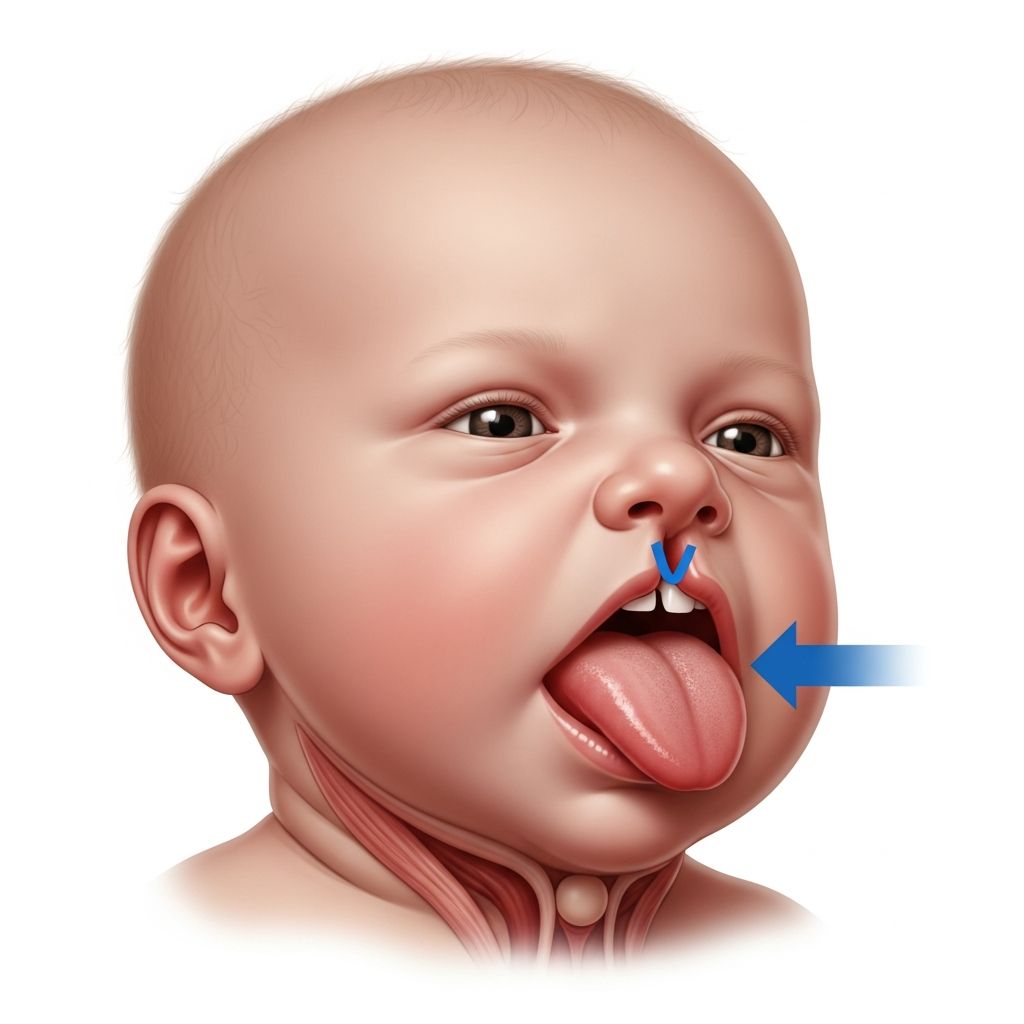
Pierre Robin Sequence (PRS) is a congenital condition characterized by a distinctive triad of developmental features affecting the lower jaw and airway. The condition is named after the sequence of events that occurs during fetal development, where one initial malformation leads to a cascading chain of physical changes. Unlike a syndrome where multiple anomalies arise independently, a sequence represents a primary defect that triggers subsequent structural abnormalities.
The hallmark features of Pierre Robin Sequence include micrognathia (a smaller-than-normal lower jaw), glossoptosis (backward displacement of the tongue), and upper airway obstruction. While these three features form the core presentation, the severity and associated complications can vary significantly among affected individuals. Some infants may experience life-threatening respiratory compromise, while others may have mild symptoms that improve with growth and development.
Key Features and Characteristics
Understanding the primary features of Pierre Robin Sequence is essential for parents and healthcare providers involved in the care of affected children.
Micrognathia
The most prominent feature of Pierre Robin Sequence is micrognathia, which refers to underdevelopment or hypoplasia of the mandible (lower jaw). The lower jaw characteristically has a reduced length and is positioned toward the back of the oral cavity. This retrognathic positioning is not simply a matter of size but involves abnormal positioning of the jaw structures. The mandible develops insufficiently during prenatal development, setting off a chain of events that leads to the other characteristic features of the condition. As the child grows, the jaw may gradually develop more normally, though some individuals may retain permanent structural differences.
Glossoptosis and Airway Obstruction
Because the jaw is underdeveloped and positioned posteriorly, the tongue naturally assumes a retruded position (pulled backward). This backward displacement of the tongue base into the pharynx is called glossoptosis. The displaced tongue can partially or completely obstruct the upper airway, leading to breathing difficulties that range from mild snoring and noisy breathing to severe respiratory distress requiring immediate intervention. The severity of airway obstruction often correlates with the degree of micrognathia, though individual variations are common.
Cleft Palate
Approximately 60-80% of infants with Pierre Robin Sequence also have a cleft palate, typically a U-shaped cleft of the hard and soft palate. The cleft palate is believed to result from the mechanical effects of the retruded tongue, which interferes with normal palatal shelf fusion during early fetal development. The presence of a cleft palate compounds the difficulties associated with feeding and can affect speech development as the child grows. Some infants may have a complete cleft palate, while others present with a partial cleft or even a high-arched palate without a complete cleft.
Clinical Presentation and Symptoms
Infants with Pierre Robin Sequence typically present with a constellation of symptoms that become apparent shortly after birth or during the neonatal period.
Respiratory Symptoms
Breathing difficulties are among the most prominent presenting symptoms. Parents and healthcare providers may notice:
– Loud or noisy breathing, particularly during sleep- Snoring or stridorous breathing patterns- Signs consistent with obstructive sleep apnea, where breathing pauses occur during sleep- In severe cases, episodes of desaturation (decreased oxygen levels in the blood)- Retractions (visible pulling in of the skin around the ribs and neck during breathing efforts)- Cyanosis (bluish discoloration of the skin) in severe cases
Related Stories



Feeding Difficulties
The altered anatomy of the oral cavity makes feeding particularly challenging for infants with Pierre Robin Sequence. Food must pass through an abnormally configured oral cavity to reach the gastrointestinal tract. Difficulties encountered include:
– Weak sucking reflex or inability to coordinate sucking and swallowing- Aspiration risk, where food or liquid may enter the airway instead of the esophagus- Poor feeding efficiency leading to prolonged feeding times- Inadequate nutritional intake- Failure to thrive or slow weight gain
Associated Features
Beyond the primary triad, infants may present with additional features including ear infections, conductive hearing loss related to middle ear dysfunction, and in some cases, associated cardiac anomalies such as heart murmurs or pulmonary complications.
Causes and Genetic Factors
The precise etiology of Pierre Robin Sequence remains incompletely understood, though current evidence suggests that multiple contributing factors lead to the sequential development of the characteristic features. The condition can occur as an isolated anomaly or as part of a recognized genetic syndrome.
Isolated Pierre Robin Sequence
In cases of isolated PRS without associated genetic syndromes, mutations have been identified on multiple chromosomes including chromosomes 2, 4, 11, and 17. The SOX9 gene, located on chromosome 17, has been identified as a particularly important locus. The SOX9 gene encodes a protein critical for skeletal development and cartilage formation. Mutations or damage to regulatory regions (enhancers) that control SOX9 activity can result in reduced production of the SOX9 protein, leading to abnormal development of craniofacial structures. Additionally, mutations in the KCNJ2 gene on chromosome 17 have been implicated in some cases and may affect facial and cartilage development.
Syndromic Pierre Robin Sequence
When Pierre Robin Sequence occurs as part of a broader genetic syndrome, the underlying genetic basis differs. Several recognized syndromes are associated with PRS:
Stickler Syndrome is the most common genetic syndrome associated with Pierre Robin Sequence, accounting for approximately 47% of syndromic PRS cases. Stickler syndrome is an autosomal dominant condition caused by mutations in collagen genes (COL genes), which affect collagen formation throughout the body. Clinical features include flat midface, distinctive ocular findings such as retinal detachments and cataracts, joint hypermobility, and sensorineural hearing loss in addition to the typical PRS features.22q11.2 Deletion Syndrome (also known as velocardiofacial syndrome) results from deletion of a segment of chromosome 22. This syndrome presents with a constellation of features including congenital heart disease, palatal abnormalities, immune system dysfunction, hypocalcemia, thyroid dysfunction, growth hormone deficiency, gastrointestinal problems, kidney abnormalities, hearing loss, seizures, and learning differences.Treacher Collins Syndrome and other conditions affecting craniofacial development can also present with Pierre Robin Sequence features.
Diagnosis and Evaluation
Diagnosis of Pierre Robin Sequence is primarily clinical, based on recognition of the characteristic physical features. However, comprehensive evaluation is essential to assess severity and identify associated anomalies.
Physical Examination
Initial diagnosis typically occurs through clinical examination, where the characteristic micrognathia, glossoptosis, and airway obstruction are identified. The examiner may assess jaw positioning, tongue placement, and observe the infant’s breathing patterns.
Airway Assessment
A complete airway assessment must be performed in all suspected cases. This may include direct visualization of the airway structures and assessment of the degree of obstruction. Observation in a hospital setting is often recommended for initial assessment and monitoring.
Sleep Study
Polysomnography (sleep study) is a valuable diagnostic tool that can objectively quantify the degree of airway obstruction, measure oxygen desaturation episodes, and assess the frequency of apneic events during sleep. This information helps guide treatment decisions.
Imaging Studies
Radiographic imaging may be employed to visualize jaw structures and assess the severity of micrognathia. Three-dimensional imaging can provide detailed anatomical information to guide surgical planning if intervention is needed.
Genetic Testing
For cases suspected of being syndromic or for genetic counseling purposes, chromosomal analysis or specific genetic testing may be recommended to identify underlying genetic mutations.
Treatment and Management Options
Management of Pierre Robin Sequence is individualized based on severity and associated complications. Treatment approaches range from conservative management to surgical intervention.
Conservative Management
Mild cases of Pierre Robin Sequence may be managed conservatively through:
– Positioning strategies, such as prone positioning or side-sleeping to facilitate airway patency- Close monitoring and observation- Nutritional support and specialized feeding techniques- Regular clinical follow-up to assess progression
Non-Surgical Interventions
For moderate cases, non-surgical approaches may provide symptom relief:
– Continuous positive airway pressure (CPAP) therapy to maintain airway patency during sleep- Nasopharyngeal airway placement in selected cases- Feeding modifications, including specialized bottles, thickened feeds, or nasogastric tube feeding
Surgical Management
Severe cases with significant airway obstruction may require surgical intervention. Surgical options include:
– Distraction osteogenesis, a procedure that gradually stretches the mandibular bone to increase jaw length and improve airway dimensions- Tongue-lip adhesion, a procedure that temporarily adheres the tongue to the lower lip to prevent glossoptosis- Tracheostomy, which bypasses the upper airway obstruction when other measures are ineffective or when associated laryngotracheal anomalies are present- Palatal repair for associated cleft palate, typically performed after the initial airway concerns are stabilized
Prognosis and Long-Term Outcomes
The prognosis for Pierre Robin Sequence varies depending on severity and the presence of associated anomalies. In isolated cases with mild to moderate symptoms, the outlook is generally favorable. The mandible often undergoes catch-up growth during childhood, gradually improving airway dimensions and reducing obstruction severity. Many children outgrow their breathing difficulties as they age.
However, complications can arise from prolonged airway obstruction and hypoxemia, including failure to thrive, pulmonary hypertension, cor pulmonale (right heart failure), cerebral impairment from chronic hypoxia, and in severe cases, death. The mortality rate is higher in syndromic PRS cases, particularly those with associated cardiac or central nervous system anomalies. Early detection and appropriate management significantly improve outcomes and prevent long-term complications.
Associated Complications
Without appropriate management, Pierre Robin Sequence can lead to serious complications:
– Hypoxemia and chronic oxygen desaturation- Failure to thrive due to feeding difficulties and increased caloric demands from breathing efforts- Pulmonary hypertension from chronic hypoxemia- Cor pulmonale and right heart failure- Cerebral impairment from prolonged hypoxic injury- Aspiration pneumonia- Developmental delays if feeding and nutritional needs are not adequately met
Frequently Asked Questions
Q: Is Pierre Robin Sequence inherited?
A: Most cases of isolated Pierre Robin Sequence are not inherited, though genetic factors play a role in susceptibility. Syndromic forms associated with Stickler syndrome or other conditions may have autosomal dominant inheritance patterns. Genetic counseling is recommended for families with affected members.
Q: Can Pierre Robin Sequence be diagnosed prenatally?
A: While prenatal ultrasound or advanced imaging may occasionally suggest micrognathia, definitive diagnosis typically occurs after birth. The full constellation of features becomes apparent clinically in the neonatal period.
Q: Will my child outgrow Pierre Robin Sequence?
A: Many children experience significant improvement as their mandible undergoes catch-up growth during childhood. Breathing difficulties often resolve or improve substantially, though some residual jaw differences may persist. Associated cleft palate will require surgical repair.
Q: What is the difference between isolated and syndromic Pierre Robin Sequence?
A: Isolated PRS affects only the jaw and airway structures, while syndromic PRS occurs as part of a genetic syndrome with additional features affecting other body systems. Syndromic forms often have a more complex clinical course and higher complication rates.
Q: How often should my child be monitored?
A: Monitoring frequency depends on severity. Infants with significant airway obstruction require close hospital observation and frequent clinical assessment. Milder cases need regular follow-up with specialists to track mandibular growth and symptom progression.
Q: Can feeding difficulties be managed without tube feeding?
A: Many infants can be managed with specialized feeding techniques, including upright positioning, slower feeding rates, and modified feeding methods. However, some may require supplemental nasogastric or gastric tube feeding to ensure adequate nutrition during the critical early months.
References
- Pierre Robin Sequence – Symptoms, Causes, Treatment — National Organization for Rare Disorders (NORD). 2024. https://rarediseases.org/rare-diseases/pierre-robin-sequence/
- Pierre Robin Syndrome – StatPearls — National Center for Biotechnology Information (NCBI), National Institutes of Health. 2024. https://www.ncbi.nlm.nih.gov/books/NBK562213/
- Pierre Robin Sequence | Causes, Symptoms, Diagnosis & Treatment — Cincinnati Children’s Hospital Medical Center. 2024. https://www.cincinnatichildrens.org/health/p/pierre-robin-sequence
- Pierre Robin Syndrome | Children’s Hospital of Philadelphia — Children’s Hospital of Philadelphia. 2024. https://www.chop.edu/conditions-diseases/pierre-robin-syndrome
- Pierre Robin sequence: MedlinePlus Medical Encyclopedia — U.S. National Library of Medicine. 2024. https://medlineplus.gov/ency/article/001607.htm
- Pierre Robin Syndrome (Sequence) — Cleveland Clinic. 2024. https://my.clevelandclinic.org/health/diseases/21863-pierre-robin-syndrome
- Pierre Robin sequence (PRS) — Royal Children’s Hospital, Melbourne. 2024. https://www.rch.org.au/kidsinfo/fact_sheets/pierre_robin_sequence_prs/
Similar Articles








Read full bio of Sneha Tete