Piezogenic Papule Images: 5 Essential Photos For Identification
Explore detailed images and comprehensive insights into piezogenic papules, their causes, diagnosis, and management strategies.
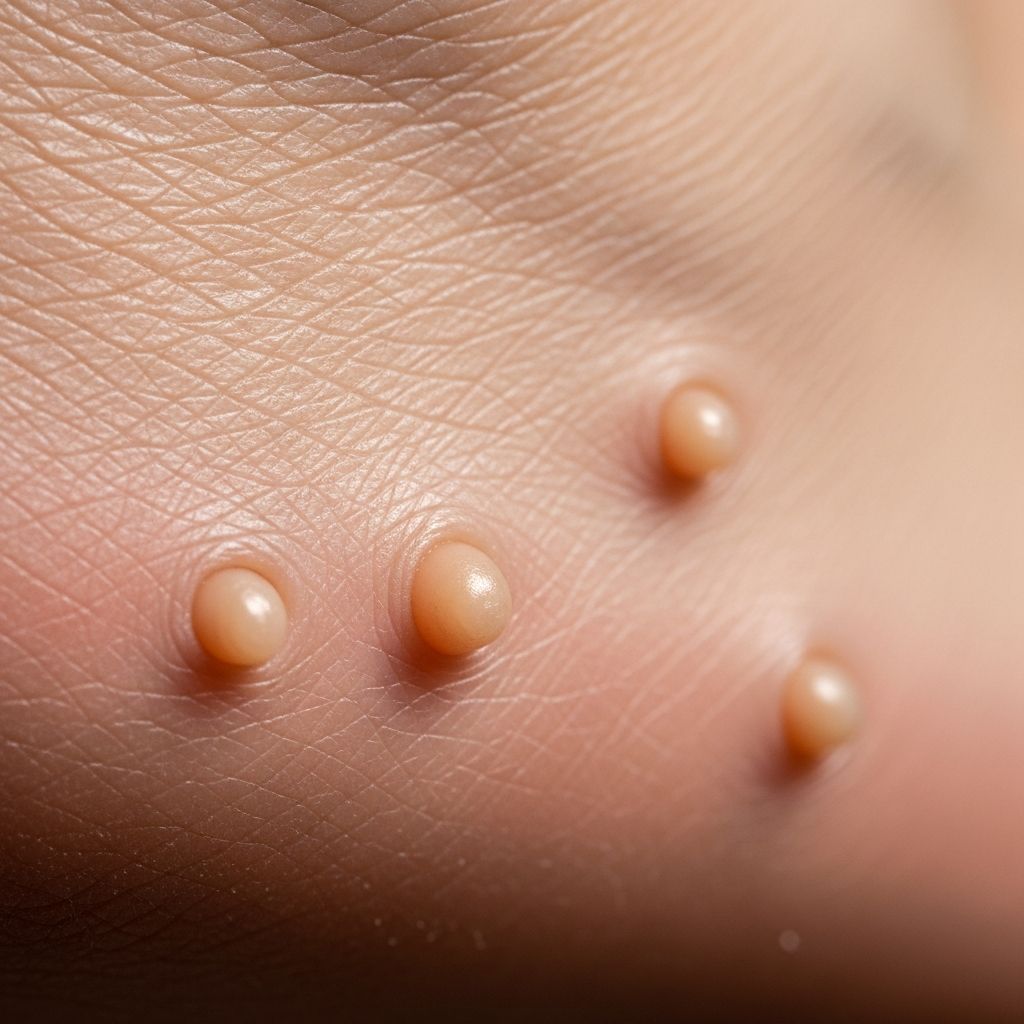
Piezogenic papules are small, soft, whitish or yellowish bumps that appear on the heels and sometimes wrists when pressure is applied. They result from herniation of subcutaneous fat through the dermal connective tissue and are common, affecting up to 76% of the population in some studies. Typically asymptomatic, they become visible upon weight-bearing and disappear at rest. This gallery showcases clinical images of piezogenic papules in various presentations, aiding in recognition and differentiation from other heel lesions.
What are piezogenic papules?
Piezogenic papules, also known as piezogenic pedal papules, represent a benign extrusion of normal subcutaneous fat lobules through gaps in the reticular dermis, particularly on the heels. The term ‘piezogenic’ derives from the Greek ‘piezein’ meaning to press, highlighting their pressure-induced appearance. These papules are usually multiple, bilateral, and measure 2-10 mm in diameter. They are soft to palpation and blanch under direct pressure due to their fatty composition.
In most individuals, piezogenic papules are incidental findings during clinical examination, noticed when the patient stands on tiptoes or edges of their feet. Prevalence increases with age due to cumulative mechanical stress on connective tissues. While heels are the primary site, similar papules can occur on wrists, where non-weight-bearing pressure elicits them. Painless variants are the norm, but a subset causes discomfort, limiting ambulation and warranting intervention.
Who gets piezogenic papules?
Piezogenic papules are ubiquitous, with one study reporting a 76% prevalence in a small population cohort. They predominantly affect adults, though they can appear in children, potentially mimicking juvenile aponeurotic fibroma. Risk factors include:
- Obesity: Excess weight amplifies heel pressure, promoting fat herniation.
- Athletic activities: Long-distance running, figure skating, and prolonged standing increase mechanical stress.
- Connective tissue disorders: Up to one-third of Ehlers-Danlos syndrome (EDS) patients exhibit painful papules due to collagen defects.
- Flat feet (pes planus): Alters biomechanics, heightening heel strain.
- Genetic syndromes: Associations with Prader-Willi syndrome, characterized by hypotonia and obesity.
Women may report them more frequently, possibly due to footwear choices or higher consultation rates for foot issues. No strong racial predilection exists.
What causes piezogenic papules?
The pathophysiology involves herniation of subcutaneous fat chambers through connective tissue defects in the dermis. Normally, fat lobules are compartmentalized by fibrous septa anchored to the plantar fascia. Repeated pressure or trauma weakens these septa, allowing fat to protrude.
Painless papules reflect small, peripheral fat chambers. Painful ones arise from trabecular degeneration, fusing chambers into larger defects that entrap neurovascular structures, causing ischemia and nerve compression. Risk amplifiers like obesity or EDS exacerbate septal fragility. Analogous to abdominal hernias, cumulative microtrauma over years predisposes susceptible individuals.
What do piezogenic papules look like?
Piezogenic papules manifest as clusters of 2-5 mm dome-shaped, skin-colored to yellowish papules on the medial and lateral heel borders, best elicited by standing on toes. They are evanescent, vanishing when non-weight-bearing. Wrist papules appear similarly upon compression.
Clinical images description:
- Image 1: Bilateral heel papules in a middle-aged woman standing; multiple 3-4 mm whitish papules along posterolateral heels.
- Image 2: Close-up of right heel in athlete; tense, yellow papules protruding under weight, resolving off-feet.
- Image 3: Painful papules in EDS patient; erythematous, tender nodules with surrounding callus.
- Image 4: Wrist piezogenic papules; subtle bumps on volar wrists upon pressure.
- Image 5: Child with papules mimicking fibroma; small, discrete heel bumps.
Related Stories



Differential includes plantar warts (verrucous), fibromas (firm), lipomas (solitary), or rheumatoid nodules (rheumatoid arthritis).
How are piezogenic papules diagnosed?
Diagnosis is clinical, based on characteristic appearance upon pressure provocation. No biopsy is routinely needed, as histopathology shows unremarkable fat lobules in dermis without inflammation. Dermoscopy may reveal yellowish globules, but it’s seldom required.
In painful cases, exclude mimics like plantar fasciitis (morning pain, medial calcaneal tenderness), Achilles enthesitis, or peripheral neuropathy. History probes EDS (hypermobility, easy bruising) or Prader-Willi features. Imaging (ultrasound/MRI) assesses orthopedic issues if suspected. Children warrant scrutiny for fibromas.
Management of piezogenic papules
Asymptomatic papules require no intervention; reassure patients of their benign nature. For painful papules, after ruling out alternatives:
Conservative measures (first-line)
- Weight loss to reduce heel pressure.
- Activity modification: Avoid prolonged standing/running.
- Supportive footwear: Heel cups, foam pads, orthotics redistribute weight.
- Compression stockings or taping minimize herniation.
Medical therapies
| Treatment | Mechanism | Efficacy/Notes |
|---|---|---|
| Corticosteroid injections (e.g., betamethasone + bupivacaine) | Reduce inflammation, cytokines | 50% pain reduction post-injection; repeat if needed. Contraindicated in diabetes/osteoporosis. |
| Electro-acupuncture | Stimulates circulation, reduces congestion | Well-tolerated; avoid in pacemakers/coagulopathy. |
| Low-level laser therapy | Boosts blood flow, tissue repair | Promising in small study; 10 sessions resolved papules. |
Surgical options (last resort)
Endoscopic fascial release or punch excision with defect closure for refractory cases. High recurrence/scarring risk, especially in EDS.
Piezogenic papules treatment
Treatment escalates from conservative to invasive:
- Non-invasive: Pads, orthotics, weight management – effective for most.
- Injections: Steroid-anesthetic mix yields rapid relief.
- Advanced: Laser/acupuncture for non-responders.
- Surgery: Reserved for debilitating pain; closure of fascial defects preferred.
Outcomes vary; 90% asymptomatic spontaneously resolve with rest. Monitor EDS patients closely.
FAQs
Are piezogenic papules dangerous?
No, they are benign and harmless unless painful. They signal connective tissue issues in rare cases like EDS.
Do piezogenic papules go away?
They disappear off-pressure; persistent ones may need management but rarely resolve completely without intervention.
Can children get piezogenic papules?
Yes, though less common; differentiate from fibromas.
Is treatment always needed?
No, only for symptomatic cases after excluding differentials.
Can piezogenic papules cause pain?
Rarely; pain stems from nerve entrapment in larger herniations.
References
- Piezogenic Pedal Papule — StatPearls – NCBI Bookshelf. 2023-07-17. https://www.ncbi.nlm.nih.gov/books/NBK482153/
- Piezogenic Pedal Papules (Painful Piezogenic Pedal Papules; Piezogenic Wrist Papules) — Dermatology Advisor. 2023. https://www.dermatologyadvisor.com/home/decision-support-in-medicine/dermatology/piezogenic-pedal-papules-painful-piezogenic-pedal-papules-piezogenic-wrist-papules/
- How to treat piezogenic papules — Typology US. 2024. https://us.typology.com/library/how-to-treat-piezogenic-papules
- Piezogenic papules — DermNet NZ. 2023. https://dermnetnz.org/topics/piezogenic-papules
Similar Articles








Read full bio of medha deb