Pigmentary Demarcation Lines: 8 Types Explained
Understanding pigmentary demarcation lines: Benign skin pigmentation patterns across body sites and skin types.
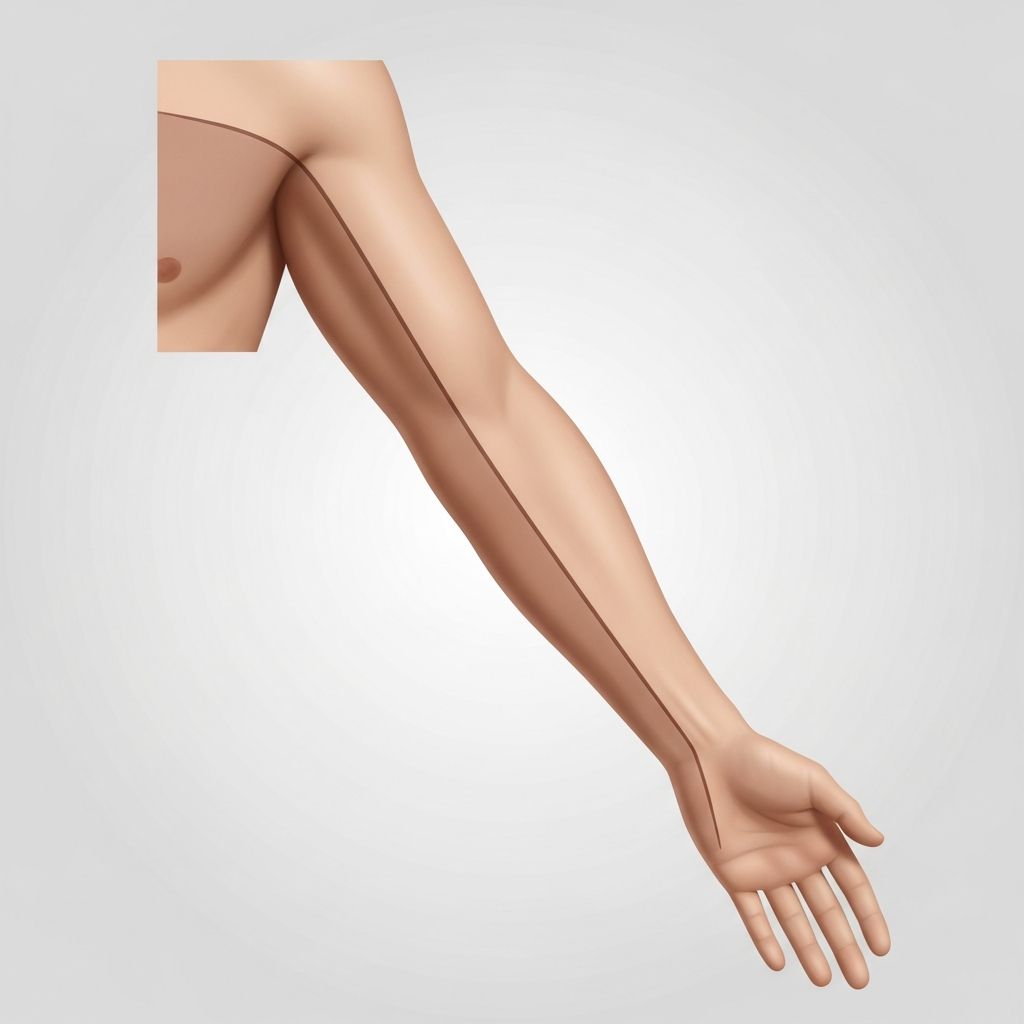
Pigmentary demarcation lines (PDL), also known as Voigt-Futcher lines or Futcher lines, represent physiological boundaries where skin pigmentation abruptly shifts from normal to hyperpigmented areas. These benign patterns are symmetrical, more prominent in darker skin types, and follow underlying developmental lines like Blaschko’s lines, reflecting cutaneous mosaicism.
What are pigmentary demarcation lines?
Pigmentary demarcation lines separate zones of lighter and darker skin color, often becoming more visible after sun exposure or during hormonal changes such as pregnancy. They are a normal variant rather than a pathological condition, though they can cause cosmetic concern leading to unnecessary worry or treatment. Unlike disorders like melasma or post-inflammatory hyperpigmentation, PDL exhibit sharp, linear borders without scaling, itching, or inflammation.
These lines indicate genetic mosaicism in melanocyte distribution, where embryonic cell migrations create stable pigmentation differences persisting from infancy into adulthood. They occur across all races but are most obvious in individuals with Fitzpatrick skin types III-VI, such as African, Hispanic, Asian, and Indian populations.
Who gets pigmentary demarcation lines?
PDL can appear in anyone, but prevalence varies by ethnicity and gender. Studies show higher rates in darker-skinned individuals: up to 9% in Indian females versus 0.75% in males for facial types. They are genetic in predisposition, with familial aggregation noted, and often emerge around puberty, influenced by hormones.
- Common populations: African, Japanese, Hispanic, Indian descent.
- Risk factors: Female gender (due to hormonal influences), sun exposure, pregnancy (especially Type B).
- Age of onset: Infancy to puberty; persist lifelong unless fading post-pregnancy.
In Caucasians, PDL are rare but documented, emphasizing the need for awareness to avoid misdiagnosis.
What causes pigmentary demarcation lines?
The exact etiology remains unclear, but several theories explain their formation:
- Blaschko’s lines: PDL align with these hypothetical skin migration patterns from embryogenesis, indicating mosaicism in pigment cell clones.
- Neurological basis: Corresponding to Voigt’s peripheral nerve distributions, suggesting innervation influences pigmentation.
- Hormonal triggers: Exacerbated in pregnancy (Type B PDL) or puberty, with partial fading postpartum.
- UV exposure: Accentuates contrast by tanning hyperpigmented zones more.
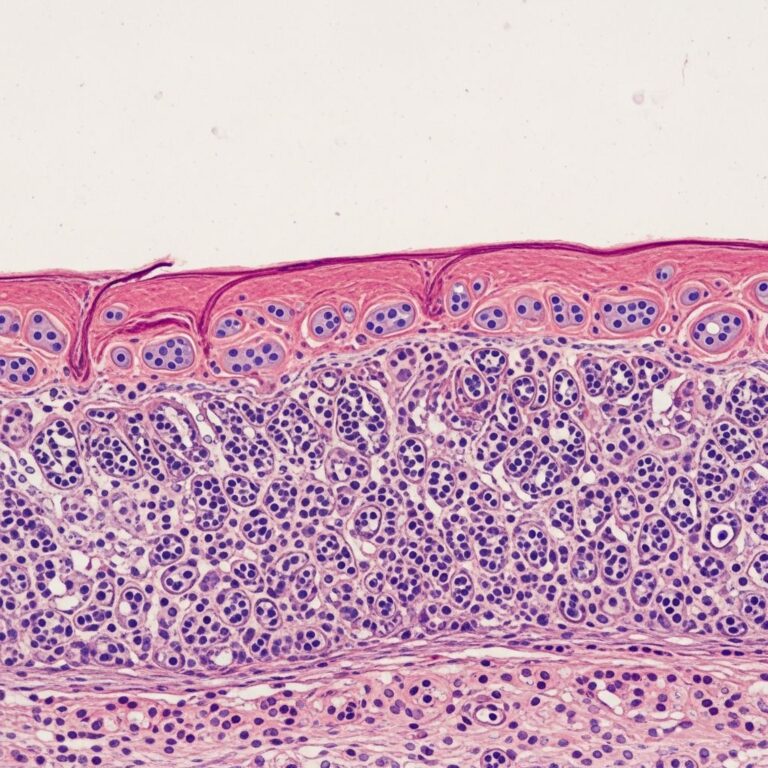
Histologically, PDL show basal keratinocyte hyperpigmentation and mild dermal melanin incontinence without inflammation, distinguishing them from ashy dermatosis or erythema dyschromicum perstans.
What are the clinical features of pigmentary demarcation lines?
PDL present as asymptomatic, sharply demarcated hyperpigmented macules, patches, or lines. They are bilateral and symmetrical, with no textural changes, hair alterations, or satellite lesions.
- Appearance: Abrupt transition; darker outer/lateral skin vs. lighter medial areas.
- Enhancers: Sunlight, tanning, pregnancy make them prominent.
- Duration: Chronic, stable; pregnancy-related may resolve post-delivery.
Diagnosis is clinical, based on location, symmetry, and history; biopsy rarely needed but confirms post-inflammatory-like changes.
Types of pigmentary demarcation lines
Related Stories



Six primary types (A-F) are classically described, with additional facial variants (G-H) in certain populations.
| Type | Location | Characteristics |
|---|---|---|
| PDL-A (Futcher’s lines) | Lateral vs. medial upper arms, extending to pectoral area | Most common; darker outer arm. |
| PDL-B | Posteromedial lower legs/thighs | Pregnancy-associated; serpiginous/reticular patterns. |
| PDL-C | Mediosternal/presternal vertical line | Hypopigmented band. |
| PDL-D | Central/posteromedial chest or spine | Linear hyperpigmentation. |
| PDL-E | Mid-back or clavicle-to-areola chest bands | Bilateral streaks. |
| PDL-F | Lateral cheek/periorbital face | Inverted cone on cheek. |
| PDL-G | Malar to temple (‘W’ shape) | Two inverted cones. |
| PDL-H | Oro-mental bands (mouth angle to chin) | Linear, often with lower lip parallel band. |
Facial PDL (F-H) are prevalent in Indian females (up to 9%), appearing at puberty and persisting.
Diagnosis
PDL diagnosis relies on characteristic distribution, symmetry, and lack of symptoms. Differentials include:
- Melasma, ashy dermatosis, erythema dyschromicum perstans.
- Post-inflammatory hyperpigmentation, striae distensae.
- Photo-induced changes.
Biopsy, if performed, reveals hyperpigmentation without atypia. Wood’s lamp accentuates borders; dermoscopy shows uniform pigment.
Pigmentary demarcation lines during pregnancy
Type B PDL frequently emerge or intensify during pregnancy due to hormonal surges, affecting posterior thighs/legs with hyperpigmented patches and occasional erythema. They often fade spontaneously postpartum, as seen in cases resolving within weeks. Reassurance is key, avoiding unnecessary interventions.
Treatment of pigmentary demarcation lines
PDL are benign and require no treatment. Management focuses on education and camouflage:
- Observation: Most stable; pregnancy-related self-resolve.
- Sunscreen: Broad-spectrum SPF 50+ to minimize contrast.
- Camouflage: Makeup for cosmetics concerns.
- Avoid: Topicals (hydroquinone, retinoids) or lasers, risking irritation without benefit.
Cosmetic treatments lack evidence and may worsen pigmentation.
What is the outcome for pigmentary demarcation lines?
Excellent prognosis: lifelong but harmless. Pregnancy-exacerbated cases often improve post-delivery. No malignant potential; regular skin checks suffice.
Frequently Asked Questions (FAQs)
Are pigmentary demarcation lines harmful?
No, they are a normal skin variant with no health risks.
Can PDL be removed?
No effective or recommended treatments exist; they are physiological.
Why do they appear in pregnancy?
Hormones trigger Type B; most fade after delivery.
Are PDL genetic?
Yes, familial patterns and ethnic predisposition suggest genetics.
Do they occur on the face?
Yes, Types F-H common in some populations like Indians.
References
- Pigmentary demarcation lines: Three cases encapsulating a benign physiological phenomenon — AlGhamdi KM et al. 2024-10-15. https://pmc.ncbi.nlm.nih.gov/articles/PMC11844954/
- Pigmentary demarcation lines — DermNet NZ. 2023-05-12. https://dermnetnz.org/topics/pigmentary-demarcation-lines
- Pigmentary demarcation lines over the face — Indian Journal of Dermatology, Venereology and Leprology. 2012-07-01. https://ijdvl.com/pigmentary-demarcation-lines-over-the-face/
- Type B Pigmentary Demarcation Lines of Pregnancy — Ann Dermatol. 2012-08-01. https://pmc.ncbi.nlm.nih.gov/articles/PMC3412246/
- Futcher lines — VisualDx. 2025-01-10. https://www.visualdx.com/visualdx/diagnosis/futcher+lines?diagnosisId=52667&moduleId=102
Similar Articles








Read full bio of medha deb