Pigmented Contact Cheilitis: Causes, Symptoms & Treatment
Understanding pigmented contact cheilitis: allergic reactions causing lip discoloration and effective management strategies.
Pigmented Contact Cheilitis: A Comprehensive Overview
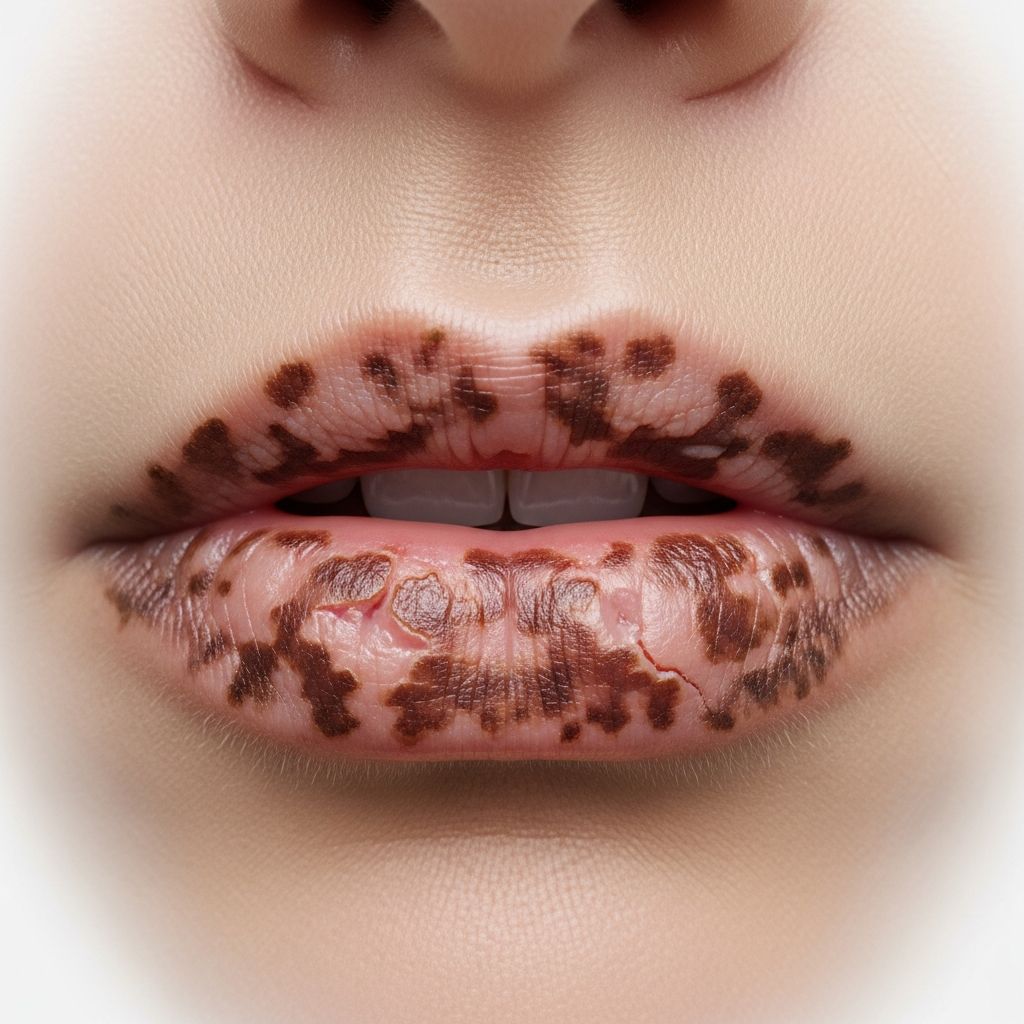
Pigmented contact cheilitis is an irritant or allergic reaction to an allergen in contact with the lips that results in brown-black discoloration of the lip(s). This condition represents a delayed hypersensitivity reaction, typically occurring when there is frequent and repeated contact with a small amount of a sensitizing substance. Unlike typical contact dermatitis, which presents with inflammatory manifestations such as redness and swelling, pigmented contact cheilitis is characterized by the development of hyperpigmentation as a secondary feature, often with minimal or absent acute inflammatory signs. The condition primarily affects women in their third decade of life and is most commonly caused by sensitizing components found in lip cosmetics.
What Causes Pigmented Contact Cheilitis?
The development of pigmented contact cheilitis involves repeated exposure to low levels of certain sensitizing substances through a delayed (type IV) hypersensitivity reaction. The most common allergen sources include lipstick ingredients, though the condition can develop from contact with various other products applied to the lips. Several specific compounds and substances have been documented as causative agents.
Common Allergens and Irritants
- Paraphenylenediamine (PPD): Found in hair dyes and some cosmetic products, PPD is a well-documented sensitizer that can cause pigmented contact cheilitis. Patch test studies have shown positive reactions to PPD in approximately 40-42% of cases with hair dye exposure.
- Lipstick ingredients: Including castor oil, shellac, colophony, azo dyes, sesame oil, and ozonated olive oil.
- Preservatives: Chemical preservatives commonly used in cosmetic and oral care products can act as sensitizers.
- Fragrance components: Fragrance mix and individual fragrance compounds have been identified as allergens in patch testing.
- Propylene glycol: A common ingredient in cosmetics and personal care products that can trigger allergic reactions.
- Rubber or latex products: Contact with lips during cosmetic application or use of certain lip care products.
- Food-related allergens: Citrus fruits, cinnamon, and other food components that come into contact with the lips.
The condition can also develop as an irritant reaction rather than a true allergic response, particularly with frequent exposure to harsh chemicals in oral hygiene products, food components, or environmental irritants such as cold, wind, and low humidity. Notably, while these allergen and irritant sources are common in the population, pigmented contact cheilitis remains relatively rare, suggesting that there may be unidentified predisposing patient factors that increase susceptibility to this specific presentation.
Clinical Presentation and Symptoms
The clinical presentation of pigmented contact cheilitis typically progresses through distinct phases, beginning with acute inflammatory symptoms that may initially resemble other lip conditions. Patients may initially present with burning and itchy swelling of the lip(s), symptoms suggestive of cold sores or herpes simplex infection. Over time, the lip becomes progressively darker, developing a distinctive dark purple-black color, which often becomes more obvious after ceasing use of the offending product.
Key Clinical Features
- Primary manifestation: Multiple brown macules (discolored patches) that may involve both lips as well as surrounding skin.
- Progressive darkening: The lip discoloration develops gradually, sometimes appearing more pronounced after discontinuing the causative product.
- Associated symptoms: While still using the offending product, the lip may present with redness, scaling, itching, swelling, and in some cases vesicles and papules.
- Distribution patterns: Approximately 42.8% of reported cases involve lesions in both lips, while 42.8% present with lesions exclusively on the lower lip.
- Persistent pigmentation: The hyperpigmentation tends to persist longer than acute inflammatory symptoms, with an average evolution time of 13.5±15.6 months.
Related Stories



The hyperpigmentation pattern typically manifests as multiple rather than solitary lesions, with the cutaneous examination revealing hyperpigmented macules, sometimes with concurrent scaling. The distinctive feature of this condition is the occurrence of pigmentation without prominent inflammatory changes, which distinguishes it from typical acute contact dermatitis.
Pathophysiology and Histopathological Features
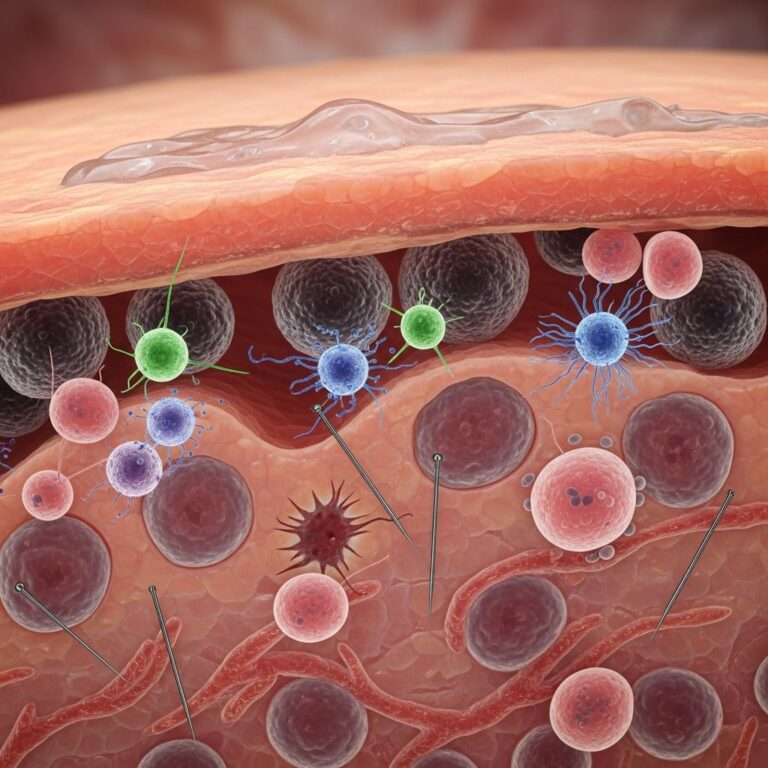
The mechanism underlying pigmented contact cheilitis involves specific histopathological changes in the skin layers. Basal liquefaction degeneration and pigmentary incontinence are responsible for the melanin pigmentation observed in this condition. Pigmentary incontinence results in what has been described as a natural tattoo of the melanin pigment—the pigment is absorbed so slowly by dermal macrophages that the resulting hyperpigmentation becomes persistent.
Biopsies reveal increased melanophages in the upper dermis as the main histopathological characteristic, which represents immune cells that have engulfed melanin released from damaged basal keratinocytes. This process explains why the pigmentation can persist for extended periods even after discontinuing the causative product. While a detailed understanding of pigmented contact cheilitis pathogenesis continues to evolve, evidence suggests that repeated exposure to low levels of sensitizing substances triggers a delayed-type hypersensitivity response localized to the lip region.
The reason that saliva exposure and lip involvement commonly occur without intraoral (inside the mouth) findings is hypothesized to involve saliva contributing to the dilution or elimination of allergens, resulting in lip involvement without deeper mucosal involvement.
Diagnosis of Pigmented Contact Cheilitis
Diagnosis of pigmented contact cheilitis involves both clinical evaluation and confirmatory testing. The condition presents diagnostic challenges because the clinical appearance alone—hyperpigmentation of the lips—is relatively nonspecific and can resemble other pigmented lip conditions.
Diagnostic Approach
Patch testing is the gold standard for detecting allergenic substances and confirming the diagnosis of pigmented contact cheilitis. The diagnostic protocol typically includes:
- Standard allergen series: Testing against commonly encountered allergens to identify potential sensitizers.
- Patient’s own products: Testing with the patient’s cosmetics and personal care products “as is” to identify the specific causative agent.
- Extended allergen series: Additional testing based on the clinical history and suspected cause, such as cosmetic ingredient series for suspected lipstick reactions.
In clinical practice, one documented case showed that one of the patient’s own lipsticks caused a hyperpigmented positive reaction on patch testing. In contrast, some cases may show negative patch test results despite clinical findings consistent with contact cheilitis, leading to a diagnosis of pigmented irritant contact cheilitis rather than allergic contact cheilitis. These cases typically resolve after ceasing use of the offending product, even without a positive patch test reaction.
Importantly, a detailed medical history and thorough physical examination are fundamental to diagnosis, as the diagnosis of pigmented contact cheilitis is primarily clinical in nature, and biopsies are not necessary for confirmation. The distribution, duration of pigmented lesions, medication history, and any changes in lesion patterns are paramount for differential diagnosis of numerous pigmented conditions affecting the lips.
Treatment and Management Strategies
The management of pigmented contact cheilitis centers on identifying and eliminating the causative allergen or irritant. According to established dermatological guidelines from the American Academy of Dermatology, the best way to treat contact dermatitis—including contact cheilitis—is to avoid the allergen or irritant altogether.
Primary Treatment Approach
Allergen/irritant avoidance: After confirming the contact reaction through patch testing, the patient should be instructed to avoid using any products containing the detected allergenic substance. Avoiding the identified allergen or irritant, usually found in lipsticks, results in no further attacks of cheilitis. This preventive measure is essential for preventing recurrent episodes of the condition.
Symptomatic and Adjunctive Treatment
While discontinuing the use of products causing the contact reaction usually resolves common symptoms such as itching, swelling, scaling, and redness, the pigmentation can persist for longer periods. To address residual symptoms and promote healing, the following treatment measures may be recommended:
- Topical corticosteroids: May be used to alleviate associated symptoms such as itching, swelling, and scaling. Topical steroids can help reduce inflammatory manifestations during the acute phase.
- Hydroquinone: A depigmenting agent that may be applied topically to facilitate the fading of residual hyperpigmentation.
- Emollients: Vaseline or other moisturizing agents may help manage dry, irritated lip skin.
- Sun protection: Protecting the lips from sun exposure may be beneficial, though the condition itself is distinct from actinic cheilitis caused by UV exposure.
Expected Timeline for Resolution
While avoiding the offending product typically resolves acute symptoms relatively quickly, the pigmentation may take considerably longer to fade. The pigmentation may fade over 12 months but may not resolve completely in all cases. The average follow-up period observed in clinical cases is approximately 12 months, though complete resolution can extend beyond this timeframe. This persistent nature of the hyperpigmentation is due to the deep dermal location of the melanin and the slow resorption process by macrophages.
Differential Diagnosis
Pigmented contact cheilitis must be distinguished from other conditions affecting the lips. Contact dermatitis itself, which involves sensitizing components and inflammatory characteristics but no pigmentation, represents a related but distinct condition. Additionally, atopic dermatitis (AD), a multifactorial pruritic eczematous condition, shares similar clinical findings and can occur concomitantly with contact dermatitis, potentially complicating the clinical picture.
Another condition requiring differentiation is actinic cheilitis, a precancerous condition caused by long-term sun exposure that leads to rough, scaly, discolored patches on the lips—but through an entirely different mechanism involving UV-induced genetic damage to skin cells rather than allergic sensitization. Actinic cheilitis predominantly affects individuals with extensive occupational or recreational sun exposure, whereas pigmented contact cheilitis is related to product exposure and can affect any individual using the causative product.
The distribution, duration, and associated clinical features, along with patch testing results, help differentiate pigmented contact cheilitis from other pigmented lip conditions and contact dermatitis variants.
Risk Factors and Patient Susceptibility
While the allergen and irritant sources responsible for pigmented contact cheilitis are common in the general population, the condition itself remains relatively rare. This discrepancy suggests underlying predisposing patient factors that increase susceptibility to developing this specific presentation. Risk factors may include personal or family history of atopy, allergic disease, or contact dermatitis, though these have not been definitively established for all cases.
Recent research investigating the relationship between labial pigmentation and atopic dermatitis found that patients with atopic dermatitis who developed labial pigmentation had significantly more frequent allergic disorders and higher IgE levels compared to atopic dermatitis patients without labial pigmentation. This suggests that immune dysregulation beyond delayed hypersensitivity alone may play a role in the development of pigmented lip macules in susceptible individuals.
Prevention Strategies
The prevention of pigmented contact cheilitis involves avoiding the causative substance or product causing the condition. Once an allergen has been identified through patch testing, scrupulous avoidance of products containing that ingredient is essential. Practical prevention strategies include:
- Carefully reviewing ingredient lists on cosmetic products before purchase and use
- Patch testing new cosmetic products on a small area before widespread application
- Using hypoallergenic or allergen-free alternatives when available
- Maintaining awareness of occupational exposures (such as hair dye exposure in salon workers)
- Considering personal history of allergic reactions when selecting lip care products
- Consulting with a dermatologist when introducing new cosmetics if you have a history of lip sensitivity
Clinical Significance and Patient Education
Pigmented contact cheilitis often alarms patients due to the unexpected appearance of hyperpigmentation on the lips, particularly when the condition develops gradually over weeks to months. Many patients may initially suspect a serious condition such as malignancy or systemic disease. Therefore, accurate diagnosis and clear patient education regarding the benign nature of this condition and its management are important components of clinical care.
Healthcare providers should recognize pigmented contact cheilitis in their differential diagnosis of pigmented lip lesions, particularly when the patient reports recent changes in cosmetic product use or occupational exposures. A detailed medical history focusing on product use, timeline of symptom onset, and patch test findings provides the framework for accurate diagnosis and appropriate management.
Frequently Asked Questions (FAQs)
Q: How long does it take for pigmented contact cheilitis to develop?
A: Pigmented contact cheilitis develops through repeated exposure to an allergen or irritant, with the average evolution time being 13.5±15.6 months, though it can range from 2 to 36 months depending on the frequency of exposure and individual susceptibility.
Q: Will the discoloration go away if I stop using the product?
A: Yes, stopping use of the offending product will prevent further attacks and typically resolve acute symptoms like itching and swelling. However, the pigmentation may persist for extended periods and may fade gradually over 12 months or longer, though it may not completely resolve in all cases.
Q: Is patch testing necessary for diagnosis?
A: Patch testing is the gold standard for confirming pigmented contact cheilitis and identifying the specific allergen. While clinical diagnosis can be suggested by the presentation, patch testing provides definitive confirmation and guides avoidance strategies.
Q: Can pigmented contact cheilitis affect the inside of the mouth?
A: Typically, pigmented contact cheilitis affects the lips without involving the intraoral mucosa (inside the mouth). This is thought to occur because saliva helps dilute or eliminate allergens, limiting the reaction to the lip area.
Q: Who is most commonly affected by this condition?
A: Pigmented contact cheilitis primarily affects women in their third decade of life, with the condition most commonly caused by sensitizing components found in lip cosmetics.
Q: Are there any systemic treatments for pigmented contact cheilitis?
A: Treatment is primarily local, focusing on allergen avoidance and topical management. Systemic treatments are not typically necessary, though topical corticosteroids and depigmenting agents may be used to manage symptoms and pigmentation.
References
- Pigmented Contact Cheilitis to Paraphenylenediamine — National Center for Biotechnology Information (NCBI/NLM). Available at https://pmc.ncbi.nlm.nih.gov/articles/PMC2856363/
- Pigmented Contact Cheilitis: A Systematic Review — National Center for Biotechnology Information (NCBI/NLM). 2024. Available at https://pmc.ncbi.nlm.nih.gov/articles/PMC11584958/
- Pigmented Contact Cheilitis — DermNet New Zealand. Available at https://dermnetnz.org/topics/pigmented-contact-cheilitis
- Allergic Reaction on Lips: Causes, Symptoms, Treatment — Medical News Today. Available at https://www.medicalnewstoday.com/articles/allergic-reaction-on-lips
- Pigmented Contact Cheilitis Information and Overview — DoveMed. Available at https://www.dovemed.com/diseases-conditions/pigmented-contact-cheilitis
- Lip Allergic Contact Dermatitis: Causes and Management — Doctor Katta MD. Available at https://www.doctorkatta.com/lip-allergic-contact-dermatitis
- Fact Sheet: Dry Lips and Angular Cheilitis — Virginia Commonwealth University Health Services. Available at https://health.students.vcu.edu/media/student-affairs-sites/ushs/docs/LIPSCHEILITIS.pdf
Similar Articles








Read full bio of medha deb