Pigmented Skin Lesions: 6 Common Types, Diagnosis & Treatment
Comprehensive guide to identifying, diagnosing, and managing benign and malignant pigmented skin lesions.
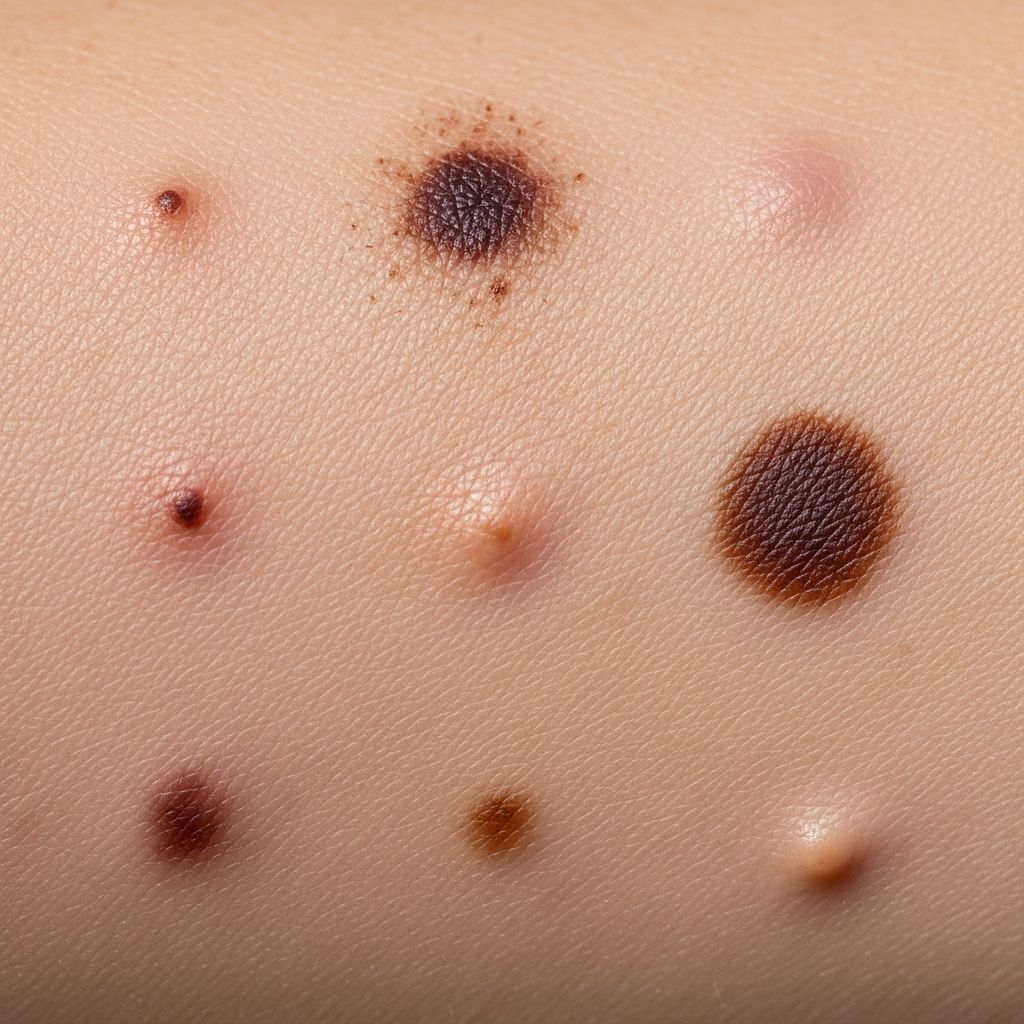
Pigmented skin lesions are common dermatological findings characterised by localised areas of increased or decreased skin pigmentation, often due to melanin accumulation. These lesions range from harmless freckles to potentially life-threatening melanomas, necessitating accurate diagnosis for appropriate management[10].
What are pigmented skin lesions?
Pigmented skin lesions appear as brown, black, blue, or grey patches on the skin, primarily resulting from excess melanin produced by melanocytes or other pigments like haemosiderin from blood breakdown. While most are benign, some indicate malignancy, making dermatological evaluation essential, particularly for changing lesions. Skin colour variations arise from melanin, haemoglobin, and connective tissue interactions, influenced by genetics and UV exposure.
Who gets pigmented skin lesions?
These lesions affect individuals of all ages, skin types, and ethnicities, though prevalence varies. Freckles and solar lentigines are common in fair-skinned people (Fitzpatrick types I-III) due to UV sensitivity, while post-inflammatory hyperpigmentation (PIH) predominates in darker skin (types IV-VI). Hormonal changes increase melasma risk in women, and moles typically emerge in childhood to early adulthood.
What causes pigmented skin lesions?
Causes include genetic predisposition, UV radiation, hormonal fluctuations, inflammation, trauma, medications, and rarely systemic diseases. UV exposure drives solar lentigines and melanoma; inflammation triggers PIH; oestrogen surges cause melasma. Malignant lesions like melanoma often stem from UV damage or pre-existing moles.
What are the clinical features of pigmented skin lesions?
Lesions vary in size, shape, colour, and texture:
- Solar lentigo: Flat, tan-brown macules (1-3 cm) on sun-exposed areas like face and hands, with irregular borders.
- Ephelis (freckle): Small (1-2 mm), red-tan macules on face/arms, fading in winter.
- Melasma: Symmetrical brown-grey patches on cheeks/forehead, worse with sun/hormones.
- Melanocytic naevus (mole): Uniform brown, round/oval, flat or raised, <6 mm.
- Seborrhoeic keratosis: Waxy, ‘stuck-on’ brown-black plaques.
- Postinflammatory hyperpigmentation: Irregular dark patches post-inflammation/acne.
Malignant features include asymmetry, border irregularity, colour variation, diameter >6 mm, evolving size (ABCDE rule).
Diagnosis of pigmented skin lesions
Diagnosis combines clinical examination, dermoscopy, and biopsy. Dermoscopy reveals pigment networks, globules, and vessels distinguishing benign from malignant. The 7-point checklist scores suspicious features (e.g., atypical network=2 points; size >7 mm=1 point); ≥3 points warrant biopsy. Total body photography aids monitoring high-risk patients.
How are pigmented skin lesions treated?
Treatment depends on type and symptoms:
- Benign lesions: Observation, cryotherapy, lasers (Q-switched Nd:YAG), topical agents (hydroquinone, retinoids), chemical peels.
- Melasma: Sunscreen, hydroquinone 4%, tranexamic acid, lasers cautiously.
- Melanoma/suspicious: Excision with margins, sentinel lymph node biopsy if indicated.
Avoid sun exposure; use broad-spectrum SPF 50+ daily.
What is the outcome for pigmented skin lesions?
Benign lesions have excellent prognosis with cosmesis post-treatment. Early-detected melanoma has >90% 5-year survival; nodular melanoma prognosis worsens due to late diagnosis. Regular self-examination and dermatologist check-ups prevent complications.
Clinical images of pigmented skin lesions
Images typically show: solar lentigines as irregular brown macules on hands; melasma as centrofacial hyperpigmentation; moles as uniform brown papules; melanoma as asymmetrical multicoloured lesions with irregular borders (descriptions based on standard dermatological atlases).
Related topics
- Melasma
- Melanocytic naevus
- Melanoma
- Seborrhoeic keratosis
- Solar lentigo
Frequently asked questions
Are all pigmented skin lesions cancerous?
Related Stories



No, most are benign like freckles or moles, but changing lesions require evaluation to rule out melanoma.
Can pigmented lesions be removed safely?
Yes, lasers, cryotherapy, or excision remove many benign lesions effectively, with low recurrence if sun-protected.
How can I prevent new pigmented lesions?
Use daily sunscreen, avoid peak UV hours, wear protective clothing; hormonal management helps melasma.
When should I see a dermatologist for a pigmented lesion?
If it changes in size, shape, colour, bleeds, itches, or scores ≥3 on 7-point checklist.
Do skin lightening creams work for hyperpigmentation?
Hydroquinone and retinoids are effective for PIH/melasma but require prescription and sun avoidance for best results.
| Lesion Type | Appearance | Common Sites | Treatment |
|---|---|---|---|
| Solar lentigo | 1-3 cm tan-brown macule | Face, hands | Laser, cryotherapy |
| Ephelides | 1-2 mm red-tan | Face, arms | Sunscreen; self-fades |
| Melasma | Brown-grey patches | Cheeks, forehead | Hydroquinone, sunscreen |
| Mole | Uniform brown, <6 mm | Body-wide | Excision if suspicious |
| PIH | Irregular dark patches | Post-acne sites | Topicals, time |
This article provides an in-depth exploration of pigmented skin lesions, emphasising early detection and management to ensure skin health. Regular skin checks are vital, especially for those with many moles or UV exposure history.
References
- Common Types of Pigmented Skin Lesions — Pymble Dermatology. 2023. https://pymbledermatology.com.au/medical-services/medical-dermatology/pigmented-lesions/
- Common Pigmentation Disorders — American Academy of Family Physicians (AAFP). 2009-01-15. https://www.aafp.org/pubs/afp/issues/2009/0115/p109.html
- Skin Pigmentation Types, Causes and Treatment—A Review — National Institutes of Health (NIH), PMC. 2023. https://pmc.ncbi.nlm.nih.gov/articles/PMC10304091/
- Skin pigmentation disorders: Types, diagnosis, and treatment — Medical News Today. 2023. https://www.medicalnewstoday.com/articles/skin-pigmentation-disorders
- Pigmented Lesions — Dermatology Associates of Oakbrook Terrace. 2023. https://oakbrookderm.com/services/general-dermatology/pigmented-lesions/
- Skin Pigmentation Disorders | Hyperpigmentation — MedlinePlus, U.S. National Library of Medicine. 2023. https://medlineplus.gov/skinpigmentationdisorders.html
- Pigmented Skin Lesions — Patient.info. 2023. https://patient.info/doctor/dermatology/black-and-brown-skin-lesions
Similar Articles








Read full bio of Sneha Tete