Pilates Moves to Strengthen Your Pelvic Floor
Discover effective Pilates exercises to build pelvic floor strength, improve bladder control, and enhance core stability for better overall health.
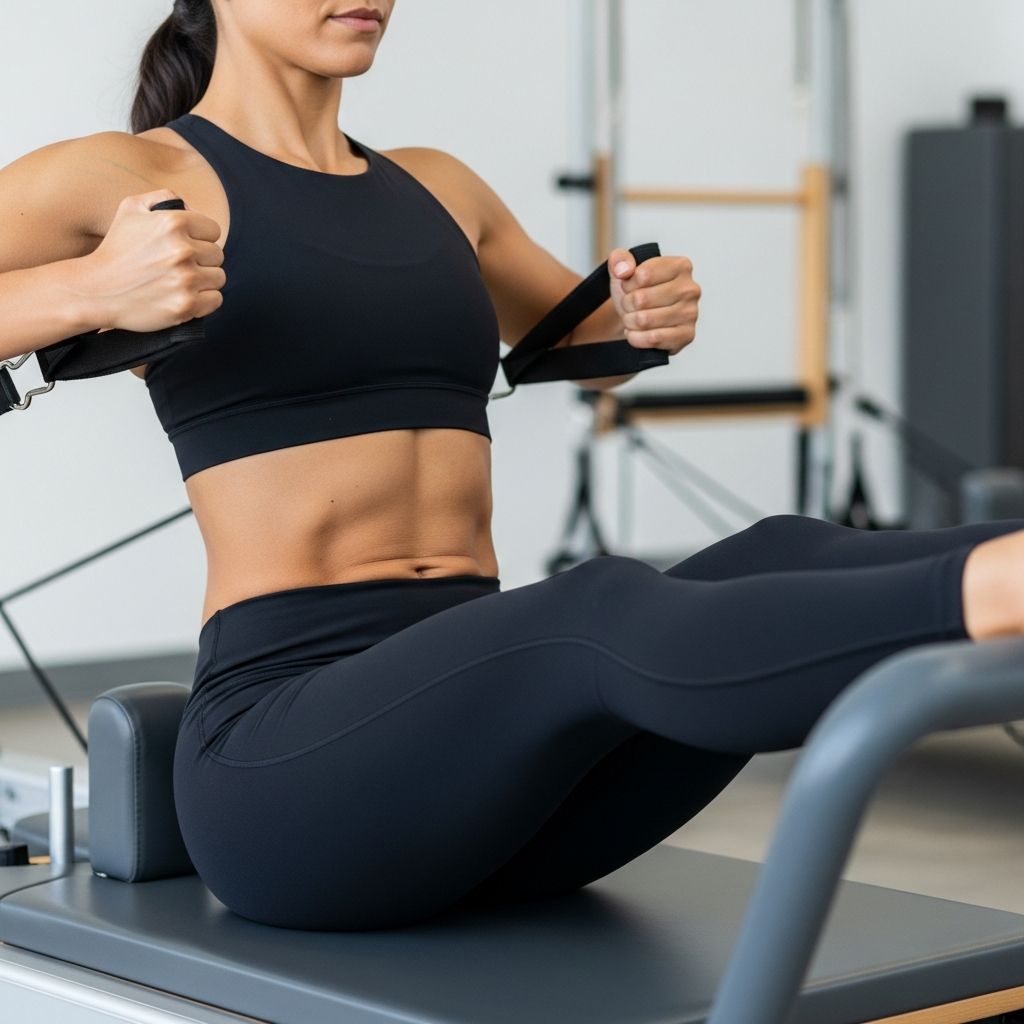
The pelvic floor muscles form a vital hammock-like structure supporting your bladder, bowel, uterus, and rectum. Weakness here can lead to urinary incontinence, prolapse, or discomfort, affecting millions, especially postpartum or postmenopausal women. Pilates excels at targeting these deep core muscles alongside the transverse abdominis, diaphragm, and multifidus for synergistic strength.
Unlike isolated Kegels, Pilates integrates breathwork, posture, and controlled movements to build functional pelvic floor resilience. Research shows Pilates matches or exceeds standard pelvic floor exercises in reducing urinary incontinence (UI) symptoms and boosting quality of life, with benefits from as little as one weekly session over 8-52 weeks.
What Is the Pelvic Floor—and Why Strengthen It?
Your
pelvic floor
comprises the levator ani and coccygeus muscles, innervated by the lumbosacral plexus. These muscles control continence, sexual function, and organ support while responding to intra-abdominal pressure changes from daily activities like coughing or lifting.Weak or dysfunctional pelvic floors contribute to
stress urinary incontinence (SUI)
—leaking during sneezes or jumps—and pelvic organ prolapse. Overly tight floors cause pain during sex or activities like cycling. Pilates restores balance by strengthening without excess pressure, as studies confirm Pilates exercises generate IAP comparable to simple sit-to-stands.- Common risk factors: Pregnancy, childbirth, menopause, obesity, chronic coughing, or heavy lifting.
- Benefits of strengthening: Reduced UI episodes, better posture, enhanced sexual health, and prolapse prevention.
A 12-week Pilates program significantly cut SUI symptoms in women aged 45-70, with sustained results at 6 months post-intervention, proving its feasibility and adherence in community settings.
How Pilates Benefits the Pelvic Floor
Pilates emphasizes the “center” or core—pelvic floor inferiorly, diaphragm superiorly, transverse abdominis anteriorly, and multifidus posteriorly—for holistic stability. Here’s how it transforms pelvic health:
- Core strengthening: Builds transversus abdominis and pelvic floor synergy, supporting organs and reducing leakage risks. Beginner moves like knee drops activate without fatigue.
- Muscle control: Trains contraction-relaxation cycles for precise engagement, vital for incontinence management. Practice on a fit ball heightens awareness.
- Posture and alignment: Corrects slouching that compresses the pelvis; axial elongation lifts pressure off the floor.
- Flexibility: Stretches tight areas, like cat stretches on equipment, while teaching relaxation for weak-yet-grippy floors.
- Breath integration: Exhale contracts pelvic floor and transversus; inhale lengthens, protecting lumbopelvic structures.
Modified Pilates added to physiotherapy yields superior outcomes, making it ideal for rehab.
Who Should Try These Pilates Moves?
These exercises suit beginners to advanced, but consult a doctor or pelvic health PT if you have active prolapse, severe UI, or post-surgery recovery. Postpartum women (6+ weeks cleared), menopausal individuals, or anyone with incontinence benefit most.
- Start slow: 1-2 sessions/week, progressing as control improves.
- Modifications: Use props like balls or walls for support.
- Track progress: Note leakage episodes or ease of muscle engagement.
10 Pilates Moves to Strengthen Your Pelvic Floor
Perform these in sequence, 2-3 times weekly. Focus on breath: Inhale to prepare, exhale to engage pelvic floor (imagine lifting a blueberry). Maintain neutral spine; stop if you bear down or leak. Aim for 8-12 reps unless noted.
Related Stories



1. Pelvic Floor Activation (Supine)
Lie on your back, knees bent, feet flat. Inhale deeply, then exhale while gently drawing pelvic floor up and in—like stopping urine flow and gas. Hold 5 seconds, relax fully. This isolates activation without strain.
2. Pelvic Clock (Supine)
From crook-lying, tilt pelvis like clock hands: 12 (posterior tilt), 6 (anterior), 3/9 (sides). Move slowly on exhale, stabilizing core. Enhances mobility and awareness.
3. Bridging
Feet hip-width, exhale to tilt pelvis, lift hips into bridge. Squeeze glutes and pelvic floor at top, lower with control. Builds posterior chain synergy.
4. Roll-Up
Lying supine, arms extended, exhale to curl head/shoulders up, reaching for toes in segmental flexion. Strengthens abs while engaging floor.
5. Leg Circles (Supine)
One foot flexed to ceiling, circle leg perpendicularly (clockwise/counter) on exhale, pelvis stable. Alternate legs; challenges stability.
6. Side Kick Kneeling
Kneel on one knee, top leg extended. Pulse forward/back at hip height on exhale. Mod: Side-lying. Targets obliques and floor.
7. Quadruped Limb Lift (4-Point Kneeling)
On hands/knees, extend opposite arm/leg, hold neutral spine. Alternate; advances to bird-dog. Demands trunk stabilization.
8. Roll Down Series (Seated)
Sit tall, exhale to roll down vertebra-by-vertebra, then up with pelvic floor lift. Improves spinal control.
9. Assisted Squat
Hold wall/door, feet wide, squat with co-contraction (core + floor). Rise exhaling. Functional for daily lifts.
10. Knee Drops/Floats (Supine)
Supine, knees bent/tabletop. Exhale to drop one knee side/center or float up/down, pelvis stable. Beginner core-pelvic integrator.
Pilates Equipment for Pelvic Floor Work
Mat Pilates requires no gear, but reformers, Cadillac, or Wunda Chair add resistance for progression. Cat stretches on these release tension safely. Start mat-based for accessibility.
Sample Weekly Routine
| Day | Focus | Moves | Duration |
|---|---|---|---|
| Mon | Activation | 1-3, 10 | 20 min |
| Wed | Stability | 4-7 | 25 min |
| Fri | Functional | 8-10, 3 | 20 min |
| Sun | Full flow | All | 30 min |
Rest or walk other days. Warm-up with breathwork.
Common Mistakes to Avoid
- Bearing down: Never push out; lift inward.
- Holding breath: Sync with exhale.
- Over-gripping: Relax fully between reps to avoid fatigue.
- Ignoring posture: Lengthen spine always.
When to See a Professional
If no improvement in 4-6 weeks, symptoms worsen, or pain occurs, seek a pelvic floor PT. They assess via biofeedback and tailor Pilates integration.
Frequently Asked Questions (FAQs)
Q: How often should I do these Pilates pelvic floor exercises?
A: 2-3 times weekly for 20-30 minutes yields results, per studies showing UI reductions with minimal sessions.
Q: Can men benefit from pelvic floor Pilates?
A: Yes, for prostate issues or incontinence; same principles apply.
Q: Is Pilates safe postpartum?
A: After 6-week clearance; start gentle to rebuild strength.
Q: How long until I see results?
A: 8-12 weeks for noticeable UI improvement, sustained with consistency.
Q: What’s the difference between Kegels and Pilates?
A: Kegels isolate; Pilates integrates with core/breath for functional gains.
References
- The Effect of Pilates on Pelvic Floor Muscle Strength in Women with Urinary Incontinence — Physiopedia. Accessed 2026. https://www.physio-pedia.com/The_effect_of_Pilates_on_pelvic_floor_muscle_strength_in_women_with_urinary_incontinence
- At Its Core: Pilates and Pelvic Floor Health — Pilates Journal. Accessed 2026. https://pilatesjournal.com/articles/at-its-core-pilates-and-pelvic-floor-health
- Effect of a 12-Week Pilates Pelvic Floor-Strengthening Program on Self-Reported Urinary Incontinence — PMC (PubMed Central, peer-reviewed). 2020-02-29. https://pmc.ncbi.nlm.nih.gov/articles/PMC7044776/
Similar Articles








Read full bio of Sneha Tete