Pilocarpine Eye Drops: A New Approach to Presbyopia
Discover how low-dose pilocarpine formulations are transforming presbyopia management with improved comfort and efficacy.

Presbyopia, the gradual loss of the eye’s ability to focus on near objects, represents one of the most universal experiences of aging. Beginning typically around age 40, this condition makes everyday tasks increasingly challenging—reading menus, reviewing documents, and viewing smartphone screens become progressively difficult without visual aids. For decades, reading glasses and bifocals have served as the standard solution, with surgical interventions available for those seeking more permanent alternatives. However, recent pharmaceutical innovations are fundamentally changing how eye care professionals approach presbyopia management, offering patients a new class of therapeutic options that bridge the gap between conventional correction and surgical intervention.
Understanding the Presbyopia Challenge
The biological mechanism underlying presbyopia involves the progressive hardening and loss of elasticity in the eye’s crystalline lens, combined with weakening of the ciliary muscles responsible for accommodation—the eye’s ability to change focus from distance to near objects. This age-related process is completely unavoidable, affecting virtually every human being as they advance through middle age. Unlike refractive errors such as myopia or hyperopia, which can be corrected through glasses or contact lenses alone, presbyopia requires a functional change in how the eye processes images at varying distances.
Traditional management strategies have relied on corrective lenses, whether in the form of reading glasses, bifocals, progressive lenses, or contact lenses with monovision correction. While these options remain effective and accessible, they present inherent limitations: the need to constantly switch between pairs of glasses, the cosmetic concerns some patients experience, and the ongoing expense of replacement and maintenance. Surgical approaches, including corneal reshaping procedures and intraocular lens implants, offer more permanent solutions but carry greater risks and expense, making them impractical for the newly presbyopic patient in their early forties.
The Evolution of Pharmacological Presbyopia Treatment
The pharmaceutical approach to presbyopia represents a relatively recent development in ophthalmology. Earlier attempts to address presbyopia through eye drops showed initial promise but encountered significant tolerability challenges. These earlier formulations produced substantial adverse effects that limited their practical application and patient acceptance. Headaches and brow ache were commonly reported, with many patients experiencing noticeable ocular surface discomfort that made consistent use difficult. The side effect profile of these predecessors essentially rendered them impractical despite their efficacy in improving near vision.
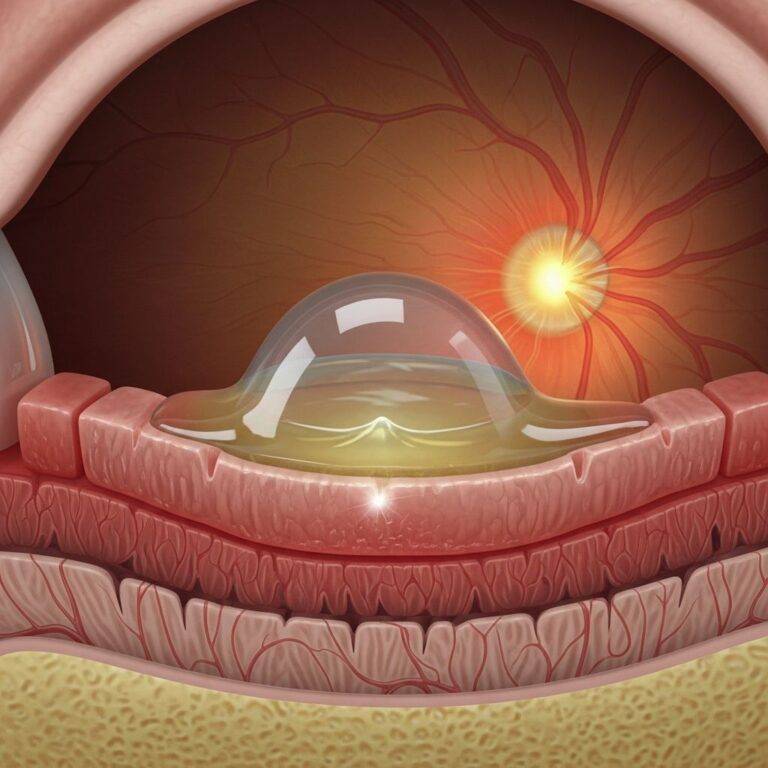
The mechanism behind these pharmacological treatments relies on the creation of a "pinhole effect." When the pupil constricts, the depth of field increases naturally, allowing light to focus more efficiently on the retina even when the lens cannot fully accommodate. By inducing controlled pupil constriction through miotic agents, eye drops can artificially recreate this optical advantage, effectively compensating for the presbyopic eye’s reduced accommodative ability. However, the challenge lay in achieving this optical benefit without triggering uncomfortable muscular spasms or inflammatory responses.
The Breakthrough: Low-Dose Pilocarpine Formulations
The introduction of preservative-free 0.4% pilocarpine (Qlosi, developed by Orasis Pharmaceuticals) represents a significant advancement in this therapeutic category. Rather than pursuing higher concentrations of pilocarpine, which intensified side effects without proportionally improving outcomes, researchers reformulated the medication at a lower concentration with proprietary manufacturing techniques designed to enhance bioavailability and patient comfort.
Clinical trial data demonstrates the effectiveness of this approach convincingly. In the phase 3 NEAR trials involving over 600 presbyopia patients, the 0.4% pilocarpine formulation achieved a significantly greater percentage of responders compared to vehicle control—40.1% versus 19.1% (P < .0001) when measured on day 8 at one hour post-dose. Beyond these primary endpoint measurements, exploratory analyses revealed that a considerable percentage of treated patients achieved three-line or better improvement in distance-corrected near visual acuity, representing clinically meaningful vision enhancement for everyday activities.
Related Stories



Superior Tolerability and Comfort Profile
What distinguishes the 0.4% pilocarpine formulation most markedly from its predecessors is the dramatically improved tolerability profile. The preservative-free formulation eliminates chemical irritants that accumulate in the ocular surface with repeated instillation. Clinical trial data showed remarkably few reports of headaches and brow ache—the primary limiting factors of earlier pilocarpine products—with overall tolerability described as excellent across trial populations. This improvement in comfort represents far more than a minor refinement; it fundamentally changes the practical applicability of the medication for long-term management.
The superior tolerability stems directly from the proprietary formulation approach. Rather than attempting to overcome the inherent irritation of pilocarpine by increasing concentration, which would intensify side effects, the pharmaceutical developers focused on creating a more refined delivery system that minimizes ocular surface contact with unnecessary additives. The removal of preservatives—chemicals traditionally included to prevent bacterial contamination in multi-dose bottles—eliminates a primary source of irritation that accumulates with each application.
Safety Considerations and Risk Assessment
Safety evaluation remains paramount when introducing any new therapeutic agent, particularly those affecting ocular function. Historical concerns about pilocarpine treatments centered on the theoretical risk of retinal detachment, a serious complication associated with topical miotic use, particularly at higher concentrations. Research had previously linked retinal detachment development to strong pupil constriction, especially among patients with anatomical risk factors such as high myopia or family history of retinal disease.
The clinical safety data for the 0.4% pilocarpine formulation addresses these concerns comprehensively. The phase 3 NEAR trials, which enrolled over 600 presbyopia patients, documented zero cases of retinal detachment. Following the medication’s commercial availability beginning in April 2025, ongoing surveillance has similarly revealed no reported cases of retinal detachment attributable to the treatment. Additionally, no serious adverse events have been reported to the FDA during this post-approval monitoring period. These safety findings support the concentration-dependent nature of pilocarpine’s effects—the lower dose achieves the optical benefits of pupil constriction while minimizing the muscular and vascular effects associated with higher concentrations.
A specialized clinical study conducted at Bascom Palmer Eye Institute provided detailed mechanistic insight into why the 0.4% formulation proves safer than higher-concentration alternatives. Using advanced anterior segment optical coherence tomography imaging, researchers directly visualized the effects of different pilocarpine concentrations on three key anatomical structures: ciliary muscle thickness, pupil diameter, and lens thickness. The findings proved particularly instructive: pilocarpine 0.4% significantly reduced pupil diameter compared to control (p < 0.05) but produced no significant changes in lens thickness or ciliary muscle movement. In stark contrast, pilocarpine 2%—a much higher concentration—resulted in statistically significant ciliary muscle changes at near vision that were not observed with the lower-dose formulation. This research demonstrates that the 0.4% concentration achieves its therapeutic effect through pupillary mechanisms while sparing the ciliary muscle from excessive stimulation, thereby reducing the neurological side effects and ocular complications associated with strong accommodation-related muscle contraction.
Clinical Application and Patient Selection
Optimal therapeutic outcomes depend significantly on appropriate patient selection and realistic expectation setting. Ophthalmologists recommend directing 0.4% pilocarpine treatment toward early presbyopes aged 40 to 60 years—patients experiencing the initial stages of accommodation loss who have not yet developed the advanced presbyopia that might warrant lens-based surgical interventions. For this population, the medication provides a valuable nonsurgical bridge, delaying the need for reading glasses or surgical procedures while maintaining normal ocular anatomy for potential future interventions.
Importantly, eye care professionals emphasize that pilocarpine effects improve progressively with continued use, distinguishing this medication from instantaneous pharmaceutical interventions. Patients require patient counseling regarding this temporal dimension: vision improvement does not peak on the first day of treatment but rather accumulates over the first week and continues to enhance with sustained use. This progressive improvement contrasts with the immediate action of corrective lenses, requiring patients to understand that presbyopia drops represent a therapeutic process rather than an instantaneous correction.
Because the medication specifically addresses near vision through pupil constriction, it does not significantly affect distance vision, making it suitable for bifocal or progressive correction patterns. Some patients may experience optimal benefit by using the drops as needed for near-vision tasks while relying on existing distance correction if necessary, providing flexible therapeutic scheduling.
Access and Professional Oversight
Recognition of potential risks, even when those risks appear minimal in clinical trials, necessitates appropriate safeguards regarding medication distribution and use. Access to 0.4% pilocarpine is restricted to eyecare professionals—ophthalmologists and optometrists—who can perform appropriate screening to identify patients at elevated retinal detachment risk. This professional-only access model ensures that patients receive comprehensive eye examination, documentation of baseline retinal status, and individualized risk stratification before treatment initiation. Patients with significant myopia, family histories of retinal detachment, previous retinal surgery, or anatomical factors increasing retinal detachment risk can be appropriately counseled regarding alternatives.
The Future of Presbyopia Management
The successful development and approval of 0.4% pilocarpine represents the beginning rather than the culmination of pharmaceutical presbyopia treatment. Multiple additional formulations are currently in clinical development or advancing through regulatory approval pathways. The FDA has approved aceclidine 1.44% (VIZZ), a novel miotic agent previously used for glaucoma treatment in Europe, which offers the potential for extended duration of action. Additional candidates in development include dual-agent formulations combining miotics with complementary agents designed to reduce muscular spasms or improve ocular surface comfort.
Emerging research also explores entirely different therapeutic mechanisms, including topical agents designed to chemically modify lens proteins through deglycation—removing advanced glycation end products that accumulate in the lens over decades and contribute to its progressive hardening. These approaches target the fundamental biological mechanisms of presbyopia rather than simply compensating for lost accommodation function.
Frequently Asked Questions
- How quickly do pilocarpine eye drops work?
- While some improvement may be observed within hours, maximal effect develops over the first week of use and continues to improve with ongoing treatment. Patients should not judge efficacy based on the first dose.
- Can pilocarpine drops eliminate the need for reading glasses?
- For many patients, the drops provide substantial improvement in near vision, though some may still benefit from glasses for extended reading or fine detail work, particularly in poor lighting conditions.
- Are pilocarpine drops safe for all presbyopic patients?
- While safety data is excellent, patients with certain risk factors for retinal detachment should discuss their individual circumstances with their eye care professional before starting treatment.
- How often should pilocarpine drops be used?
- Dosing schedules follow prescribing guidelines provided by manufacturers, typically involving daily application. Patients should follow their ophthalmologist’s specific recommendations.
- Can pilocarpine drops be used indefinitely?
- Current understanding supports safe long-term use, though ongoing monitoring remains important as the medication class matures and longer-term follow-up data accumulates.
Conclusion
Low-dose pilocarpine eye drops represent a meaningful advancement in presbyopia management, offering patients a pharmaceutical option that successfully bridges traditional corrective lenses and surgical interventions. By resolving the tolerability limitations that plagued earlier pilocarpine formulations while maintaining excellent safety profiles, the 0.4% concentration enables practical long-term use. For the growing population of middle-aged adults seeking alternatives to reading glasses, this new therapeutic category provides a valuable option worthy of discussion with their eye care professionals. As additional formulations progress through clinical development, presbyopia management will increasingly offer personalized choices tailored to individual patient preferences and clinical circumstances.
References
- Low-Dose Pilocarpine Brings New Promise for Presbyopia Management — Clinical Ophthalmology and Therapeutics Review. 2026. https://crstoday.com/articles/jan-2026/low-dose-pilocarpine-brings-new-promise-for-presbyopia-management
- New QLOSI Safety Data Supports Drop as Pupil Selective for Presbyopia — Eyes on Eyecare/Glance. 2026-01-23. https://glance.eyesoneyecare.com/stories/2026-01-23/new-qlosi-safety-data-supports-drop-as-pupil-selective-for-presbyopia/
- Efficacy and Safety of CSF-1 (0.4% Pilocarpine Hydrochloride) in Presbyopia: Pooled Results of the NEAR Phase 3 Randomized Clinical Trials — Clinical Therapeutics. 2024;46(2):104-113. https://pubmed.ncbi.nlm.nih.gov/41504521/
- Combination Low-Dose Pilocarpine/Diclofenac Sodium and Pilocarpine Alone for Presbyopia: Results of a Randomized Phase 2b Clinical Trial — Clinical Ophthalmology. 2024;18:3425-3439. https://pubmed.ncbi.nlm.nih.gov/41504521/
- The Emerging Era of Presbyopia-Correcting Eye Drops: What’s Next? — Ophthalmology Times. 2025. https://www.ophthalmologytimes.com/view/the-emerging-era-of-presbyopia-correcting-eye-drops-what-s-next-
Similar Articles








Read full bio of Sneha Tete