Pinguecula: Treatment, Complications, 4 Prevention Steps
Discover effective treatments for pinguecula and learn about potential complications to safeguard your eye health effectively.
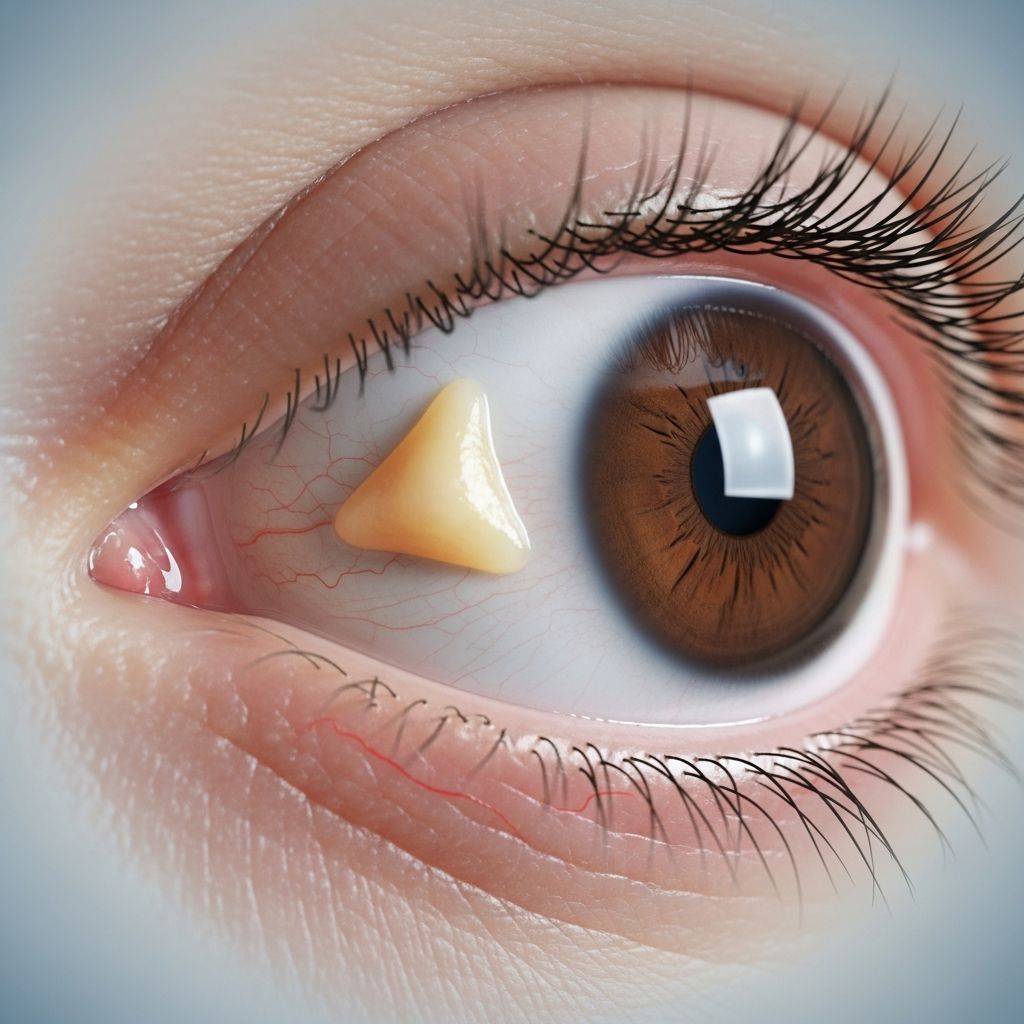
Pinguecula is a frequent benign growth on the conjunctiva, appearing as a yellowish patch near the cornea, often due to prolonged UV exposure, wind, and dust. While typically harmless, it can lead to discomfort and rare complications requiring targeted management.
Understanding Pinguecula Basics
This condition involves deposits of protein, fat, or calcium on the eye’s white surface, primarily affecting individuals over 40 who spend significant time outdoors. It forms on the nasal side more commonly because the cornea focuses UV light there, intensifying damage over time. Unlike more invasive pterygium, pinguecula stays on the conjunctiva without invading the cornea initially.
Recognition is key: a small, raised bump signals its presence, often unnoticed until irritation arises. Prevalence exceeds 47.9% in high-risk groups like outdoor workers in sunny regions. Early awareness prevents escalation.
Common Symptoms and Daily Impact
Symptoms vary from subtle to disruptive, including a gritty foreign body sensation, dryness, itching, redness, and burning. Inflamed cases, termed pingueculitis, amplify swelling and discomfort, mimicking allergies or dry eye syndrome.
- Irritation: Persistent ‘something in the eye’ feeling prompts rubbing, worsening the issue.
- Dryness: Disrupted tear film leads to burning and itchiness.
- Redness: Visible inflammation around the growth, especially post-exposure to irritants.
- Visual changes: Rare, but large growths may cause cosmetic concerns or mild blurring.
These effects impair quality of life, particularly for those in windy, dusty environments. Professional evaluation distinguishes it from similar conditions like conjunctivitis.
Primary Causes and Risk Factors
Environmental assaults drive pinguecula formation. Chronic UV radiation degenerates conjunctival tissue, while wind and dust exacerbate irritation. Age-related ocular surface changes heighten susceptibility post-40.
| Risk Factor | Description | Prevalence Impact |
|---|---|---|
| UV Exposure | Sunlight without protection; common in equatorial areas | High; primary trigger |
| Wind/Dust | Outdoor occupations like farming or construction | Increases by 2-3x in exposed groups |
| Age >40 | Tissue degeneration | Affects >40% in demographics |
| Dry Eyes/Contact Lenses | Chronic irritation | Moderate risk elevation |
Contact lens users face added risk from mechanical irritation and reduced tear stability.
Non-Surgical Treatment Approaches
Most cases respond to conservative measures. Lubricating drops alleviate dryness and irritation, restoring tear film. Artificial tears, used 4-6 times daily, provide immediate relief without side effects.
- Prescription Drops: Steroid or anti-inflammatory for pingueculitis; short-term use to curb swelling.
- Ointments: Nighttime application for severe dryness.
- Lid Hygiene: Warm compresses reduce associated blepharitis.
Over-the-counter options suffice for mild symptoms, but persistent issues warrant ophthalmologist input to avoid masking progression.
Surgical Interventions: When Necessary
Surgery is rare, reserved for cosmetic concerns, chronic inflammation unresponsive to drops, or rare vision threats. Procedures excise the growth under local anesthesia, with high success rates but potential recurrence.
Advanced techniques include conjunctival autografting to minimize regrowth. Post-op care involves drops and shields for 1-2 weeks. Complications like scarring are minimal in expert hands.
Potential Complications to Monitor
Though benign, pinguecula can inflame into pingueculitis, causing acute redness and pain treatable with drops. A graver risk is pterygium evolution, where tissue invades the cornea, distorting vision and necessitating surgery.
Related Stories



- Pingueculitis: Sudden swelling from irritants; resolves with meds.
- Pterygium Progression: 10-20% risk if untreated; surgical if corneal involvement.
- Dellen Formation: Thinning near growth from poor tear spreading.
- Cosmetic Issues: Enlarged bumps affect appearance.
Untreated complications heighten dry eye syndrome, impacting daily activities.
Prevention Strategies for Eye Protection
Proactive steps halt development and recurrence. UV-blocking wraparound sunglasses (100% UVA/UVB) are essential, alongside wide-brimmed hats.
- Apply preservative-free artificial tears before outdoor exposure.
- Avoid rubbing eyes; use hypoallergenic makeup.
- Schedule annual eye exams, especially post-40.
- Hydrate and use humidifiers in dry climates.
These habits reduce incidence by up to 50% in at-risk populations.
Diagnostic Process Explained
Diagnosis relies on slit-lamp biomicroscopy, revealing the characteristic yellowish nodule. No biopsy needed for typical cases; imaging rules out malignancy. Differentiate from pterygium via location and vascularity.
Living with Pinguecula: Long-Term Outlook
Prognosis excels with management; most stabilize without surgery. Monitor for growth or symptoms signaling complications. Lifestyle adjustments ensure minimal interference.
Frequently Asked Questions
What exactly causes a pinguecula?
Deposits from UV damage, wind, dust; age accelerates tissue changes.
Can pinguecula affect vision?
Rarely directly; progression to pterygium may distort cornea.
Is surgery always required?
No; drops manage 90%+ cases effectively.
How to differentiate pinguecula from pterygium?
Pinguecula: conjunctival bump; pterygium: corneal invasion with vessels.
Are there home remedies?
Lubricants and UV protection; consult doctor for inflammation.
This guide empowers informed decisions. Persistent symptoms demand professional care.
References
- Causes, Symptoms, and Treatment of a Pinguecula — Broberg Eye Care. 2023. https://brobergeyecare.com/pinguecula/
- Understanding Pinguecula Eye: Causes, Symptoms, and Treatments — Northwest Eye Clinic. 2025-09-02. https://nweyeclinic.com/understanding-pinguecula-eye-causes-symptoms-and-treatments/
- Understanding Pinguecula: Causes, Symptoms, Treatment — Assil Gaur Eye Institute. 2024. https://assileye.com/blog/pinguecula-causes-symptoms-treatment/
- Pinguecula — American Optometric Association. 2024. https://www.aoa.org/healthy-eyes/eye-and-vision-conditions/pinguecula
- Pinguecula – Symptoms, Causes, Diagnosis and Treatment — Medpark Hospital. 2024. https://www.medparkhospital.com/en-US/disease-and-treatment/pinguecula
- Pinguecula — StatPearls, NCBI Bookshelf. 2023-08-08. https://www.ncbi.nlm.nih.gov/books/NBK558965/
- Pinguecula: Symptoms, Causes, Treatment & Prevention — All About Vision. 2024. https://www.allaboutvision.com/conditions/pinguecula/
Similar Articles








Read full bio of medha deb