Pinworms (Threadworms): Symptoms, Treatment & Prevention
Complete guide to pinworm infections: causes, symptoms, treatment options, and prevention strategies for children and adults.
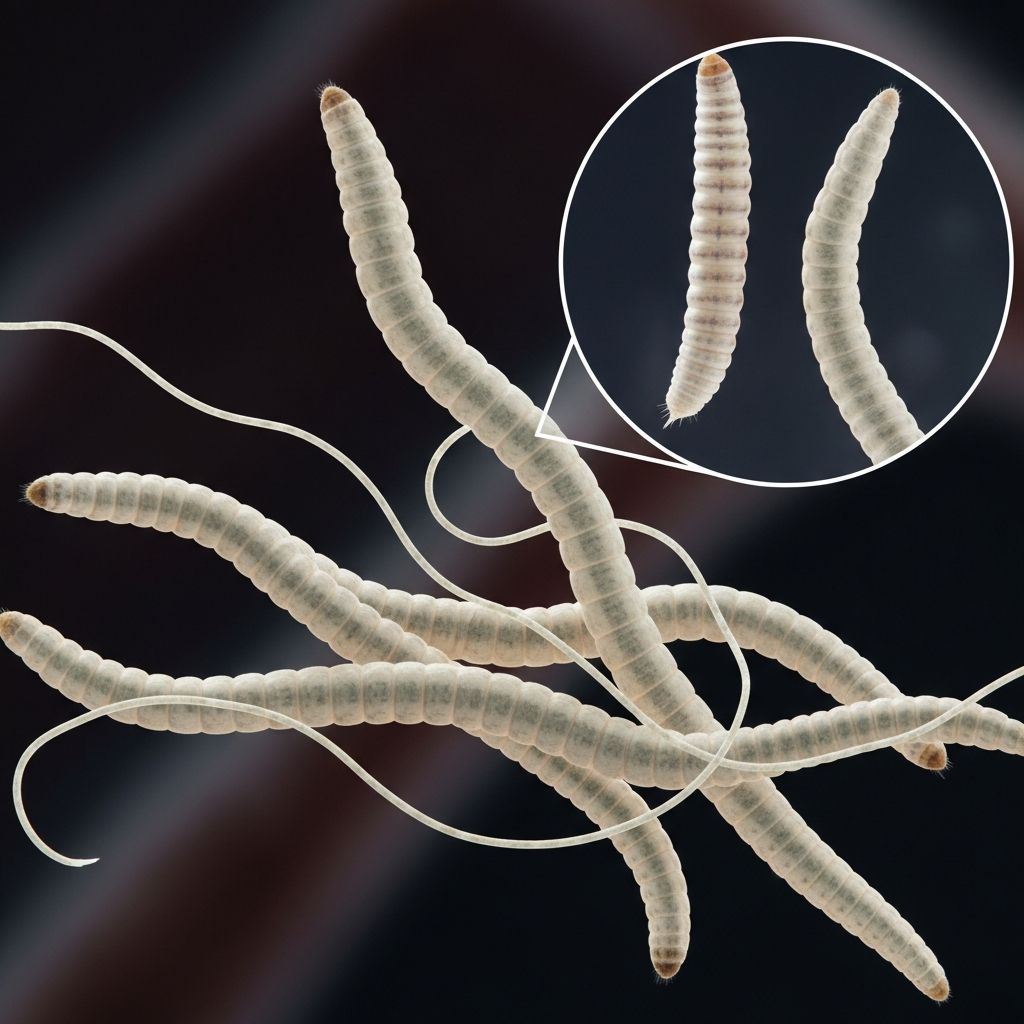
What Are Pinworms?
Pinworms, also known as threadworms, are tiny parasitic worms that measure approximately 8 to 13 millimeters in length. These microscopic organisms are white or light gray in color and cause a common infection called enterobiasis. The scientific name for the pinworm is Enterobius vermicularis. Pinworm infections represent the most common type of worm infection in the United States, affecting approximately 40 million people nationally and roughly 1 billion people worldwide. While the infection is highly contagious and occurs most frequently in children, it can affect individuals of any age, including adults.
A single female pinworm can produce over 10,000 eggs, and an infected individual may harbor anywhere from just a few worms to hundreds of them at any given time. Despite the alarming numbers, pinworms rarely cause serious medical complications and are relatively easy to treat with appropriate medication.
How Pinworm Transmission Occurs
Understanding how pinworms spread is crucial for prevention and breaking the cycle of reinfection. Pinworm transmission follows a well-established pattern that makes the infection highly contagious.
Primary Routes of Transmission
You can contract pinworms through several pathways. The most common method involves touching a contaminated surface or object and then placing your fingers near your mouth. Pinworm eggs can survive for two to three weeks on contaminated surfaces, making environmental transmission a significant concern. The eggs are incredibly small and microscopic, making it impossible to see them with the naked eye. This invisibility means you could unknowingly transfer eggs from a contaminated surface directly to your mouth.
Additionally, infected individuals can spread pinworms through direct contact. When an infected person fails to wash their hands properly after using the bathroom, contaminated hands can transfer eggs to other people, shared objects, or food. Inhalation of airborne eggs is also possible, though less common, as eggs can become suspended in dust particles throughout the home.
Autoinfection and Reinfection
One particularly challenging aspect of pinworm infection involves autoinfection, where an infected person reinfects themselves. This occurs when gravid females migrate to the anal region at night to deposit eggs, causing intense itching. Scratching this itchy area and then touching the mouth introduces eggs back into the digestive system. Additionally, retrograde infection can occur when larvae already hatched outside the body migrate back to the anus and cause renewed infection.
Pinworm Symptoms and Clinical Presentation
The symptoms of pinworm infection vary considerably among affected individuals. Interestingly, approximately 40% of infected people are asymptomatic or have minimal symptoms. When symptoms do occur, they typically present a distinctive clinical picture.
Primary Symptoms
The main symptom of pinworm infection is pronounced anal itching, medically referred to as anal pruritus. This itching typically occurs primarily at nighttime while the infected person sleeps. The intense itching results from female pinworms migrating to the anal region to deposit their eggs. Beyond the physical symptoms, pinworm infection is often characterized by significant psychological distress, particularly in children and adults who feel embarrassed about the condition.
Related Stories



Additional Symptoms
While anal itching dominates the symptom profile, other manifestations may occasionally occur. Some individuals experience sleep disturbances due to nighttime itching. In rare cases (affecting less than 1% of infected individuals), pinworms can involve other organs such as the vagina, urinary bladder, peritoneum, kidneys, liver, or even the eye. These extraintestinal complications are uncommon but demonstrate the worm’s potential to migrate beyond the intestinal tract.
If autoinfection does not occur, pinworm infection is self-limiting due to the brief lifespan of adult worms, which live up to 100 days before naturally dying.
Diagnosis Methods
Accurate diagnosis of pinworm infection requires specific diagnostic approaches, as traditional methods prove ineffective.
The Scotch Tape Test
The diagnostic method of choice is the perianal “Scotch tape specimen,” also known as the tape test. This simple procedure involves pressing clear tape against the skin around the anus in the morning before the first bowel movement and before washing the genital area. The tape is then examined under a microscope for the presence of pinworm eggs. Taking three consecutive samples analyzed microscopically provides a sensitivity of approximately 90%. This high accuracy rate makes the Scotch tape test the gold standard for pinworm diagnosis.
Why Other Tests Are Ineffective
Stool microscopy is not helpful for diagnosing pinworms since the worm eggs are primarily deposited outside the intestine in the perianal region. Serological methods have no diagnostic relevance for pinworm infections. Furthermore, blood eosinophilia and elevated immunoglobulin E levels are generally not expected due to the low invasiveness of the pinworms. These factors make the tape test the most reliable diagnostic tool available.
Treatment Options for Pinworm Infections
Fortunately, pinworm infections respond excellently to pharmaceutical treatment. Medications cure pinworms 90% to 100% of the time, and with proper treatment, pinworms disappear without causing long-term health problems.
Approved Antihelminthic Medications
Three main medications effectively treat pinworm infections:
- Mebendazole (brand names: Emverm, Vermox) — recommended as first-line treatment
- Albendazole (Albenza) — effective alternative medication
- Pyrantel pamoate (Reese’s Pinworm Medication) — available without prescription
All three medications have success rates exceeding 90%. Healthcare providers typically treat pinworm infections with oral anti-parasitic medications that can eliminate the worms in just two doses.
Treatment Protocol and Duration
Due to the high risk of recurrence, repeat administration of medication is recommended even in initial infections. The standard protocol involves doses at initial treatment, followed by repeat doses after 14 days and again after 28 days. For recurrent infections that persist despite standard treatment, prolonged treatment lasting up to 16 weeks using a “pulse scheme” is recommended.
Household Treatment Importance
A critical aspect of successful pinworm treatment involves treating all household members simultaneously. The involvement of all persons living in the patient’s household, including sexual partners, is a prerequisite to the lasting success of treatment. This comprehensive approach prevents reinfection cycles and ensures complete eradication of the parasite.
Managing Residual Itching
After treatment, your child may still experience itching for about one week. To relieve this lingering discomfort, you can apply hydrocortisone cream, take lukewarm baths, wear soft cotton underwear, and keep fingernails trimmed short to prevent scratch-related complications.
Why Home Remedies Don’t Work
Several home remedies have been promoted for treating pinworms, including garlic, Karlovy Vary healing salts, and colon irrigation (colonics). However, there is no scientific evidence that any of these methods effectively eliminate pinworms. Medicine remains the best and only proven way to completely eradicate pinworm infections.
Prevention Strategies
The most effective way to prevent pinworm infections or reinfections involves preventing eggs from reaching your mouth. Implementing comprehensive hygiene practices significantly reduces transmission risk.
Essential Prevention Practices
- Wash hands thoroughly with soap and water, especially after using the bathroom, before eating, and before food preparation
- Trim and keep fingernails short to prevent egg accumulation under nails
- Encourage children to avoid touching their face, mouth, or nose unnecessarily
- Wash contaminated clothing, bedding, and other items in hot water regularly
- Vacuum floors and dust surfaces frequently to remove eggs from the environment
- Bathe or shower daily, particularly upon waking, to remove eggs deposited during the night
- Change and wash underclothing and pajamas daily
- Teach children proper hygiene practices at home, school, and daycare settings
Frequently Asked Questions
Q: Are pinworms dangerous or life-threatening?
A: No, pinworms rarely cause serious medical problems. While they cause considerable discomfort and itching, and can create psychological distress, they don’t typically result in long-term health complications. With appropriate treatment, they resolve completely.
Q: How long do pinworms live?
A: Adult female pinworms live up to 100 days. Male worms die shortly after copulation. The infection is self-limiting if autoinfection does not occur, meaning it naturally resolves as worms reach the end of their lifespan.
Q: Can adults get pinworms?
A: Yes, while pinworm infections occur predominantly in children, adults can also contract them. Caregivers, parents, and other household members have significant risk of infection through contact with infected children.
Q: How long do pinworm eggs survive outside the body?
A: Pinworm eggs can survive for two to three weeks on contaminated surfaces, making environmental transmission a significant concern and requiring thorough cleaning and hygiene practices.
Q: Is one dose of medication enough to treat pinworms?
A: No, due to the high risk of recurrence and autoinfection, repeat doses are recommended. The standard protocol includes doses at initial treatment, 14 days later, and 28 days later to ensure complete eradication.
Q: Can I see pinworms in my stool?
A: While some people may observe worms in their stool, stool microscopy is not a reliable diagnostic tool for pinworms since eggs are primarily deposited in the perianal region rather than the intestinal lumen.
Q: What is the most effective diagnostic test for pinworms?
A: The perianal “Scotch tape specimen” is the diagnostic method of choice. This involves pressing clear tape against the anus in the morning before bowel movements, then examining the tape under a microscope. Three consecutive samples provide approximately 90% sensitivity.
When to Seek Medical Attention
If you suspect you or your child has a pinworm infection, particularly if experiencing persistent anal itching, nighttime discomfort, or sleep disturbances, contact a healthcare provider. Your doctor can perform the appropriate diagnostic tests and prescribe effective treatment. Additionally, seek medical attention if symptoms persist after completing the recommended treatment protocol, as this may indicate the need for extended or alternative therapy.
Conclusion
Pinworm infections, while common and sometimes distressing, are highly treatable and preventable. Understanding the transmission methods, recognizing symptoms, and implementing proper diagnostic and treatment approaches ensures successful resolution. With medication cure rates exceeding 90% and comprehensive household treatment, pinworms can be completely eliminated. The key to long-term success lies in treating all household members simultaneously and implementing consistent hygiene practices to prevent reinfection. By educating children about proper handwashing and good hygiene habits early, families can reduce the risk of future infections and teach valuable health lessons that benefit children throughout their lives.
References
- The Diagnosis and Treatment of Pinworm Infection — National Center for Biotechnology Information (NCBI), PubMed Central. 2019. https://www.ncbi.nlm.nih.gov/pmc/articles/PMC6522669/
- Pinworms (Threadworms): Symptoms, How You Get Them, and Treatments — Cleveland Clinic. Last reviewed 2024-07-12. https://my.clevelandclinic.org/health/diseases/21137-pinworms
- Pinworms: Infection, Symptoms, Treatment, Prevention — WebMD Medical Reference. https://www.webmd.com/a-to-z-guides/pinworms-infection
- Enterobius vermicularis (Pinworm) Infestation — Video Journal and Encyclopedia of GI Endoscopy. 2014-05-01. https://www.ncbi.nlm.nih.gov/pmc/articles/PMC3564407/
- Intestinal Parasites & Worms: Symptoms, Types, Treatment — Cleveland Clinic. https://my.clevelandclinic.org/health/diseases/intestinal-parasites
Similar Articles








Read full bio of Sneha Tete