Pistol Squats: Step-By-Step Guide To Master Single-Leg Strength
Master the challenging pistol squat with step-by-step progressions, benefits, form tips, and expert advice for building strength and mobility.
The
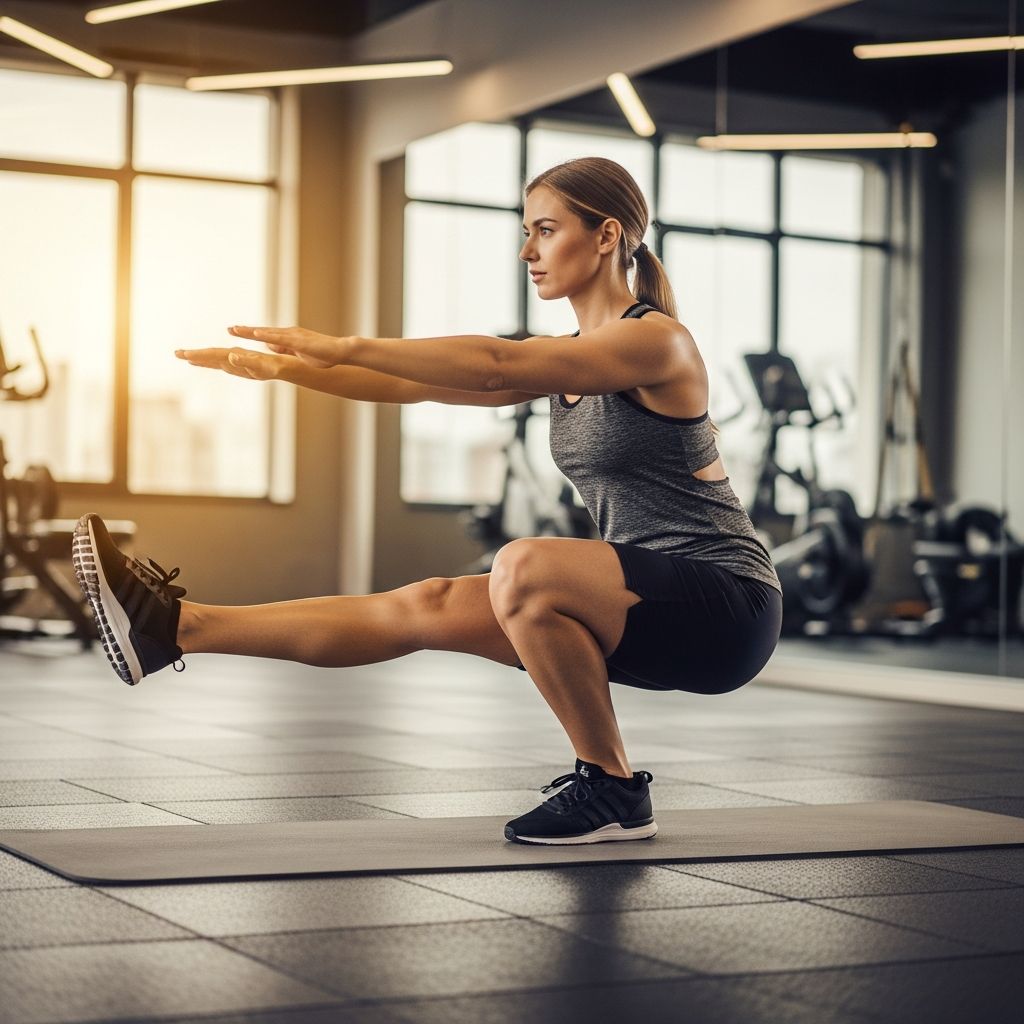
pistol squat
is an advanced bodyweight exercise that demands exceptional strength, balance, mobility, and coordination. Performed on one leg with the other extended forward, it challenges your entire lower body while engaging the core for stability. Unlike standard squats, pistol squats require you to lower until your hamstring touches your calf, then explode back up without assistance. This move builds unilateral strength, corrects imbalances, and enhances functional fitness for everyday activities and athletic performance.Fitness experts like Beau Whitman, a trainer and former gymnast, describe it as “the hardest squat to learn,” emphasizing the need for progressive training to master it. Whether you’re a beginner building foundational strength or an advanced athlete refining technique, understanding pistol squats unlocks profound lower-body power.
What Are Pistol Squats?
A
pistol squat
is a deep, single-leg squat where you hinge at the hips, bend one knee, and lower your body until the hamstring of the working leg rests against the calf. The non-working leg extends straight out in front, parallel to the ground, while arms reach forward for counterbalance. This position tests your ability to handle full bodyweight on one leg, making it far more demanding than bilateral squats.Pistol squats differ from other single-leg variations like lunges or Bulgarian split squats by requiring full depth and no rear-leg support. They promote symmetry by isolating each side independently, revealing and correcting weaknesses. Originating from bodyweight training and calisthenics communities, they’ve gained popularity in CrossFit, gymnastics, and functional fitness for their real-world applicability, such as improving stability for running or climbing.
Muscles Worked by Pistol Squats
Pistol squats target a comprehensive array of lower-body muscles, making them a compound exercise par excellence. Primarily, they engage the
quadriceps
for knee extension during the ascent,hamstrings
andglutes
for hip extension, andcalves
for ankle stability. Thecore
—including abs, obliques, and lower back—activates intensely to maintain balance and an upright torso.- Quads: Drive the upward push, handling the bulk of the load.
- Glutes and hamstrings: Power the hip hinge and prevent forward tilt.
- Calves: Stabilize the ankle in deep flexion.
- Gluteus medius/minimus: Unilateral nature strengthens hip abductors for pelvic stability.
- Core and stabilizers: Prevent rotation and ensure control throughout.
Physical therapist Dallas Reynolds from ATI Physical Therapy notes that pistol squats excel at targeting outside hip muscles for balance, crucial for activities like walking or running. This full engagement builds functional strength beyond aesthetics.
Benefits of Pistol Squats
Incorporating pistol squats yields multifaceted advantages for strength, mobility, and injury prevention. As a unilateral exercise, they
correct muscle imbalances
by forcing each leg to work independently, reducing compensation patterns that lead to injury, per the American Council on Exercise.- Enhanced balance and coordination: Single-leg stance hones proprioception and stability.
- Improved mobility: Demands ankle dorsiflexion, hip flexion, and hamstring flexibility.
- Functional strength: Mimics real-life movements, boosting power for sports and daily tasks.
- Core activation: Intense bracing builds anti-rotational strength.
- Ankle and hip health: Strengthens joints for better resilience.
Related Stories



Trainer Bianca Vesco highlights how they build lower-body symmetry and ankle mobility, essential for optimal movement and injury prevention. Regular practice also conditions legs for weighted squats by exposing kinetic chain weaknesses.
How to Do Pistol Squats: Step-by-Step Form Guide
Perfect form prevents injury and maximizes gains. Start with these cues from expert Beau Whitman:
- Stand tall, feet hip-width. Pick a base leg and shift weight onto it.
- Extend the opposite leg forward, foot off the floor. Arms out for balance.
- Squeeze abs and glutes. Push hips back, bend knee slowly.
- Lower as far as mobility allows, keeping chest up and leg extended.
- Hold briefly, then drive through the heel to stand, squeezing glutes at top.
Breathe in on descent, out on ascent. Aim for control—tempo of 3-5 seconds down, explosive up. Repeat 3-8 reps per side, 3 sets.
Pistol Squat Progressions: Build Up Safely
Most can’t perform full pistol squats immediately due to mobility and strength demands. Progress systematically.
Body Assessment and Warmups
Assess ankles, hips, and knees first. Warmups include:
- Ankle: Kneel and lean (3×15-30s/leg); leg hug rotations (2-3/dir).
- Hip: Pigeon stretch (2-3×15-30s/leg); frog stretch (same).
Progressions Table
| Progression | Description | Reps/Sets |
|---|---|---|
| 1. Air Squats | Master bilateral squats first. | 3×10-15 |
| 2. Cossack Squats | Lateral lunge to side stretch. | 3×8/side |
| 3. Single-Leg Deadlift | Hinge forward on one leg for balance. | 3×8/side |
| 4. Toe Squat | Squat on toes, heels elevated. | 6-8/leg |
| 5. Floater Squat | Partial depth with assisted rise. | 6-8/leg |
| 6. Assisted Pistol | 3×5-8/side | |
| Full Pistol | Unassisted deep squat. | 3×3-6/side |
Advance only when prior steps feel controlled.
Common Pistol Squat Mistakes (And Fixes)
- Knee caving: Actively push knee out over toes.
- Leaning forward: Keep chest up, hinge from hips.
- Insufficient depth: Improve mobility with stretches.
- Rushing: Slow eccentric phase for control.
- Ignoring weak side: Train both equally.
Safety Considerations and Modifications
Pistol squats stress knees and lower back, so consult a doctor if you have pain. Reynolds warns of joint strain for those with pre-existing issues. Beginners: Use assistance like a chair or counter. Scale depth gradually. Stop if form breaks.
Modifications include box-assisted pistols or partial range. Build double-leg strength first if single-leg is too hard.
Frequently Asked Questions (FAQs)
Why are pistol squats so hard?
They demand single-leg bodyweight support plus mobility, flexibility, balance, and coordination.
How long to master pistol squats?
Weeks to months with consistent progressions, depending on starting fitness.
Are pistol squats safe for knees?
Yes with proper form and progression; avoid if painful.
Can beginners do pistol squats?
Not full ones—start with assisted variations and build up.
How often to train pistol squats?
2-3x/week, with rest days for recovery.
References
- How to Do the Pistol Squat Using a Step-By-Step Progression — Men’s Health. 2024. https://www.menshealth.com/fitness/a65448661/guide-to-pistol-squats/
- Master The Pistol Squat: Benefits, Form, & Progression — One Peloton. 2023. https://www.onepeloton.com/blog/pistol-squat
- How To Do Pistol Squats: Single-Leg Squat How-To, From A Trainer — Women’s Health. 2024. https://www.womenshealthmag.com/fitness/a64034267/how-to-do-pistol-squats/
- Pistol squats can be teaching tool for the body — Review-Journal. 2014-03-30. https://www.reviewjournal.com/life/health/pistol-squats-can-be-teaching-tool-for-the-body/
- American Council on Exercise (ACE) Guidelines on Muscle Imbalances — ACE Fitness. 2023. https://www.acefitness.org/
Similar Articles








Read full bio of Sneha Tete