Pituitary Adenoma: Causes, Symptoms, and Treatment Options
Comprehensive guide to understanding pituitary adenomas, diagnosis, and evidence-based treatment approaches.
What Is a Pituitary Adenoma?
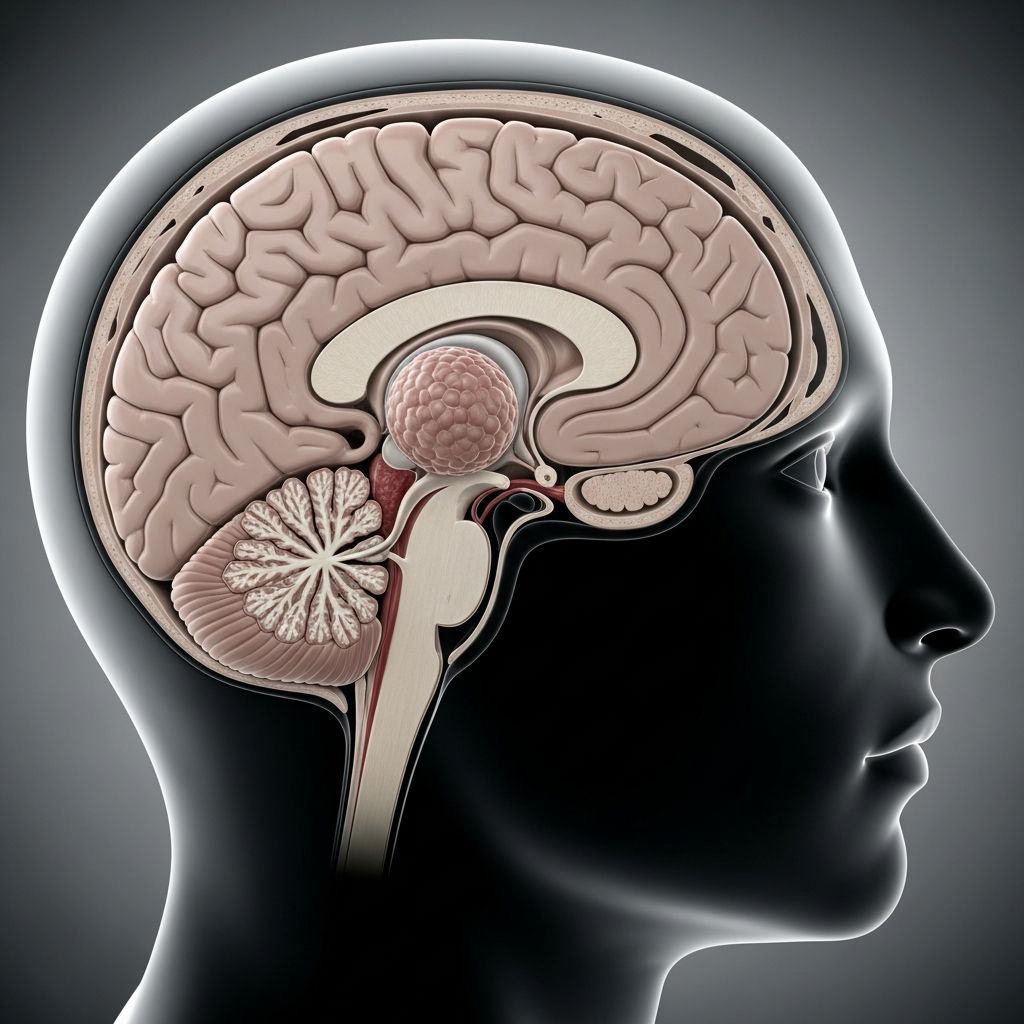
A pituitary adenoma is a benign (noncancerous) tumor that develops in the pituitary gland, a small endocrine gland located at the base of the brain. The pituitary gland produces hormones that regulate many vital bodily functions, including growth, metabolism, reproduction, and stress response. Pituitary adenomas are slow-growing tumors that can vary significantly in size and hormone-producing activity. While these tumors are benign, they can still cause serious health complications depending on their size and whether they secrete hormones.
Pituitary adenomas are classified into two main categories: functional adenomas, which produce excess hormones, and nonfunctional adenomas, which do not produce hormones. Understanding the type and characteristics of your pituitary adenoma is essential for determining the appropriate treatment approach and managing potential complications.
Understanding the Pituitary Gland
The pituitary gland is often called the “master gland” because it controls the production of hormones throughout the body. Located just below the brain in a bony cavity called the sella turcica, the pituitary gland is roughly the size of a pea. Despite its small size, this gland has an enormous impact on overall health and well-being.
The pituitary gland consists of two parts: the anterior pituitary and the posterior pituitary. The anterior pituitary produces hormones such as growth hormone, adrenocorticotropic hormone (ACTH), thyroid-stimulating hormone (TSH), and prolactin. The posterior pituitary stores and releases hormones produced by the hypothalamus, including antidiuretic hormone and oxytocin. When a tumor develops in the pituitary gland, it can interfere with normal hormone production and regulation.
Types of Pituitary Adenomas
Pituitary adenomas are classified based on their size and hormone-secreting activity. Understanding the different types helps healthcare providers develop appropriate treatment strategies.
Microadenomas and Macroadenomas
Pituitary adenomas are first classified by size. Microadenomas are smaller tumors, typically less than 10 millimeters in diameter, while macroadenomas are larger tumors exceeding 10 millimeters. Macroadenomas are more likely to cause mass effects due to pressure on surrounding structures, including the optic chiasm (the part of the brain where the optic nerves cross) and other brain tissues.
Functional Adenomas
Functional adenomas actively produce hormones, leading to hormonal imbalances. Common types include:
Prolactinomas
Prolactinomas are the most common type of pituitary adenoma, accounting for 32% to 66% of all cases. These tumors produce excessive prolactin, a hormone that stimulates milk production. In women, prolactinomas can cause amenorrhea (absence of menstruation), galactorrhea (inappropriate milk production), loss of libido, and infertility. In men, they typically present with loss of libido, erectile dysfunction, and infertility. Dopamine agonists such as cabergoline and bromocriptine are the first-line treatments and are effective in approximately 80% of patients, normalizing prolactin levels and often shrinking the tumor.
Growth Hormone-Secreting Adenomas
These tumors account for 8% to 16% of all pituitary adenomas and cause acromegaly, a condition characterized by abnormal enlargement of the hands, feet, nose, lips, and tongue. Diagnosis involves elevated insulin-like growth factor 1 (IGF-1) levels and elevated growth hormone levels. Initial treatment is typically surgical removal, followed by medical therapy if needed using somatostatin analogues, cabergoline, or pegvisomant.
ACTH-Secreting Adenomas
These adenomas produce excessive adrenocorticotropic hormone, leading to Cushing disease (hypercortisolism due to pituitary adenomas). ACTH-secreting adenomas account for approximately 65% of all cases of Cushing syndrome. Treatment typically involves surgical resection of the tumor, with medical therapies such as ketoconazole, mifepristone, and pasireotide used for patients not cured by surgery.
Related Stories



Thyroid-Stimulating Hormone-Secreting Adenomas
These rare tumors account for approximately 1% of all pituitary adenomas and cause central hyperthyroidism. Treatment involves surgery and somatostatin analogues if surgical removal does not completely cure the condition.
Nonfunctional Adenomas
Nonfunctional adenomas account for 15% to 54% of all pituitary adenomas and do not produce excess hormones. These tumors typically present with mass effects such as vision problems, headaches, and hormonal deficiencies resulting from compression of the normal pituitary tissue. Many nonfunctional adenomas are discovered incidentally during imaging for other reasons and may not require immediate treatment if they are small and asymptomatic.
Symptoms and Signs
The symptoms of pituitary adenomas vary depending on the tumor’s size and hormone-secreting activity. Some patients may have no symptoms and only discover their tumor during imaging for unrelated reasons.
Symptoms from Hormone Excess
Functional adenomas that produce excess hormones can cause various symptoms specific to the hormone involved. Women may experience menstrual irregularities, infertility, and galactorrhea, while men may experience erectile dysfunction and decreased libido. Patients with growth hormone-secreting tumors may notice progressive enlargement of their hands, feet, and facial features. Those with ACTH-secreting adenomas may develop characteristic features of Cushing syndrome, including central weight gain, purple stretch marks, and easy bruising.
Symptoms from Tumor Pressure (Mass Effects)
Large tumors (macroadenomas) can compress nearby brain structures and nerves, causing:
Vision Problems: Approximately 40% to 60% of people with macroadenomas experience impaired vision. The tumor compresses the optic chiasm, leading to visual field defects, particularly loss of peripheral (side) vision. Double vision and blurred vision are also common complaints.
Headaches: Pituitary adenomas frequently cause headaches, often resulting from pressure on nearby tissues or stretching of the dura mater (the membrane surrounding the brain).
Pituitary Hormone Deficiencies: Large tumors can damage normal pituitary tissue, leading to hypopituitarism (underactive pituitary gland). This causes deficiencies in one or more pituitary hormones, resulting in fatigue, weight changes, temperature intolerance, and sexual dysfunction.
Other Symptoms: Patients may also experience nausea, vomiting, confusion, facial pain, drooping eyelids, and seizures in severe cases.
Diagnosis
Diagnosing a pituitary adenoma typically involves a combination of clinical evaluation, blood tests, and imaging studies.
Blood Tests
Blood tests measure pituitary and related hormones to determine if the tumor is secreting excess hormones. For prolactinomas, prolactin levels are measured. For growth hormone-secreting tumors, IGF-1 and growth hormone levels are evaluated. For ACTH-secreting adenomas, cortisol levels are assessed. Additional tests may include thyroid function tests and other hormone measurements depending on clinical suspicion.
Imaging Studies
Magnetic resonance imaging (MRI) is the preferred imaging modality for detecting and characterizing pituitary adenomas. MRI provides excellent soft tissue detail and can accurately determine tumor size, extent, and relationship to surrounding structures. Computed tomography (CT) may be used in some cases, particularly to assess bony anatomy.
Visual Field Testing
For patients with large tumors that may compress the optic chiasm, formal visual field testing (perimetry) is performed to document any vision loss and baseline vision status before treatment.
Treatment Options
Treatment for pituitary adenomas depends on the tumor type, size, hormone-secreting activity, and symptoms. Early intervention provides the best chance for cure or control of the tumor and prevention of complications.
Observation
Many small, nonfunctional adenomas that are discovered incidentally do not require immediate treatment if they are asymptomatic and not growing. These tumors are monitored with periodic imaging scans (typically MRI) and clinical evaluation. If the tumor remains stable and causes no symptoms, observation may continue indefinitely.
Medical Therapy
Medical therapy is used to manage hormonal imbalances and, in some cases, shrink tumors. For prolactinomas, dopamine agonists such as cabergoline and bromocriptine are first-line treatments. With medical management, approximately 80% of patients have prolactin levels restored to normal and experience tumor shrinkage, improved vision, resolution of headaches, and restored fertility.
For other functional adenomas, medications may include somatostatin analogues for growth hormone and TSH-secreting tumors, and various agents such as ketoconazole, mifepristone, and pasireotide for ACTH-secreting tumors. Common side effects of dopamine agonists include headaches, nausea, vomiting, and dizziness.
Transsphenoidal Surgery
Transsphenoidal surgery is the surgical treatment of choice for most pituitary adenomas except prolactinomas. The surgeon approaches the pituitary gland through the nose and sinuses (transsphenoidal route) rather than through a craniotomy. This minimally invasive approach results in fewer side effects, quick patient recovery, and hospital stays as short as two to three days.
For prolactinomas, surgery is generally reserved for tumors that fail to respond to medical therapy or when medication cannot be tolerated. For other adenomas, surgery is typically the initial treatment, with medical therapy reserved for patients not cured by surgery.
Radiation Therapy
Radiation therapy may be considered for tumors that cannot be surgically removed due to their sensitive location in the skull base, or for tumors not adequately controlled by surgery and medical therapy. External beam radiation therapy (EBRT) may be used to target and shrink pituitary tumors. Possible side effects include headaches, vision changes, and potential long-term complications such as radiation-induced pituitary dysfunction and secondary malignancies.
Complications and Prognosis
The prognosis for pituitary adenomas depends on the tumor type and size. Complications can arise from the tumor itself or from treatment.
Hypopituitarism
Approximately 60% of patients with pituitary adenomas develop hypopituitarism (deficiency of one or more pituitary hormones) after treatment with surgery and/or radiation therapy. Hypopituitarism is treatable with hormone replacement therapy, which replaces deficient hormones such as thyroid hormone, cortisol, growth hormone, and gonadal hormones.
Pituitary Apoplexy
A rare but potentially serious complication is pituitary apoplexy, which occurs when there is sudden bleeding into the tumor. Symptoms include severe headache (often the worst headache of a person’s life), vision problems including double vision or vision loss, nausea, vomiting, and confusion. Pituitary apoplexy requires emergency treatment, typically including corticosteroid medications and often surgery to remove the tumor.
Surgical Complications
Complications from pituitary surgery may include cerebrospinal fluid leak, meningitis, bleeding, vision changes, and pituitary hormone deficiencies. However, with experienced surgeons and modern techniques, pituitary surgery is safer than ever before.
Frequently Asked Questions
Q: Are all pituitary adenomas cancerous?
A: No. Pituitary adenomas are benign (noncancerous) tumors. They are slow-growing and do not spread to other parts of the body. However, they can still cause serious health problems due to their size or hormone production.
Q: Can pituitary adenomas go away on their own?
A: Some small, nonfunctional adenomas may remain stable without treatment and are simply monitored with periodic imaging. Spontaneous resolution is rare, but some functional adenomas, particularly prolactinomas, may respond well to medical therapy and shrink significantly.
Q: What is the success rate of transsphenoidal surgery?
A: Success rates vary depending on tumor type and size. For microadenomas, success rates are generally high (80-90% for prolactinomas). Larger tumors may have lower remission rates. Your neurosurgeon can discuss specific success rates based on your tumor characteristics.
Q: Will I need lifelong hormone replacement therapy?
A: Some patients develop hypopituitarism after treatment and require hormone replacement therapy. However, not all patients require lifelong therapy. The need for and duration of hormone replacement therapy depend on individual circumstances and the extent of pituitary damage.
Q: Can pituitary adenomas recur after treatment?
A: Recurrence rates vary by tumor type. Prolactinomas have lower recurrence rates with medical management. Some other adenomas may recur, requiring monitoring with periodic imaging and clinical follow-up.
Q: What should I expect during recovery from transsphenoidal surgery?
A: Most patients recover quickly from transsphenoidal surgery and can leave the hospital within two to three days. Recovery typically involves nasal congestion and drainage for several weeks, gradual return to normal activities, and follow-up appointments to monitor healing and hormone levels.
References
- Diagnosis and Treatment of Pituitary Adenomas: A Review — PubMed/National Center for Biotechnology Information. 2016. https://pubmed.ncbi.nlm.nih.gov/28170483/
- Pituitary Gland and Pituitary Tumors — American Association of Neurological Surgeons (AANS). 2024. https://www.aans.org/patients/conditions-treatments/pituitary-gland-and-pituitary-tumors/
- Pituitary Adenomas: Definition, Symptoms & Treatment — Cleveland Clinic. 2024. https://my.clevelandclinic.org/health/diseases/15328-pituitary-adenomas
- Pituitary Adenomas: Symptoms, Causes, and Treatment — Tampa General Hospital. 2024. https://www.tgh.org/institutes-and-services/conditions/pituitary-adenomas
- Pituitary Adenomas: Types, Symptoms, and Treatment — Pacific Neuroscience Institute. 2024. https://www.pacificneuroscienceinstitute.org/pituitary-disorders/conditions/pituitary-adenomas/
- Pituitary Tumors — Symptoms and Causes — Mayo Clinic. 2024. https://www.mayoclinic.org/diseases-conditions/pituitary-tumors/symptoms-causes/syc-20350548
Similar Articles








Read full bio of Sneha Tete