The Pituitary Gland: Master Controller of Hormones
Understanding the pituitary gland: anatomy, hormones, and common disorders.
Understanding the Pituitary Gland
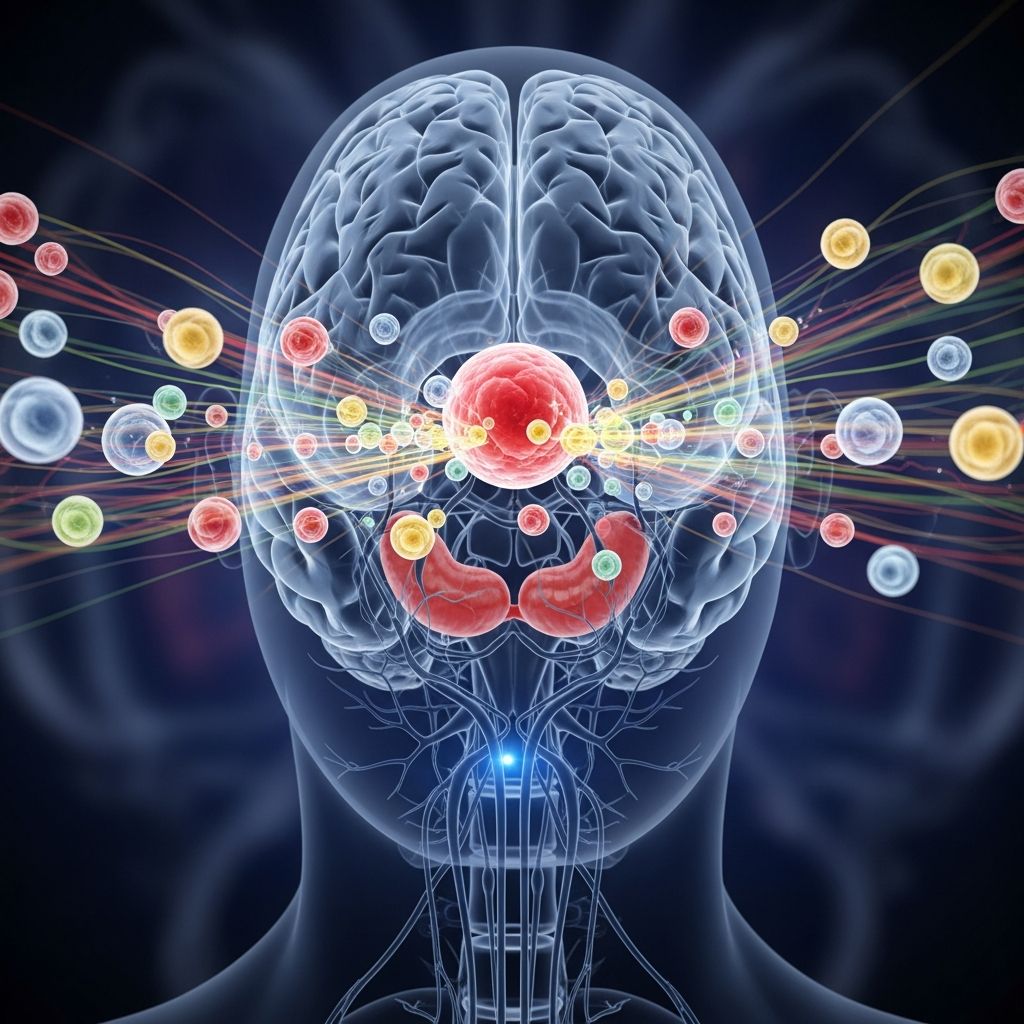
The pituitary gland is a small, pea-sized endocrine gland located at the base of the brain, often referred to as the “master gland” of the endocrine system. Despite its diminutive size—approximately 1 centimeter in diameter—this remarkable organ exerts profound influence over numerous bodily functions and processes. The pituitary gland is responsible for producing and secreting hormones that regulate growth, metabolism, reproduction, blood pressure, stress response, and many other vital physiological functions. Its importance to human health cannot be overstated, as hormonal imbalances affecting the pituitary can lead to significant health complications.
Anatomy and Structure of the Pituitary Gland
The pituitary gland is composed of two anatomically and functionally distinct regions: the anterior lobe (adenohypophysis) and the posterior lobe (neurohypophysis). Between these lobes lies a small region called the intermediate lobe, which is rudimentary in humans but more developed in other animal species.
Location and Physical Positioning
The pituitary gland is situated in a bony cavity called the sella turcica (or pituitary fossa) of the sphenoid bone at the base of the brain. This protective bony structure shields the gland from external trauma. Superiorly, the gland is covered by the diaphragma sellae, a circular layer of dura mater. The anatomical positioning of the pituitary places it in close proximity to several important structures: the optic chiasm lies anterosuperiorly, the sphenoid sinus is located anteroinferiorly, and the cavernous sinus is positioned laterally. This strategic location allows the pituitary to maintain essential connections with the hypothalamus through the pituitary stalk, also known as the infundibulum.
The Anterior Pituitary (Adenohypophysis)
The anterior pituitary comprises approximately 80 percent of the total pituitary gland weight and is the larger of the two main lobes. This lobe is composed of hormone-secreting epithelial cells and functions as a true endocrine gland, actively producing and secreting multiple hormones. The anterior pituitary is divided into two sections: the pars distalis (pars glandularis), which constitutes approximately 80 percent of the gland and contains most hormone-producing cells, and the pars tuberalis (pars infundibularis), which forms a tubular structure around the infundibulum.
The anterior pituitary is connected to the hypothalamus through an intricate vascular system called the hypophyseal portal system. This system consists of primary and secondary capillary plexuses connected by portal veins, providing a direct pathway for hypothalamic releasing hormones to reach and stimulate anterior pituitary hormone secretion.
The Posterior Pituitary (Neurohypophysis)
The posterior pituitary differs fundamentally from the anterior pituitary in both structure and function. Composed of unmyelinated secretory neurons, the posterior pituitary functions as an extension of the hypothalamus rather than as a true endocrine gland. Importantly, the posterior pituitary does not produce its own hormones; instead, it stores and releases two hormones (oxytocin and vasopressin) that are initially synthesized in the hypothalamus. These hormones travel through nerve axons via the hypothalamohypophyseal tract to be stored in the posterior pituitary, where they await signals for release based on the body’s physiological needs.
Connection with the Hypothalamus
Related Stories



The pituitary gland maintains a unique and critical connection with the hypothalamus, a region of the brain that controls many autonomic functions and hormonal processes. The two structures are connected by the pituitary stalk (infundibulum), which contains both blood vessels and nerve fibers. This dual connection establishes two distinct regulatory pathways:
The hypothalamus controls the anterior pituitary through the hypophyseal portal blood vessels, releasing specific hormones that stimulate or inhibit anterior pituitary hormone secretion. In contrast, the hypothalamus controls the posterior pituitary through nerve impulses transmitted along nerve axons. By the end of the first trimester of fetal development, the pituitary gland is completely formed and maintains these essential connections, allowing for the integration of signals from the brain and regulation of various endocrine functions.
Hormones Produced by the Anterior Pituitary
The anterior pituitary produces and secretes multiple hormones that regulate a wide range of physiological processes throughout the body. Each of these hormones targets specific tissues and organs, exerting precise control over bodily functions.
Growth Hormone (Somatotropin)
Growth hormone (GH), also known as somatotropin, is crucial for physical growth and development, particularly during childhood and adolescence. This hormone acts on nearly every cell type in the body, with principal targets being bones and skeletal muscles. Growth hormone promotes the lengthening of bones and increases muscle mass. Additionally, GH exerts direct metabolic effects on fats, proteins, and carbohydrates, facilitating the breakdown of adipose tissue and promoting protein synthesis. The hormone operates through complex signaling mechanisms involving growth hormone receptors, tyrosine kinases, and various intracellular signaling molecules.
Thyroid-Stimulating Hormone (TSH)
Thyroid-stimulating hormone (TSH) regulates the function of the thyroid gland, which produces hormones essential for metabolism, energy production, and heat generation. TSH stimulates the thyroid to produce and release thyroid hormones, which subsequently provide feedback to regulate TSH secretion. This feedback mechanism ensures appropriate thyroid function and metabolic rate.
Adrenocorticotropic Hormone (ACTH)
Adrenocorticotropic hormone (ACTH) stimulates the adrenal cortex to produce and release cortisol and other corticosteroid hormones. These hormones are essential for managing stress responses, maintaining blood pressure, and regulating metabolism. ACTH secretion follows a circadian rhythm, with levels typically higher in early morning hours.
Follicle-Stimulating Hormone (FSH) and Luteinizing Hormone (LH)
Follicle-stimulating hormone (FSH) and luteinizing hormone (LH) are gonadotropins that regulate reproductive function in both males and females. In females, FSH stimulates the development of ovarian follicles and estrogen production, while LH triggers ovulation and progesterone production. In males, FSH promotes sperm production, and LH stimulates testosterone production. These hormones bind to G protein-coupled receptors on target cells, activating signaling cascades that ultimately produce reproductive physiological responses.
Prolactin
Prolactin is essential for lactation and breast milk production following childbirth. Beyond reproductive function, prolactin influences immune system function and participates in various metabolic processes. Prolactin secretion is uniquely controlled by inhibitory factors from the hypothalamus rather than stimulatory factors.
Hormones of the Posterior Pituitary
The posterior pituitary releases two important hormones that are synthesized in the hypothalamus.
Antidiuretic Hormone (Vasopressin)
Antidiuretic hormone (ADH), also called vasopressin, regulates water balance and blood osmolarity by promoting water reabsorption in the kidneys. This hormone helps maintain adequate hydration and appropriate blood pressure. ADH secretion increases when blood osmolarity rises or blood volume decreases, signaling the kidneys to conserve water.
Oxytocin
Oxytocin plays critical roles in childbirth and lactation. During labor, oxytocin stimulates uterine contractions, facilitating delivery. Following childbirth, oxytocin triggers milk letdown during breastfeeding. Beyond reproductive functions, oxytocin influences social bonding, emotional regulation, and stress responses.
Physiological Functions and Regulation
The pituitary gland, through its various hormones, regulates numerous essential physiological processes. These hormones affect nearly every body system, including the endocrine system, cardiovascular system, digestive system, reproductive system, and immune system. The pituitary accomplishes this regulatory role through intricate feedback mechanisms involving the hypothalamus and target organs.
When target organs respond to pituitary hormones by increasing their own hormone production, these elevated hormone levels provide negative feedback to the pituitary and hypothalamus, reducing further pituitary hormone secretion. This negative feedback loop maintains hormonal homeostasis and prevents excessive hormone production.
Common Pituitary Disorders
Dysfunction of the pituitary gland can result in various medical conditions, characterized by either excessive hormone production (hypersecretion) or insufficient hormone production (hyposecretion).
Hyperpituitarism
Hyperpituitarism occurs when the pituitary produces excessive amounts of one or more hormones. Acromegaly results from excess growth hormone production in adults, causing abnormal enlargement of facial features, hands, and feet. Cushing’s syndrome develops from excessive ACTH production, leading to characteristic symptoms including central obesity, purple stretch marks, and mood disturbances. Hyperprolactinemia, characterized by elevated prolactin levels, can cause inappropriate lactation, infertility, and decreased libido.
Hypopituitarism
Hypopituitarism refers to insufficient production of one or more pituitary hormones. This condition can result from pituitary tumors, traumatic brain injury, radiation therapy, or inflammatory conditions. Growth hormone deficiency in children impairs growth and development, while in adults it causes decreased muscle mass and increased fat deposition. TSH deficiency leads to secondary hypothyroidism, characterized by fatigue and metabolic slowdown. ACTH deficiency causes adrenal insufficiency, potentially resulting in life-threatening complications during stress or illness.
Pituitary Adenomas
Pituitary adenomas are benign tumors of the pituitary gland that may or may not produce excessive hormones. These tumors can cause symptoms through mass effect, compressing nearby structures such as the optic nerves, or through hormone oversecretion. Treatment depends on tumor type, size, and symptomatology, ranging from observation to surgery and radiation therapy.
Diagnostic Evaluation
Healthcare providers evaluate pituitary function through several diagnostic methods. Blood tests measure hormone levels, revealing abnormalities in pituitary or target organ function. Imaging studies, including magnetic resonance imaging (MRI), provide detailed visualization of pituitary anatomy and detect structural abnormalities such as tumors. Dynamic hormone testing, which involves administering stimulating or suppressive agents followed by hormone level measurement, assesses pituitary functional capacity more precisely than static measurements alone.
Treatment Approaches
Treatment of pituitary disorders depends on the underlying cause and nature of hormonal dysfunction. Hormone replacement therapy addresses deficiencies, while medications targeting hormone oversecretion can normalize excessive hormone production. Surgical intervention may be necessary for symptomatic tumors, while radiation therapy serves as an adjunctive treatment for certain conditions. Regular monitoring through blood tests and imaging ensures appropriate treatment response and facilitates early detection of complications.
Frequently Asked Questions
Q: What is the pituitary gland’s primary function?
A: The pituitary gland’s primary function is to produce and secrete hormones that regulate numerous vital physiological processes, including growth, metabolism, reproduction, blood pressure, stress response, and lactation. It serves as the “master gland” coordinating endocrine system function.
Q: Why is the pituitary gland called the “master gland”?
A: The pituitary is called the “master gland” because it controls the secretion of other endocrine glands, including the thyroid, adrenal glands, and gonads, through its hormone production. It coordinates the entire endocrine system’s function.
Q: What is the difference between the anterior and posterior pituitary?
A: The anterior pituitary is a true endocrine gland that produces and secretes its own hormones in response to hypothalamic stimulation. The posterior pituitary, by contrast, is neural tissue that stores and releases hormones produced by the hypothalamus.
Q: How does the hypothalamus control the pituitary gland?
A: The hypothalamus controls the anterior pituitary through releasing hormones delivered via portal blood vessels, and controls the posterior pituitary through nerve impulses transmitted along nerve axons in the pituitary stalk.
Q: What symptoms might indicate a pituitary disorder?
A: Symptoms of pituitary disorders vary depending on which hormones are affected but may include growth abnormalities, fatigue, sexual dysfunction, headaches, vision problems, and metabolic disturbances. Any suspected pituitary disorder requires medical evaluation.
References
- Physiology, Pituitary Gland — National Center for Biotechnology Information (NCBI). 2024. https://www.ncbi.nlm.nih.gov/books/NBK459247/
- Overview of the Pituitary Gland — Merck Manuals. 2024. https://www.merckmanuals.com/home/hormonal-and-metabolic-disorders/pituitary-gland-disorders/overview-of-the-pituitary-gland
- Pituitary Gland: What It Is, Function & Anatomy — Cleveland Clinic. 2024. https://my.clevelandclinic.org/health/body/21459-pituitary-gland
- Pituitary gland: Anatomy and function of the hypophysis — Kenhub. 2024. https://www.kenhub.com/en/library/anatomy/pituitary-gland
- The Pituitary Gland – Structure – Vasculature — TeachMeAnatomy. 2024. https://teachmeanatomy.info/neuroanatomy/structures/pituitary-gland/
- Pituitary gland — Wikipedia. 2024. https://en.wikipedia.org/wiki/Pituitary_gland
Similar Articles








Read full bio of Sneha Tete