Pityriasis Alba Guide: Symptoms, Causes, Treatment, Prevention
Common childhood skin condition causing hypopigmented patches, often linked to eczema, typically self-resolving with simple management.
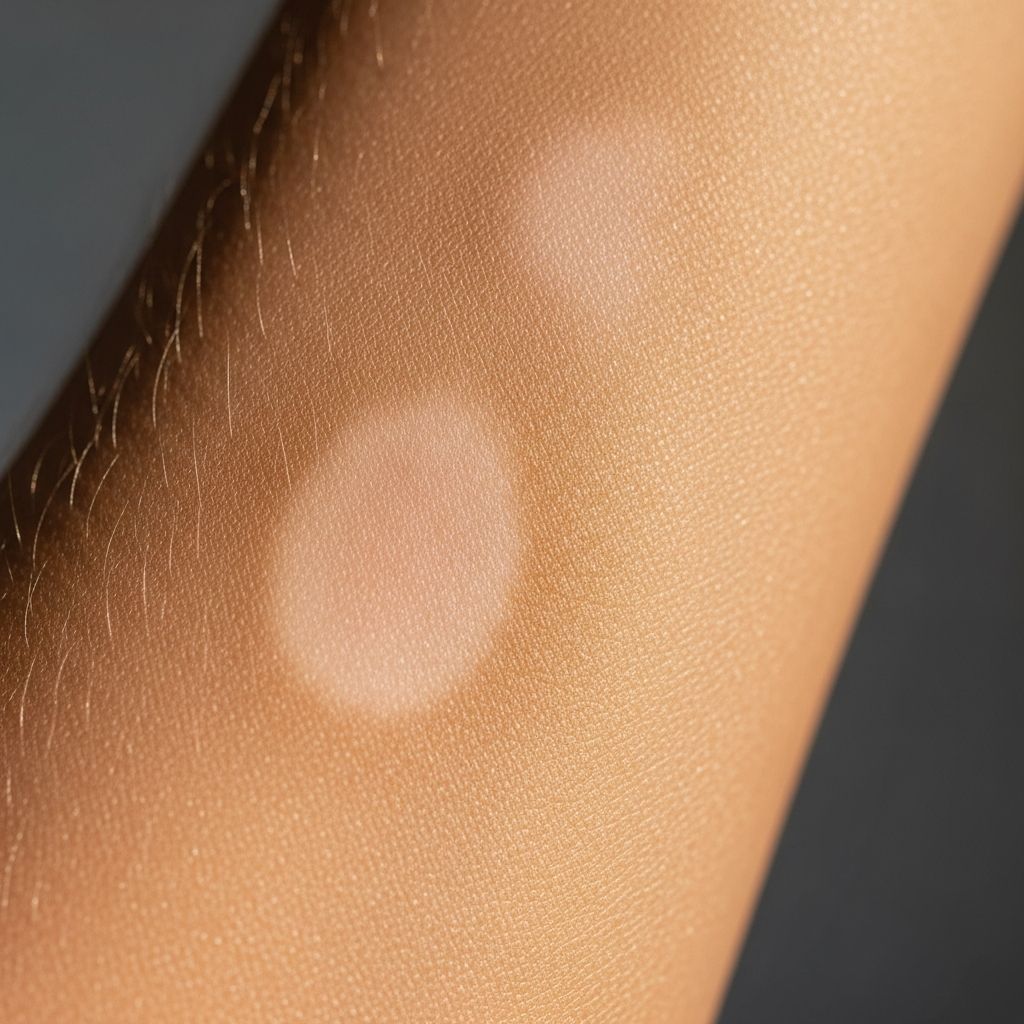
Pityriasis alba is a common, benign skin condition primarily affecting children and adolescents, characterized by round or oval patches of lighter skin (hypopigmentation) with fine scaling. It is considered a low-grade form of eczema and often resolves spontaneously within months to a year, though cosmetic concerns may prompt management.
What is pityriasis alba?
Pityriasis alba manifests as asymptomatic or mildly itchy, hypopigmented macules or patches, typically 0.5 62 cm in diameter but can enlarge up to 5 cm. The term ‘pityriasis’ refers to the fine, bran-like scales, while ‘alba’ denotes the pale color. Lesions evolve from subtle pink or red scaly patches to hypopigmented areas after inflammation subsides, becoming more noticeable with sun tanning.
This condition is self-limiting, with gradual repigmentation over several months to a few years, most cases resolving within one year. It predominantly affects the face (cheeks), but can involve the arms, neck, and trunk. Prevalence peaks in school-aged children (3 616 years), with no strong gender preference, though slightly more common in females.
Who gets pityriasis alba?
Pityriasis alba primarily impacts children and young adults, especially those with fair to medium skin tones where contrast is evident post-tanning. It is more prevalent in atopic individuals 6up to 50% have a history of atopic dermatitis, allergic rhinitis, or asthma. Family history of atopy increases risk. In darker skin types, patches may appear more pronounced due to pigmentation contrast.
- Children aged 3 616 years (peak incidence)
- Individuals with atopic background (eczema, hay fever, asthma)
- Slight female predominance
- More visible in summer due to sun exposure
What causes pityriasis alba?
The exact etiology remains unclear, but pityriasis alba is strongly associated with atopic dermatitis (eczema). It may represent post-inflammatory hypopigmentation from mild, subclinical eczematous changes disrupting normal melanocyte function and melanin production. Dry skin (xerosis), frequent face washing, and sun exposure exacerbate visibility. No infectious agent or genetic mutation is identified; it’s not contagious.
Proposed mechanisms include:
- Impaired barrier function in atopic skin leading to inflammation
- Temporary reduction in melanosome transfer
- Habits like excessive scrubbing reducing skin hydration
What are the clinical features of pityriasis alba?
Lesions begin as faint pink, slightly raised, scaly patches that may itch mildly. Scaling resolves, leaving hypopigmented, well-defined round/oval patches with collarette scaling (fine, peripheral scale). Number varies from few to dozens; size 1 63 cm typically. Face (cheeks, forehead) involved in 90% of cases, followed by upper arms.
Hypopigmentation accentuates in summer as surrounding skin tans. Rarely symptomatic beyond cosmetics; no scarring or atrophy.
| Stage | Features |
|---|---|
| Early | Pink/red, scaly, mildly itchy |
| Mature | Hypopigmented, fine scale, asymptomatic |
| Resolution | Gradual repigmentation over months |
Diagnosis
Diagnosis is clinical based on characteristic hypopigmented patches with history of atopy in children. Differential includes tinea versicolor (KOH positive), vitiligo (total depigmentation, no scale), nevus depigmentosus (stable from birth), post-inflammatory hypopigmentation, and psoriasis alba. Rarely, Wood lamp shows faint accentuation; KOH prep or biopsy (showing reduced melanin, spongiosis) if atypical.
Related Stories



Treatment of pityriasis alba
No curative treatment exists as it’s self-resolving; management focuses on reassurance, symptom relief, and camouflage. Key strategies:
- Emollients: Daily mild moisturizers (e.g., petroleum jelly, ceramide creams) reduce scaling and xerosis.
- Topical corticosteroids: Low-potency (hydrocortisone 1%) for itchy/inflamed lesions, short-term use on face.
- Non-steroidal topicals: Pimecrolimus 1% or tacrolimus 0.1% for inflammation without atrophy risk.
- Sun protection: Broad-spectrum SPF 50+ sunscreen to minimize contrast.
Severe/recalcitrant cases: Topical calcitriol, narrowband UVB, or excimer laser (rarely needed). Avoid irritants, harsh soaps.
What is the outcome for pityriasis alba?
Excellent prognosis; full repigmentation occurs spontaneously. Resolution time: 2 66 months typically, up to 1 63 years in persistent cases. Recurrences common in atopics, especially summer. No long-term sequelae.
How can pityriasis alba be prevented?
- Maintain skin hydration with frequent emollient application
- Use gentle cleansers; avoid hot water/excessive washing
- Daily broad-spectrum sunscreen on exposed areas
- Manage underlying atopy (e.g., eczema control)
- Humidify dry environments
Related topics
- Atopic dermatitis
- Postinflammatory hypopigmentation
- Tinea versicolor
- Vitilasis
- Xerosis
Frequently Asked Questions
Is pityriasis alba contagious?
No, it is not infectious or contagious; it’s a non-infectious dermatitis variant.
Does pityriasis alba go away?
Yes, it resolves completely without scarring, typically within 1 year.
Can adults get pityriasis alba?
Rarely; it’s mainly a pediatric condition, but young adults with atopy may develop it.
Is pityriasis alba the same as vitiligo?
No; vitiligo causes total white depigmentation without scale, is autoimmune, and doesn’t resolve spontaneously.
Can sun exposure worsen pityriasis alba?
Yes, tanning highlights patches; sunscreen is essential.
References
- Pityriasis Alba: Causes, Symptoms, and Treatments 6 Healthline. 2023-05-15. https://www.healthline.com/health/pityriasis-alba
- Pityriasis alba: Causes, symptoms, and treatment 6 Medical News Today. 2024-02-10. https://www.medicalnewstoday.com/articles/pityriasis-alba
- Pityriasis alba 6 MedlinePlus (U.S. National Library of Medicine). 2023-11-20. https://medlineplus.gov/ency/article/001463.htm
- Pityriasis Alba 6 StatPearls (NCBI Bookshelf). 2024-07-05. https://www.ncbi.nlm.nih.gov/books/NBK431061/
- Pityriasis Alba: Symptoms, Causes & Treatment 6 Cleveland Clinic. 2023-09-12. https://my.clevelandclinic.org/health/diseases/pityriasis-alba
- All about pityriasis alba: causes, symptoms and treatments 6 Dexeryl. 2023-01-01. https://www.dexeryl.com/en/your-skin/pityriasis-alba
- Pityriasis alba (dry white patches) 6 DermNet NZ. 2024-03-18. https://dermnetnz.org/topics/pityriasis-alba
Similar Articles








Read full bio of medha deb