Pityriasis Amiantacea: 5 Treatment Steps For Faster Recovery
Scalp condition with thick, asbestos-like scales bound to hair shafts, often linked to underlying inflammatory diseases.
What are the aims of this leaflet?
This leaflet has been written to help you understand more about pityriasis amiantacea. It tells you what it is, what causes it, what can be done about it, and where you can get more information and support.
References
- A Case of Pityriasis Amiantacea with Rapid Response to Treatment — Wisconsin Medical Journal. 2014-06. https://wmjonline.org/wp-content/uploads/2014/113/3/119.pdf
- Pityriasis amiantacea: a study of seven cases — PMC / An Bras Dermatol. 2016. https://pmc.ncbi.nlm.nih.gov/articles/PMC5087242/
- Pityriasis amiantacea — DermNet NZ. Recent update. https://dermnetnz.org/topics/pityriasis-amiantacea
What is pityriasis amiantacea?
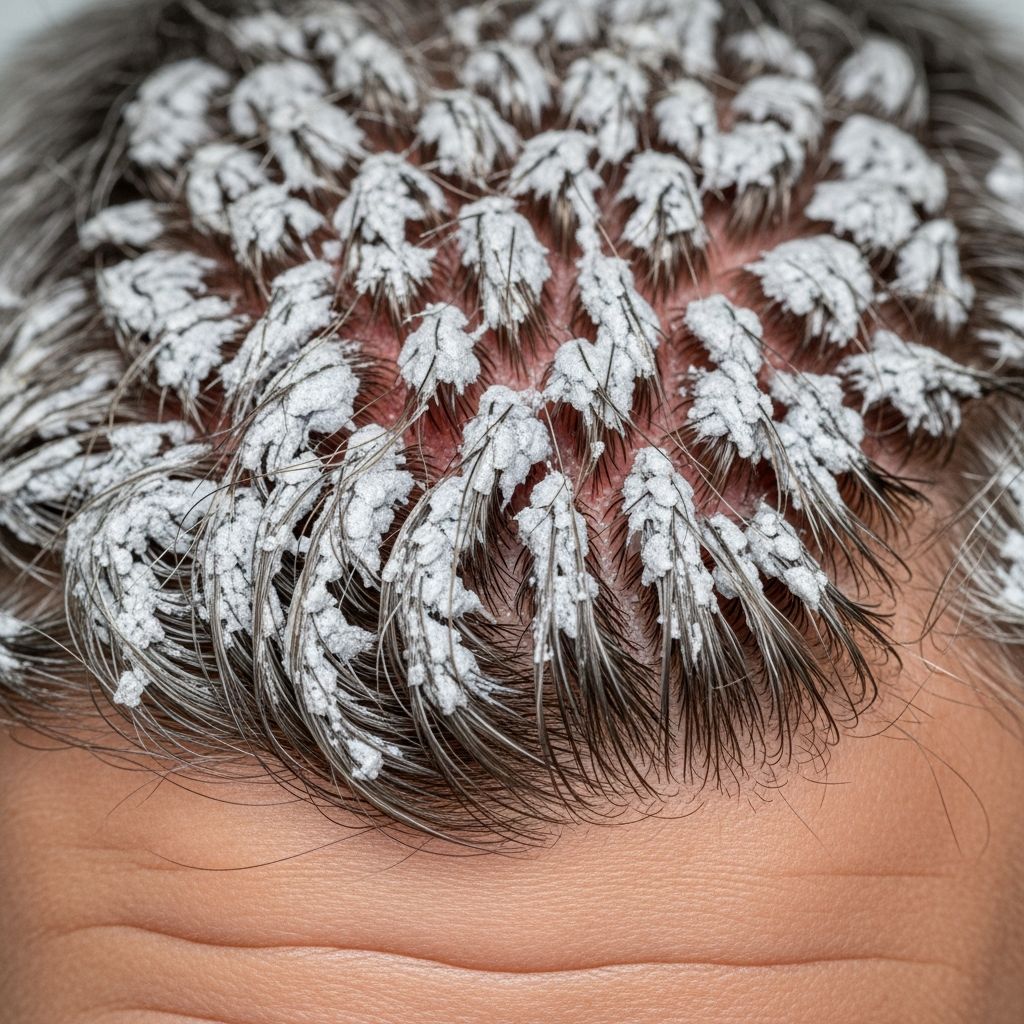
Pityriasis amiantacea is a striking visible reaction of the scalp characterised by thick scales bound tightly to the hair shafts, ‘asbestos-like’. The scales are firmly adherent silvery or dark-coloured crusts that coat the hair shafts and scalp in a thick, layer-like manner, resembling asbestos fibres. This condition is not a distinct disease but rather a secondary reaction pattern to various underlying inflammatory scalp disorders. It most commonly manifests on the scalp but can occasionally extend to other hair-bearing areas such as the beard or pubic regions.
The thick encrustations can envelop multiple hair shafts, leading to matting of the hair and potential temporary hair loss upon scale removal. Without prompt intervention, it risks progression to secondary bacterial infection, oozing, crusting, and even scarring alopecia. Clinical studies confirm its inflammatory nature, with histopathological findings mirroring underlying conditions like psoriasis or seborrheic dermatitis.
Who gets pityriasis amiantacea?
Pityriasis amiantacea affects individuals across all age groups, from children to adults, though it shows a predilection for young adults aged 25–50 years and a notable female predominance. In pediatric cohorts, it complicates seborrheic dermatitis in approximately 11% of cases, with females comprising up to 71% of affected patients and a mean onset age around 9 years. Adults, particularly females, report higher incidence, potentially linked to hormonal or genetic factors exacerbating scalp inflammation.
- Prevalence: Rare overall, but under-recognized due to its dramatic presentation.
- Demographics: More common in females; pediatric cases average 5.9–9 years.
- Risk factors: History of psoriasis, seborrheic dermatitis, eczema, or tinea capitis increases susceptibility.
No strong ethnic predisposition is noted, but chronic scalp conditions heighten risk. Early recognition prevents chronicity and alopecia.
What causes pityriasis amiantacea?
The precise aetiology remains multifactorial, with pityriasis amiantacea arising as a reactive scalp pattern to diverse inflammatory dermatoses rather than a primary entity. Common triggers include:
- Psoriasis: Scalp psoriasis frequently underlies, with hyperkeratotic plaques evolving into adherent scales.
- Seborrhoeic dermatitis: Most frequent association, especially in pediatrics; greasy scales progress to thick crusts.
- Tinea capitis: Fungal infections provoke reactive scaling; mycological tests confirm.
- Other: Atopic dermatitis, lichen simplex chronicus, lichen planopilaris, and contact dermatitis.
Secondary staphylococcal infection (impetiginisation) complicates many cases, with Staphylococcus aureus isolated in 81% of patients versus 3% in controls. Bacterial superinfection exacerbates inflammation, supporting combined antibiotic-anti-inflammatory regimens. Histopathology reveals non-specific spongiosis, parakeratosis, and acanthosis akin to psoriasis or dermatitis. Idiopathic cases occur without identifiable triggers.
What are the symptoms of pityriasis amiantacea?
Symptoms centre on scalp discomfort and visible changes:
- Erythema and scaling: Red, inflamed scalp under thick, silvery-yellow or dark adherent crusts coating hairs.
- Pruritus: Intense itching universal, leading to scratching and worsening.
- Matting and hair loss: Hairs encased in scales; removal causes temporary alopecia, rarely scarring (14% in pediatrics).
- Secondary infection: Oozing, sticky crusts, pustules if impetiginised.
- Odour: Foul smell from bacterial overgrowth.
Related Stories



Symptoms persist months to years without treatment, with flare-ups common in chronic diseases.
How is pityriasis amiantacea diagnosed?
Diagnosis is primarily clinical, based on characteristic ‘asbestos-like’ scales. Dermoscopy reveals thick plaques with bound hairs. To identify underlying causes:
| Test | Purpose |
|---|---|
| Wood lamp/mycology | Rule out tinea capitis |
| Bacterial swab | Detect S. aureus |
| Scalp biopsy (rare) | Confirm psoriasis/dermatitis if atypical |
| Full skin exam | Uncover psoriasis plaques elsewhere |
Negative fungal cultures guide against antifungals unless proven.
How is pityriasis amiantacea treated?
Treatment targets scale removal, inflammation control, and underlying disease, yielding rapid response (2–6 weeks) in most. Sequential approach:
- Keratolytics/Emollients: Mineral/olive oil under occlusion softens scales; salicylic acid shampoos (daily).
- Topical corticosteroids: Clobetasol solution BID or betamethasone 0.1% for potent anti-inflammation.
- Antifungals: Ketoconazole 2% shampoo for seborrheic dermatitis (6.4 months average).
- Antibiotics: Oral cephalexin (2 weeks) or topical if S. aureus confirmed.
- Adjuncts: Coal tar, topical calcipotriol for psoriasis.
Pediatric success with ketoconazole + oil; adults combine steroids/antibiotics. Chronic cases require maintenance to prevent recurrence.
What is the likely prognosis of pityriasis amiantacea?
Prognosis excels with early treatment: idiopathic cases clear fully without recurrence; fungal cures possible. Chronic triggers (psoriasis) cause persistence/flares, but control averts scarring alopecia. Temporary hair regrowth universal; scarring rare if prompt.
Frequently Asked Questions
Is pityriasis amiantacea contagious?
No, it is non-infectious unless secondary bacterial/fungal elements present, treated accordingly.
Does pityriasis amiantacea cause permanent hair loss?
Temporary in most; scarring rare (14%) with delayed treatment.
How long does treatment take?
2 weeks to 6 months; maintenance for chronic cases.
Can children get it?
Yes, often complicating seborrheic dermatitis; responds well to topicals.
Is it linked to psoriasis?
Frequently; full skin exam recommended.
Similar Articles








Read full bio of medha deb