Pityriasis Rosea: A Practical Guide To Diagnosis And Treatment
Common self-limiting rash often starting with a herald patch, resolving in 6-12 weeks with symptomatic relief.
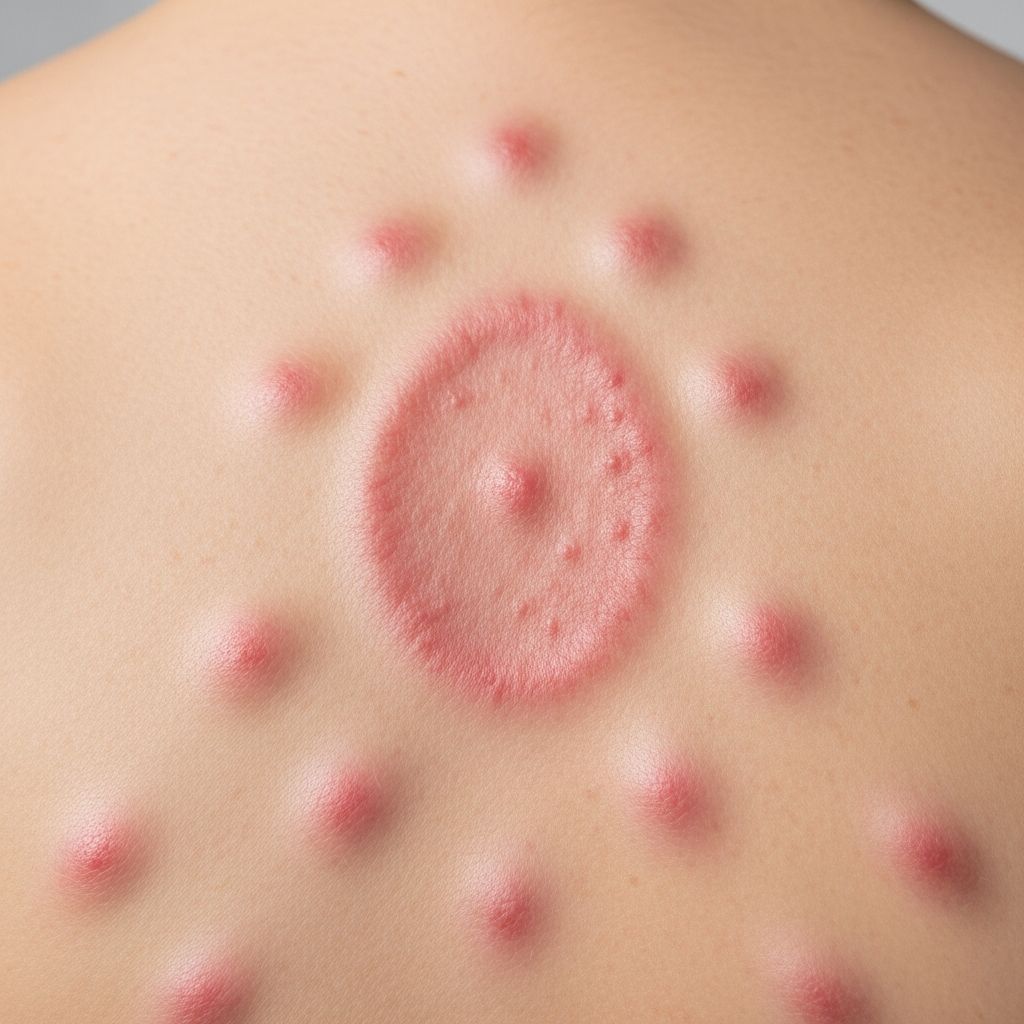
Pityriasis rosea is a common, acute, self-limiting skin rash characterized by distinctive oval scaly patches, typically affecting young adults. It often begins with a single large lesion called the herald patch, followed 1–2 weeks later by a widespread eruption of smaller similar lesions in a characteristic ‘Christmas tree’ pattern on the trunk. The condition usually resolves spontaneously within 6–12 weeks without scarring, though mild itching is common.
What is pityriasis rosea?
Pityriasis rosea, also known as pityriasis rosea Gibert, represents a cutaneous eruption of unknown aetiology. It manifests as an exanthem (widespread rash) that is typically asymptomatic but can cause pruritus (itching) in up to 75% of cases. The rash follows a predictable evolution: an initial herald patch appears, succeeded by secondary eruptions that align parallel to skin tension lines, creating the classic ‘fir tree’ distribution on the back. Incidence peaks in spring and autumn, with females affected more frequently than males in a 3:2 ratio. Most cases occur in individuals aged 10–35 years.
Who gets pityriasis rosea?
Pityriasis rosea predominantly affects adolescents and young adults, with peak incidence between 15 and 40 years. Children under 10 and adults over 50 are less commonly affected. There is no strong racial predilection, though it is reported worldwide. Outbreaks may occur in clusters, suggesting possible contagious spread within households or communities. Young women are at slightly higher risk, potentially due to hormonal or immune factors. Immunocompromised individuals may experience atypical or prolonged presentations.
- Age: Primarily 10–35 years
- Sex: Females > males (3:2)
- Season: Spring and autumn peaks
- Recurrence: Rare (<2%)
What causes pityriasis rosea?
The precise cause remains unknown, but strong evidence implicates human herpesviruses 6 and 7 (HHV-6 and HHV-7), which are reactivated in many patients. These viruses, responsible for roseola infantum in children, trigger the rash in previously infected individuals. PCR studies detect HHV-6/7 DNA in lesional skin and peripheral blood during active disease, supporting a viral aetiology. Other triggers include upper respiratory infections, vaccinations, medications (e.g., metronidazole, isotretinoin), and stressors. It is not directly contagious person-to-person, though close contacts may develop cases due to shared predispositions. No bacterial, fungal, or other definitive pathogens have been confirmed.
What are the clinical features of pityriasis rosea?
Prodrome
Up to 90% of patients experience mild ‘flu-like’ symptoms 1–2 weeks before the rash: fatigue, malaise, sore throat, headache, nausea, or low-grade fever. These resolve as the herald patch emerges.
Herald patch
The inaugural lesion is a solitary, oval, salmon-pink patch, 2–10 cm in diameter, with peripheral scale and central clearing (‘ring-like’). It appears on the trunk (abdomen > chest > back), neck, or proximal limbs. Collarette scale—fine, trailing edge— is pathognomonic. It persists 2–10 days before secondary lesions.
Secondary eruption
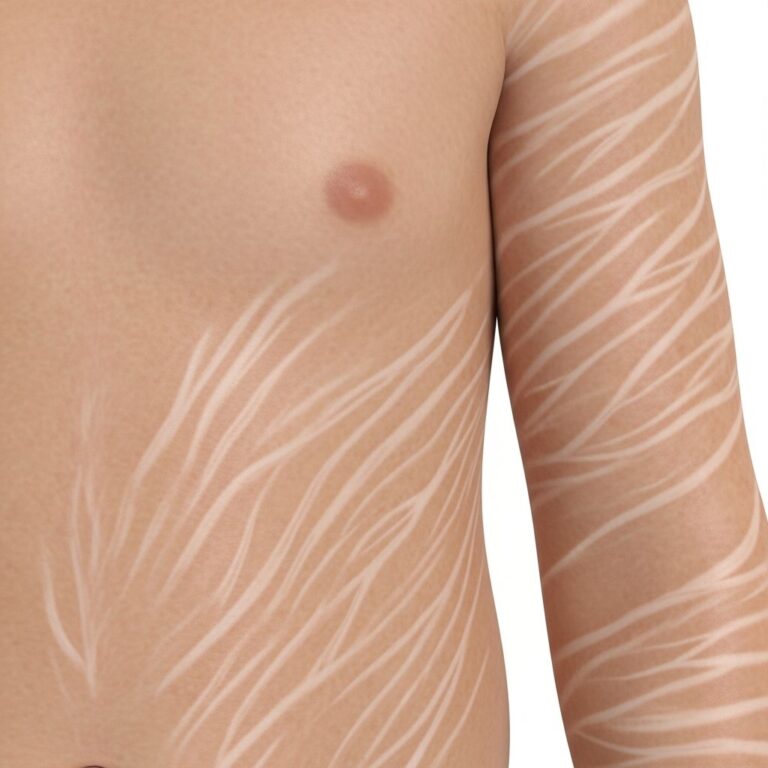
Smaller (0.5–2 cm) oval pink-red papules and plaques with collarette scale erupt 7–14 days after the herald patch. Lesions follow Langer skin tension lines, forming a symmetrical ‘Christmas tree’ or ‘fir tree’ pattern on the trunk. Sites: thorax (most common), abdomen, back, neck, proximal extremities. Spares face, palms, soles, scalp. Pruritus affects 50–75%; severe in 10–20%. Lesions evolve from pink to tan-brown over weeks.
Related Stories



- Duration: Herald patch: 2–10 days; secondary rash: 4–8 weeks (up to 12 weeks)
- Distribution: Trunk >> extremities; spares flexures, face, palms/soles
- Morphology: Oval pink patches > plaques with collarette scale
Inverse pityriasis rosea
Axillary, inguinal, popliteal, antecubital flexures; fewer, larger lesions.
Papular pityriasis rosea
Children: uniform small papules.
Vesicular pityriasis rosea
Infants: vesicles on erythematous base.
Diagnosis
Clinical diagnosis suffices in typical cases: herald patch + secondary ‘fir tree’ eruption in a young adult. Skin biopsy rarely needed but shows superficial perivascular lymphocytic infiltrate, focal spongiosis, parakeratosis, dyskeratotic keratinocytes. No viral inclusions typically. Dermoscopy: peripheral striated scale, dotted vessels. Differential: guttate psoriasis (micaceous scale, sternum), tinea corporis (annular, centrifugal), nummular eczema (vesicles), drug eruption, secondary syphilis (palms/soles), parvovirus B19.
| Condition | Distinguishing Features |
|---|---|
| Guttate psoriasis | Micaceous scale, Auspitz sign, sternal involvement, nail pits |
| Tinea corporis | Annular, advancing border, central clearing, KOH+ |
| Nummular eczema | Vesicles, oozing, coin-shaped on limbs |
| Secondary syphilis | Palms/soles, mucous patches, serology+ |
Investigations
- Usually unnecessary
- Serology: syphilis (VDRL/RPR), if atypical
- Swabs/culture: exclude tinea, bacteria
- Biopsy: if diagnosis uncertain
- HHV-6/7 PCR: research only
Treatment of pityriasis rosea
As a self-limited condition resolving in 6–12 weeks without sequelae, treatment targets symptoms only. Reassurance is key. No therapy alters duration reliably.
Symptomatic relief
- Emollients: Fragrance-free moisturizers (e.g., ceramide-based) multiple times daily
- Topical corticosteroids: Mild-potency (hydrocortisone 1%) for mild itch; moderate (mometasone) for severe, trunk/limbs only, 1–2 weeks max
- Oral antihistamines: Sedating (hydroxyzine, diphenhydramine) at night; non-sedating (loratadine) daytime for pruritus
- Baths: Colloidal oatmeal, lukewarm water; avoid soap
- Menthol/pramoxine: Cooling lotions
Specific therapies (severe/refractory)
- Phototherapy: Narrowband UVB (NB-UVB), 2–3x/week accelerates clearance (70–80% improvement in 2–4 weeks); risk of hyperpigmentation
- Antivirals: Acyclovir 400 mg 5x/day ×7 days reduces severity/duration in HHV-associated cases (evidence level B)
- Systemic steroids: Prednisone 0.5–1 mg/kg tapered over 2 weeks (rarely, severe cases)
Note: Macrolides (erythromycin, azithromycin) ineffective (prior studies disproven).
Complications
- Postinflammatory hyper/hypopigmentation (10–30%, darker skin types)
- Persistent itch (<3 months)
- Emotional distress
- Rare: asteatotic eczema, bacterial superinfection
Prevention
No proven prevention. Avoid triggers: stress management, sun protection (paradoxical worsening reported).
Patient advice
- Expect spontaneous resolution 6–12 weeks
- Cool showers, cotton clothing, trim nails
- Sunscreen SPF 30+ (phototherapy-like effect beneficial, but avoid burn)
- Non-contagious; may occur in contacts coincidentally
- Seek review if: pregnancy, >3 months duration, facial/genital involvement, fever
Frequently Asked Questions
Is pityriasis rosea contagious?
No, it is not contagious despite viral association. Clusters likely due to shared exposures.
Does pityriasis rosea leave scars?
No scarring; resolves completely. Hyper/hypopigmentation temporary.
Can pityriasis rosea recur?
Rare (<2%); if recurs, reconsider diagnosis.
Is pityriasis rosea dangerous in pregnancy?
Possible fetal risk (miscarriage, anomalies); urgent dermatology/obstetric review.
How long does pityriasis rosea last?
6–12 weeks total; herald patch first 1–2 weeks.
References
- Pityriasis Rosea: Causes and Treatment — Riva Dermatology. 2023. https://www.rivaderm.com/conditions/pityriasis-rosea
- Pityriasis Rosea: Diagnosis and Treatment — American Academy of Family Physicians (AAFP). 2018-01-01. https://www.aafp.org/pubs/afp/issues/2018/0101/p38.html
- Pityriasis rosea: Diagnosis and treatment — American Academy of Dermatology (AAD). 2024. https://www.aad.org/public/diseases/a-z/pityriasis-rosea-treatment
- Pityriasis rosea – Diagnosis & treatment — Mayo Clinic. 2024-10-15. https://www.mayoclinic.org/diseases-conditions/pityriasis-rosea/diagnosis-treatment/drc-20376410
- Pityriasis Rosea — St. Louis Children’s Hospital. 2024. https://www.stlouischildrens.org/conditions-treatments/pityriasis-rosea
- Pityriasis rosea — National Health Service (NHS). 2023-05-02. https://www.nhs.uk/conditions/pityriasis-rosea/
Similar Articles








Read full bio of medha deb