Placenta: Overview, Anatomy, Function & Complications
Complete guide to placenta: structure, functions, positions, and potential complications during pregnancy.
Understanding the Placenta: Your Baby’s Lifeline During Pregnancy
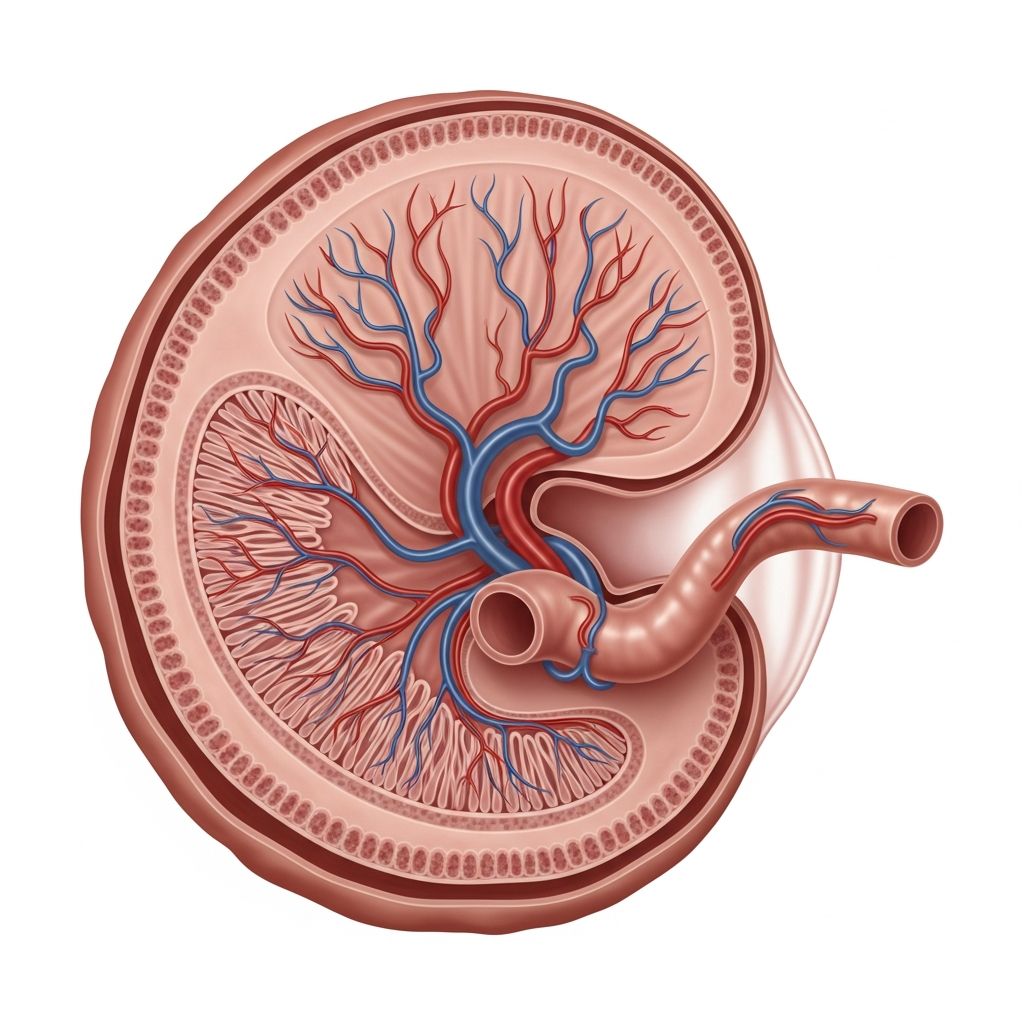
The placenta is a temporary yet remarkably vital organ that develops in your uterus during pregnancy. This specialized structure serves as the essential connection between you and your developing baby, facilitating a complex exchange of nutrients, oxygen, and waste products through the umbilical cord. Understanding the placenta’s structure and functions can help expectant parents appreciate the intricate biological processes that sustain a healthy pregnancy and support fetal development from conception through delivery.
The placenta begins to form shortly after conception when the fertilized egg implants into the uterine wall. Rather than being a static structure, the placenta is a dynamic organ that continuously adapts to meet the growing demands of your developing baby throughout pregnancy. By the time your baby is born, the placenta has grown to approximately 10 inches long, 1 inch thick at its center, and weighs around 16 ounces—roughly the equivalent of one pound.
What Is the Placenta?
The placenta is a unique organ composed primarily of specialized cells called trophoblasts. These cells play a crucial regulatory role in controlling the degree of uterine invasion and establishing the nutrient transport system necessary for fetal survival. The placenta functions as a biological bridge between two separate circulatory systems—yours and your baby’s—while keeping them distinct and separate to prevent direct mixing of blood.
The structure of the placenta contains primarily blood vessels housed within specialized finger-like projections called “villi.” These villi are particularly significant in the placenta’s architecture. The chorionic villi, which are tiny, finger-like structures extending from the placental surface, dramatically increase the surface area available for nutrient and oxygen exchange. This expanded surface area enables the placenta to efficiently transfer essential substances between your bloodstream and your baby’s bloodstream without the two circulatory systems ever making direct contact.
Key Functions of the Placenta
The placenta performs several critical functions that are essential for maintaining a healthy pregnancy and supporting proper fetal development:
Nutrient and Oxygen Delivery
One of the placenta’s primary responsibilities is delivering vital nutrients and oxygen from your body to your developing baby. Your blood passes through the placenta, providing glucose, oxygen, and essential nutrients to your baby through the umbilical cord. This continuous supply of oxygen and nutrients is absolutely necessary for your baby’s growth and development. The placenta essentially acts as your baby’s lungs, kidneys, and liver until birth, performing the functions these organs will eventually undertake after delivery.
Waste Removal and Filtration
While delivering beneficial substances, the placenta simultaneously filters out harmful waste products and carbon dioxide from your baby’s blood. This dual function—delivering what your baby needs while removing what it doesn’t—creates an elegant system of exchange that protects your baby while maintaining the health of both mother and child. Your body then processes and eliminates these waste products through your own respiratory and urinary systems.
Hormone Production
Beyond its role in nutrient exchange, the placenta functions as a major endocrine organ, synthesizing and secreting critical sex steroid and protein hormones. One particularly important hormone is human chorionic gonadotropin (hCG), which the placenta begins secreting approximately one week after conception. This hormone stimulates the production of progesterone, a steroid hormone essential for the survival and development of your baby. The detection of hCG in a mother’s urine forms the basis of most pregnancy tests.
Related Stories



As pregnancy progresses, the placenta takes over hormone production from the corpus luteum by the end of the first trimester (12 weeks of pregnancy). During this transition, many pregnant individuals experience relief from early pregnancy symptoms like nausea and fatigue as hormonal balance shifts. The placenta also significantly increases progesterone production to sustain the uterine lining and prevent premature labor. Additionally, it produces estrogen, which promotes the growth of the uterus and prepares breast tissue for breastfeeding.
Another critical hormone produced by the placenta is human placental lactogen (hPL), which plays an important role in regulating blood sugar levels and helps prepare the breasts for lactation. The placenta also produces relaxin, a hormone that softens ligaments and joints, particularly in the pelvis, allowing your body to adapt to the growing baby and ultimately facilitating easier delivery.
Immune Protection
The placenta provides significant immune protection by shielding your baby from many harmful substances while simultaneously transferring your antibodies to your developing baby. This transfer of maternal antibodies provides your newborn with early immunity to infections you are immune to, offering crucial protection during the vulnerable early weeks and months of life.
Stem Cell Housing
An often-overlooked function of the placenta is that it contains valuable stem cells that can be collected and banked after delivery for potential use in future regenerative therapies and medical treatments. These lifesaving stem cells represent an emerging frontier in personalized medicine and regenerative health.
Placental Structure and Development
Understanding the internal structure of the placenta provides insight into how this organ accomplishes its many functions. The placenta develops shortly after conception when the fertilized egg implants into your uterine wall. The blood vessels within the placenta connect directly with your baby’s bloodstream through the umbilical cord, creating a continuous pathway for exchange. The remaining placental tissues primarily serve to connect the villi to the umbilical cord and allow your blood to bathe the villi, continuously supplying your baby with oxygen and nutrients.
The placenta relies on its unique architecture to maintain separation between maternal and fetal circulatory systems while enabling efficient exchange. The chorionic villi penetrate into areas where maternal blood vessels are located, allowing maternal blood to flow around and bathe the villi directly. This arrangement creates an optimal environment for the transfer of oxygen, nutrients, and waste products while maintaining the integrity and safety of both circulatory systems.
Placental Position and Location
The placenta can develop in various locations within your uterus, as it develops wherever the fertilized egg implants into your uterine wall. Understanding where your placenta is positioned is important for monitoring your pregnancy and identifying potential complications.
Normal Placental Positions
In most pregnancies, the placenta attaches to the top, side, front, or back of the uterus. These positions are considered normal and typically don’t create complications during pregnancy or delivery. The placenta has the ability to move as your pregnancy progresses—it can move upward and away from your cervix as your baby grows, typically continuing this movement until approximately 32 weeks of pregnancy. This mobility is beneficial because it often resolves potential complications that may be present earlier in pregnancy.
Abnormal Placental Positions
Occasionally, the placenta may attach in the lower area of the uterus, which can lead to complications. When the placenta is positioned low in the uterus but doesn’t cover the cervix, it’s known as a low-lying placenta. In some cases, the placenta may partially or completely cover the cervical opening, resulting in a condition called placenta previa.
Placental Complications
Placenta Previa
Placenta previa is a condition in which the placenta is positioned low in the uterus and may partially or completely cover the cervix—the passage connecting the uterus to the vagina. This condition can cause severe bleeding in a pregnant person before or during delivery. When placenta previa is diagnosed, a cesarean section (C-section) delivery is often necessary to prevent dangerous hemorrhage and ensure the safety of both mother and baby. The severity of placenta previa can vary, ranging from a low-lying placenta that doesn’t cover the cervix to cases where the placenta completely blocks the cervical opening.
Other Placental Complications
While placenta previa is among the more commonly discussed complications, other conditions can affect placental function and require medical monitoring. These may include placental insufficiency, where the placenta doesn’t deliver adequate nutrients and oxygen to the fetus, and placental abruption, where the placenta partially or completely separates from the uterine wall before delivery. Any concerns about placental position or function should be discussed with your healthcare provider, who can provide appropriate monitoring and management strategies.
Placental Changes Throughout Pregnancy
The placenta is not a static organ but rather a dynamic structure that undergoes significant changes throughout pregnancy. In the first trimester, while the placenta is developing its basic structure and beginning hormone production, the corpus luteum—a temporary endocrine structure that develops from the ovarian follicle after ovulation—handles most hormone production. As the placenta matures and takes over hormone production around the end of the first trimester, many pregnant individuals notice changes in their pregnancy symptoms.
The placenta continues to grow and adapt throughout the second and third trimesters to meet your baby’s increasing nutritional demands. The villi continue to branch and expand, increasing the surface area available for exchange. By the time you reach late pregnancy, the placenta has become a highly efficient organ capable of supporting the rapid growth and development of your nearly full-term baby.
The Placenta as Your Baby’s Life Support System
The placenta truly deserves recognition as your baby’s lifeline during pregnancy. Working continuously throughout your pregnancy, the placenta delivers nutrients and oxygen, removes waste products, produces critical hormones, and provides immune protection. Its intricate design and location ensure the health and growth of your developing baby while simultaneously supporting your overall pregnancy health and well-being.
By understanding these key roles and functions, expectant parents can better appreciate the remarkable biological processes taking place during pregnancy. This knowledge not only enhances understanding of normal pregnancy but also helps parents recognize the importance of prenatal care and monitoring. Additionally, understanding the placenta’s value influences important decisions parents may face about the placenta’s future after delivery, such as whether to preserve its valuable stem cells for potential future medical use.
Frequently Asked Questions
Q: When does the placenta form during pregnancy?
A: The placenta begins to form shortly after conception when the fertilized egg implants into your uterine wall. It develops and matures throughout pregnancy to support your baby’s needs.
Q: Can the placenta move during pregnancy?
A: Yes, the placenta can move as pregnancy progresses. It typically moves upward and away from your cervix as your baby grows, usually continuing this movement until approximately 32 weeks of pregnancy.
Q: What is the umbilical cord’s role in relation to the placenta?
A: The umbilical cord connects your baby to the placenta and serves as the pathway through which nutrients, oxygen, and waste products are exchanged between your body and your baby.
Q: How much does the placenta weigh at birth?
A: By the time your baby is born, the placenta typically weighs around 16 ounces (approximately 1 pound) and measures about 10 inches long and 1 inch thick at its center.
Q: What happens to the placenta after delivery?
A: After your baby is delivered, the placenta is expelled from your uterus in a process called the third stage of labor. Some parents choose to preserve placental stem cells for potential future medical use.
Q: How does the placenta prevent maternal and fetal blood from mixing?
A: The placenta is composed of specialized structures and cellular layers that allow nutrient and oxygen exchange while maintaining a barrier that keeps maternal and fetal blood separate and prevents them from directly mixing.
References
- Placenta | Research Starters – EBSCO — EBSCO Information Services. Accessed December 2025. https://www.ebsco.com/research-starters/anatomy-and-physiology/placenta
- The Lifeline Organ: 5 Surprising Facts About the Placenta’s Job During Pregnancy — Americord Blood. Accessed December 2025. https://www.americordlood.com/articles/5-surprising-facts-about-the-placentas-job-during-pregnancy
- Placenta: Overview, Anatomy, Function & Complications — Cleveland Clinic. Accessed December 2025. https://my.clevelandclinic.org/health/body/22337-placenta
- Placenta: How it works, what’s normal — Mayo Clinic. Accessed December 2025. https://www.mayoclinic.org/healthy-lifestyle/pregnancy-week-by-week/in-depth/placenta/art-20044425
- Placenta | Human & Animal Development — Britannica. Accessed December 2025. https://www.britannica.com/science/placenta-human-and-animal
Similar Articles








Read full bio of Sneha Tete