Plantar Fasciitis: Causes, Symptoms, and Treatment Options
Complete guide to understanding plantar fasciitis, its symptoms, causes, and effective treatment strategies.
What Is Plantar Fasciitis?
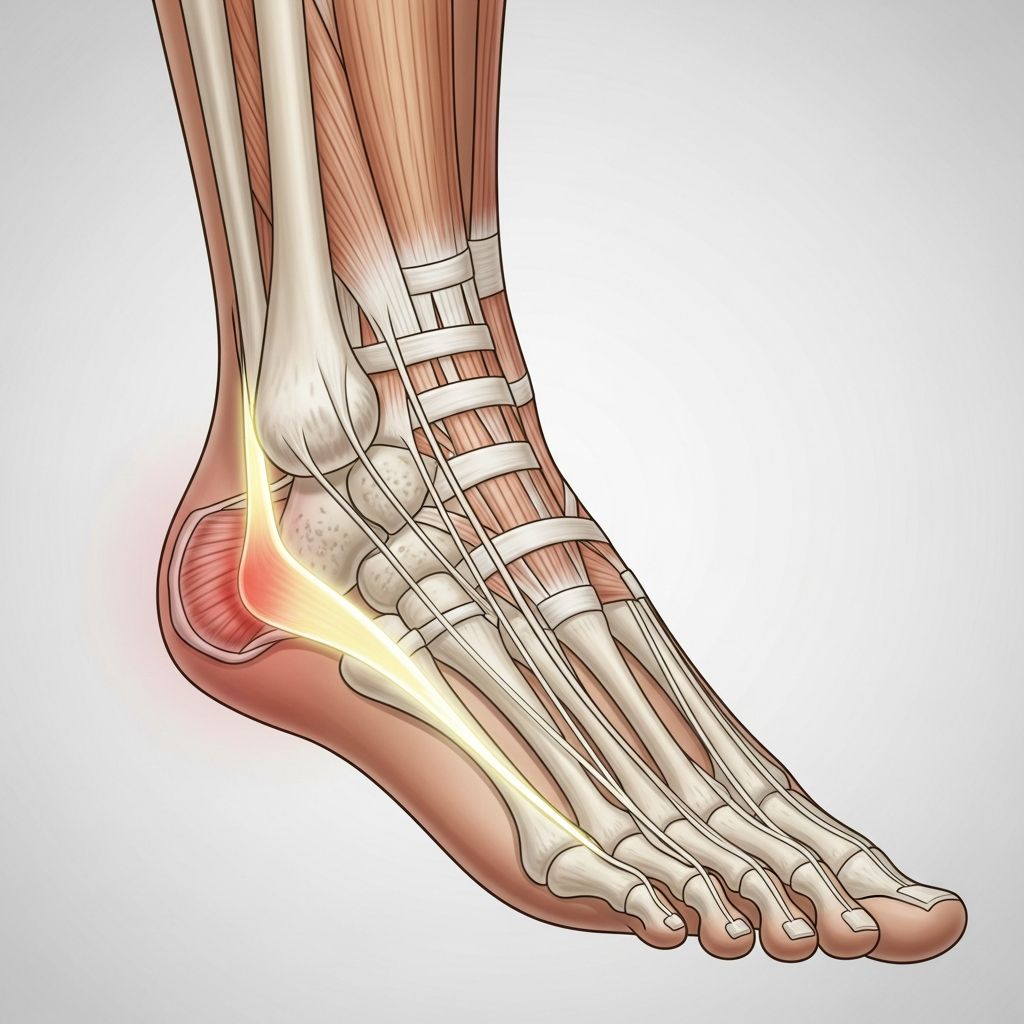
Plantar fasciitis is an inflammation of the fibrous tissue, known as the plantar fascia, that runs along the bottom of your foot and connects your heel bone to your toes. This thick band of tissue is crucial for supporting the arch of your foot and distributing pressure during movement. When this tissue becomes strained or inflamed, it can result in intense heel pain that affects daily activities and quality of life.
The plantar fascia consists of three bands of tissue that work together to provide structural support. When these tissues experience repeated stress and strain, small tears can develop, leading to the characteristic pain associated with this condition. Understanding the anatomy of the plantar fascia helps explain why certain activities and conditions make the pain worse.
Plantar fasciitis is remarkably common, accounting for more than one million US clinic visits annually. It stands as one of the most prevalent causes of heel pain among adults, particularly affecting those in midlife and beyond. The condition can develop suddenly or gradually, depending on your lifestyle and physical demands.
Understanding the Symptoms
The hallmark symptom of plantar fasciitis is stabbing pain in the bottom of your foot near the heel. However, the pain experience can vary significantly from person to person, and understanding the different manifestations helps in early recognition and treatment.
The most characteristic feature of plantar fasciitis is the timing of pain. Pain is typically worst with your first steps in the morning after waking up. This occurs because the plantar fascia tightens overnight as you rest, and the initial steps stretch and stress the tissue. Many people describe this morning pain as a sharp, stabbing sensation that can be quite debilitating.
Additional symptoms and pain triggers include:
- Pain that decreases as you move around and warm up the foot
- Pain that returns after long periods of standing or weight-bearing activities
- Discomfort when standing up after sitting for extended periods
- Pain when climbing stairs or walking barefoot
- Tenderness and tightness along the arch of your foot
- Pain after intense activities such as running or jumping
- Discomfort when wearing shoes with poor arch support
The pain pattern is distinctive: it typically improves within a few minutes of walking as the fascia warms up and stretches, but it can return if you continue strenuous activity or stand for extended periods. This fluctuating pain pattern often makes plantar fasciitis particularly frustrating for those who experience it.
Risk Factors and Causes
The exact cause of plantar fasciitis remains poorly understood, but research has identified numerous risk factors that increase your likelihood of developing this condition. Some factors are within your control, while others are intrinsic to your body or lifestyle.
Common risk factors include:
- Age: Most common in adults aged 45 to 64 years
- Body weight: Overweight or obesity significantly increases risk
- Activity level: Runners and athletes face higher risk
- Occupation: Jobs requiring prolonged standing increase susceptibility
- Foot mechanics: Limited ankle dorsiflexion (ability to move toes upward) increases stress on the fascia
- Repeated strain from activities that stress the heel and arch
- Sudden increases in physical activity
- Wearing shoes with inadequate arch support
Related Stories



The condition develops when repeated activities place chronic overload on the plantar fascia, whether through everyday lifestyle demands or athletic pursuits. This repeated stress causes the tissue to develop tiny tears and degenerative changes. Over time, the body’s response to this damage can lead to inflammation and pain that may persist for months or even years.
Interestingly, plantar fasciitis affects both sedentary individuals and athletic people, suggesting that the mechanism involves more than just exercise. Poor foot biomechanics, inadequate stretching, and sudden changes in activity levels can all contribute to developing this condition.
Diagnosis and Clinical Evaluation
Diagnosing plantar fasciitis typically begins with a discussion of your symptoms and a physical examination by a healthcare provider. Diagnosis is usually straightforward based on your characteristic symptoms and physical findings.
During evaluation, your healthcare provider will:
- Ask about your pain patterns and when symptoms began
- Inquire about your daily activities and exercise habits
- Apply pressure to specific areas of your heel to elicit tenderness
- Perform the Windlass test by gently pushing your toes upward toward your knee to reproduce pain
- Examine your foot structure and gait
- Assess your ankle flexibility and range of motion
In most cases, this clinical examination is sufficient for diagnosis. However, if your diagnosis is uncertain or your symptoms don’t improve with initial treatment, your healthcare provider may order imaging studies. Ultrasound or magnetic resonance imaging of the ankle and foot can visualize the plantar fascia and help rule out other conditions. These imaging studies can reveal inflammation, thickening of the fascia, or other structural changes, but they are not routinely necessary for diagnosis.
Treatment Options and Management Strategies
Treatment for plantar fasciitis has evolved significantly, and a comprehensive approach offers the best chance of success. Most cases respond well to conservative treatment, though the timeline for improvement varies considerably.
Initial Conservative Treatment:
The foundation of plantar fasciitis treatment begins with conservative approaches that address the mechanical stress on the fascia:
- Appropriate footwear: Wearing stiff-soled shoes with good structure and arch support is essential. Avoid going barefoot and choose arch-supportive shoes for home wear
- Orthotics and insoles: Custom orthotic devices or over-the-counter insoles help distribute pressure and reduce stress on the fascia
- Physical therapy: Stretching exercises and physical therapy are first-line treatments that strengthen supporting muscles and improve flexibility
- Activity modification: Reducing activities that aggravate symptoms while maintaining gentle movement helps prevent stiffness
- Rest and ice: For acute cases, appropriate rest and ice therapy can help reduce inflammation
- Taping and strapping: Supportive taping can reduce stress on the fascia during daily activities
Acute vs. Chronic Treatment Approach:
An important distinction exists between acute plantar fasciitis and chronic plantar fascia problems, often termed plantar fasciopathy. Acute plantar fasciitis typically occurs in the first three to six months and primarily involves inflammation and strain of the fascia. During this phase, anti-inflammatory treatments, gentle stretching, and support through taping are appropriate.
After six months, if pain persists, the condition has often transitioned to a chronic, non-inflammatory state characterized by degenerative changes and scar tissue formation. This distinction is crucial because chronic cases require different treatment approaches. For chronic fasciopathy, adjuvant therapies that stimulate the body’s healing response are more effective than anti-inflammatory treatments.
Advanced Treatment Options:
When conservative treatments don’t provide sufficient relief, several advanced options are available:
- Corticosteroid injections: Anti-inflammatory injections administered into the affected area can provide temporary pain relief, particularly in early stages
- Extracorporeal shock wave therapy (ESWT): High-pressure sound waves applied to the plantar fascia can provide more pain relief than corticosteroid injections. This non-invasive treatment may require three to five sessions spaced five to seven days apart
- Platelet-rich plasma (PRP) therapy: This regenerative medicine approach uses concentrated platelets from your own blood to promote tissue healing. Typically requires two injections spaced one month apart
- Amniotic cell injections: Similar to PRP therapy, this approach stimulates the body’s healing response in chronic cases
- Surgical intervention: In rare cases where heel pain persists after extensive nonsurgical treatment, surgery on the plantar fascia or calf muscle may be considered
Research indicates that a systematic treatment approach combining appropriate footwear, physical therapy, stretching, and adjuvant therapies when needed achieves almost 100 percent resolution of plantar fascia heel pain in many cases.
Long-Term Outlook and Recovery Timeline
Understanding the prognosis of plantar fasciitis helps set realistic expectations for recovery. The timeline for improvement varies considerably among individuals.
Recovery and persistence statistics:
- Many cases of heel pain due to plantar fasciitis resolve on their own, but recovery may take months to years
- Up to 80 percent of patients may have persistent symptoms one year after diagnosis
- At 15 years, approximately 44 percent may still experience heel pain, though it is typically less severe than at the time of initial diagnosis
These statistics demonstrate that while plantar fasciitis frequently improves, it can be a persistent condition requiring ongoing management. The good news is that even when pain persists, it often becomes milder and more manageable over time with appropriate treatment and lifestyle modifications.
Prevention and Long-Term Management
Preventing plantar fasciitis or preventing recurrence after treatment involves addressing the underlying mechanical issues:
- Maintain a healthy body weight to reduce stress on your feet
- Wear supportive, well-cushioned shoes with adequate arch support
- Perform regular stretching exercises, particularly calf and plantar fascia stretches
- Avoid sudden increases in physical activity; increase intensity gradually
- Avoid going barefoot, especially on hard surfaces
- Strengthen foot and calf muscles through targeted exercises
- Take breaks during activities that require prolonged standing
- Maintain flexibility and range of motion in your ankles and feet
By addressing the habits and mechanical factors that contributed to plantar fasciitis, you can significantly reduce the risk of the condition returning after successful treatment.
Frequently Asked Questions
Q: How long does it take to recover from plantar fasciitis?
A: Recovery timelines vary widely. Some people experience improvement within weeks with conservative treatment, while others may take several months. The condition can persist for extended periods, with studies showing that up to 80 percent of patients may have symptoms one year after diagnosis, though symptoms often gradually improve over time.
Q: Is plantar fasciitis permanent?
A: Plantar fasciitis is not necessarily permanent, but it can become chronic. With appropriate treatment and lifestyle modifications, most people achieve significant pain relief. However, some individuals experience persistent low-level symptoms for years, even though the pain typically becomes less severe over time.
Q: Can plantar fasciitis go away on its own?
A: Yes, heel pain due to plantar fasciitis frequently goes away on its own without treatment. However, this spontaneous resolution may take months or even years. Conservative treatment significantly accelerates recovery and reduces pain during the healing process.
Q: What’s the difference between acute and chronic plantar fasciitis?
A: Acute plantar fasciitis typically occurs in the first three to six months and involves inflammation and strain. Chronic plantar fasciitis, technically called plantar fasciopathy, develops after six months and is characterized by degenerative changes and scar tissue rather than inflammation. Treatment approaches differ between these stages.
Q: Should I use ice or heat for plantar fasciitis?
A: For acute cases (first three to six months), ice can help reduce inflammation. However, for chronic cases, heat and avoiding anti-inflammatory treatments may be more beneficial since the goal shifts from reducing inflammation to stimulating healing and tissue regeneration.
Q: Are there exercises I can do at home?
A: Yes, physical therapy exercises are an important first-line treatment for plantar fasciitis. Common home exercises include calf stretches, plantar fascia stretches, and arch-strengthening exercises. A physical therapist can prescribe specific exercises tailored to your condition.
Q: When should I consider surgery for plantar fasciitis?
A: Surgery is typically considered only after extensive conservative and advanced nonsurgical treatments have failed to provide relief. Most cases resolve without surgical intervention, making surgery a last-resort option in rare cases.
References
- Plantar Fasciitis — Symptoms and Causes — Mayo Clinic. 2024. https://www.mayoclinic.org/diseases-conditions/plantar-fasciitis/symptoms-causes/syc-20354846
- Rethinking The Treatment Options For Plantar Fasciitis — University Foot and Ankle Institute. 2024. https://balancehealth.com/resources/rethinking-the-treatment-options-for-plantar-fasciitis/university-foot-and-ankle-institute/
- What Is Plantar Fasciitis? — Patient Information — JAMA Network. 2024. https://jamanetwork.com/journals/jama/fullarticle/2823273
- Physical Therapy Guide to Plantar Fasciitis — Choose PT. 2024. https://www.choosept.com/guide/physical-therapy-guide-plantar-fasciitis
- Plantar Fasciitis: A Concise Review — NIH/PMC. 2013. https://pmc.ncbi.nlm.nih.gov/articles/PMC3951039/
Similar Articles








Read full bio of Sneha Tete