Plasma Cell Mucositis: Complete Guide To Diagnosis & Treatment
Rare inflammatory disorder of mucous membranes with dense plasma cell infiltrates, posing diagnostic and therapeutic challenges.
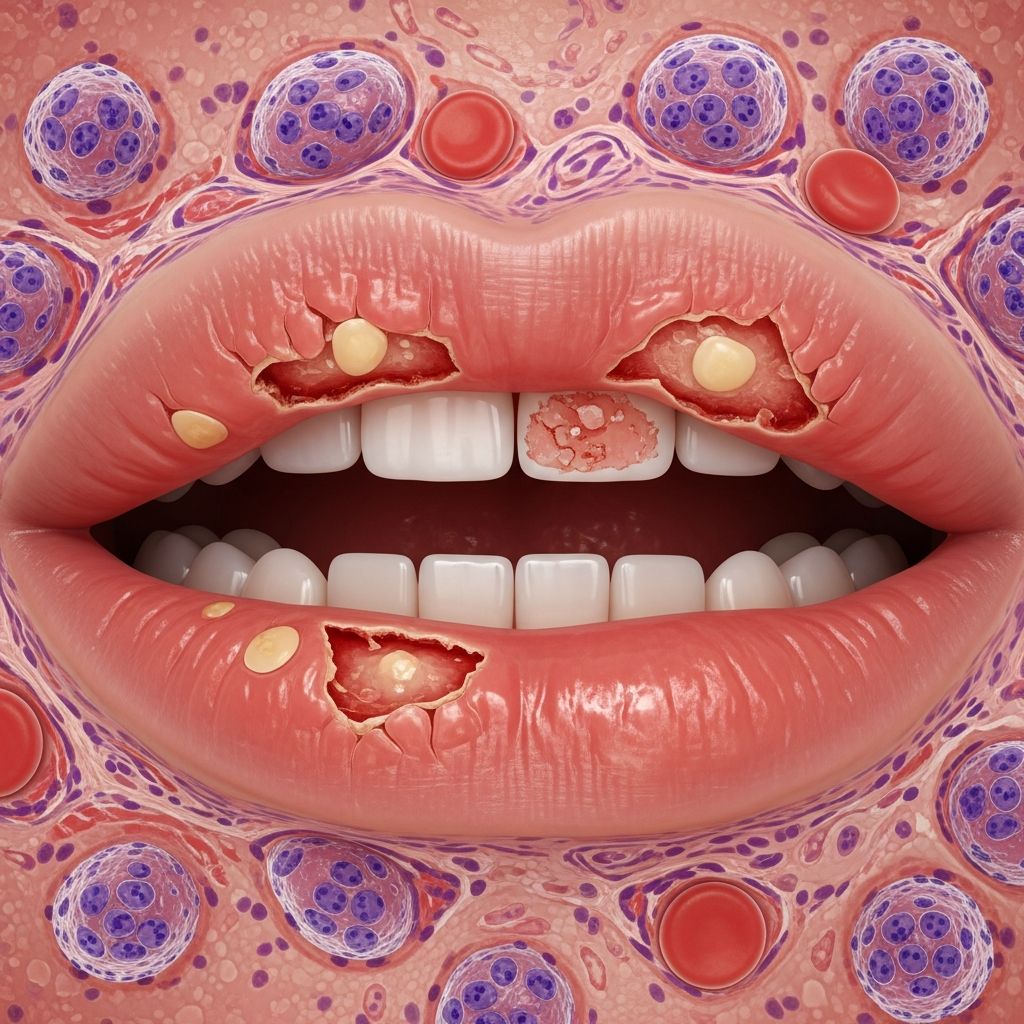
Plasma cell mucositis (PCM) is a rare, benign, chronic inflammatory disorder primarily affecting the mucous membranes of the upper aerodigestive tract, including the oral cavity, pharynx, larynx, and nasal mucosa. Characterized by dense, polyclonal plasma cell infiltrates in the submucosa, it presents with intensely erythematous and swollen mucosa, often leading to pain, dysphagia, hoarseness, and other debilitating symptoms. The condition’s unknown etiology and resistance to treatment make it a diagnostic and therapeutic challenge requiring multidisciplinary management.
What is plasma cell mucositis?
Plasma cell mucositis, also known as plasma cell or plasmacytic mucositis, is an idiopathic reactive condition distinguished by a dense subepithelial infiltrate of polyclonal plasma cells without evidence of neoplasia. Unlike monoclonal proliferations seen in plasmacytoma or multiple myeloma, PCM features polyclonality confirmed by immunohistochemistry, such as kappa/lambda light chain restriction analysis. It predominantly involves the oral mucosa but can extend to the esophagus, nasopharynx, oropharynx, hypopharynx, larynx, and nasal passages, causing widespread mucosal inflammation.
The disorder is chronic and non-resolving in most cases, with symptoms persisting for months to years. Histologically, it shows pseudoepitheliomatous hyperplasia, acanthosis, spongiosis, neutrophilic exocytosis, microabscesses, and occasional Russell bodies (immunoglobulin accumulations in plasma cells). Clinical features include florid erythema, cobblestone or nodular surface changes, papillary or velvety textures, gingival enlargement, and desquamative gingivitis, without significant ulceration in early stages.
Who gets plasma cell mucositis?
PCM is exceptionally rare, with fewer than 100 well-documented cases in medical literature. It affects adults primarily, with a mean age of onset around 40-50 years, though pediatric cases are reported. There is no strong gender predilection, but some series note a slight male predominance. Associations include autoimmune conditions (e.g., positive anti-Ro antibodies), infections (e.g., hepatitis B core antibody), and hypersensitivity to allergens or irritants like chewing gum, foods, or dental materials. No genetic predisposition is established, but immune dysregulation is implicated.
- Prevalence: Extremely low; oral involvement in 65-100% of cases, gingiva most common (65.82%).
- Risk factors: Potential triggers include allergens, infections, or physical irritants; exclusion of these is key in workup.
- Demographics: Adults > children; no racial bias reported.
What causes plasma cell mucositis?
The precise etiology of PCM remains unknown, classified as an idiopathic plasma cell proliferative disorder. Hypotheses center on immune-mediated hypersensitivity or autoimmune reactions, supported by associations with polyclonal hypergammaglobulinemia (elevated IgG), autoantibodies, and metachronous involvement of multiple mucosal sites suggesting systemic immunity involvement. Potential triggers include:
- Food allergens or chewing gum flavors (e.g., cinnamon, mint).
- Infectious agents (e.g., hepatitis B, though not causative).
- Medications or dental restorations.
- Chronic irritation from ill-fitting dentures or habits.
No single causative agent is identified, and spontaneous resolution occurs rarely without intervention. Differentiation from neoplastic processes is critical, as monoclonal plasma cell disorders like extramedullary plasmacytoma mimic PCM clinically and histologically.
What are the clinical features of plasma cell mucositis?
PCM manifests with varied mucosal changes, most prominent in the oral cavity. Erythema affects 99% of cases, with swelling, nodularity, and surface alterations. Symptoms are chronic and include:
| Site | Frequency | Common Features |
|---|---|---|
| Oral (Gingiva) | 65.82% | Desquamative gingivitis, spongy enlargement, erythema. |
| Buccal mucosa/Tongue | Common | Fissuring, oedema, cobblestone appearance. |
| Pharynx/Larynx | Variable | Hoarseness, dysphagia, sore throat. |
| Nasal | Rare | Crusting, epistaxis. |
Symptoms: Pain (60.76% most common), burning mouth, dysphagia, chronic cough, nasal crusting. Signs include lymphadenopathy (reactive), lip swelling, and granulomatous lesions. Progression can lead to strictures (e.g., tracheal).
Related Stories



Diagnosis
Diagnosis relies on clinicopathologic correlation after excluding mimics. Essential steps include:
- Clinical exam: Erythematous, nodular mucosa; rule out infection/ulceration.
- Biopsy: Dense polyclonal plasma cell infiltrate (>90% plasma cells), pseudoepitheliomatous hyperplasia. IHC for polyclonality (kappa/lambda ratio ~1:1).
- Labs: Serum protein electrophoresis, immunofixation, IgG4 levels, autoantibodies (anti-Ro), viral serologies (HBV, HIV).
- Imaging: Endoscopy for extroral sites; exclude malignancy.
Differentials: Plasma cell gingivitis (limited to gingiva, allergen-related), plasmacytoma (monoclonal), IgG4-related disease, orofacial granulomatosis, pemphigus vulgaris, sarcoidosis.
Differential diagnosis
| Condition | Key Distinguisher |
|---|---|
| Extramedullary plasmacytoma | Monoclonal plasma cells; systemic myeloma workup abnormal. |
| Plasma cell gingivitis | Confined to gingiva; resolves with allergen removal. |
| Lichen planus/pemphigoid | Ulceration, autoantibodies; interface dermatitis. |
| Graft-vs-host disease | History of transplant; mixed infiltrate. |
| Infectious (e.g., candidiasis) | Response to antifungals; hyphae on PAS stain. |
What is the treatment for plasma cell mucositis?
No consensus exists; management targets symptoms and stabilization, not cure. First-line: Remove irritants/allergens. Topical therapies preferred over systemic due to fewer side effects. Approaches include:
- Corticosteroids: Topical (triamcinolone, clobetasol), intralesional, or systemic (prednisolone 40mg/day tapering).
- Immunosuppressants: Topical tacrolimus/cyclosporine, systemic methotrexate, mycophenolate, dapsone.
- Other: Antifungals, fusidic acid, colchicine, adalimumab.
Severe cases: Low-dose radiotherapy, CO2 laser, cryotherapy, surgery for strictures. Most achieve stabilization; relapse common, requiring long-term monitoring.
Complications
Chronic pain impacts quality of life; dysphagia risks malnutrition/aspiration. Rare strictures (esophageal/tracheal) may necessitate surgery. Reactive lymphadenopathy can mimic lymphoma, delaying diagnosis. Resistance to therapy leads to prolonged morbidity.
Prevention
No known prevention due to unclear etiology. Avoid potential triggers post-diagnosis (e.g., specific foods). Regular dental care and irritant-free oral hygiene may mitigate flares.
Prognosis
Benign but chronic; spontaneous remission rare. With treatment, most stabilize without progression to malignancy. Multidisciplinary care improves outcomes, though full resolution uncommon.
Frequently Asked Questions
Q: Is plasma cell mucositis cancerous?
A: No, it is a benign polyclonal reactive process, distinct from malignant plasma cell neoplasms like plasmacytoma.
Q: Can plasma cell mucositis be cured?
A: Cure is rare; treatment focuses on symptom control and stabilization, with variable relapse rates.
Q: What does plasma cell mucositis look like?
A: Intensely red, swollen mucosa with nodular/cobblestone changes, gingival enlargement, no primary ulceration.
Q: How is plasma cell mucositis diagnosed?
A: By biopsy showing dense polyclonal plasma cells plus exclusion of infection, allergy, and malignancy.
Q: What triggers plasma cell mucositis?
A: Unknown; possible allergens, irritants, or immune factors suspected.
References
- CPC05: Plasma cell mucositis: a complex and challenging condition — British Journal of Dermatology, Oxford Academic. 2022. https://academic.oup.com/bjd/article/187/S1/21/6700359
- Plasma Cell Mucositis: A Clinical Conundrum — Acta Dermatovenerologica Croatica. 2024. https://actadermatovenerologicacroatica.hr/wp-content/uploads/2024/07/5.-Fatahzadeh-%E2%80%93-FINAL_compressed.pdf
- Pitfalls and Challenges in Oral Plasma Cell Mucositis — NIH, PMC. 2022-11-11. https://pmc.ncbi.nlm.nih.gov/articles/PMC9659091/
- Severe manifestation of plasma cell mucositis in a patient with… — Wiley Online Library. 2024. https://onlinelibrary.wiley.com/doi/10.1111/scd.13053
- Plasma-cell mucositis—a rare differential diagnosis for ulceration of oral mucosa — Termedia Publishing. 2015. https://www.termedia.pl/Plasma-cell-mucositis-a-rare-differential-diagnosis-for-ulceration-of-oral-mucosa,56,26127,1,1.html
Similar Articles








Read full bio of Sneha Tete