Plasmapheresis (Plasma Exchange): Therapy, Procedure & Uses
Discover how plasmapheresis works, its uses, risks, and benefits in modern medicine.
What Is Plasmapheresis (Plasma Exchange)?
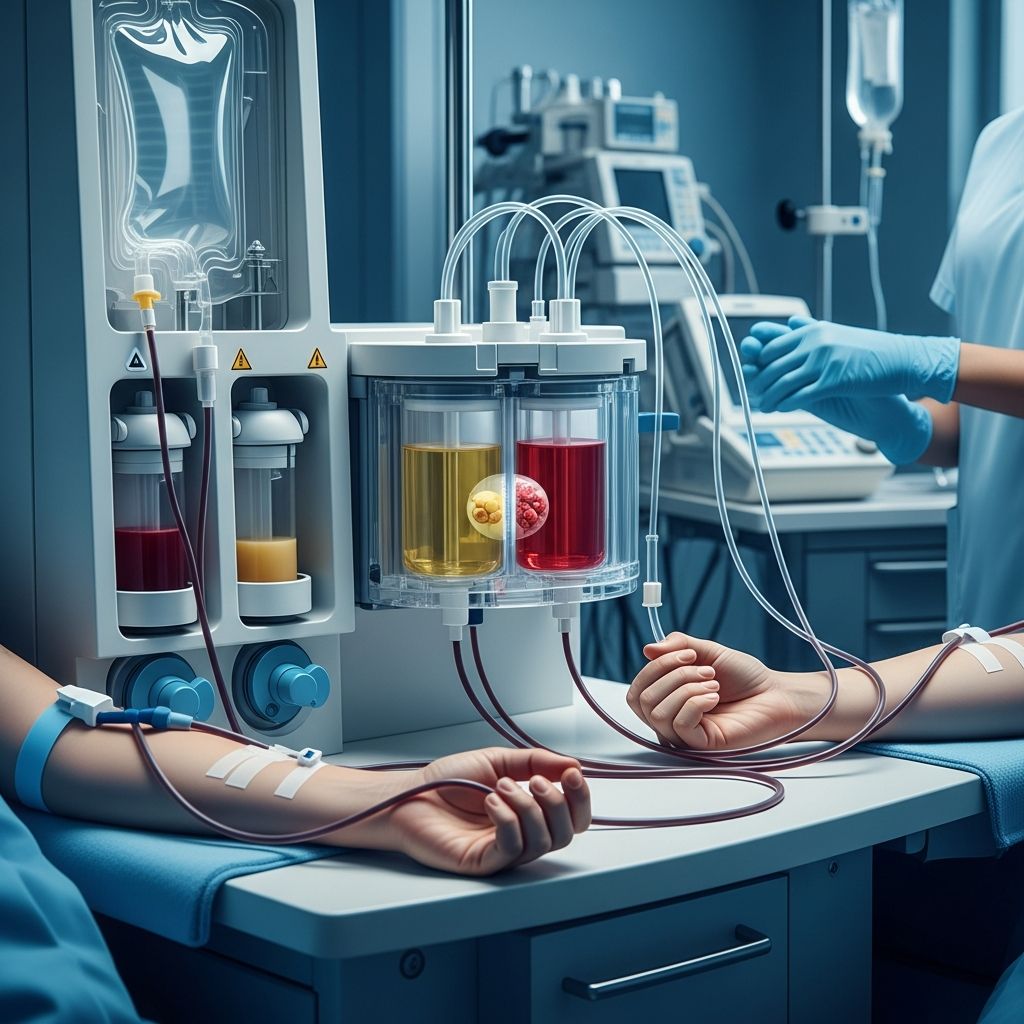
Plasmapheresis, also known as plasma exchange, is a medical procedure that involves removing plasma from a patient’s blood and replacing it with healthy donor plasma or a suitable replacement fluid. This process is performed using a specialized machine called an apheresis instrument, which separates plasma from other blood components. The remaining blood cells are then mixed with the replacement fluid and returned to the patient’s body.
How Does Plasmapheresis Work?
The plasmapheresis process is extracorporeal, meaning it takes place outside the body. Here’s a step-by-step breakdown:
- Blood is drawn from the patient through a vein, typically in the arm.
- The blood is passed through an apheresis machine, which separates plasma from blood cells.
- The plasma, which may contain harmful substances such as antibodies, immune complexes, or toxins, is removed and discarded.
- The blood cells are mixed with a replacement fluid, such as albumin, saline, or fresh frozen plasma.
- The treated blood is returned to the patient’s body.
Why Is Plasmapheresis Used?
Plasmapheresis is used to treat a variety of medical conditions, particularly those involving the immune system, blood, or neurological disorders. Common uses include:
- Autoimmune Disorders: Plasmapheresis can help remove harmful antibodies in conditions like Guillain-Barré syndrome, myasthenia gravis, and systemic lupus erythematosus.
- Blood Disorders: It is used in thrombotic thrombocytopenic purpura (TTP), hemolytic uremic syndrome (HUS), and certain types of anemia.
- Neurological Disorders: Plasmapheresis may be used in multiple sclerosis, chronic inflammatory demyelinating polyneuropathy (CIDP), and other autoimmune neurological conditions.
- Plasma Cell Disorders: In conditions like multiple myeloma or Waldenström macroglobulinemia, plasmapheresis helps remove abnormal proteins from the blood.
- Organ Transplant Support: It can be used to prevent or treat rejection in organ transplant recipients.
- Severe Infections: In rare cases, plasmapheresis is used to remove toxins or inflammatory substances in severe infections or sepsis.
Types of Plasmapheresis
There are several types of plasmapheresis procedures, each tailored to specific medical needs:
- Standard Plasma Exchange: Involves removing and replacing one volume of plasma per session.
- High-Volume Plasma Exchange: Treats the plasma multiple times in a single session, often used in severe cases or when rapid removal of harmful substances is needed.
- Double Filtration Plasmapheresis (DFPP): Uses dual filters to selectively remove specific substances, such as immune complexes or high-molecular-weight proteins.
- Immunoadsorption (IA): A selective method that removes specific antibodies or immune complexes from the plasma.
- Selective Plasma Exchange (SPE): Targets specific components of plasma for removal.
Procedure Details
Plasmapheresis is typically performed in a hospital or specialized medical center. The procedure usually takes 2–4 hours per session, and the number of sessions required depends on the patient’s condition. Most patients receive between three and seven exchanges, but some may need more.
Preparation
- The patient’s medical history and blood tests are reviewed to determine eligibility.
- Informed consent is obtained after explaining the risks and benefits.
- The patient may be asked to avoid certain medications or foods before the procedure.
During the Procedure
- The patient is connected to the apheresis machine via a vein in the arm or a central venous catheter.
- Blood is continuously drawn, separated, and returned to the body.
- The medical team monitors vital signs and watches for any adverse reactions.
Related Stories



After the Procedure
- The patient is observed for a short period to ensure there are no immediate complications.
- Follow-up appointments are scheduled to monitor progress and determine if additional sessions are needed.
Risks and Side Effects
Plasmapheresis is generally safe, but like any medical procedure, it carries some risks. Common side effects include:
- Hypocalcemia (low calcium levels)
- Fluid shifts and hypotension (low blood pressure)
- Vasovagal syncope (fainting)
- Transfusion reactions (if donor plasma is used)
- Coagulopathy (bleeding disorders)
- Electrolyte imbalances
Severe complications are rare but can include infection, allergic reactions, or, in very rare cases, death due to the underlying condition or complications from the procedure.
Benefits of Plasmapheresis
Plasmapheresis offers several benefits for patients with certain medical conditions:
- Rapid removal of harmful substances from the blood
- Improvement in symptoms and clinical outcomes
- Support for recovery from organ transplants
- Reduction in the need for other treatments, such as immunosuppressive drugs
Who Performs Plasmapheresis?
Plasmapheresis is performed by a team of healthcare professionals, including:
- Intensive care specialists
- Hepatologists
- Anesthesiologists
- Liver transplant surgeons
- Nurses
- Apheresis technicians
- Laboratory medicine specialists
- Blood bank staff
The procedure requires coordination among multiple departments to ensure patient safety and optimal outcomes.
Plasmapheresis in Special Cases
Plasmapheresis has been used in unique and challenging cases, such as:
- COVID-19 Patients: High-volume plasma exchange has been used in young COVID-19 patients with liver failure to stabilize their condition before transplantation.
- Post-COVID-19 Condition (PCC): Plasmapheresis has been studied as a potential treatment for PCC, though recent trials have shown it is safe but not effective in improving symptoms or quality of life.
- Plasma Cell Disorders: Plasmapheresis is effective in managing conditions like multiple myeloma and Waldenström macroglobulinemia by removing abnormal proteins.
FAQs About Plasmapheresis
How long does a plasmapheresis session last?
A typical session lasts 2–4 hours, depending on the patient’s condition and the type of procedure.
How many sessions are needed?
The number of sessions varies, but most patients receive between three and seven exchanges. Some may need more, depending on their response to treatment.
Is plasmapheresis painful?
The procedure is generally not painful, though some patients may experience mild discomfort from the needle or catheter.
What are the risks of plasmapheresis?
Risks include hypocalcemia, fluid shifts, hypotension, vasovagal syncope, transfusion reactions, coagulopathy, and electrolyte imbalances. Severe complications are rare.
Can plasmapheresis cure autoimmune diseases?
Plasmapheresis can help manage symptoms and improve outcomes, but it is not a cure for autoimmune diseases. It is often used in combination with other treatments.
References
References
- Plasmapheresis (Plasma Exchange): Therapy, Procedure & What It Is — Cleveland Clinic. 2023. https://my.clevelandclinic.org/health/treatments/24197-plasmapheresis-plasma-exchange
- The Role of Therapeutic Plasma Exchange in Plasma Cell Disorders — PMC. 2023. https://pmc.ncbi.nlm.nih.gov/articles/PMC11512890/
- Plasma Exchange Therapy for the Post COVID-19 Condition — Nature. 2025. https://www.nature.com/articles/s41467-025-57198-7
Similar Articles








Read full bio of medha deb