Plateau Iris: Diagnosis, Care, And Treatment Options
Explore the essentials of plateau iris, from detection methods to proven therapies that safeguard eye health and prevent vision threats.
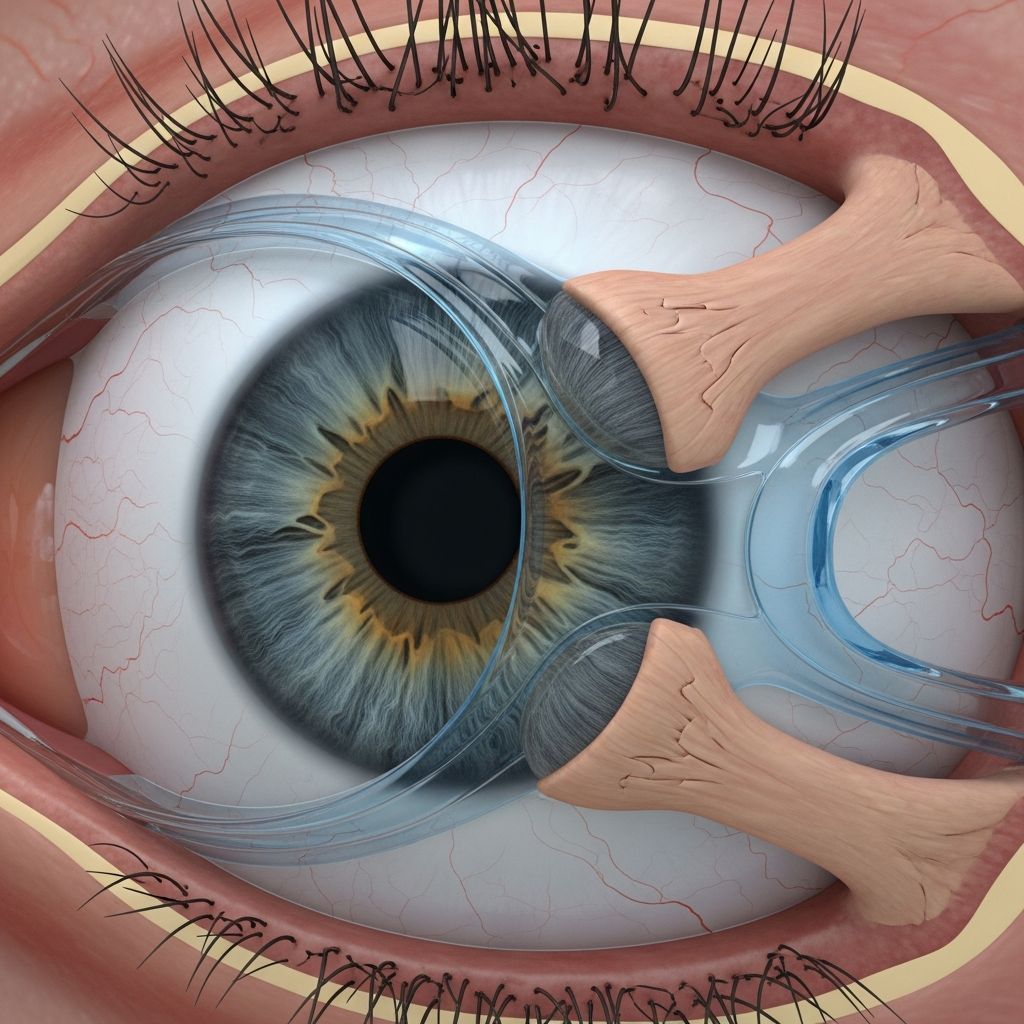
Plateau iris represents a distinct anatomical variation in the eye that predisposes individuals to angle-closure glaucoma, a condition where the drainage angle of the anterior chamber narrows or closes, potentially elevating intraocular pressure (IOP) and damaging the optic nerve. Unlike typical pupillary block mechanisms, plateau iris involves the iris root being positioned anteriorly due to ciliary body prominence, creating a ‘plateau’ effect that persists even after standard interventions like iridotomy.
Understanding the Anatomy Behind Plateau Iris
The eye’s anterior chamber relies on a precise balance of structures for proper aqueous humor outflow. In plateau iris, the ciliary processes are large and positioned forward, pushing the peripheral iris against the trabecular meshwork. This configuration can lead to two scenarios: plateau iris configuration, which is asymptomatic and incidental, and plateau iris syndrome (PIS), where angle closure occurs with pupil dilation.
Key anatomical hallmarks include a normal central anterior chamber depth but a shallow peripheral chamber, often confirmed via imaging like ultrasound biomicroscopy (UBM). The ‘double hump’ sign on gonioscopy—where compressing the cornea reveals a central hump from the lens and a peripheral one from the ciliary body—is a classic indicator.
- Forward displacement of ciliary processes
- Anteriorly bowed iris root
- Spasm of the ciliary muscle as a trigger for closure
Recognizing Symptoms and Risk Factors
Many cases remain silent until an acute attack, characterized by sudden eye pain, blurred vision, halos around lights, nausea, and elevated IOP. Chronic low-grade closure may cause subtle headaches or progressive vision loss without dramatic episodes.
Risk factors predominantly affect women, possibly due to hormonal influences or anatomical predispositions. Age-related lens growth exacerbates the issue by pushing the iris forward.
| Risk Factor | Description | Prevalence Insight |
|---|---|---|
| Female Gender | Higher incidence observed in clinical series | 100% in one study of 8 patients |
| Age >40 | Lens thickening narrows angles | Common in middle-aged adults |
| Asian Descent | Anatomical predisposition to narrow angles | Elevated in certain ethnic groups |
| Family History | Genetic component suspected | Bilateral presentation frequent |
Diagnostic Approaches for Accurate Identification
Diagnosis hinges on detailed anterior segment examination. Gonioscopy is foundational, revealing narrow angles that do not open fully with indentation and showing the double hump sign.
Advanced imaging enhances precision:
- Ultrasound Biomicroscopy (UBM): Visualizes ciliary body position and iris angulation, confirming anterior rotation.
- Anterior Segment OCT (AS-OCT): Non-contact assessment of angle parameters and iris volume.
- Darkroom Prone Provocative Testing: Monitors angle changes with pupil dilation to provoke closure safely.
Post-iridotomy gonioscopy is critical; persistent closure post-procedure flags plateau iris.
Laser Interventions: Frontline Therapies
Laser peripheral iridotomy (LPI) addresses pupillary block but often fails in plateau iris, necessitating argon laser peripheral iridoplasty (ALPI).
ALPI Technique: Applies burns to the peripheral iris (200-500 μm spot, 0.2-0.6s duration, 150-300mW power), contracting tissue to flatten the iris and widen the angle. Studies show high efficacy, with low retreatment rates.
Related Stories



Repeat ALPI may be needed for re-closure. Rare complications include Urrets-Zavalia syndrome (fixed dilated pupil), resolving in most within a year.
Pharmacological Management Options
Miotic agents like pilocarpine (low-dose 1-2%) contract the sphincter and ciliary muscle, thinning the iris and pulling it from the meshwork. Ideal for preoperative control or patients declining lasers.
- Pilocarpine 1-4%: qid dosing, monitors for side effects like myopia.
- Aqueous suppressants (beta-blockers, alpha-agonists, CAIs): Acute IOP spikes.
- Prostaglandin analogs: Enhance outflow despite slower onset.
Avoid mydriatics; use short-acting ones cautiously.
Advanced Surgical Solutions
For refractory cases with synechiae >180° or glaucoma damage, surgery escalates:
- Cataract Extraction: Removes lens contribution, deepening the chamber. Often combined with endocyclophotocoagulation (ECP) to rotate ciliary body posteriorly. Highly effective for angle opening.
- Trabeculectomy: Filtering surgery for IOP control when trabecular damage persists.
- Endocycloplasty (ECPL): Laser targets ciliary processes to reduce forward push.
Clear lens extraction is gaining favor as primary intervention per recent trials like EAGLE and ZAP.
Monitoring and Long-Term Care Strategies
Lifelong follow-up prevents progression: quarterly gonioscopy, IOP checks, visual fields, and OCT nerve analysis. Target IOP <15-18 mmHg based on damage extent.
Patient education emphasizes avoiding triggers like dim lighting or anticholinergics.
Clinical Outcomes and Evidence Review
Treatment success is robust: ALPI opens angles in >90% initially; cataract surgery resolves closure in most. Functional data from series show stabilized VA, reduced meds, and IOP control.
Challenges include recurrence (10-20%) and non-compliance with miotics.
Frequently Asked Questions (FAQs)
What distinguishes plateau iris from pupillary block?
Plateau iris persists post-iridotomy due to structural ciliary issues, not just pupil-lens apposition.
Is ALPI painful?
Mild discomfort; topical anesthesia suffices.
Can plateau iris affect both eyes?
Yes, often bilateral; monitor symmetrically.
When is surgery preferred over lasers?
In advanced glaucoma, extensive synechiae, or lens opacities.
How often should follow-ups occur?
Every 3-6 months initially, then annually if stable.
References
- Treating Plateau Iris — Glaucoma Today. 2012-09. https://glaucomatoday.com/articles/2012-sept-oct/treating-plateau-iris
- Plateau Iris – Therapeutic options and functional results after treatment — PMC (NCBI). 2017. https://pmc.ncbi.nlm.nih.gov/articles/PMC5710019/
- Plateau Iris — EyeWiki (AAO). Accessed 2026. https://eyewiki.org/Plateau_Iris
- Plateau Iris Syndrome and Acute Angle Closure Glaucoma: A Teaching Case Report — Journal of Optometric Education. N/A. https://journal.opted.org/article/plateau-iris-syndrome-and-acute-angle-closure-glaucoma-a-teaching-case-report/
- Plateau Iris and Angle Closure Management — Review of Ophthalmology. N/A. https://www.reviewofophthalmology.com/article/plateau-iris-and-angle-closure-management
- Endocycloplasty (ECPL) for Plateau Iris Angle Closure Glaucoma — YouTube (Ophthalmic Video). N/A. https://www.youtube.com/watch?v=nD036Bi2ebo
Similar Articles








Read full bio of medha deb