Platelet-Rich Plasma: Hair Loss Treatment From Your Own Blood
Exploring PRP therapy as an innovative solution for hair loss using regenerative medicine.
Platelet-Rich Plasma: A New Frontier in Hair Loss Treatment
Hair loss affects millions of people worldwide, causing significant emotional and psychological distress. While traditional treatments like minoxidil and finasteride have been available for decades, many patients seek alternative therapies with potentially fewer side effects. Platelet-rich plasma (PRP) therapy has emerged as an innovative regenerative medicine approach that harnesses the body’s own healing potential to stimulate hair growth. This treatment modality represents a paradigm shift in hair loss management, offering patients a more natural option derived from their own biological materials.
Understanding Platelet-Rich Plasma
Platelet-rich plasma is a concentrated solution derived from a patient’s own blood that contains significantly elevated levels of platelets and growth factors. The process begins when a healthcare provider draws a small amount of blood from the patient, typically from the arm. This blood sample is then placed in a centrifuge, a specialized machine that spins the sample at high speeds to separate its components based on density.
During centrifugation, the blood separates into three main layers: red blood cells at the bottom, white blood cells and platelets in the middle layer, and plasma at the top. The middle layer, which is rich in platelets, is carefully extracted and processed to create PRP. Platelets are small cell fragments in the blood that play a crucial role in wound healing and tissue repair. When activated, platelets release numerous bioactive substances that facilitate healing and regeneration.
The Science Behind Hair Growth
Growth Factors in PRP
The therapeutic power of PRP lies in the growth factors released by platelets. These include platelet-derived growth factor (PDGF), vascular endothelial growth factor (VEGF), transforming growth factor beta-1 (TGF-β1), epidermal growth factor (EGF), insulin-like growth factor-1 (IGF-1), and fibroblast growth factor (FGF). These growth factors work synergistically to create an optimal microenvironment for hair follicle recovery and regeneration. PDGF stimulates cellular proliferation and blood vessel formation, while VEGF promotes angiogenesis—the development of new blood vessels that deliver oxygen and nutrients to hair follicles. TGF-β1 and EGF support tissue remodeling and keratinocyte growth, essential for hair shaft formation.
Mechanism of Action
PRP therapy targets hair loss through multiple mechanisms. The growth factors in PRP extend the anagen phase (active growth phase) of the hair cycle, delay the catagen phase (transition phase), and reduce the telogen phase (resting phase) when hair naturally sheds. Additionally, these factors enhance blood circulation to hair follicles, improving oxygen and nutrient delivery. PRP also stimulates the proliferation of dermal papilla cells—specialized cells at the base of hair follicles that regulate hair growth—and extends the lifespan of hair follicles.
PRP Treatment Procedure
Step-by-Step Process
The PRP hair treatment procedure is minimally invasive and typically performed in an outpatient clinic setting. First, a healthcare provider draws approximately 20-60 milliliters of blood from the patient’s arm. The blood sample is immediately placed in a sterile tube containing an anticoagulant to prevent clotting. The tube is then centrifuged using a standardized double-spin protocol that separates platelet-rich plasma from other blood components. This process typically takes 10-15 minutes.
Related Stories



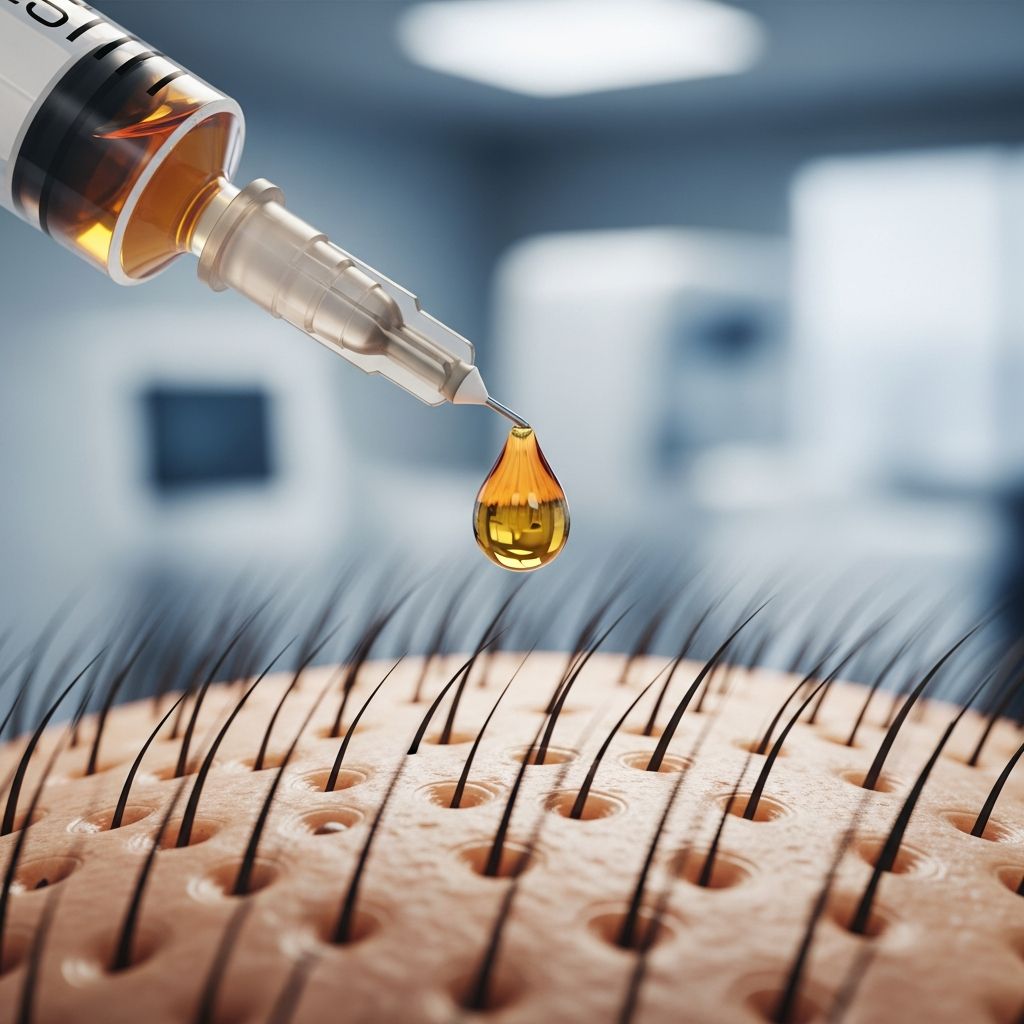
Once PRP is prepared, the scalp area experiencing hair loss is cleaned and typically treated with a topical anesthetic to minimize discomfort. Using a fine needle or micro-injection technique, the healthcare provider injects the PRP superficially into the dermis of the scalp at the level of hair follicles. The injections are administered in a grid-like pattern across affected areas to ensure even distribution and maximum benefit. A typical treatment session involves multiple injections across the scalp.
Treatment Schedule
Most PRP protocols recommend an initial series of three treatments administered at four-week intervals. This initial phase typically spans 12 weeks. Following the initial treatment series, maintenance sessions are generally recommended every six to twelve months to sustain results. Some patients may require retreatment sooner depending on individual response rates and the progression of their hair loss.
Clinical Effectiveness and Results
Hair Density Improvements
Clinical studies have demonstrated significant improvements in hair density following PRP treatment. A comprehensive peer-reviewed study found that PRP treatment significantly increased hair density from 40.76 ± 14.26 hairs/cm² at baseline to 66.00 ± 18.00 hairs/cm² after treatment completion, representing a meaningful increase in hair count. Another rigorous placebo-controlled study reported a mean increase of 33.6 hairs in the target treatment area and a mean increase in total hair density of 45.9 hairs per cm² compared with baseline values. A meta-analysis pooling data from 17 treatment groups revealed that mean hair density increased from approximately 142 to 177 hairs/cm² following PRP therapy, an increase of approximately 35 hairs/cm².
Success Rates
Success rates for PRP hair treatment vary depending on the study population and measurement criteria. Research indicates that at least 30–50% of patients will experience some benefit from PRP therapy. However, some studies report substantially higher success rates. One study found that 93% of 30 male pattern baldness patients reported that their hair loss had completely stopped as early as two months after beginning PRP therapy. Another analysis showed that in a group of 20 patients, only 4 participants reported continued hair loss 12 months after their last treatment, indicating a 80% retention rate. Patient satisfaction with PRP treatment is notably high, with reports indicating that 97.6% of patients expressed satisfaction or strong satisfaction with their results.
Response Variability
While many patients experience significant improvements, response rates vary among individuals. Factors contributing to this variability include differences in study design, PRP preparation techniques, participant characteristics, and platelet concentration levels. Research has shown that the efficacy of hair regrowth stimulation is directly proportional to platelet concentration, but only up to a certain threshold. Platelet concentrations around ≥ 1 million/μL (approximately 4–7 times the average baseline) are considered therapeutically effective. Since normal platelet levels range from 150 to 450 per microliter, some PRP samples will have much higher levels of growth factors than others, potentially accounting for inconsistent results.
Safety and Adverse Effects
Side Effect Profile
PRP therapy is generally well-tolerated with a favorable safety profile. The most commonly reported adverse effects are mild and transient, including temporary scalp discomfort, slight redness, minimal swelling at injection sites, and occasional mild itching or burning sensations that typically resolve within hours to days. No serious adverse events have been documented in clinical studies. Because PRP is derived from the patient’s own blood, the risk of allergic reactions or immune rejection is virtually eliminated. This represents a significant safety advantage over some pharmaceutical treatments like topical minoxidil and oral finasteride, which carry risk of systemic side effects.
Patient Tolerance
The minimal side effect profile contributes to high patient tolerance and compliance with treatment protocols. Most patients can resume normal activities immediately following treatment, making PRP an attractive option for those with busy schedules or those concerned about treatment-related downtime.
Suitable Candidates for PRP Therapy
Ideal Patient Profile
PRP therapy works best for individuals experiencing early to moderate hair loss. Patients with androgenetic alopecia (male or female pattern baldness) typically respond well to PRP treatment. The treatment is also effective for alopecia areata, an autoimmune condition causing patchy hair loss. For alopecia areata specifically, PRP has demonstrated superior efficacy compared to triamcinolone acetonide (TrA), with 60% of PRP-treated patients achieving complete remission at 12 months compared to only 27% in the TrA group.
Poor Candidates
Individuals who are completely bald may not be good candidates for PRP therapy, as the treatment aims to stimulate existing hair follicles rather than generate entirely new follicles. Patients with active infections, certain blood disorders, or those taking blood-thinning medications should consult with their healthcare provider before pursuing PRP treatment. Additionally, patients with unrealistic expectations about hair regrowth may not be satisfied with results.
Comparison with Other Hair Loss Treatments
| Treatment | Mechanism | Effectiveness | Side Effects | Timeline |
|---|---|---|---|---|
| PRP Therapy | Growth factors stimulate follicles | 30-50% benefit; some studies show higher rates | Mild, transient scalp discomfort | 4-6 months for visible results |
| Minoxidil (Topical) | Extends anagen phase | Modest improvements in some users | Scalp irritation, facial hair growth | 3-6 months for results |
| Finasteride (Oral) | DHT inhibitor | Slows hair loss, modest regrowth | Sexual dysfunction, breast tissue changes | 3-12 months for results |
| Hair Transplant | Surgical hair relocation | Permanent hair restoration | Surgical risks, scarring, cost | 6-12 months for full results |
Cost and Insurance Considerations
The cost of PRP therapy varies depending on geographic location, the specific clinic, and the number of treatment sessions required. A typical single PRP treatment session costs between $500 and $2,500, with most patients requiring an initial series of three treatments spaced four weeks apart. This results in initial treatment costs ranging from $1,500 to $7,500. Maintenance treatments add additional costs on an annual basis. Insurance coverage for PRP therapy is limited, as most insurers classify it as an elective cosmetic procedure. Patients should verify with their insurance provider regarding coverage options and contact their chosen clinic for specific pricing information.
Frequently Asked Questions
Q: How long does it take to see results from PRP hair treatment?
A: Most patients begin noticing initial improvements in hair thickness and reduced shedding within 2-3 months of starting treatment. Full results typically become apparent after completing the initial three-treatment series at 12 weeks. Continued improvements may be observed over several months following treatment completion.
Q: Is PRP therapy permanent?
A: PRP therapy is not permanent. Results are maintained through periodic maintenance treatments, typically recommended every 6-12 months. Without maintenance treatments, the benefits may gradually diminish over time as the underlying hair loss condition continues to progress.
Q: Can PRP be combined with other hair loss treatments?
A: Yes, PRP therapy can be combined with other treatments like minoxidil or finasteride to potentially enhance results. Many dermatologists recommend combination therapy for optimal outcomes, particularly in patients with moderate to advanced hair loss.
Q: Does PRP work for female hair loss?
A: Yes, PRP therapy has emerged as a highly effective treatment for female hair loss, significantly enhancing hair density and thickness with minimal side effects. The treatment is equally effective in both men and women with androgenetic alopecia.
Q: Are there any contraindications to PRP treatment?
A: Patients with blood clotting disorders, active scalp infections, or those taking anticoagulant medications should consult their healthcare provider before undergoing PRP therapy. Additionally, pregnant or breastfeeding women should postpone treatment until after this period.
Q: How does PRP compare to hair transplants?
A: PRP therapy is non-surgical and less invasive than hair transplantation but also generally produces more modest results. Hair transplants offer permanent solutions but involve surgical risks and higher costs. Many patients use PRP as a preliminary treatment before considering transplantation.
Conclusion
Platelet-rich plasma therapy represents an exciting advancement in hair loss treatment, offering patients a regenerative medicine approach that harnesses their body’s own healing potential. With a growing body of clinical evidence supporting its effectiveness, a favorable safety profile, and high patient satisfaction rates, PRP has established itself as a legitimate treatment option for androgenetic alopecia and alopecia areata. While results vary among individuals and the treatment requires maintenance sessions, many patients experience significant improvements in hair density, thickness, and overall hair quality.
The success of PRP therapy depends on multiple factors including proper patient selection, standardized preparation protocols, appropriate platelet concentration, correct injection technique, and realistic patient expectations. As more rigorous clinical trials continue to validate PRP’s efficacy and refine optimal treatment protocols, this innovative therapy will likely play an increasingly important role in comprehensive hair loss management strategies. For those seeking alternatives to pharmaceutical interventions or considering their options before more invasive procedures, PRP therapy offers a promising path forward.
References
- Effectiveness of Autologous Platelet-Rich Plasma for Androgenetic Alopecia — Dove Medical Press. 2024. https://www.dovepress.com/effectiveness-of-autologous-platelet-rich-plasma-for-androgenetic-alop-peer-reviewed-fulltext-article-CCID
- The Effect of Platelet-Rich Plasma in Hair Regrowth — National Institutes of Health (NIH). 2015. https://pmc.ncbi.nlm.nih.gov/articles/PMC4622412/
- Does PRP Work for Hair Regrowth? Studies Support Platelet-rich Plasma Therapy — Carney Center. 2024. https://carneycenter.com/does-prp-work-hair-regrowth/
- PRP for Hair Loss: Procedure, Benefits & Costs — International Society of Hair Restoration Surgery (ISHRS). 2024. https://ishrs.org/patients/treatments-for-hair-loss/medications/platelet-rich-plasma/
- PRP for Hair Loss: Efficacy, Safety, and Cost — Healthline. 2023. https://www.healthline.com/health/prp-for-hair-loss
- Effectiveness of Platelet-rich Plasma in Treating Female Hair Loss: A Systematic Review — John Wiley & Sons. 2024. https://onlinelibrary.wiley.com/doi/10.1111/srt.70004
- What Is The Success Rate of PRP Hair Treatment? — Wimpole Clinic. 2024. https://wimpoleclinic.com/blog/what-is-the-success-rate-of-prp-hair-treatment/
Similar Articles








Read full bio of medha deb