Platelet-Rich Plasma (PRP) Injection: Benefits & Uses
Discover how PRP injections use your own blood to heal injuries and stimulate tissue regeneration.
Understanding Platelet-Rich Plasma (PRP) Injections
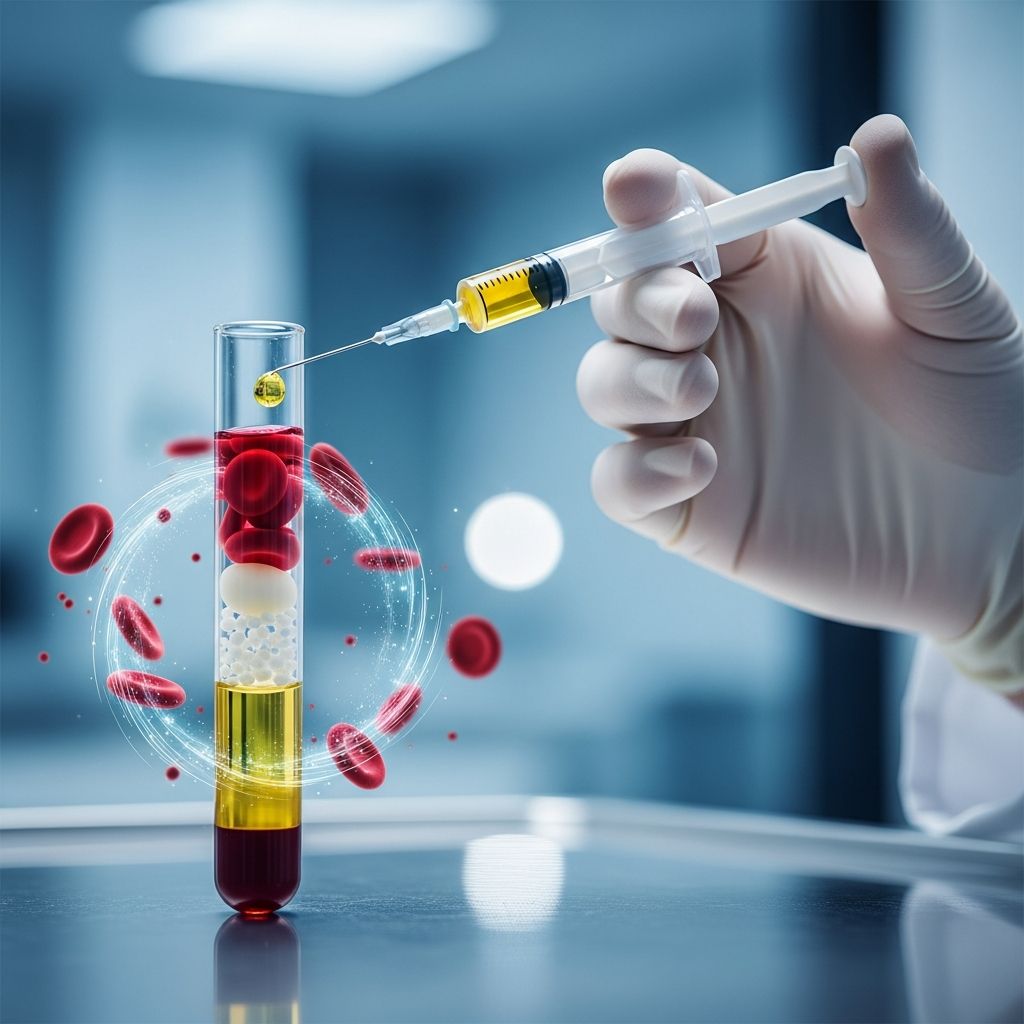
Platelet-rich plasma (PRP) is a biologic medicine derived from your own blood that healthcare providers use to stimulate healing in diseased or injured tissues. This innovative therapeutic approach harnesses the natural healing power of your body’s own platelets to promote tissue regeneration and reduce pain. PRP therapy represents a significant advancement in regenerative medicine, offering patients a minimally invasive alternative to traditional treatments for various musculoskeletal conditions.
The fundamental concept behind PRP therapy is straightforward yet powerful: your blood contains platelets that play a crucial role in wound healing and tissue repair. Healthcare providers process your blood to concentrate the number of platelets in the plasma and then inject this enriched solution back into your body at the site of injury or disease. This concentrated formula contains five to ten times as many platelets as a normal blood sample, significantly amplifying the healing potential at the treatment site.
What Is Platelet-Rich Plasma?
Platelets are small cell fragments found within your blood that serve multiple critical functions. Beyond their well-known role in blood clotting, platelets contain special proteins called growth factors that possess remarkable healing properties. These growth factors are the key therapeutic agents in PRP therapy, working to recruit and stimulate reparative cells at the injection site.
Plasma is the liquid component of your blood that carries these platelets. When healthcare providers prepare PRP, they take a sample of your blood and process it in a centrifuge machine, which spins rapidly to separate the blood components. This separation process isolates the platelets and concentrates them within the plasma, creating a potent therapeutic solution. A typical PRP injection contains approximately 94% platelets compared to only 6% in normal blood, with growth factor concentrations five to ten times higher than what’s found in regular blood samples.
How PRP Works: The Healing Mechanism
When PRP is injected into injured or diseased tissue, the activated platelets release growth factors that initiate a cascade of healing responses. These growth factors work by recruiting reparative cells to the affected area and increasing their proliferation, essentially accelerating your body’s natural healing process. The mechanism is entirely biologic and harnesses your own cellular resources to promote tissue regeneration.
PRP therapy can accelerate the healing and regeneration of injured tendons, ligaments, muscles, and joints. The therapy works by using each individual patient’s own blood platelets and growth factors to heal and improve musculoskeletal symptoms. This approach means there’s no risk of rejection since the treatment uses your own biological material, making it a safe and natural option for those seeking regenerative solutions.
Conditions Treated with PRP Injections
PRP therapy has demonstrated effectiveness across a wide range of orthopedic and medical conditions. Clinical studies have shown that PRP injections improve function and decrease pain in multiple joints and tissues throughout the body.
Musculoskeletal Conditions: PRP is particularly effective for muscle, ligament, and tendon injuries, making it a valuable treatment option for athletes and active individuals. The therapy has shown promising results in treating arthritis, fractures, and various soft tissue injuries. Specific areas where PRP has been successfully applied include the elbow, wrist, shoulder, hip, knee, and ankle.
Osteoarthritis: PRP injections can ease the pain of osteoarthritis, offering relief without the need for invasive surgery. For patients facing joint replacement, PRP therapy can potentially delay or prevent the need for surgical intervention.
Related Stories



Cosmetic and Hair Loss Applications: Beyond musculoskeletal uses, PRP can be injected into aging skin or applied during microneedling procedures for facial rejuvenation. Additionally, PRP is injected into the scalp to treat hair thinning and hair loss conditions, stimulating natural hair growth through the concentrated growth factors.
The PRP Injection Procedure: Step-by-Step Process
Understanding what to expect during a PRP injection procedure helps patients prepare mentally and physically for their treatment. The entire process is designed to be minimally invasive while maintaining strict sterile techniques.
Blood Collection
Your healthcare provider begins by drawing approximately 10 milliliters of blood from a large vein in your elbow, similar to a routine blood test. The blood is collected in a special tube using sterile techniques to maintain the integrity of the sample.
Centrifugation and Processing
The collected blood is then placed in a centrifuge machine that spins rapidly to separate its components. This separation process takes approximately 10 to 15 minutes and isolates the platelets from red blood cells, white blood cells, and other plasma components. The result is a highly concentrated platelet-rich plasma ready for injection. Processing typically takes around 30-45 minutes from start to finish.
Anesthesia and Injection Site Preparation
Once the PRP is prepared, the injured area of your body is first cleansed with an antiseptic solution and numbed using local anesthesia. This ensures your comfort throughout the injection process. You will be positioned appropriately depending on the injection site to allow the healthcare provider optimal access.
PRP Injection
The platelet-rich portion of your blood is drawn sterilely into a syringe and injected directly into the targeted joint or affected tissue by your healthcare provider. In many cases, ultrasound or X-ray imaging is used to guide the needle placement, ensuring precision and accuracy in delivering the PRP to the exact location requiring treatment. A nurse monitors your vital signs throughout the procedure to ensure your safety and comfort.
Recovery and Aftercare
Once the procedure is complete, a plaster is placed over the injection site, and you will be transferred to the recovery room for observation where nursing staff monitors your vital signs. The total procedure time typically ranges from 60 to 90 minutes, though this can vary depending on the specific injection site and individual circumstances. Most patients can return to normal activities within a few days after the injection, though it’s advisable to avoid strenuous activities during the initial recovery period to maximize effectiveness.
What to Expect After PRP Treatment
You may experience mild soreness at the injection site and some temporary numbness in the area of the procedure. These symptoms are normal and typically resolve within a few days. Ice can be used to alleviate discomfort if needed, and most people feel only pressure during the treatment with minimal to no pain.
PRP Treatment Timeline and Results
One important aspect of PRP therapy to understand is that it works differently from some other injection treatments. While steroid injections might provide immediate relief, PRP requires time to manifest its effects and promote long-term healing. Patients often notice gradual improvements over several weeks rather than immediate pain relief.
The effects of a PRP injection may last for six months to a year or longer, depending on your condition. During this time, your symptoms should continue to improve for several months as the healing process unfolds. Significant benefits usually become apparent between 4 to 12 weeks post-injection. In a survey of patients who received PRP, approximately 70% experienced considerable pain reduction after three months, highlighting PRP’s role in sustained recovery.
Most patients usually require 1 to 3 sessions of treatment for optimal efficiency. In certain cases, a follow-up PRP injection may be performed to augment the healing response and provide additional therapeutic benefit.
Benefits of PRP Therapy
PRP therapy offers numerous advantages as a treatment option:
Natural and Safe: Because PRP uses your own blood, there is no risk of allergic reaction or rejection. The product injected is 100% your own blood product (autologous).
Minimally Invasive: As a simple and minimally invasive intervention, PRP may reduce the need for surgery and associated complications.
Fast Healing Process: PRP therapy provides a fast, safe, and effective healing process that effectively reduces inflammation and swelling.
Long-Lasting Results: Unlike temporary pain relief solutions, PRP promotes actual tissue healing and regeneration, offering long-term benefits.
Versatile Applications: PRP can be used for various musculoskeletal conditions as well as cosmetic and hair restoration applications.
Considerations and Effectiveness
While PRP therapy has demonstrated significant benefits for many patients, it’s important to have realistic expectations. Not everyone experiences the same level of improvement from PRP injections. Healthcare providers aren’t entirely certain why these results vary among patients, so they can’t predict with certainty that PRP therapy will work for every individual. However, if you have a condition that’s difficult to treat and not going away with conventional therapies, PRP might be worthwhile to try.
As an advanced technique, PRP therapy continues to evolve with ongoing research and clinical application. Several clinical studies have demonstrated positive outcomes, but individual results can vary based on factors such as the specific condition being treated, the severity of the injury or disease, and individual healing capacity.
Pre-Procedure Consultation and Preparation
To ensure the best treatment and intervention, all patients are required to attend a consultation with a physician first, after which the procedure will be scheduled on another day. During this consultation, your healthcare provider will review your medical history, current medications, and any pre-existing conditions that might affect treatment. If you are diabetic or have other medical conditions, inform your doctor as this information is important for treatment planning.
Before your appointment, a routine blood draw will be performed, and your provider will place the blood in a centrifuge to concentrate the platelets and growth factors within the platelets. Your healthcare provider may suggest sedation via an intravenous (IV) line if deemed appropriate, which will keep you comfortable and safe during the procedure.
Frequently Asked Questions About PRP Injections
Q: How long does the PRP injection procedure take?
A: The total procedure time typically ranges from 60 to 90 minutes, though this can vary depending on the injection site and individual circumstances. The blood processing itself takes approximately 30-45 minutes.
Q: How many PRP injections will I need?
A: Most patients usually require 1 to 3 sessions for treatment efficiency. Your healthcare provider will determine the appropriate number of sessions based on your specific condition and response to treatment.
Q: When will I see results from PRP therapy?
A: Results are not immediate. Significant benefits usually become apparent between 4 to 12 weeks post-injection, with gradual improvements occurring over several weeks. The effects may last for six months to a year or longer.
Q: Is PRP therapy painful?
A: Most people feel only pressure during the treatment with minimal to no pain. The injection site is numbed with local anesthesia before the procedure. You may experience mild soreness afterward, which typically resolves within a few days.
Q: Can I return to normal activities after PRP injection?
A: Patients can often return to normal activities within a few days after the injection. However, it is advisable to avoid strenuous activities during the initial recovery period to maximize effectiveness.
Q: Is PRP therapy safe?
A: Yes, PRP therapy is safe because it uses your own blood. There is no risk of allergic reaction or rejection since the treatment uses autologous material derived from your own body.
Q: What conditions can PRP treat?
A: PRP can treat musculoskeletal conditions including muscle, ligament, and tendon injuries; arthritis; fractures; and various joint problems including the elbow, wrist, shoulder, hip, knee, and ankle. It can also be used for cosmetic applications and hair loss treatment.
Q: Will PRP definitely work for my condition?
A: While many patients experience significant benefits from PRP injections, results can vary. Healthcare providers cannot predict with certainty that PRP therapy will work for every individual. However, if you have a condition that’s difficult to treat and not responding to other therapies, PRP may be worthwhile to try.
Conclusion
Platelet-rich plasma (PRP) injection therapy represents a promising advancement in regenerative medicine, offering patients a minimally invasive treatment option for various musculoskeletal conditions, cosmetic applications, and hair loss. By harnessing the healing power of your own blood’s platelets and growth factors, PRP therapy promotes natural tissue regeneration and can potentially delay or prevent the need for surgery. While results vary among individuals and take time to manifest, many patients experience significant pain reduction and functional improvement within weeks to months of treatment. If you’re considering PRP therapy, consult with a qualified healthcare provider to determine if this advanced treatment option is appropriate for your specific condition and medical history.
References
- Platelet-Rich Plasma (PRP) – Cleveland Clinic Abu Dhabi — Cleveland Clinic Abu Dhabi. 2024. https://www.clevelandclinicabudhabi.ae/en/health-hub/health-resource/treatments-and-procedures/platelet-rich-plasma
- Platelet Rich Plasma Therapy — Daniel Myers, MD. 2024. https://www.danielmyermd.com/platelet-rich-plasma-therapy.html
- Platelet Rich Plasma Injections – Cleveland Pain Care — Cleveland Pain Care. 2024. https://www.clevelandpaincare.com/pain-treatments/platelet-rich-plasma-injections/
- Platelet-Rich Plasma (PRP Injection): What It Is & Uses — Cleveland Clinic. 2024. https://my.clevelandclinic.org/health/treatments/platelet-rich-plasma-prp-injection
- PRP Therapy – Regrow Hair – Cleveland Clinic — Cleveland Clinic. 2024. https://my.clevelandclinic.org/cosmetic-plastic-surgery/procedures/prp-therapy
- Embracing the Power of Platelet-Rich Plasma (PRP) Injections — Kamath Orthopedics. 2024. https://www.kamathorthopedics.com/post/embracing-the-power-of-platelet-rich-plasma-prp-injections-unlocking-the-potential-for-joint-heal
- What is the Efficacy of Intra-Articular Platelet-Rich Plasma Injections — National Center for Biotechnology Information (PubMed). 2023. https://pubmed.ncbi.nlm.nih.gov/37972549/
Similar Articles








Read full bio of medha deb