Play and Learning for Children with Low Vision
Discover thoughtfully selected toys and activities designed for developmental growth and sensory engagement.
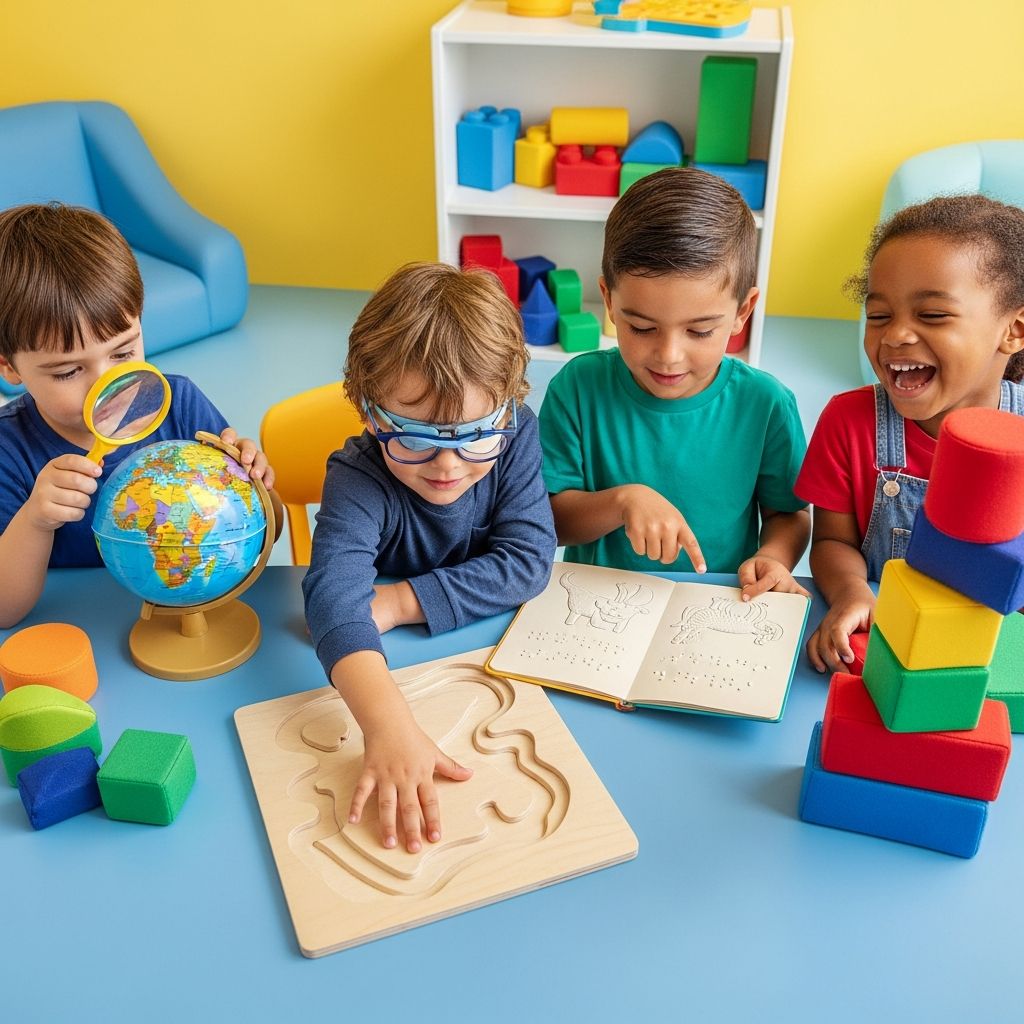
Play serves as a fundamental pillar of childhood development, offering opportunities for cognitive growth, social interaction, and physical skill development. For children with low vision, thoughtfully selected toys and play environments become even more critical, as they provide pathways to explore the world through senses beyond sight. Understanding how to choose appropriate play materials helps ensure that children with vision differences receive the stimulation and support necessary for healthy development while maintaining the joy and spontaneity that make play essential during childhood.
Understanding Sensory Play for Children with Vision Differences
Children with low vision or blindness learn about their environment through auditory, tactile, olfactory, and gustatory channels. Effective toys for these children prioritize multisensory engagement, allowing exploration through touch, sound, and spatial awareness rather than relying primarily on visual information. When selecting play materials, parents and educators should consider how toys deliver information and feedback through non-visual pathways.
Tactile exploration forms the foundation of sensory play for children with low vision. Toys that offer varied textures—smooth surfaces, bumpy ridges, soft materials, and rigid structures—give children important information about their surroundings. This tactile feedback supports the development of fine and gross motor skills while building confidence in physical movement and spatial navigation.
Auditory feedback represents another critical sensory channel. Toys that produce distinct sounds, music, or voice prompts help children locate objects in space, understand cause-and-effect relationships, and remain engaged with play materials. The quality and variety of sounds matter significantly; toys with clear, distinct tones work better than those with muffled or overly complex audio outputs.
Developmental Stages and Age-Appropriate Toy Selection
Infancy and Early Toddler Years (Birth to 18 Months)
During infancy, children develop foundational understanding of cause and effect, object permanence, and basic motor coordination. Toys for this age group should emphasize sensory stimulation through multiple channels simultaneously.
- Musical Devices: Toys that produce sounds in response to movement, such as musical rollers with varied tones and textures, help infants understand the connection between their actions and environmental responses. These devices also provide motivation for reaching, grasping, and rolling movements that strengthen developing muscles.
- Textured Exploration Toys: Soft toys with contrasting textures support tactile discrimination development. Toys combining plastic and fabric elements, for example, allow babies to experience texture variation and develop touch sensitivity.
- Sound-Based Interactive Toys: Battery-operated toys with gentle melodies and distinct tones encourage auditory attention and localization skills, helping infants learn to find sound sources in their environment.
Toddler and Preschool Years (18 Months to 5 Years)
As children enter toddlerhood and early childhood, play becomes more purposeful and imaginative. Toys that support language development, fine motor skill refinement, and emerging problem-solving abilities become increasingly appropriate.
- Interactive Books and Audio Players: Screen-free audio devices with tactile controls support vocabulary development and comprehension skills. Books with physical elements—buttons to push, textures to feel, and pages to turn—combine literacy exposure with manipulative play.
- Cause-and-Effect Toys: Devices that respond to specific actions with interesting results reinforce understanding of how actions produce consequences. Hammers that produce sounds, buttons that trigger recordings, and levers that activate movements all support cognitive development in engaging ways.
- Shape and Texture Matching Games: Tactile boards and puzzles with raised shapes and varying textures build problem-solving skills while developing fine motor control and tactile discrimination abilities.
- Music and Movement Tools: Floor pianos, drum pads, and percussion instruments encourage gross motor development through movement while building auditory processing skills and rhythm recognition.
Related Stories



School-Age Children (5 to 12 Years)
School-age children benefit from toys that bridge independent play with collaborative activities, building confidence and social engagement while supporting academic skill development.
- Coding and STEM Toys: Screen-free programming devices with tactile buttons and audio feedback teach computational thinking while remaining fully accessible. Children use hands-on manipulation to create programs and solve problems.
- Electronic Memory Games: Strategy-based games with audio prompts and tactile buttons develop memory, attention, and concentration while providing opportunities for competitive play.
- Building Systems: Construction toys with braille-labeled components or tactile indicators allow children to design and assemble structures while understanding spatial relationships and engineering principles.
- Sensory and Exploration Devices: Metal detectors and other discovery-based tools transform outdoor play into treasure hunts, building independence and providing physical activity with motivating audio feedback.
Key Characteristics of Effective Play Materials
Auditory Quality and Clarity
Toys should produce clear, distinct sounds that provide useful information without overwhelming the listener. Beeping sounds that indicate object location, distinct musical notes, voice prompts with clear pronunciation, and varied audio outputs help children navigate play experiences successfully. Avoid toys with tinny, muffled, or overly loud sounds that create frustration rather than engagement.
Tactile Features and Texture Variety
Effective toys incorporate diverse tactile elements—smooth and bumpy surfaces, soft and firm materials, large and small elements. Toys designed for manipulation through whole-hand grasping work better initially for children developing fine motor control, while toys encouraging finger-tip exploration support advanced motor skill development. Raised elements, braille labels, and distinct edges help children understand toy structure and function.
Durability and Safety Considerations
Toys should withstand vigorous manipulation without breaking into small parts that pose choking hazards. Sturdy construction ensures that toys remain functional through extended tactile exploration. Materials should be non-toxic and smooth, without sharp edges that could cause injury during intensive handling.
Accessibility Features
Consider whether toys include built-in accessibility features such as braille labeling, large print options, or audio descriptions. Mainstream toys—products designed for general audiences—often work well for children with low vision when they incorporate clear tactile elements and reliable audio feedback. Specialized accessible versions of popular toys may offer enhanced features that improve usability without creating a stigmatized play experience.
Color and Visual Considerations for Children with Remaining Vision
Children with low vision retain varying degrees of functional vision, making color and contrast considerations important even as auditory and tactile features remain primary. High-contrast colors—bright yellows, reds, and blacks—provide visual information for children with residual vision, while remaining toys without vision remain fully functional. Matte finishes reduce glare that can strain eyes or create visual confusion, while appropriately sized toys support comfortable visual access for close-range inspection.
Creating Structured Play Environments
The play space itself significantly impacts how successfully children with low vision engage with toys and activities. Organized, predictable environments help children navigate independently and locate preferred play materials without frustration.
- Consistent Organization: Keep frequently used toys in the same locations, allowing children to develop spatial memory and independence in toy selection and retrieval.
- Clear Space for Movement: Ensure adequate open floor space for gross motor play, exploration, and safe movement without obstacles that could create tripping hazards.
- Accessible Storage: Use tactilely distinct containers or organization systems that allow children to quickly identify and access preferred toys without requiring adult assistance for every selection.
- Designated Activity Zones: Establish specific areas for different types of play—a quiet zone for listening and fine motor activities, an open area for gross motor movement, and a social zone for collaborative games.
Expanding Play Through Toy Combinations and Modifications
Individual toys become more versatile when combined with other materials or modified to enhance accessibility. A floor piano becomes more engaging when paired with a dance activity. Building blocks gain complexity when organized by texture or size. Many mainstream toys become more accessible through simple additions—braille labels applied with a label maker, audio descriptions recorded by family members, or tactile modifications that enhance feature identification.
Parents and educators can expand toy functionality by creating narratives around play, involving multiple children in games that emphasize social interaction over visual outcomes, and incorporating toys into daily routines that make play feel natural and purposeful rather than therapeutic.
Selecting Toys That Build Independence and Confidence
Toys that function intuitively—without requiring constant adult interpretation or assistance—build confidence and support independent play. When children can activate toys, understand their responses, and control play outcomes with minimal adult involvement, they develop agency and self-direction. Toys that produce consistent, predictable responses help children understand cause and effect while remaining manageable for children still developing coordination and strength.
As children demonstrate increasing competence with basic toys, introducing more complex options supports continued development. A child who masters a simple audio player progresses to devices with more buttons and options. A child skilled with basic shape puzzles advances to more challenging tactile matching games. This progression maintains engagement while supporting appropriate developmental challenge.
Integrating Toys into Social Play and Family Engagement
While independent play holds important developmental value, toys that facilitate social interaction and family engagement create additional benefits. Games with turn-taking mechanics, toys that multiple children can play simultaneously, and activities that encourage collaboration build social skills and strengthen family bonds. When siblings, parents, and peers engage with the same toys, children with low vision experience inclusion while developing understanding of social conventions and communication strategies.
Frequently Asked Questions
How do I know if a toy is truly accessible for my child with low vision?
Test toys directly with your child before purchasing when possible. The toy should produce clear, distinct feedback through sound or tactile response when your child interacts with it. Your child should be able to locate and activate toy features with minimal assistance, and the toy should continue functioning reliably through repeated use.
Are specialized toys for blind and low vision children necessary, or can mainstream toys work?
Many mainstream toys work well for children with low vision, particularly those emphasizing auditory and tactile engagement. Specialized toys sometimes offer enhanced accessibility features, but they may appear less age-appropriate or engaging. Consider starting with mainstream options that incorporate strong sensory features, then supplementing with specialized toys that address specific developmental needs.
How much should parents spend on toys for children with low vision?
Quality toys need not be expensive. Many effective play materials cost under $25, while exceptional toys may range from $50 to $100. Schools, libraries, and toy lending organizations often maintain collections of accessible toys that families can borrow, reducing costs while allowing children to experience diverse play options. Focus on toy quality and appropriateness for your child rather than price alone.
Can children with low vision enjoy the same toys as their sighted siblings?
Children with low vision often enjoy toys designed for sighted children, particularly when those toys incorporate strong auditory or tactile elements. Playing with age-typical toys supports inclusion and reduces stigmatization while demonstrating that children with vision differences participate in typical childhood activities. Some toys may require minimal modifications or creative engagement strategies to become fully accessible.
What role do educators and specialists play in toy selection?
Teachers of the visually impaired, orientation and mobility specialists, and occupational therapists bring expertise in matching toys to individual children’s developmental levels and learning styles. These professionals can recommend toys addressing specific skill areas, suggest modifications that enhance accessibility, and help families understand how to maximize learning through play.
Moving Forward with Play-Based Learning
Selecting toys for children with low vision involves thoughtful consideration of how different toys deliver information and engage the senses. By prioritizing auditory clarity, tactile variety, and intuitive functionality while incorporating the individual preferences and developmental stage of each child, parents and educators create play experiences that support growth, build confidence, and honor the fundamental importance of play in childhood. The goal remains unchanged from play for any child—creating joyful, engaging experiences that help young people learn about themselves and their world while building the foundation for lifelong learning and social connection.
References
- Techie Toy Gift Guide — California School for the Blind, State of California. 2024. https://www.csb-cde.ca.gov/instruction/assistivetech/techietoygiftguide.aspx
- Top Toys for Blind or Visually Impaired Children — Indiana Institute for Blind and Visually Impaired (IBVI). https://ibvi.org/blog/top-toys-for-blind-or-visually-impaired-children/
- Toys & Games for Children & Adults with Vision Impairment — Fat Brain Toys. https://www.fatbraintoys.com/special_needs/vision_impairment.cfm
- Choosing Toys and Creating a Play Area for Your Blind or Low Vision Child — American Printing House for the Blind (APH) Connect Center. https://aphconnectcenter.org/familyconnect/browse-by-age/babies-and-toddlers/play/choosing-toys-and-creating-a-play-area-for-your-blind-or-low-vision-child/
- Toy Ideas for Blind Infants, Toddlers, and Preschoolers — National Federation of the Blind (NFB). https://nfb.org/images/nfb/publications/fr/fr5/frfa0108.htm
- Toys for Blind Kids — Braille Superstore. https://www.braillebookstore.com/Toy-Department
Similar Articles








Read full bio of Sneha Tete