Pleura: Anatomy, Function & Clinical Significance
Understand the pleura's vital role in protecting lungs and enabling smooth respiratory movement.
Understanding the Pleura: Anatomy and Function
The pleura is a thin, specialized serous membrane that plays a crucial role in your respiratory system. This delicate tissue surrounds your lungs and lines the interior of your chest wall, creating an essential barrier that enables proper lung function and protects these vital organs. Understanding the pleura’s structure and function is important for comprehending how your body breathes and recognizing potential respiratory complications.
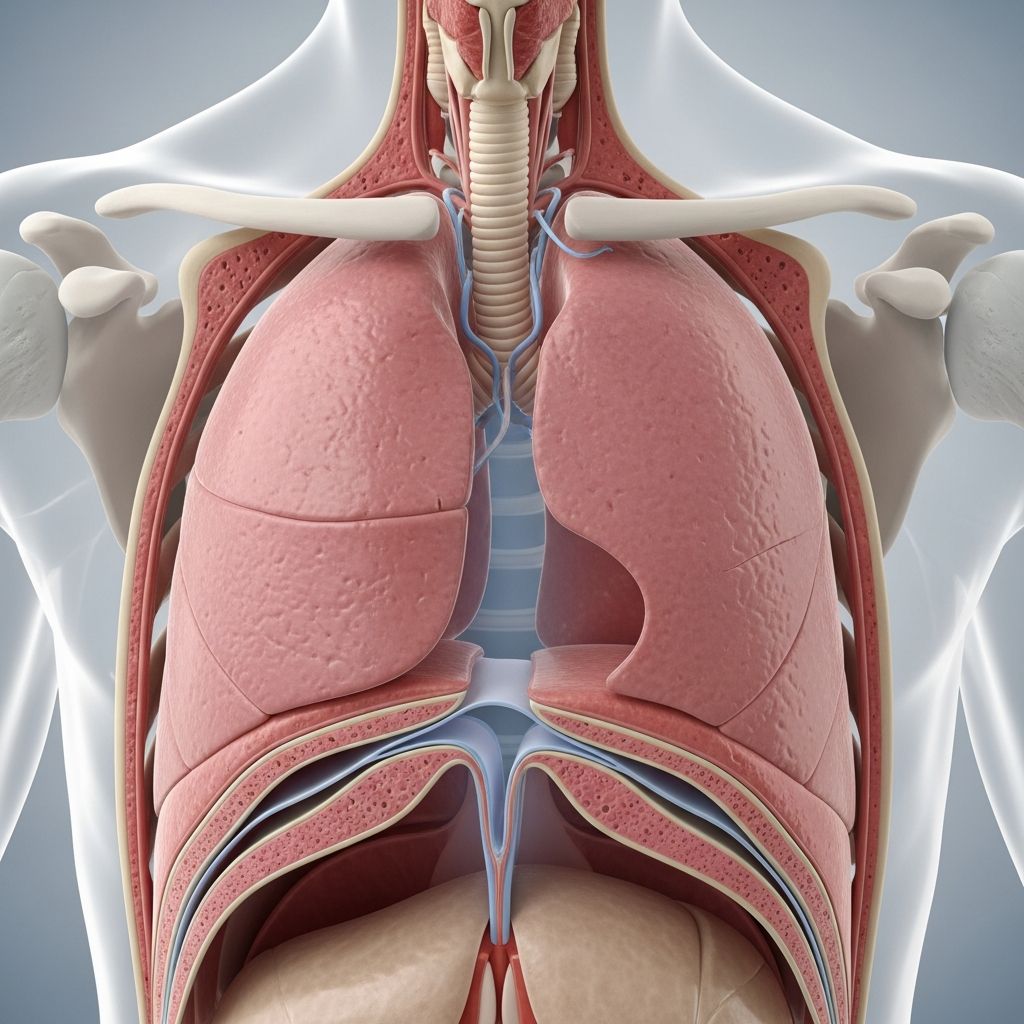
The pleura functions as a two-layered protective covering that folds back on itself to form a closed pleural sac. This unique design creates a space between the layers that facilitates smooth lung movement during breathing. Without this specialized membrane, the mechanical efficiency of respiration would be severely compromised, and the lungs could sustain damage during the constant expansion and contraction of each breath.
Pleura Structure: The Two-Layer Design
The pleura consists of two distinct layers, each with its own specific location and function within your thoracic cavity. Understanding these layers is essential for grasping how the pleura maintains proper lung mechanics.
The Parietal Pleura
The parietal pleura is the outer layer of the pleural membrane. This layer attaches directly to the chest wall, rib cage, and diaphragm. It forms the outer boundary of the pleural sac and serves as a protective barrier between the pleural cavity and the rest of the thoracic cavity. The parietal pleura is divided into several regions based on anatomical location, including the costal pleura (covering the ribs), mediastinal pleura (covering the mediastinum), diaphragmatic pleura (covering the diaphragm), and cervical pleura (extending into the neck region).
The Visceral Pleura
The visceral pleura is the inner layer of the pleural membrane. Unlike the parietal pleura, the visceral pleura adheres directly to the surface of the lungs themselves, covering the lung tissue, blood vessels, nerves, and bronchi. This intimate contact allows the visceral pleura to move in synchronization with lung expansion and contraction. The visceral pleura is so firmly attached to the lung surface that it cannot be separated from it under normal circumstances.
The Pleural Cavity and Pleural Fluid
Between the two pleural layers exists a potential space called the pleural cavity. Under normal, healthy conditions, this space contains only a tiny amount of serous fluid—typically just 15 to 20 milliliters. This minimal quantity of fluid serves critical functions that enable efficient breathing and lung protection.
Functions of Pleural Fluid
The pleural fluid performs two essential roles in maintaining proper respiratory function. First, it continuously lubricates the pleural surfaces, acting much like a thin layer of oil between moving parts of machinery. This lubrication allows the visceral and parietal pleura to slide smoothly over each other as the lungs expand during inhalation and contract during exhalation. Without this lubricating fluid, each breath would create friction and potentially damage the delicate tissue layers.
Second, the pleural fluid generates surface tension that pulls the visceral and parietal pleura together, keeping them in close contact. This surface tension is particularly important during breathing. As the thoracic cavity expands during inspiration, the surface tension allows the lungs to follow the movement of the chest wall and diaphragm, expanding appropriately to draw in air. The parietal pleura moves outward with the rib cage while the visceral pleura remains attached to the lung tissue, and the pleural fluid’s surface tension maintains their relationship throughout this movement.
Related Stories



Pleural Recesses: Spaces Within the Cavity
The pleural cavity is not uniformly filled with lung tissue. In certain locations, the parietal pleura comes into contact with itself, creating specialized spaces known as pleural recesses. These recesses are clinically important because they serve as areas where fluid can accumulate.
The Costodiaphragmatic Recess
The costodiaphragmatic recess is located between the diaphragmatic pleura and the costal pleura, situated in the lower portion of the pleural cavity. This recess is the most dependent part of the pleural space when a person is upright. Because of its dependent location, pleural effusions—abnormal accumulations of fluid—typically collect in this recess first. When excess pleural fluid is present, it accumulates in the costodiaphragmatic recess due to gravity, potentially causing the costophrenic angle to become blunted on chest X-rays.
The Costomediastinal Recess
The costomediastinal recess is another space within the pleural cavity, located between the mediastinal pleura and the costal pleura, just posterior to the sternum. This recess is situated in the anterior and medial portion of the thoracic cavity. While less commonly involved in fluid accumulation compared to the costodiaphragmatic recess, the costomediastinal recess can also collect excess fluid in certain pathological conditions.
Blood Supply to the Pleura
The two layers of pleura receive blood from different vascular systems, reflecting their distinct anatomical positions and functions. The visceral pleura receives its blood supply primarily from the bronchial circulation, which is the same blood supply that nourishes the lung tissue itself. This shared blood supply allows for integrated function between the pleura and the underlying lung parenchyma.
In contrast, the parietal pleura receives its blood supply from the intercostal arteries, which run along the ribs and supply the chest wall structures. This separate blood supply system allows the parietal pleura to remain functionally independent while still maintaining close anatomical association with the chest wall and diaphragm. The dual blood supply system ensures that both pleural layers remain well-perfused and healthy, maintaining their protective and functional roles.
Nerve Supply and Pain Sensation
The innervation of the pleura is an important consideration in understanding pleural pain and clinical symptoms. The parietal pleura and visceral pleura have distinctly different nerve supplies, leading to significant clinical differences in pain perception.
The costal and cervical portions of the parietal pleura are innervated by the intercostal nerves, which also supply sensation to the chest wall. The diaphragmatic portion of the parietal pleura receives innervation from the phrenic nerve, which is responsible for controlling diaphragmatic movement during breathing. Because the parietal pleura is supplied by somatic nerves, it possesses significant sensory innervation and can sense pain. This is clinically important because inflammation or irritation of the parietal pleura—a condition called pleuritis—causes sharp chest pain that worsens with breathing and coughing.
The visceral pleura, by contrast, receives its nerve supply through the autonomic nervous system and lacks sensory innervation. Because the visceral pleura cannot sense pain, conditions affecting the visceral pleura alone do not typically cause pain. This anatomical distinction helps clinicians differentiate between various pleural conditions based on the presence or absence of pain symptoms.
Clinical Significance and Common Conditions
The pleura’s importance extends beyond basic anatomy into clinical medicine. Understanding pleural pathology is essential for diagnosing and treating respiratory conditions.
Pleural Effusion
Pleural effusion represents a pathological accumulation of fluid within the pleural cavity, exceeding the normal small amount present in healthy individuals. Rather than the thin lubricating film normally present, pleural effusions involve substantial fluid collection that can compress the lungs and impair breathing. Pleural effusions are classified into two categories: transudative and exudative, depending on the underlying mechanism causing fluid accumulation.
Transudative effusions typically result from systemic factors such as right-sided heart failure, increased capillary hydrostatic pressure, or decreased plasma protein levels. Exudative effusions usually develop from local lung disease, increased capillary permeability due to inflammation or ischemia, or lymphatic obstruction. Multiple mechanisms can contribute to pleural effusion development, including lymphatic obstruction, increased capillary permeability, decreased plasma colloid pressure, and increased negative intrapleural pressure.
Pneumothorax
Pneumothorax occurs when air enters the pleural space, a condition that disrupts normal pleural mechanics. When air penetrates the pleural cavity, it breaks the seal between the visceral and parietal pleura, causing the surface tension that normally keeps these layers together to disappear. This loss of surface tension allows the lung to collapse, as it no longer maintains its expanded relationship with the chest wall. Pneumothorax can result from trauma, rupture of lung tissue, or other causes that compromise the integrity of the pleural space.
Relationship to Adjacent Structures
The pleura does not exist in isolation but maintains important relationships with surrounding anatomical structures. Notably, there is no anatomical connection between the right and left pleural cavities. Each lung is enclosed in its own separate pleural sac, allowing each side to function independently. This anatomical separation means that disease or injury affecting one pleural cavity does not automatically spread to the opposite side.
The mediastinum, the central compartment of the thoracic cavity, lies between the pleural sacs of the right and left lungs. The mediastinal pleura forms the medial boundary of each pleural cavity and contains important structures including the heart, esophagus, trachea, and major blood vessels. The relationship between the pleura and mediastinal structures is clinically important when evaluating thoracic pathology.
Frequently Asked Questions About the Pleura
Q: What is the normal amount of pleural fluid?
A: Normally, the pleural cavity contains only a small amount of serous fluid—approximately 15 to 20 milliliters. This minimal quantity is essential for lubricating the pleural surfaces and maintaining surface tension between the pleural layers.
Q: Why does pleuritis cause pain while visceral pleural disease typically does not?
A: The parietal pleura contains sensory nerve fibers and can sense pain, while the visceral pleura lacks sensory innervation. Therefore, inflammation of the parietal pleura causes sharp chest pain, but visceral pleural disease typically does not produce pain symptoms.
Q: What happens to the pleura during breathing?
A: During inhalation, the parietal pleura moves outward with the expanding rib cage and diaphragm. The pleural fluid’s surface tension maintains contact between the visceral pleura and the expanding parietal pleura, allowing the lungs to expand and fill with air.
Q: How are pleural effusions typically treated?
A: Treatment depends on the underlying cause of the effusion. Options may include addressing the primary condition (such as heart failure management), thoracentesis (draining fluid), medications, or in some cases, more invasive procedures. The specific approach depends on the effusion classification and cause.
Q: Can the pleura regenerate if damaged?
A: While the pleura has some capacity for healing, extensive damage may result in scarring and decreased pleural function. Prevention of pleural injury through appropriate medical care is preferable to relying on regeneration after damage occurs.
References
- Anatomy, Thorax, Lung Pleura And Mediastinum — National Center for Biotechnology Information (NCBI). 2024. https://www.ncbi.nlm.nih.gov/books/NBK519048/
- Lungs: Location, Anatomy, Function & Complications — Cleveland Clinic. 2024. https://my.clevelandclinic.org/health/body/8960-lungs
- Anatomy of the Lungs and Airways — SmartVest. 2024. https://smartvest.com/blog/anatomy-of-the-lungs/
- Phrenic Nerve: Function, Anatomy & Damage — Cleveland Clinic. 2024. https://my.clevelandclinic.org/health/body/22270-phrenic-nerve
- Pleural Effusions: Evaluation and Management — Cleveland Clinic Journal of Medicine. 2005. https://www.ccjm.org/content/ccjom/72/10/854.full.pdf
Similar Articles








Read full bio of medha deb