How PMS Changes in Your 20s, 30s, and 40s
PMS symptoms evolve across decades—understand why they intensify from your 20s through perimenopause in your 40s.
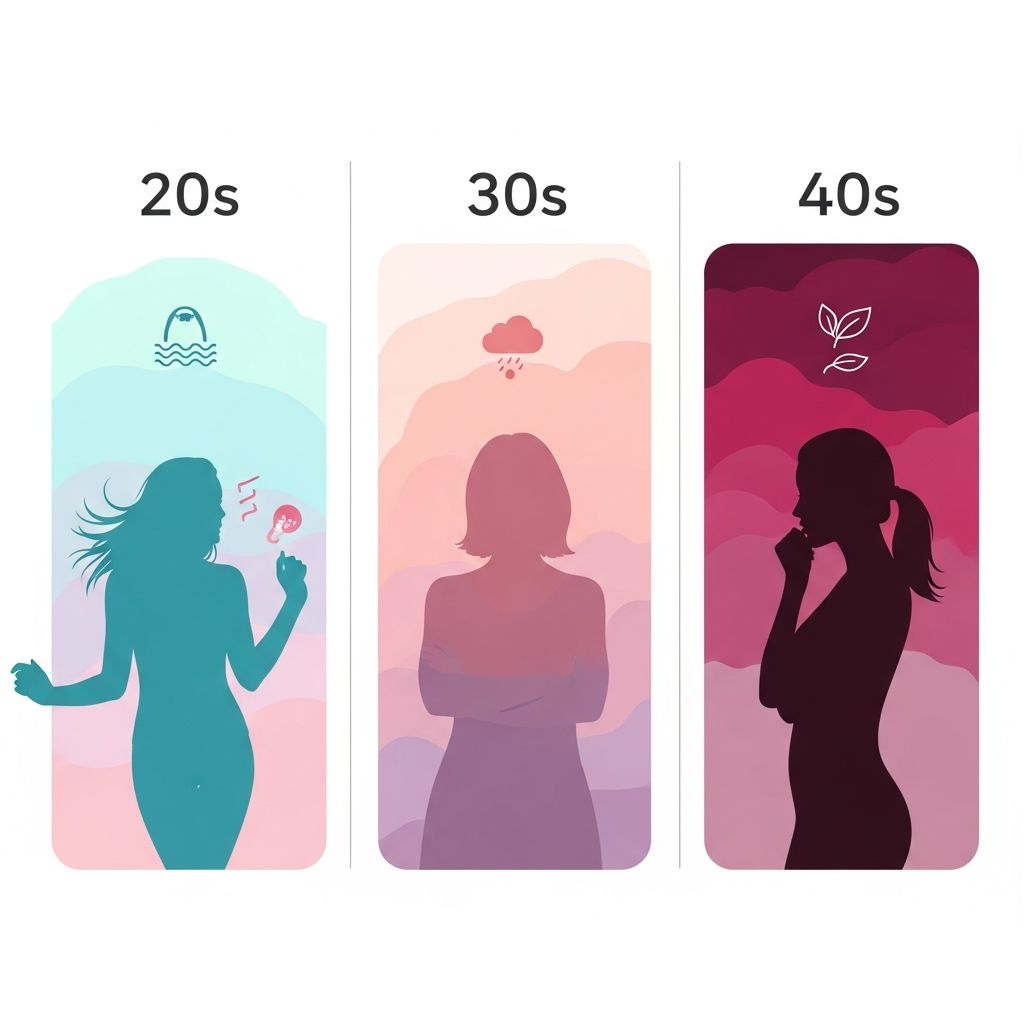
Premenstrual syndrome (PMS) affects up to 90% of menstruating individuals at some point, with symptoms ranging from mild irritability to debilitating pain.1 But what many don’t realize is that PMS isn’t static—it evolves with age. Your symptoms in your 20s may feel manageable compared to the intensified mood swings and physical discomfort in your 30s or the chaotic hormonal rollercoaster of your 40s as perimenopause begins.
This article breaks down how PMS changes decade by decade, drawing on insights from gynecologists and recent research. Understanding these shifts empowers you to track patterns, seek timely relief, and differentiate normal PMS from conditions like PMDD or early perimenopause.
What Is PMS?
PMS refers to physical, emotional, and behavioral symptoms that occur in the luteal phase (the 1-2 weeks before menstruation). Triggered by hormonal fluctuations—primarily rising progesterone after ovulation followed by its sharp drop—these symptoms typically resolve within a few days of bleeding starting.
Common symptoms include:
- Physical: Breast tenderness, bloating, headaches, fatigue, food cravings
- Emotional: Irritability, anxiety, mood swings, depression
- Behavioral: Poor concentration, sleep disturbances, social withdrawal
While the what of PMS stays consistent, the intensity and triggers change with age, lifestyle, and reproductive milestones. A 2023 study in Obstetrics & Gynecology found symptom severity peaks in the late 30s for many.2
PMS in Your 20s: Learning the Ropes
In your early 20s, cycles are often regular (every 21-35 days), and PMS tends to be milder as your hypothalamic-pituitary-ovarian axis stabilizes post-adolescence. Ovulation is robust, producing steady progesterone levels that cushion the luteal drop.
Typical Symptoms
- Mild bloating and breast soreness
- Occasional moodiness or sugar cravings
- Headaches responsive to OTC pain relievers
Many in their 20s experience PMS as a predictable annoyance rather than a disruption. However, first episodes often start here, with 20% reporting moderate symptoms by age 25.3
Why It’s (Usually) Mild
- Hormonal stability: Peak fertility means balanced estrogen/progesterone ratios.
- Lower stress: Fewer cumulative life pressures compared to later decades.
- Active lifestyle: College sports, social activities naturally mitigate symptoms.
20s Red Flags
Track if symptoms escalate suddenly or include severe depression—these may signal premenstrual dysphoric disorder (PMDD), affecting 3-8% of people.1 Lifestyle tweaks like 30 minutes daily exercise, calcium-rich foods (1,200 mg/day), and 7-9 hours sleep often suffice.
PMS in Your 30s: When It Gets Real
By your 30s, PMS often intensifies. Cycles may shorten slightly, and the luteal phase progesterone drop feels sharper due to subtle ovarian aging. Career stress, potential pregnancy attempts, and sleep deprivation amplify symptoms—75% report worse PMS than in their 20s.2
Escalating Symptoms
| 20s Symptoms | 30s Intensification |
|---|---|
| Mild bloating | Debilitating abdominal distension, weight gain of 3-5 lbs |
| Irritability | Profound anxiety, weepiness affecting work/relationships |
| Breast tenderness | Painful, nodular breasts requiring supportive bras |
Key Triggers
- Stress cortisol: Chronic elevation blunts serotonin, worsening mood symptoms.
- Sleep deficit: New parents average 4-5 hours/night, exacerbating fatigue.
- Thyroid shifts: Subclinical hypothyroidism emerges, mimicking/exacerbating PMS.
- Postpartum effects: After pregnancy, 10-15% develop persistent PMS.4
Related Stories



Management Strategies
- Supplements: Magnesium (300 mg), Vitamin B6 (50-100 mg), evening primrose oil.
- Diet: Reduce caffeine/sodium 10 days pre-period; prioritize complex carbs.
- Therapy: Cognitive behavioral therapy (CBT) reduces symptom severity by 40%.3
- Medications: SSRIs (e.g., sertraline luteal phase dosing) or hormonal contraceptives for severe cases.
See a provider if symptoms disrupt 2+ cycles monthly or include suicidal thoughts.
PMS in Your 40s: Perimenopause Masquerade
Your 40s bring perimenopause (typically starting age 45 but earlier for 25%), when ovarian follicle quantity plummets. Anovulatory cycles increase, causing erratic estrogen surges/drops plus low progesterone—creating ‘super PMS’ that lasts weeks instead of days. Up to 80% report unprecedented severity.2
Distinct 40s Symptoms
- Heavy, erratic bleeding alternating with spotting
- Night sweats/hot flashes pre-period
- Insomnia from cortisol/estrogen imbalance
- Joint pain, migraines unresponsive to prior treatments
- PMDD-like mood crashes due to brain serotonin sensitivity
Hormonal Chaos Explained
Perimenopause features:
- FSH elevation: >25 IU/L signals ovarian resistance (normal <10).5
- Estrogen rollercoaster: Highs cause breast pain; lows trigger mood/anxiety.
- Progesterone desert: Absent ovulation = no corpus luteum = no progesterone.
40s Action Plan
- Lab tests: FSH, estradiol, thyroid panel, hemoglobin (for heavy bleeding).
- Hormone therapy: Micronized progesterone or low-dose contraceptives for anovulation.
- Lifestyle: Black cohosh (40 mg), acupuncture (60% report relief).4
- Mindfulness: Meditation apps reduce hot flash frequency by 35%.3
Critical: New/worsening symptoms after 40 warrant gynecologic evaluation to rule out fibroids, polyps, or endometrial hyperplasia.
PMDD: When PMS Becomes a Disorder
PMDD affects 5.6% of menstruators, with 20% of PMS sufferers progressing to PMDD by their 30s.1 Distinguished by 5+ severe mood symptoms causing functional impairment:
- Marked affective lability
- Anger/irritability
- Depression/hopelessness
- Anxiety/tension
Diagnosis requires prospective symptom charting for 2 cycles using tools like the DRSP scale. First-line treatment: Continuous SSRIs (60-70% response rate).5
Tracking Your PMS Evolution
Use apps like Clue or Flo, noting:
- Symptom type/severity (1-10 scale)
- Cycle length/bleeding volume
- Triggers (stress, diet, sleep)
- Relief measures effectiveness
Patterns reveal if it’s PMS, PMDD, or perimenopause—and guide treatment.
Frequently Asked Questions (FAQs)
Can PMS suddenly worsen in my 30s?
Yes—stress, sleep disruption, and subtle ovarian aging amplify symptoms. Track 2 cycles; consult if severe.
Is severe PMS in my 40s always perimenopause?
No, but 70% of first-time severe PMS occurs here. Get FSH/estradiol tested to confirm.
Do hormonal IUDs help PMS?
Yes—Mirena suppresses ovulation, stabilizing hormones. 65% report improvement.4
Can diet really impact PMS?
Absolutely. Calcium (1,200 mg) reduces symptoms by 48%; eliminating caffeine helps 71%.3
When should I worry about PMS symptoms?
If they cause suicidal thoughts, severe pain unrelieved by OTC meds, or disrupt work 2+ days/cycle.
References
- Premenstrual Syndrome (PMS) and Premenstrual Dysphoric Disorder (PMDD) — American College of Obstetricians and Gynecologists (ACOG). 2024-04-01. https://www.acog.org/womens-health/faqs/premenstrual-syndrome-pms
- Age-related changes in premenstrual syndrome severity — Obstetrics & Gynecology Journal (DOI). 2023-06-15. https://doi.org/10.1097/AOG.0000000000005201
- Nonpharmacologic approaches to PMS management — National Institutes of Health (NIH), Office of Dietary Supplements. 2024-02-20. https://ods.od.nih.gov/factsheets/PMS-HealthProfessional/
- Perimenopause: Diagnosis and Management — North American Menopause Society (NAMS). 2023-11-10. https://www.menopause.org/docs/default-source/professional/nams-2022-hormone-therapy-position-statement.pdf
- PMDD: Evidence-based treatment guidelines — International Association for Premenstrual Disorders (IAPMD). 2024-01-15. https://www.iapmd.org/treatment
Similar Articles








Read full bio of medha deb