Pneumatic Retinopexy: Treating Retinal Detachment
Learn about pneumatic retinopexy, a minimally invasive surgical procedure for repairing retinal detachments and tears.
Understanding Pneumatic Retinopexy
Pneumatic retinopexy is a surgical procedure designed to repair certain types of retinal detachments and retinal tears.
Specifically, it is a two-part retinal surgical procedure that combines gas bubble injection with laser or freezing treatment to reattach the retina to the eye wall.
Unlike more invasive surgical interventions, pneumatic retinopexy is typically performed as an outpatient procedure, meaning you do not need to stay overnight in a hospital.
This minimally invasive approach makes it an attractive option for many patients dealing with retinal problems.
What Is Retinal Detachment?
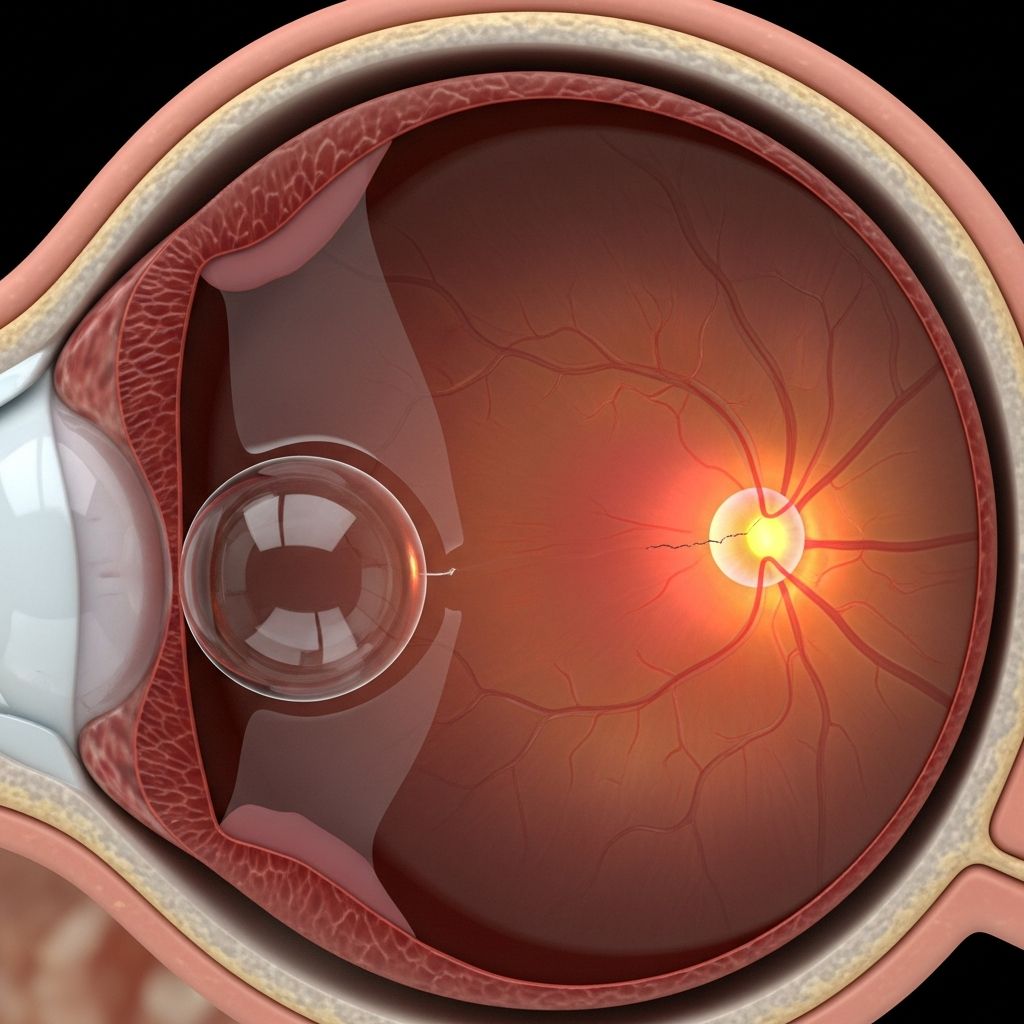
The retina is a light-sensitive tissue lining the back of your eye that plays a crucial role in vision. A retinal detachment occurs when the retina separates from the underlying tissue layer called the retinal pigment epithelium. This separation can lead to vision loss or blindness if not treated promptly.
Rhegmatogenous retinal detachment (RRD), the most common type, occurs when a break or tear in the retina allows fluid from the vitreous (the gel-like substance inside the eye) to seep beneath the retina, causing it to lift away from the eye wall. Without prompt treatment, the detached area can continue to enlarge, potentially affecting central vision.
How Pneumatic Retinopexy Works
Pneumatic retinopexy operates in two distinct stages designed to work together to restore retinal attachment.
Stage One: Gas Bubble Injection
During the first stage, an ophthalmologist injects a small, specially formulated gas bubble into the vitreous cavity of the eye. This gas bubble is carefully positioned to press against the area of the detached retina, effectively pushing it back against the inner wall of the eye. The bubble serves as an internal splint, maintaining pressure on the retina while healing occurs. As your body naturally absorbs the gas over time, the retina remains reattached.
Stage Two: Laser or Freezing Treatment
Following the gas bubble injection, the ophthalmologist applies either laser photocoagulation or cryopexy (freezing treatment) to seal the retinal tear. Laser retinopexy uses a precision-focused laser beam to create a permanent seal around the break in the retina. Alternatively, cryopexy employs a specialized freezing probe to achieve the same result. Both methods work to stabilize the tear and reduce the risk of recurrent retinal detachment by creating an adhesion between the retina and the underlying tissue layer.
Candidates for Pneumatic Retinopexy
Not all retinal detachments are suitable for treatment with pneumatic retinopexy. Your ophthalmologist will evaluate your specific condition to determine if this procedure is appropriate for you.
Ideal candidates typically have retinal detachments that meet certain criteria, including uncomplicated rhegmatogenous retinal detachment with specific tear characteristics and location. The procedure works best when the detachment is limited to certain areas of the retina and when the macula (the central area responsible for detailed vision) has not been affected or has only recently become involved.
Your eye doctor will consider factors such as the size and location of the retinal tear, the extent of the detachment, whether you have had previous eye surgery, and your overall eye health when determining candidacy.
Related Stories



Advantages of Pneumatic Retinopexy
Pneumatic retinopexy offers several notable advantages that make it an attractive treatment option:
- Outpatient procedure: The surgery can typically be performed in your doctor’s office or as a same-day surgery center visit, allowing you to return home the same day.
- Minimally invasive: Unlike some alternative procedures, it does not require external incisions or implants on the eye surface.
- Shorter operative time: The procedure generally takes less time to complete compared to other retinal reattachment surgeries.
- Reduced complications: Studies indicate lower rates of certain complications such as choroidal detachment and myopic shift compared to scleral buckling procedures.
- Faster visual recovery: Many patients experience relatively quick improvement in vision following successful reattachment.
- Preservation of eye structure: No permanent implants or external modifications are made to the eye.
Disadvantages and Limitations
While pneumatic retinopexy offers advantages, it also has certain limitations to consider:
- Lower reattachment rates: Evidence suggests pneumatic retinopexy may result in lower initial rates of retinal reattachment compared to scleral buckling procedures.
- Higher recurrence rates: The procedure may have higher rates of retinal detachment recurrence by six-month follow-up.
- Positioning requirements: After the procedure, you must maintain specific head positioning for several days to ensure the gas bubble remains in the correct location.
- Limited applicability: Not suitable for all types of retinal detachments, particularly those affecting the macula or involving multiple tears.
- Temporary vision obstruction: The gas bubble temporarily blocks part of your vision until it absorbs.
- Travel restrictions: Patients cannot fly or travel to high altitudes while the gas bubble remains in the eye.
The Pneumatic Retinopexy Procedure
Before Your Surgery
Your ophthalmologist will conduct a comprehensive eye examination to confirm the diagnosis and assess your suitability for pneumatic retinopexy. You may receive dilating eye drops and undergo imaging tests such as ultrasound to evaluate the detachment fully. Your doctor will discuss the procedure, potential risks, expected outcomes, and postoperative care requirements. You should arrange for someone to drive you home after the procedure and plan to take time off work during the initial recovery period.
During the Procedure
The procedure typically takes 20 to 45 minutes. Local or topical anesthesia will be administered to numb your eye, and you may also receive mild sedation for comfort. Your ophthalmologist will use an operating microscope for visualization. The specially formulated gas bubble is injected into the vitreous cavity using a fine needle. The ophthalmologist then applies either laser or cryopexy treatment around the retinal break to create a seal. Throughout the procedure, your eye pressure will be monitored.
After the Procedure
Immediately following surgery, your eye will be patched, and you will receive post-operative instructions. You must maintain specific head positioning—typically face-down or with your head tilted—for several days to keep the gas bubble pressing against the retina. Your doctor will provide detailed positioning instructions based on the location of your retinal tear. You should avoid air travel, high-altitude activities, and sleeping on your back during this critical period, as pressure changes can affect the gas bubble.
Recovery and Postoperative Care
Immediate Recovery
During the first week following pneumatic retinopexy, your vision may be blurred or obscured by the gas bubble. Some patients experience mild discomfort, which can typically be managed with prescribed eye drops and over-the-counter pain relievers. Your eyes may feel irritated, and you may notice increased sensitivity to light.
Activity Restrictions
Strict activity limitations are necessary during the initial recovery period. You must avoid bending over, straining, heavy lifting, and strenuous exercise. Reading and screen time should be minimized initially. Most importantly, you must maintain the specific head positioning prescribed by your surgeon to ensure the gas bubble remains in the correct location against the retina.
Timeline for Gas Bubble Absorption
Depending on the type of gas used, the bubble will gradually absorb and be replaced by natural fluids produced by your eye. Certain gases are designed to absorb within two to four weeks, while others may persist for longer periods. As the bubble shrinks, your vision will gradually improve. Your ophthalmologist will monitor the bubble’s progression during follow-up appointments.
Follow-Up Care
Attend all scheduled follow-up appointments with your ophthalmologist. These visits are crucial for monitoring the reattachment process and detecting any complications early. Your doctor will assess retinal attachment, check eye pressure, and evaluate your vision recovery. Most patients can resume normal activities gradually after several weeks, though strenuous activity should be avoided for at least one to two months.
Potential Complications and Risks
While pneumatic retinopexy is generally safe, like all surgical procedures, it carries potential risks:
- Infection: Though rare, eye infection can occur after surgery.
- Increased eye pressure (glaucoma): Temporary or sustained elevation in intraocular pressure may occur.
- Cataract formation: Clouding of the lens may develop or progress.
- Hemorrhage: Bleeding inside the eye can occur in some cases.
- Macular pucker: Scar tissue may form on the macula, affecting central vision.
- Proliferative vitreoretinopathy (PVR): Scar tissue can form in the vitreous, potentially causing redetachment.
- Failed reattachment: The retina may not reattach or may redetach after successful initial reattachment.
- Myopic shift: Refractive changes may occur in your vision prescription.
Comparison With Alternative Procedures
| Procedure | Approach | Reattachment Rate | Recovery Time | Outpatient Option |
|---|---|---|---|---|
| Pneumatic Retinopexy | Gas bubble injection with laser or cryo | Lower than scleral buckle | Weeks to months | Yes |
| Scleral Buckling | Silicone band sutured around eye | Higher than pneumatic retinopexy | Several weeks | Usually yes |
| Vitrectomy | Vitreous removal and replacement | Generally high | Several weeks | Yes |
Expected Outcomes and Success Rates
Research indicates that pneumatic retinopexy achieves retinal reattachment in approximately 70-80% of appropriately selected cases within the first six months. However, pneumatic retinopexy may result in lower rates of retinal reattachment and higher rates of recurrence compared to scleral buckle procedures. The procedure’s effectiveness depends significantly on careful patient selection and strict adherence to postoperative positioning instructions.
Visual recovery varies among patients. Some experience significant vision improvement if the macula was not previously detached. However, if the macula was detached prior to surgery, vision recovery may be more limited, though reattachment still helps prevent further vision loss.
Frequently Asked Questions
Q: Is pneumatic retinopexy painful?
A: The procedure itself should not be painful due to anesthesia. However, you may experience mild discomfort or irritation afterward, which is typically manageable with prescribed medications and over-the-counter pain relievers.
Q: How long does the gas bubble remain in my eye?
A: The duration depends on the type of gas used. Standard gases typically absorb within 2-4 weeks, while longer-acting gases may persist for 6-8 weeks. Your ophthalmologist will inform you of the specific timeline for your procedure.
Q: Can I fly after pneumatic retinopexy?
A: No, you should not fly or travel to high altitudes while the gas bubble remains in your eye. Pressure changes during flight can expand the bubble dangerously. Wait until your ophthalmologist confirms the bubble has completely absorbed.
Q: What activities should I avoid during recovery?
A: Avoid bending over, straining, heavy lifting, strenuous exercise, and activities that could increase eye pressure. Follow your doctor’s specific positioning instructions carefully. Most normal activities can gradually resume after several weeks.
Q: What is the success rate of pneumatic retinopexy?
A: Success rates range from 70-80% for appropriate candidates within the first six months. However, rates are lower than scleral buckle procedures, and recurrence rates are higher. Individual outcomes depend on factors such as tear size, location, and patient compliance with postoperative instructions.
Q: Will my vision return to normal after pneumatic retinopexy?
A: Vision improvement varies. If detected early and the macula was not detached, substantial vision recovery is possible. However, if the macula was detached, vision may not return completely, though reattachment prevents further deterioration.
Q: Are there alternatives to pneumatic retinopexy?
A: Yes. Scleral buckling and vitrectomy are alternative procedures. Your ophthalmologist will recommend the best option based on your specific retinal detachment characteristics and overall eye health.
References
- What is Retinal Surgery? — Vision Hospital Group. 2024. https://visionhospitalgroup.com.au/news/what-is-retinal-surgery/
- Pneumatic Retinopexy versus Scleral Buckle for Repairing Simple Rhegmatogenous Retinal Detachments — Cochrane Database Systematic Review. 2015-05-07. https://pubmed.ncbi.nlm.nih.gov/25950286/
- Detached Retina: Symptoms, Surgery & Recovery — NVISION Centers. 2024. https://www.nvisioncenters.com/conditions/retinal-detachment/surgery/
- Pneumatic Retinopexy for Retinal Detachment — Hartford HealthCare. 2024. https://hhcmg.hartfordhealthcare.org/resources/health-resources/health-library/detail?id=hw187768
Similar Articles








Read full bio of Sneha Tete