Pneumoconiosis: Occupational Lung Disease
Understanding pneumoconiosis: causes, symptoms, diagnosis, and treatment options.
What Is Pneumoconiosis?
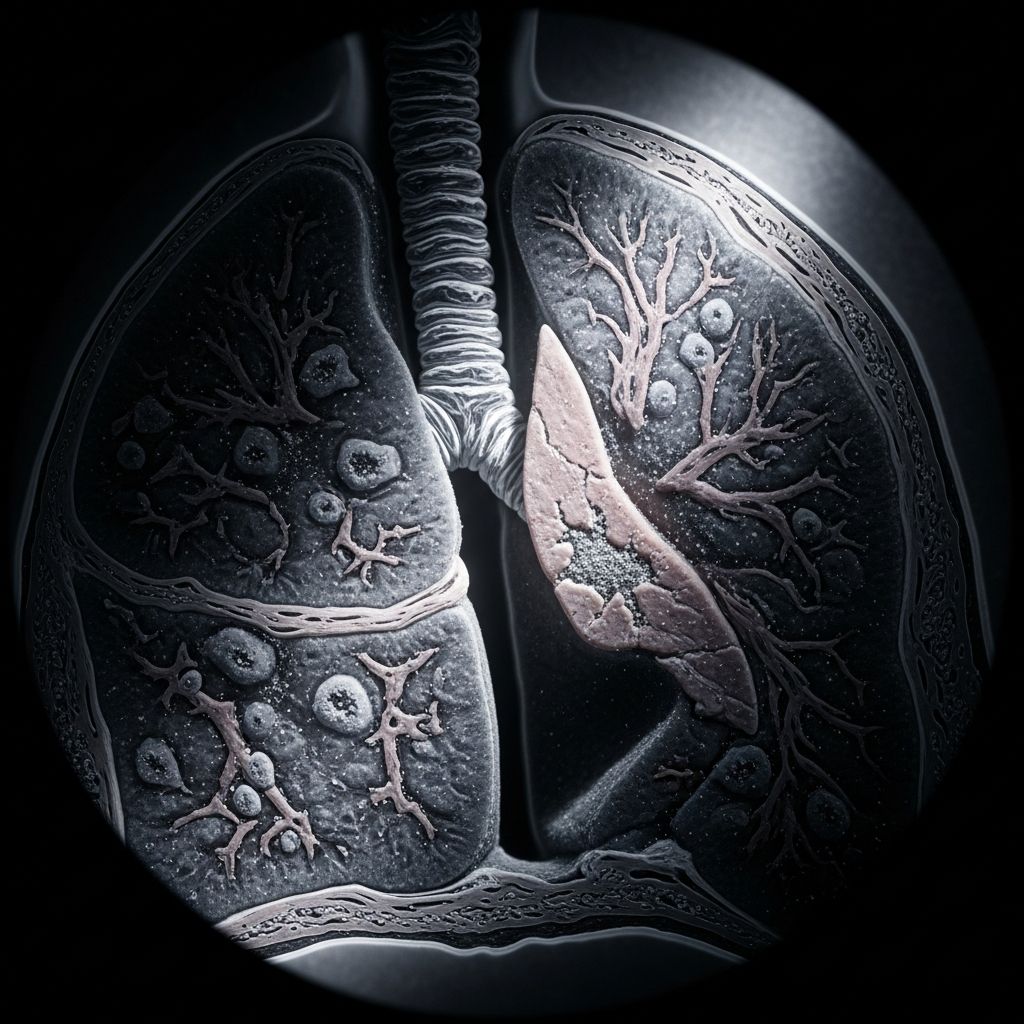
Pneumoconiosis is an occupational lung disease that develops from prolonged inhalation of fine mineral or chemical dust particles. The condition represents a significant health concern for workers in various industries, particularly mining, construction, and manufacturing. Unlike acute respiratory conditions, pneumoconiosis typically develops gradually over years or decades of exposure to harmful dust particles in the workplace. When these microscopic particles accumulate in the lungs, they trigger an inflammatory response from the immune system, which attempts to destroy the foreign invaders. This inflammatory process can result in scarring of lung tissue, making it progressively harder to breathe and reducing the lungs’ ability to function effectively.
The disease is characterized by the accumulation of scar tissue in the lungs, which reduces the elasticity and flexibility of lung tissue compared to healthy lung tissue. As a result, individuals with pneumoconiosis often experience a gradual decline in respiratory function and exercise tolerance. The severity of the condition depends on several factors, including the type of dust inhaled, the duration of exposure, the intensity of exposure, and individual susceptibility to the disease.
Types of Pneumoconiosis
Pneumoconiosis encompasses several distinct types, each caused by inhalation of specific mineral or chemical dusts. Understanding the different types is essential for proper diagnosis, management, and prevention. The most common types include:
- Silicosis: Caused by inhaling crystalline silica dust, commonly found in mining, sandblasting, stone cutting, and foundry work.
- Asbestosis: Results from exposure to asbestos fibers, historically prevalent in construction, insulation, and shipbuilding industries.
- Coal Worker Pneumoconiosis (Black Lung Disease): Develops from exposure to coal dust in underground and surface mining operations.
- Talcosis: Caused by inhalation of talc dust, affecting workers in talc mining and processing industries.
- Berylliosis: Results from exposure to beryllium dust, found in aerospace and electronics manufacturing.
- Siderosis: Caused by iron oxide dust exposure in steel and welding industries.
Other forms of pneumoconiosis can be caused by inhaling dusts containing aluminum, antimony, barium, graphite, kaolin, and mica.
Causes and Risk Factors
Pneumoconiosis results from the accumulation of fine inhaled particles that cause an inflammatory reaction within the lungs. The primary cause is prolonged occupational exposure to mineral or chemical dust. Workers in specific industries face significantly elevated risk, including coal miners, construction workers, sandblasters, foundry workers, and those in textile manufacturing.
The development of pneumoconiosis depends on multiple factors. The type of dust is critical—some particles, such as crystalline silica and asbestos fibers, are particularly harmful and more likely to cause progressive fibrosis. The duration of employment correlates directly with pneumoconiosis risk, as the length of exposure plays a crucial role in disease development. Most cases develop after years of chronic exposure, though rapidly progressive forms of silicosis can occur after short periods of intense exposure.
Cumulative dust exposure represents the most important risk factor. Workers engaged in cutting, drilling, or extraction activities closer to the dust source typically face greater occupational risk. Additionally, smoking significantly accelerates disease progression and increases the severity of symptoms. Individuals who smoke and have occupational dust exposure experience worse respiratory outcomes compared to non-smoking workers with similar exposure levels.
How Pneumoconiosis Develops
The pathophysiology of pneumoconiosis involves a complex inflammatory cascade triggered when inhaled particles enter the respiratory system. When fine dust particles—those measuring under five microns—escape the lungs’ natural defense mechanism of mucociliary clearance, they deposit in the terminal bronchioles and alveoli, the gas exchange regions of the lungs.
Related Stories



Once deposited, alveolar macrophages engulf the smaller particles through a process called phagocytosis. During this process, inflammatory cytokines including interleukin-1 beta and tumor necrosis factor-alpha are released, along with lysosomal enzymes and free radicals. These inflammatory mediators trigger a cascade of cellular responses, activating lymphocytes and epithelial cells to release additional inflammatory substances including matrix metalloproteinases and transforming growth factor-beta.
This inflammatory response stimulates fibroblasts to replicate and proliferate, causing them to surround the dust particles and form nodules. Over time, these nodules can lead to massive fibrosis, as seen in conditions like coal worker’s pneumoconiosis and silicosis. The progressive scarring reduces lung elasticity, impairs gas exchange, and leads to progressive respiratory impairment.
Symptoms and Signs
The symptoms of pneumoconiosis tend to be nonspecific and may overlap with other pulmonary conditions such as chronic bronchitis, chronic obstructive pulmonary disease, and emphysema. Early-stage disease may be asymptomatic, with abnormalities detected only on chest imaging. Common symptoms include:
- Shortness of breath (dyspnea), particularly during exertion
- Persistent, nonproductive cough that develops gradually
- Chest tightness or chest pain
- Decreased exercise tolerance
- Black sputum or mucus production (particularly in coal worker pneumoconiosis)
- Wheezing or decreased breath sounds
Initial symptoms typically occur after strenuous activity but as the disease progresses, may become present at rest as well. In severe cases where scarring is extensive, oxygen may be prevented from reaching the blood easily, resulting in low blood oxygen levels (hypoxemia). This puts additional stress on vital organs such as the heart and brain, causing secondary symptoms and complications. Some individuals may develop pulmonary hypertension, further compromising cardiovascular and respiratory function.
Diagnosis
Accurate diagnosis of pneumoconiosis requires a comprehensive approach combining occupational history, clinical evaluation, and diagnostic testing. A thorough occupational history is essential, exploring both the type of exposure and duration to harmful inhalants. Healthcare providers should carefully document workplace exposures, job duties, and timeline of employment in dusty industries.
Chest Imaging: Chest X-rays represent the primary diagnostic imaging tool, revealing characteristic patterns of small opacities or nodules in the lungs. High-resolution computed tomography (HRCT) scans may provide additional detail, particularly in advanced disease.
Pulmonary Function Tests: Spirometry and other pulmonary function tests assess how well the lungs function by measuring air volume and flow rates. These tests help determine the degree of respiratory impairment and guide treatment decisions.
Clinical Presentation: The variable clinical presentation ranges from limited pneumoconiosis with minimal symptoms to progressive massive fibrosis with significant impaired lung function. Disease can progress even after exposure ceases, particularly in fibrotic forms.
Treatment Options
Pneumoconiosis cannot be cured, and there is no treatment that can remove the specks of mineral dust already deposited in the lungs. Instead, treatment focuses on managing symptoms, slowing disease progression, and improving quality of life. The most important step in treatment is to stop further exposure to the dust or chemical that caused the disease.
Primary Treatment Approaches
Cessation of Exposure: Immediate cessation of occupational exposure is critical to prevent further lung damage and disease progression. Workers should be removed from the offending dust environment and reassigned to dust-free positions if possible.
Smoking Cessation: Smoking dramatically accelerates disease progression and worsens respiratory outcomes. Individuals with pneumoconiosis who smoke should be strongly encouraged and supported in quitting.
Medications: Healthcare providers may prescribe inhaled medications to manage symptoms. Bronchodilators open up the airways if patients experience breathing difficulties, while corticosteroids can curb airway inflammation. These medications help maintain airway patency and reduce symptoms like cough and wheezing.
Supplemental Oxygen Therapy: When blood oxygen levels are low, supplemental oxygen therapy becomes necessary. Patients breathe extra oxygen through a mask or nasal prongs, with oxygen stored in a tank or portable device. Some individuals use this treatment throughout the day, while others need it only at night.
Rehabilitation and Supportive Care
Pulmonary rehabilitation represents an important component of pneumoconiosis management. Community-based or home-based pulmonary rehabilitation programs treat symptoms and enhance exercise tolerance. Most programs include breathing retraining, low or high-intensity exercise training, endurance training, and strength training. These programs help patients maintain functional capacity and improve their ability to perform activities of daily living.
Vaccination and Preventive Measures: Routine vaccinations, including influenza and pneumococcal vaccines, are important parts of living with pneumoconiosis. Regular tuberculosis screening is also recommended, as individuals with pneumoconiosis may have increased susceptibility to tuberculosis infection.
Management of Comorbidities: Patients with pneumoconiosis often develop superimposed emphysema or chronic obstructive pulmonary disease. Workers with obstructive lung disease may benefit from specific treatment for COPD. Additionally, patients with pulmonary hypertension may require specialized management and medications.
Prognosis
The prognosis for pneumoconiosis varies depending on disease stage and severity. There is no cure for pneumoconiosis, and the prognosis is poor in the fibrotic phase of the disorder. Pneumoconiosis typically takes years to develop; however, rapidly progressive forms of silicosis can occur after short periods of intense exposure. When severe, pneumoconiosis often leads to lung impairment, disability, and premature death.
It is important to note that not all individuals exposed to inhaled dust develop lung pathology. Individual genetic factors, immune response, and overall health status influence disease development. Once developed, individuals with pneumoconiosis are at higher risk for respiratory morbidity and premature death compared to the general population. Individuals with early-stage, asymptomatic pneumoconiosis generally have a better prognosis than those with progressive massive fibrosis.
Prevention
Pneumoconioses can be avoided through appropriate dust control measures in the workplace. Prevention is far more effective than treatment, as the disease cannot be cured once established. Key prevention strategies include:
- Engineering Controls: Installing ventilation systems, wet dust suppression methods, and enclosed equipment to minimize dust generation and airborne particle levels.
- Personal Protective Equipment: Providing and ensuring proper use of respiratory protection such as N95 or P100 respirators appropriate for the specific dust exposure.
- Administrative Controls: Rotating workers away from high-exposure areas, establishing dust exposure limits, and monitoring workplace air quality.
- Medical Surveillance: Regular occupational health screening, including baseline and periodic chest X-rays and pulmonary function tests for at-risk workers.
- Worker Education: Training workers about occupational hazards, proper use of protective equipment, and early recognition of symptoms.
Frequently Asked Questions
Q: How long does it take for pneumoconiosis to develop?
A: Pneumoconiosis typically develops gradually over years or decades of dust exposure. Most cases require years of chronic exposure, though rapidly progressive forms of silicosis can develop after shorter periods of intense exposure. Once symptoms appear, the disease can progress even after exposure ceases.
Q: Can pneumoconiosis be cured?
A: No, pneumoconiosis cannot be cured. There is no treatment that can remove mineral dust from the lungs. Treatment focuses on managing symptoms, slowing progression, and improving quality of life through cessation of exposure, medications, oxygen therapy, and pulmonary rehabilitation.
Q: Who is at risk for pneumoconiosis?
A: Workers in occupations with prolonged dust exposure face elevated risk, including coal miners, construction workers, sandblasters, foundry workers, textile workers, and those in manufacturing industries. Risk increases with longer duration of employment and higher cumulative dust exposure. Smokers have worse disease outcomes.
Q: What should I do if I suspect occupational exposure?
A: If you work in a dusty industry and develop respiratory symptoms, consult a healthcare provider and provide a detailed occupational history. Request occupational health screening including chest imaging and pulmonary function tests. If diagnosed, cease dust exposure immediately and follow recommended preventive measures.
Q: Is there any medication that can reverse pneumoconiosis?
A: Currently, there is no medication that can reverse lung scarring caused by pneumoconiosis. However, medications can help manage symptoms by opening airways and reducing inflammation. Research into agents like tetrandrine shows promise in potentially slowing disease progression, but further clinical evidence is needed.
References
- Pneumoconiosis Occupational Pulmonary Fibrosis — Pulmonary Fibrosis Foundation. 2024. https://www.pulmonaryfibrosis.org/understanding-pff/types-of-pulmonary-fibrosis/occupationalpf
- Pneumoconiosis – StatPearls — National Center for Biotechnology Information (NCBI). 2024. https://www.ncbi.nlm.nih.gov/books/NBK555902/
- Pneumoconiosis: Causes, Symptoms, Treatment, Prevention & More — WebMD. 2024. https://www.webmd.com/lung/what-is-pneumoconiosis
- About Pneumoconioses — Centers for Disease Control and Prevention (CDC). 2024. https://www.cdc.gov/niosh/pneumoconioses/about/index.html
- Coal Worker Pneumoconiosis – Pulmonary Disorders — Merck Manuals Professional Edition. 2024. https://www.merckmanuals.com/professional/pulmonary-disorders/environmental-and-occupational-pulmonary-diseases/coal-worker-pneumoconiosis
- Coal Worker’s Pneumoconiosis Symptoms and Diagnosis — American Lung Association. 2024. https://www.lung.org/lung-health-diseases/lung-disease-lookup/black-lung/symptoms-diagnosis
Similar Articles








Read full bio of medha deb