Pneumothorax Overview: Causes, Symptoms, and Treatment
Understanding collapsed lung: comprehensive guide to pneumothorax causes, symptoms, diagnosis, and evidence-based treatment options.
What Is Pneumothorax?
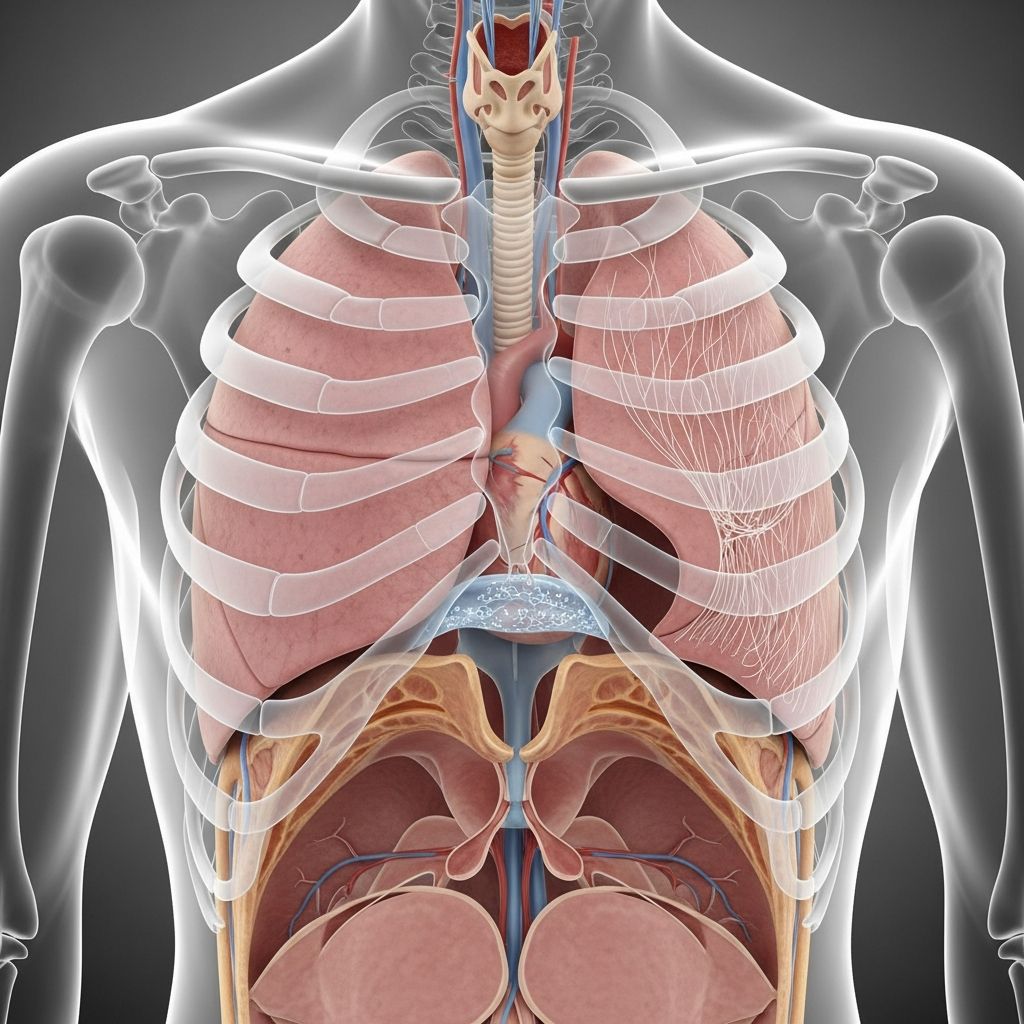
A pneumothorax, commonly known as a collapsed lung, is a medical condition in which air accumulates in the pleural space—the area between the lungs and the chest wall. This air collection creates pressure against the lung, causing it to collapse partially or completely. Normally, the pleural space maintains a negative pressure that allows the lungs to expand and contract smoothly during breathing. When air enters this sealed space, it disrupts this pressure gradient, preventing the lung from functioning properly.
The severity of a pneumothorax can range from mild cases that may resolve on their own to life-threatening emergencies requiring immediate medical intervention. Understanding the different types, causes, and symptoms of pneumothorax is essential for early recognition and appropriate treatment.
Types of Pneumothorax
Pneumothorax is classified into several categories based on the cause and clinical presentation. Understanding these distinctions helps guide treatment decisions and prognosis.
Spontaneous Pneumothorax
Spontaneous pneumothorax occurs without prior injury or trauma. It is further divided into two subtypes:
- Primary Spontaneous Pneumothorax (PSP): Occurs in individuals without known underlying lung disease, typically affecting tall, thin young people. These patients may have small, asymptomatic air-filled sacs (bullae or blebs) on the lung that rupture unexpectedly. Primary spontaneous pneumothorax is associated with increased shear forces and more negative pressure at the apex of the lung.
- Secondary Spontaneous Pneumothorax (SSP): Develops in individuals with pre-existing pulmonary diseases. This type carries more serious symptoms than PSP and poses a higher mortality risk.
Traumatic Pneumothorax
Traumatic pneumothorax results from physical injury to the chest, including blunt force trauma such as rib fractures or penetrating injuries like stab or gunshot wounds. These injuries can cause direct damage to the lung tissue, allowing air to escape into the pleural space.
Iatrogenic Pneumothorax
This type develops as a complication of medical procedures or interventions. The leading cause is transthoracic needle aspiration, typically performed during biopsies, with central venous catheterization being the second most common cause. The incidence of iatrogenic pneumothorax is 5 per 10,000 hospital admissions. Other procedures that can cause iatrogenic pneumothorax include lung biopsies, central venous catheter placement, and chest surgery.
Tension Pneumothorax
Tension pneumothorax is a life-threatening form of the condition that occurs when a one-way valve effect develops in the pleural space. Air enters during inhalation but cannot escape during exhalation, creating progressively increased pressure that collapses the lung and compresses the heart and major blood vessels. This condition is considered a medical emergency requiring immediate decompression.
Risk Factors and Causes
Several factors increase the likelihood of developing pneumotharax. For primary spontaneous pneumothorax, genetic predisposition and lifestyle factors play significant roles. Smoking is a notable risk factor, as current smokers have increased inflammatory cells in small airways and elevated pneumotharax risk. Male sex and increased height are also associated with higher incidence rates.
Related Stories



Secondary spontaneous pneumothorax occurs in patients with underlying lung diseases, including:
- Chronic obstructive pulmonary disease (COPD)
- Cystic fibrosis
- Severe asthma
- Lung infections such as tuberculosis and pneumonia
- Sarcoidosis
- Thoracic endometriosis
- Pulmonary fibrosis
- Lung cancer and sarcomas involving the lungs
Tension pneumothorax most commonly occurs in intensive care unit settings in patients receiving positive-pressure mechanical ventilation.
Symptoms and Signs
The presentation of pneumotharax varies widely, from asymptomatic cases discovered incidentally to severe, life-threatening presentations. Symptoms depend on the size of the air collection and the amount of pressure exerted on the lung.
Common Symptoms
Most patients with pneumothorax experience the following symptoms:
- Sudden onset of chest pain, typically sharp and pleuritic in nature
- Chest pain that may radiate to the ipsilateral (same-side) shoulder
- Shortness of breath (dyspnea)
- Cough
- Increased heart rate (tachycardia)
- Rapid breathing (tachypnea)
- Sharp pain when inhaling
Severe Symptoms
In cases of tension pneumothorax or large pneumotharax, patients may experience more alarming symptoms:
- Blue discoloration of the skin, lips, or fingernails (cyanosis)
- Severe distress and labored respirations
- Profuse sweating (diaphoresis)
- Confusion or dizziness
- Loss of consciousness or coma
- Shock
Patients with primary spontaneous pneumotharax are often minimally symptomatic because healthy individuals tolerate the physiologic changes well. However, patients with secondary spontaneous pneumothorax experience more potent dyspnea due to decreased underlying lung reserve.
Diagnosis
Diagnosis of pneumothorax typically involves imaging studies to visualize the air in the pleural space and assess the extent of lung collapse.
Chest X-ray
A chest X-ray is the primary diagnostic tool for pneumothorax in most cases. This imaging study can clearly show air in the pleural space and the degree of lung collapse, allowing clinicians to determine pneumothorax size and guide treatment decisions.
Advanced Imaging
In cases where a very small pneumothorax is suspected but not visible on chest X-ray, additional imaging may be necessary. Computed tomography (CT) scans and ultrasound can detect smaller air collections that may not be apparent on standard chest radiography.
Treatment Options
Treatment of pneumothorax depends on the size of the air collection, the presence of symptoms, underlying lung disease, and the clinical stability of the patient. Multiple treatment approaches exist, ranging from conservative observation to invasive procedures.
Observation and Oxygen Therapy
For small pneumotharaces without significant symptoms, conservative management with observation may be appropriate. Air reabsorbs from the pleural space naturally at a rate of approximately 1.5% per day. High-flow supplemental oxygen can accelerate this reabsorption process by displacing nitrogen from atmospheric air and changing the pressure gradient between the pleural space and capillaries.
Patients with secondary spontaneous pneumothorax measuring less than 1 cm in depth without dyspnea are typically admitted for 24-hour observation with high-flow oxygen therapy.
Needle Aspiration
For pneumothoraces measuring 1 to 2 cm in depth, needle aspiration may be performed as an initial treatment. After aspiration, the residual pneumothorax size is reassessed. If the depth remains less than 1 cm, management continues with oxygen inhalation and observation. If the depth exceeds 2 cm after aspiration, more invasive intervention becomes necessary.
Pneumotharaces on chest radiography that are approximately 25% or larger typically require needle aspiration if symptomatic.
Tube Thoracostomy
Tube thoracostomy (insertion of a chest tube) is indicated when pneumothorax depth exceeds 2 cm or when breathlessness is present. This procedure allows continuous drainage of air from the pleural space and facilitates lung re-expansion. Tube thoracostomy is also performed when needle aspiration fails to adequately resolve the pneumothorax.
Emergency Decompression for Tension Pneumothorax
Tension pneumothorax is a medical emergency requiring immediate intervention to restore normal pressure in the pleural space. Emergency needle or open decompression is necessary when intrapleural pressure exceeds atmospheric pressure throughout the breathing cycle.
Prognosis and Recovery
The prognosis for pneumothorax varies depending on type and severity. Primary spontaneous pneumothorax in young, healthy individuals generally has an excellent prognosis with appropriate treatment. Secondary spontaneous pneumothorax carries greater risk of mortality due to underlying lung disease and reduced pulmonary reserve.
Recovery time depends on the treatment approach and individual healing capacity. Patients managed conservatively may resolve their pneumothorax within weeks, while those requiring chest tube placement typically recover within 1-2 weeks. Follow-up imaging is essential to confirm lung re-expansion and resolution.
When to Seek Emergency Care
Immediate medical attention is necessary if you experience symptoms suggesting pneumothorax, including severe difficulty breathing, acute chest pain, or signs of shock such as cyanosis or loss of consciousness. These symptoms warrant evaluation at the nearest emergency department to rule out pneumothorax and tension pneumothorax, which can be immediately life-threatening.
Frequently Asked Questions
Q: Can pneumotharax be prevented?
A: While primary spontaneous pneumothorax cannot be completely prevented due to genetic factors, quitting smoking reduces risk significantly. Managing underlying lung diseases helps prevent secondary spontaneous pneumothorax. Avoiding high-risk activities and trauma reduces traumatic pneumothorax risk.
Q: Is pneumothorax life-threatening?
A: Small pneumotharaces are generally not life-threatening and may resolve spontaneously. However, tension pneumothorax is a medical emergency requiring immediate intervention. Large pneumotharaces causing significant breathing difficulty or secondary pneumothorax in patients with compromised lung function can be serious and require urgent treatment.
Q: Can pneumothorax recur?
A: Yes, pneumothorax can recur, particularly primary spontaneous pneumothorax, which has recurrence rates of 20-50%. Secondary spontaneous pneumothorax may recur more frequently in patients with untreated underlying lung disease. Procedures such as pleurodesis may be performed after recurrent episodes to prevent future occurrences.
Q: What should I do if I suspect pneumothorax?
A: Seek immediate medical evaluation if you experience sudden chest pain, shortness of breath, or other concerning symptoms. Do not delay seeking care, as prompt diagnosis and treatment are essential for optimal outcomes. Emergency care is critical if you experience severe breathing difficulty or signs of shock.
Q: How long does recovery take after treatment?
A: Recovery time varies by treatment method. Conservative management with observation may take 2-4 weeks. Needle aspiration typically results in faster recovery within 1-2 weeks. Tube thoracostomy may require 1-3 weeks hospitalization. Full recovery typically occurs within 4-6 weeks with appropriate follow-up care.
References
- Pneumothorax – StatPearls — National Center for Biotechnology Information (NCBI) Bookshelf, National Institutes of Health. 2024. https://www.ncbi.nlm.nih.gov/books/NBK441885/
- Pneumothorax | Pulmonary Medicine — JAMA Network. 2017. https://jamanetwork.com/journals/jama/fullarticle/2653738
- Pneumotharax – Symptoms, Diagnosis and Treatment — BMJ Best Practice. 2025. https://bestpractice.bmj.com/topics/en-gb/504
- Pneumothorax (Collapsed Lung): Symptoms & Treatment — Cleveland Clinic. 2024. https://my.clevelandclinic.org/health/diseases/15304-collapsed-lung-pneumothorax
- Pneumothorax (Collapsed Lung): Causes, Symptoms, and Treatment — Medical News Today. 2023. https://www.medicalnewstoday.com/articles/318110
Similar Articles








Read full bio of Sneha Tete