Polyarteritis Nodosa (PAN): Causes, Symptoms & Treatment
Learn about polyarteritis nodosa, a rare vasculitis affecting medium-sized arteries, its symptoms, diagnosis, and treatment options.
What Is Polyarteritis Nodosa (PAN)?
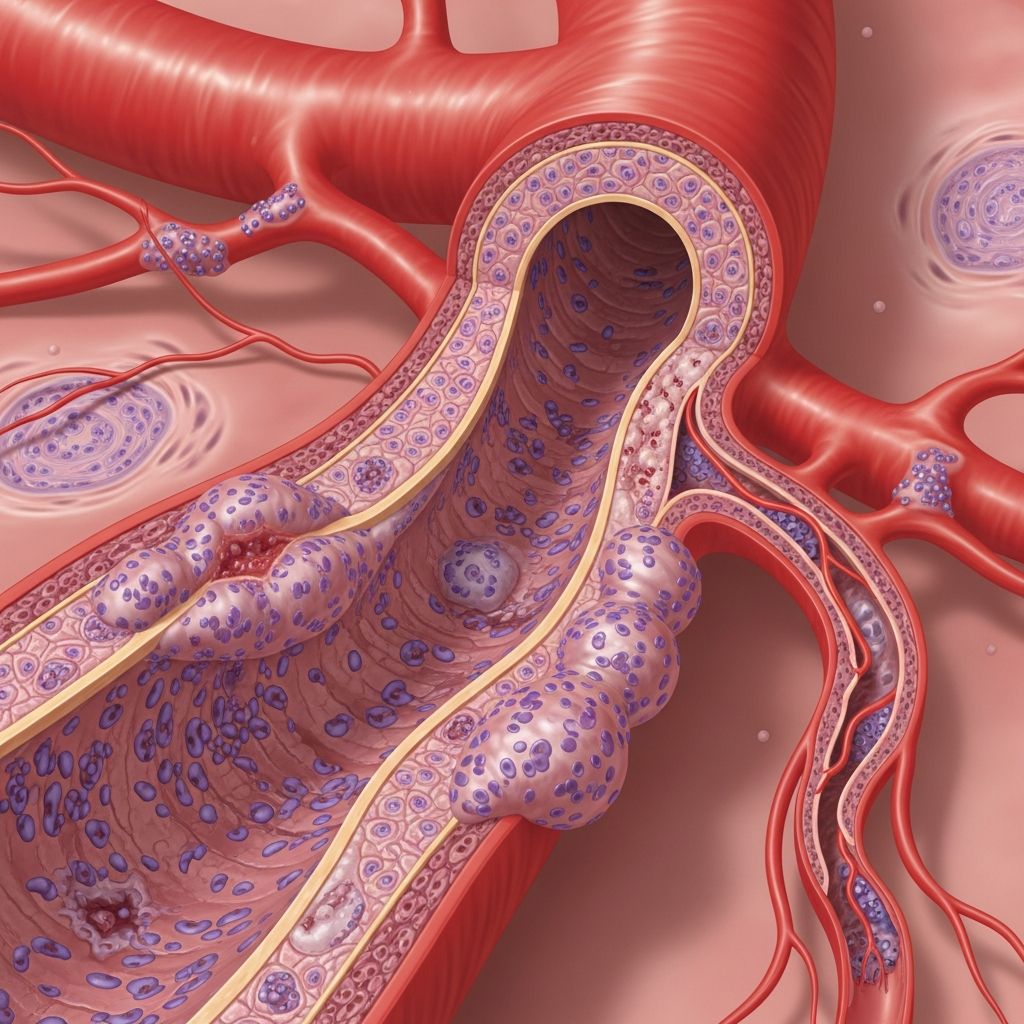
Polyarteritis nodosa (PAN) is a rare systemic vasculitis that affects medium-sized muscular arteries throughout the body. This autoimmune disease causes inflammation and damage to blood vessel walls, which can lead to tissue ischemia and organ dysfunction. Unlike other vasculitic disorders, PAN characteristically does NOT involve the lungs, postcapillary venules, or veins, making it distinct among vasculitic conditions. The disease is characterized by segmental, transmural necrotizing inflammation, most commonly occurring at arterial bifurcation points where blood vessels branch.
PAN belongs to a group of rare disorders known as vasculitides, which cause inflammation of blood vessel walls that can lead to vessel destruction and subsequent organ damage. The condition typically affects multiple organ systems, resulting in a complex clinical presentation that requires careful diagnostic evaluation and prompt treatment to prevent serious complications.
Who Gets Polyarteritis Nodosa?
PAN can affect individuals of any age, though it is relatively uncommon in the general population. The disease affects both men and women, though some studies suggest a slight male predominance. Risk factors and demographic patterns vary, but hepatitis B infection has been identified as a significant risk factor in certain populations. Testing for hepatitis B and C is routinely recommended during the diagnostic workup, as these infections can be associated with PAN development in some patients.
Symptoms of Polyarteritis Nodosa
PAN presents with a diverse array of symptoms that depend on which blood vessels and organs are affected. Patients typically experience systemic manifestations initially, which can progress to involve specific organ systems. The disease presentation can vary significantly from patient to patient.
Common systemic symptoms include:
– Fever- Fatigue and malaise- Unintentional weight loss- Loss of appetite- Myalgia (muscle pain)
Organ-specific symptoms depend on affected areas:
– Abdominal or chest pain- Shortness of breath- Joint pain (arthralgia)- Skin ulcers and sores- High blood pressure (hypertension)- Blood in stool- Polyneuropathy (nerve damage)- Palpable nodules along medium-sized arteries
The kidneys, skin, peripheral nerves, joints, muscles, and gastrointestinal tract are the most commonly affected organs. However, any organ system can be involved, making comprehensive evaluation essential. Renal involvement typically causes renal ischemia and infarction rather than glomerulonephritis, which is an important distinguishing feature of PAN.
Causes and Risk Factors
The exact cause of polyarteritis nodosa remains unclear, but it is recognized as an autoimmune condition where the body’s immune system mistakenly attacks medium-sized arteries. Several factors have been associated with increased risk of developing PAN:
– Hepatitis B infection- Hepatitis C infection- Male gender (slightly higher prevalence)- Middle age to older age groups- Genetic predisposition (in some cases)
The pathophysiology of PAN involves immune-mediated inflammation leading to segmental damage of muscular arteries. Early lesions contain polymorphonuclear leukocytes and occasionally eosinophils, while later lesions contain lymphocytes and plasma cells, reflecting the evolving inflammatory process.
Diagnosis of Polyarteritis Nodosa
Related Stories



Diagnosing PAN is complex and requires multiple diagnostic approaches, as the disease must be confirmed through specific testing rather than clinical presentation alone. A combination of laboratory tests, imaging studies, and tissue examination is typically necessary to establish a definitive diagnosis.
Laboratory Tests:
– Complete blood count (CBC) to measure red and white blood cell levels- Erythrocyte sedimentation rate (ESR) test to measure inflammation- C-reactive protein (CRP) testing- Comprehensive metabolic panel to assess kidney and liver function- Urinalysis to check for proteinuria and microscopic hematuria- Hepatitis B and C serology testing
Laboratory findings in PAN typically show elevated white blood cell counts, elevated inflammatory markers (ESR and CRP), anemia, and abnormal liver function tests. However, importantly, red blood cell casts are NOT present on urinalysis, which helps distinguish PAN from other vasculitic conditions that cause glomerulonephritis.
Imaging and Tissue Diagnosis:
– Biopsy: A tissue biopsy of an affected artery is often the gold standard for confirming PAN diagnosis. Deep skin biopsy provides good diagnostic accuracy, and combined nerve and muscle biopsy should be obtained for patients with peripheral neuropathy.- Arteriography: An X-ray of the arteries that can reveal characteristic findings such as microaneurysms and arterial narrowing- CT scan: Computed tomography uses multiple X-ray angles to create detailed images of affected organs and blood vessels- MRI: Magnetic resonance imaging uses powerful magnets and radio waves to visualize blood vessels and detect organ damage
Treatment Options for Polyarteritis Nodosa
Treatment of PAN depends on disease severity and which organs are involved. The primary goal is to control inflammation, prevent organ damage, and induce remission. A multi-drug approach is often necessary, with medications adjusted based on disease severity and patient response.
For Mild to Moderate Disease:
Patients without serious neurologic, renal, gastrointestinal, or cardiac manifestations may be treated with corticosteroids combined with methotrexate or azathioprine. This approach provides sufficient disease control while minimizing exposure to more aggressive immunosuppressive agents.
For Severe Disease:
Patients with neurologic, renal, gastrointestinal, or cardiac involvement typically require cyclophosphamide plus high-dose corticosteroids, as this combination has shown improved outcomes in severe cases. Cyclophosphamide is a potent immunosuppressive agent reserved for the most serious disease presentations.
Medication Classes Used in PAN Treatment:
– Corticosteroids: High-dose corticosteroids or steroids reduce inflammation and replace certain hormones; however, they can cause side effects, especially with long-term use- Immunosuppressants: Medications such as methotrexate, azathioprine, and cyclophosphamide suppress the immune system’s attack on blood vessels- Antiviral medications: Used primarily for patients with hepatitis B or C co-infection- TNF inhibitors: These agents show promise for patients with deficiency of adenosine deaminase 2 (DADA2) presenting with stroke and vasculitis manifestations
Early and aggressive treatment is crucial, as prompt intervention can put PAN into remission—a state where the disease shows no active signs. Adherence to prescribed medications significantly improves long-term outcomes.
Complications of Polyarteritis Nodosa
If left untreated or inadequately managed, PAN can cause serious and potentially life-threatening complications affecting vital organs:
– Heart attack (myocardial infarction)- Stroke (cerebrovascular accident)- Severe intestinal damage leading to perforation- Kidney failure requiring dialysis- Brain damage and cognitive impairment (occurring 2-3 years after disease onset)- Seizures and altered consciousness- Peripheral nerve damage causing weakness or paralysis
These complications underscore the critical importance of early diagnosis and aggressive treatment to prevent irreversible organ damage.
Prognosis and Long-Term Outlook
The prognosis for patients with PAN has improved significantly with modern treatment protocols. With appropriate treatment, approximately 80% of patients survive for five or more years. However, prognosis varies depending on several factors:
Factors Associated with Better Prognosis:
– Absence of hepatitis B or C co-infection- Disease remission achieved within 18 months of diagnosis- Limited organ involvement- Early initiation of treatment
Factors Associated with Worse Prognosis:
– Renal insufficiency- Gastrointestinal tract involvement- Neurologic involvement- Hepatitis B co-infection (associated with lower 5-year survival rates)
Relapses are less common in PAN compared to other vasculitic disorders, which is a positive prognostic feature. Patients who adhere consistently to their prescribed medication regimen and maintain regular follow-up care demonstrate the best long-term outcomes.
When to See a Healthcare Provider
Patients should seek medical evaluation if they experience:
– Unexplained fever lasting more than a few weeks- Combination of joint pain, muscle pain, and constitutional symptoms- New-onset high blood pressure that is difficult to control- Abdominal or chest pain with fever and weight loss- Skin ulcers or nodules along arteries- Sudden weakness or numbness (footdrop or wristdrop)- Blood in stool or unexplained gastrointestinal symptoms
Early medical evaluation is critical for accurate diagnosis and prompt initiation of treatment.
Frequently Asked Questions
Q: Is polyarteritis nodosa curable?
A: PAN cannot be cured, but it can be managed into remission with appropriate treatment. Most patients respond well to immunosuppressive therapy, and many achieve long-term disease control with medication adherence.
Q: Can PAN affect the lungs?
A: No, lung involvement is not characteristic of PAN, which distinguishes it from other vasculitic conditions. The lungs are typically spared in this disease.
Q: How long does PAN treatment typically last?
A: Treatment duration varies but often involves several years of maintenance therapy after initial induction treatment. The specific duration depends on individual response to treatment and disease activity.
Q: What is the relationship between hepatitis and PAN?
A: Hepatitis B and C infections are associated with increased PAN risk in some populations. Testing for these infections is routine during PAN diagnosis, and antiviral therapy may be necessary for co-infected patients.
Q: How often should PAN patients have follow-up appointments?
A: Follow-up frequency depends on disease activity and treatment response, typically ranging from monthly to quarterly visits during the initial treatment phase, with less frequent visits during maintenance therapy.
References
- Polyarteritis Nodosa (PAN) – Musculoskeletal and Connective Tissue Disorders — Merck Manuals Professional. 2025. https://www.merckmanuals.com/professional/musculoskeletal-and-connective-tissue-disorders/vasculitis/polyarteritis-nodosa-pan
- Polyarteritis Nodosa: A Systematic Review of Test Accuracy and Clinical Utility — PubMed Central/National Institutes of Health. 2021. https://pubmed.ncbi.nlm.nih.gov/33512781/
- Case Study: ‘The Great Imitator’ of Polyarteritis Nodosa — Consult QD, Cleveland Clinic. 2022. https://consultqd.clevelandclinic.org/case-study-the-great-imitator-of-polyarteritis-nodosa
- Polyarteritis Nodosa: Causes, Symptoms and Diagnosis — Healthline Media. 2024. https://www.healthline.com/health/polyarteritis-nodosa
- Polyarteritis Nodosa (PAN) — Global Autoimmune Institute. 2024. https://www.autoimmuneinstitute.org/autoimmune-resources/autoimmune-diseases-list/polyarteritis-nodosa/
- Polyarteritis Nodosa: Symptoms, Treatments, and More — WebMD. 2024. https://www.webmd.com/a-to-z-guides/polyarteritis-nodosa-facts
Similar Articles








Read full bio of Sneha Tete