Polyarteritis Nodosa Pathology: Clinician’s Guide To Diagnosis
Understanding the pathological mechanisms and clinical manifestations of polyarteritis nodosa.
Introduction to Polyarteritis Nodosa Pathology
Polyarteritis nodosa (PAN) is a rare systemic necrotizing vasculitis that primarily affects small and medium-sized muscular arteries throughout the body. This inflammatory disorder results in widespread damage to blood vessel walls, leading to secondary tissue ischemia and multiple organ system involvement. Understanding the pathological mechanisms underlying PAN is essential for clinicians to recognize early manifestations, establish accurate diagnoses, and implement appropriate therapeutic interventions. The disease characteristically spares the lungs while potentially affecting virtually every other organ system in the body.
Pathological Features and Vascular Changes
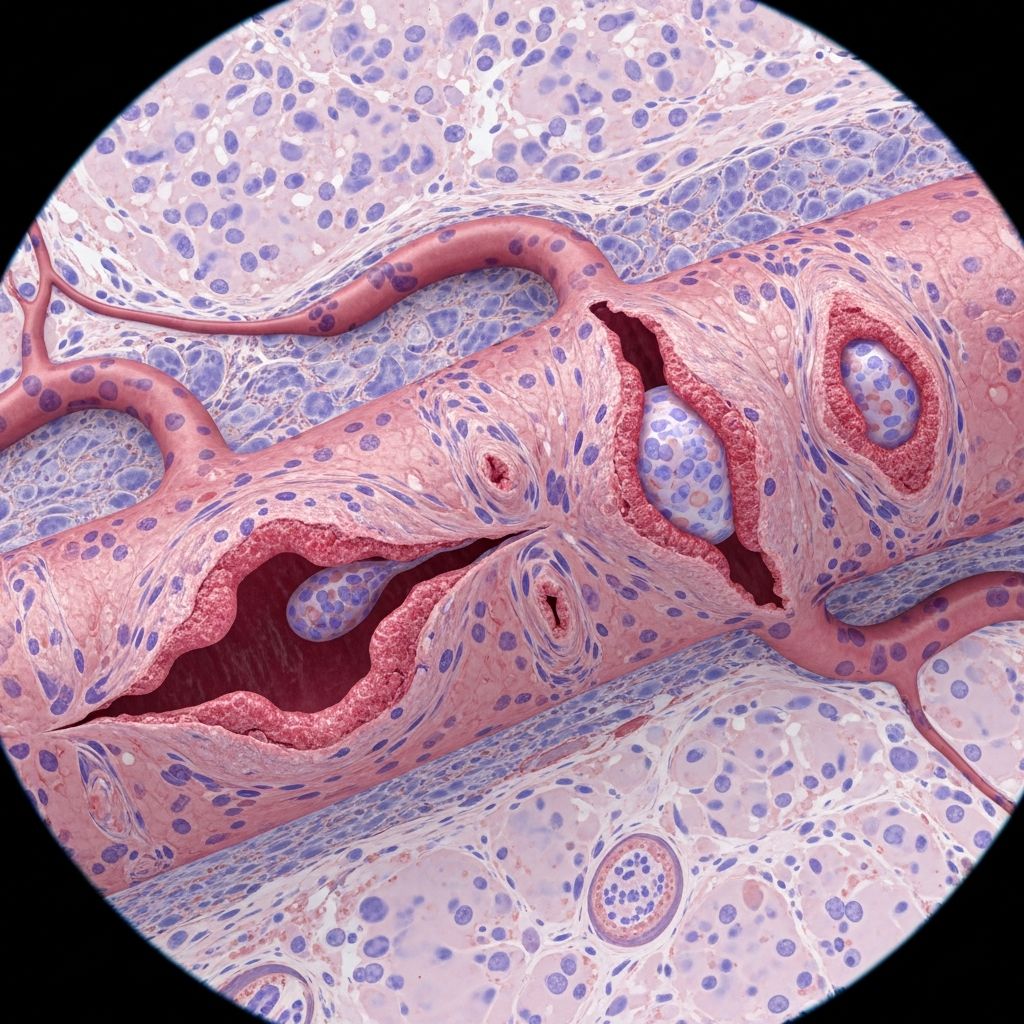
The fundamental pathological hallmark of polyarteritis nodosa is necrotizing inflammation of medium-sized arteries, occasionally extending to small muscular arteries. This inflammatory process involves infiltration of the arterial wall by various immune cells, including neutrophils and other granulocytes, leading to weakening and potential rupture of the affected vessels. The inflammatory cascade results in several characteristic vascular changes:
- Segmental inflammation of the arterial wall
- Fibrinoid necrosis of the vessel wall
- Loss of normal vascular architecture and elasticity
- Formation of microaneurysms due to focal weakening of the arterial wall
- Alternating areas of stenosis (narrowing) and dilation of affected vessels
- Potential thrombosis (blood clot formation) in affected arteries
These pathological changes result in impaired blood flow to tissues supplied by affected arteries, causing tissue ischemia and infarction. The vasculitis may be focal or segmental, meaning that disease activity is not uniformly distributed along the length of affected arteries.
Organ System Involvement and Clinical Manifestations
The kidneys, skin, joints, muscles, peripheral nerves, and gastrointestinal tract represent the most commonly affected organ systems in polyarteritis nodosa. However, the disease’s ability to affect virtually any organ system makes clinical presentation highly variable among patients.
Renal Involvement
Kidney involvement eventually develops in most patients with polyarteritis nodosa and represents one of the most serious complications. Vasculitis affecting renal arteries impairs kidney function, leading to elevation of blood urea nitrogen (BUN) and serum creatinine levels. Hypertension develops in approximately half of all PAN patients due to renal vascular involvement and reduced renal perfusion, which activates the renin-angiotensin system.
Cutaneous and Peripheral Nervous System Manifestations
The skin and peripheral nervous system frequently provide the earliest clinical clues suggestive of vasculitis. Cutaneous manifestations include palpable purpura (raised, palpable skin lesions caused by vascular inflammation), livedo reticularis (a lacy, net-like discoloration of the skin), digital gangrene (tissue death in fingers or toes), and tender subcutaneous nodules. The peripheral nervous system involvement characteristically manifests as mononeuritis multiplex, a pattern of sequential infarction affecting individual mixed motor and sensory nerves. This distinctive neurological pattern, where one mixed motor and sensory nerve is affected after another, represents one of the most specific diagnostic clues for the presence of vasculitis.
Related Stories



Systemic and Multiorgan Features
Polyarteritis nodosa typically presents with nonspecific systemic symptoms that develop gradually over weeks to months. These initial manifestations often include fever, fatigue, generalized weakness, and significant weight loss exceeding 4 kg since disease onset. Patients frequently experience myalgias (muscle pain) and myositis (muscle inflammation), along with arthralgias (joint pain). Gastrointestinal involvement can produce abdominal pain, which may be severe and accompanied by blood in the stool. Cardiac involvement, though less common, can result in chest pain and myocarditis. Testicular pain and tenderness from orchitis occurs in some male patients. Patients are at significant risk for aneurysm formation—abnormal bulgings in weakened arterial walls that can rupture or bleed catastrophically.
Hepatitis B Association and Pathogenic Mechanisms
A crucial aspect of polyarteritis nodosa pathology involves the association with hepatitis B infection. Approximately 10-30% of PAN cases show serological evidence of hepatitis B surface antigen or antibody in serum, indicating current or past infection. The pathogenic mechanism linking hepatitis B to PAN involves immune complex deposition in vessel walls. Circulating immune complexes containing hepatitis B antigen and antibodies deposit in the walls of affected arteries, triggering complement activation and subsequent inflammation. This immune complex-mediated vasculitis explains why hepatitis B-associated PAN requires specific antiviral therapy in addition to immunosuppressive treatment.
Diagnostic Approach and Pathological Confirmation
Establishing the diagnosis of polyarteritis nodosa requires integration of clinical findings with objective confirmatory testing. A definitive diagnosis typically necessitates one of two approaches: either tissue biopsy demonstrating vasculitis of small or medium-sized arteries, or arteriographic imaging revealing characteristic vascular abnormalities. No single laboratory test definitively confirms PAN diagnosis; instead, diagnosis depends on clinical suspicion combined with appropriate investigations.
Biopsy Findings
Tissue biopsy remains the gold standard for pathological confirmation of polyarteritis nodosa. Biopsy of symptomatic tissue—such as an affected nerve or symptomatic muscle—demonstrates 65% sensitivity for detecting vasculitis, meaning that approximately two-thirds of biopsies from symptomatic sites will show characteristic pathological changes. Conversely, biopsy of asymptomatic tissue yields less than 30% sensitivity, highlighting the importance of choosing symptomatic sites for sampling. The biopsy must demonstrate infiltration of small or medium-sized arteries by granulocytes and evidence of fibrinoid necrosis.
Arteriographic Findings
Mesenteric arteriography—radiographic imaging of abdominal blood vessels performed after injection of contrast material—demonstrates characteristic vascular abnormalities in approximately 60% of PAN cases. This imaging modality reveals distinctive findings including microaneurysms (very small aneurysmal dilatations), alternating stenosis and dilation of vessels (sometimes called a “beads-on-a-string” appearance), and areas of arterial occlusion. Renal artery angiography may also demonstrate similar findings. When symptomatic tissue suitable for biopsy is unavailable, mesenteric angiography should be performed to establish diagnosis.
Laboratory and Diagnostic Markers
Laboratory studies support the diagnosis by demonstrating evidence of inflammation and ruling out alternative diagnoses. Markers of inflammation including erythrocyte sedimentation rate (ESR) and C-reactive protein (CRP) are typically elevated. Renal involvement manifests as elevated creatinine or BUN not attributable to dehydration or urinary obstruction. Serological testing must include hepatitis B surface antigen and antibody assessment, as this association significantly influences treatment strategy. Additional laboratory investigations exclude other conditions mimicking PAN, such as infectious diseases, other vasculitic syndromes, or connective tissue disorders.
Disease Course and Natural History
Without treatment, polyarteritis nodosa represents a progressive, life-threatening condition. Historically, untreated PAN was usually fatal within weeks to months, with most deaths resulting from kidney failure, cardiac complications, or gastrointestinal hemorrhage. The disease onset is gradual, with constitutional symptoms developing insidiously over weeks to months before specific organ manifestations become apparent. Without intervention, almost all affected patients die within 2 to 5 years of disease onset.
Treatment Strategies and Management Approaches
The prognosis for polyarteritis nodosa has improved dramatically with modern immunosuppressive therapy. Treatment approaches vary based on disease severity and organ involvement.
Standard First-Line Therapy
High-dose corticosteroids, specifically prednisone, represent the foundation of PAN treatment. Standard initial dosing includes prednisone at 1 mg/kg per day with a maximum of 60 to 80 mg daily. For mild to moderate disease without serious neurologic, renal, gastrointestinal, or cardiac manifestations, corticosteroids may be used as monotherapy or combined with methotrexate or azathioprine.
Severe Disease Management
Severe polyarteritis nodosa with neurologic, renal, gastrointestinal, or cardiac involvement requires more aggressive immunosuppression. The combination of prednisone (1 mg/kg daily) with cyclophosphamide (2 mg/kg daily) has dramatically improved outcomes, achieving 70% ten-year survival rates and establishing this combination as the standard for severe disease. Cyclophosphamide, a chemotherapy-type drug that suppresses abnormal immune cell proliferation, effectively controls inflammation when combined with corticosteroids.
Alternative Immunosuppressive Agents
For patients unable to tolerate cyclophosphamide or as maintenance therapy, alternative immunosuppressive medications prove effective. These alternatives include methotrexate, mycophenolate mofetil, and azathioprine. These agents provide immunosuppression with potentially fewer adverse effects than cyclophosphamide, though they may be less potent for severe manifestations.
Hepatitis B-Associated Polyarteritis Nodosa
When PAN occurs in association with hepatitis B infection, treatment requires a specialized approach. The traditional regimen involves corticosteroids and cyclophosphamide; however, patients treated with this approach almost universally become chronic hepatitis B carriers and may subsequently die of cirrhosis or variceal hemorrhage. A more modern approach consists of two weeks of prednisone to control vasculitis, followed by plasmapheresis (blood plasma exchange) to remove circulating immune complexes, combined with antiviral therapy using lamivudine or other hepatitis B antivirals. This strategy aims to control vasculitis while eradicating hepatitis B infection.
Supportive and Adjunctive Measures
Beyond immunosuppressive therapy, comprehensive management includes control of hypertension, which frequently develops secondary to renal involvement. Surgical intervention may be necessary in cases of severe gastrointestinal involvement, such as bowel perforation or uncontrollable hemorrhage. Management is individualized based on the patient’s specific organ involvement and response to therapy.
Prognosis and Long-Term Outcomes
Early diagnosis and prompt treatment are essential to prevent serious complications associated with polyarteritis nodosa. Modern therapy has transformed PAN from an almost universally fatal condition into a manageable disease. When diagnosed early and treated appropriately, the disease can often be controlled and sometimes cured. However, PAN frequently follows a chronic course with periods of relapse and remission, necessitating ongoing medical care and monitoring. Most treatment protocols involve continuing steroids and other immunosuppressants for approximately 12 months after achieving disease control, with therapy then gradually tapered in selected cases. Prognostic factors include the extent of organ involvement, with renal insufficiency, gastrointestinal involvement, or neurologic involvement indicating a less favorable prognosis.
Complications and Risk Factors
Potential complications of polyarteritis nodosa include formation of dangerous aneurysms in kidneys, liver, or gastrointestinal tract arteries, abdominal bleeding from rupture of affected vessels, blood clots in diseased arteries, tissue damage or loss in affected areas, and organ dysfunction from ischemia. Patients with severe disease face risks of stroke, particularly younger patients with PAN affecting cerebral vessels. Careful monitoring for these complications and aggressive treatment are necessary to prevent permanent organ damage.
Frequently Asked Questions
Q: What is the difference between polyarteritis nodosa and other forms of vasculitis?
A: Polyarteritis nodosa is a necrotizing vasculitis affecting small and medium-sized arteries, characteristically sparing the lungs. It differs from other vasculitides in its specific vessel involvement and tendency to cause aneurysms and peripheral neuropathy through mononeuritis multiplex.
Q: How is polyarteritis nodosa definitively diagnosed?
A: Definitive diagnosis requires either tissue biopsy of affected small or medium-sized arteries showing vasculitis with granulocyte infiltration and fibrinoid necrosis, or arteriographic imaging demonstrating characteristic microaneurysms and alternating stenosis and dilation of affected vessels.
Q: Why is hepatitis B testing important in polyarteritis nodosa?
A: Hepatitis B infection is associated with approximately 10-30% of PAN cases through immune complex-mediated vasculitis. Detection of hepatitis B surface antigen or antibody requires modification of treatment to include antiviral therapy, preventing serious hepatic complications in survivors.
Q: What is the typical prognosis with modern treatment?
A: With early diagnosis and prompt immunosuppressive therapy, disease can often be controlled and sometimes cured. Historical untreated mortality was nearly universal within 2-5 years; modern therapy achieves approximately 70% ten-year survival rates with optimal treatment.
Q: Can polyarteritis nodosa recur after treatment?
A: Yes, PAN frequently follows a chronic course with periods of relapse and remission despite appropriate treatment. Ongoing medical care and monitoring are necessary even after achieving initial disease control.
References
- Polyarteritis Nodosa — Johns Hopkins Vasculitis Center. https://www.hopkinsvasculitis.org/types-vasculitis/polyarteritis-nodosa/
- Polyarteritis Nodosa – Symptoms, Causes, Treatment — National Organization for Rare Disorders (NORD). https://rarediseases.org/rare-diseases/polyarteritis-nodosa/
- Polyarteritis Nodosa — Vasculitis Foundation. https://vasculitisfoundation.org/education/vasculitis-types/polyarteritis-nodosa/
- Polyarteritis Nodosa (PAN) — Merck Manuals Professional Edition. https://www.merckmanuals.com/professional/musculoskeletal-and-connective-tissue-disorders/vasculitis/polyarteritis-nodosa-pan
- Polyarteritis Nodosa (PAN) — Vasculitis UK. https://www.vasculitis.org.uk/about-vasculitis/polyarteritis-nodosa
Similar Articles








Read full bio of medha deb