PCOS Diet: Comprehensive Guide To Foods To Eat And Avoid
Discover the best PCOS diet strategies, including foods to eat and avoid, to manage symptoms like insulin resistance, weight gain, and hormonal imbalance effectively.
Polycystic ovary syndrome (PCOS) affects up to 10% of women of reproductive age, characterized by hormonal imbalances, insulin resistance, irregular periods, and ovarian cysts. Dietary interventions serve as first-line therapy, promoting weight loss—even 5% body weight reduction can restore menstrual regularity and enhance fertility responses. High-protein diets (HPDs) improve insulin resistance markers like fasting insulin (FINS) and HOMA-IR compared to balanced diets, while low-glycemic and Mediterranean-style eating patterns support metabolic health.
What Is Polycystic Ovary Syndrome (PCOS)?
PCOS is a common endocrine disorder involving elevated androgens, insulin resistance in 50-70% of cases, and polycystic ovaries on ultrasound. Symptoms include irregular menstruation, hirsutism, acne, infertility, and increased risks for type 2 diabetes, cardiovascular disease, and endometrial cancer. Insulin resistance exacerbates hyperandrogenism by stimulating ovarian androgen production. Lifestyle changes, particularly diet, are recommended by international guidelines as primary management to address metabolic complications.
How Does Diet Affect PCOS?
Diet influences PCOS by modulating insulin sensitivity, inflammation, and hormone levels. Energy-restricted diets, HPDs, low-glycemic index (GI) diets, and Mediterranean diets promote weight loss and symptom relief. HPDs (30% calories from protein or 1.5-2.0 g/kg/day) significantly reduce FINS and HOMA-IR without adverse effects on lipids or hormones, making them safe for PCOS management after kidney screening. High-fat diets like ketogenic (KD) or very low-calorie KD (VLCKD) aid short-term weight loss and metabolic improvements but face adherence challenges; combining with Mediterranean diet enhances sustainability. Avoiding high-GI foods prevents blood sugar spikes that worsen insulin resistance.
PCOS Diet Basics
A PCOS-friendly diet emphasizes whole foods, balanced macronutrients, and anti-inflammatory choices. Key principles include:
- Low-GI foods: Choose complex carbs like quinoa, sweet potatoes, and legumes to stabilize blood sugar.
- High protein: 25-30% of calories from lean sources to enhance satiety and insulin sensitivity.
- Healthy fats: Prioritize omega-3s from fish, avocados, nuts to reduce inflammation.
- Fiber-rich: 25-30g daily from vegetables, fruits, whole grains for gut health and hormone balance.
- Portion control: Aim for 500-calorie daily deficit for sustainable 1-2 lb weekly loss.
Calorie needs vary; consult a dietitian for personalization. Hydration (8-10 glasses water/day) and limiting processed foods are essential.
Foods to Eat on a PCOS Diet
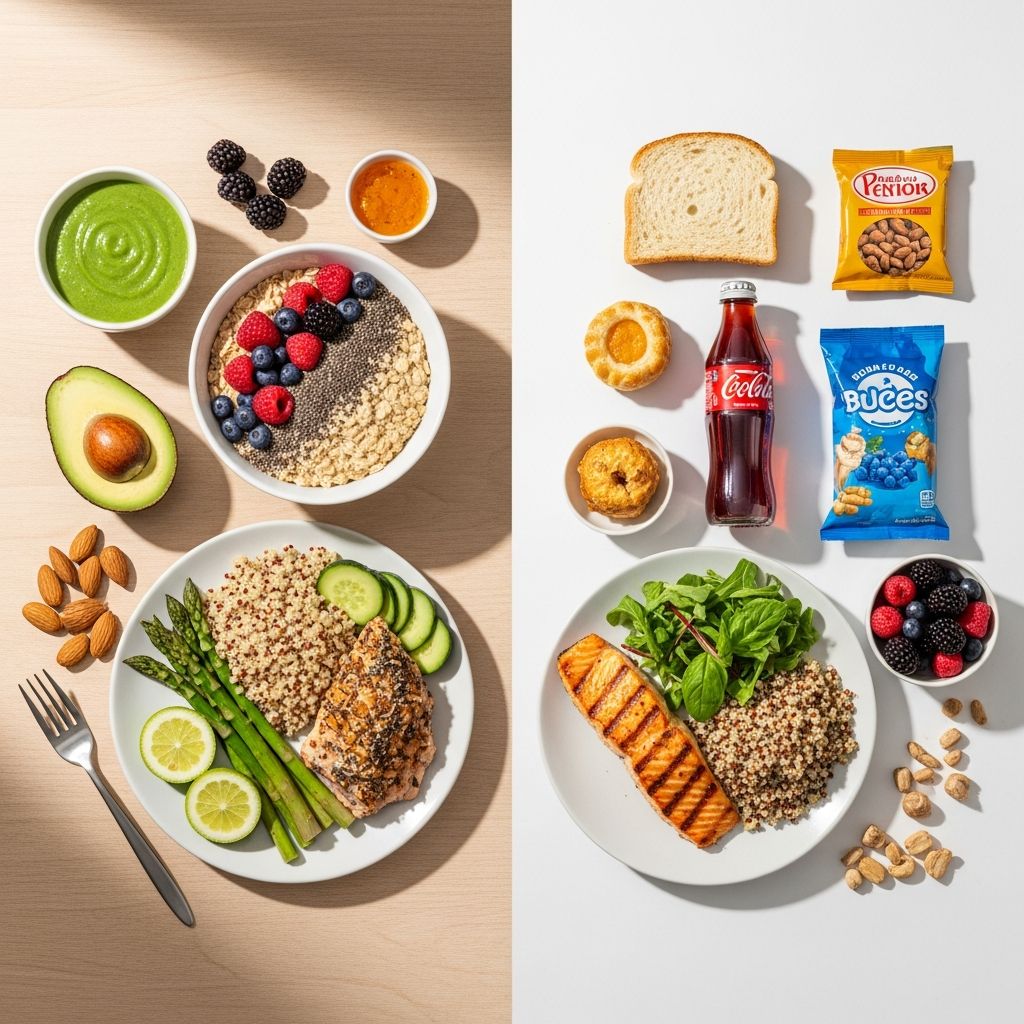
Focus on nutrient-dense foods that combat insulin resistance and support ovulation. A Mediterranean-style or high-protein approach yields best results.
- Non-starchy vegetables: Broccoli, spinach, kale, zucchini (unlimited; high fiber, low carb).
- Lean proteins: Chicken, turkey, fish (salmon for omega-3s), eggs, tofu, Greek yogurt (target 20-30g/meal).
- Healthy fats: Avocados, olive oil, nuts (almonds, walnuts), seeds (chia, flax).
- Low-GI fruits: Berries, apples, pears (1-2 servings/day).
- Whole grains: Oats, barley, brown rice (in moderation).
- Legumes: Lentils, chickpeas, black beans for plant protein and fiber.
Sample Daily Meal Plan
| Meal | Foods | Approx. Calories |
|---|---|---|
| Breakfast | Greek yogurt with berries, chia seeds, almonds | 350 |
| Snack | Apple with peanut butter | 200 |
| Lunch | Grilled chicken salad with spinach, avocado, olive oil dressing | 450 |
| Snack | Cottage cheese with cucumber | 150 |
| Dinner | Baked salmon, quinoa, broccoli | 500 |
| Total | – | 1,650 |
Related Stories



This plan provides ~100g protein, low GI, and balanced macros for PCOS symptom management.
Foods to Avoid on a PCOS Diet
Steer clear of insulin-spiking and inflammatory foods to minimize androgen excess and weight gain.
- Sugary foods/drinks: Soda, candy, desserts (cause rapid blood sugar rises).
- Refined carbs: White bread, pasta, rice (high GI).
- Processed foods: Chips, fast food, packaged snacks (trans fats, additives).
- Saturated fats: Fried foods, fatty meats, full-fat dairy in excess.
- High-GI fruits: Watermelon, pineapple (limit portions).
- Alcohol: Disrupts hormones; limit to 1 drink/week.
Best Diets for PCOS
Several evidence-based diets excel for PCOS:
- High-Protein Diet: Superior for IR improvement; reduces FINS/HOMA-IR vs. balanced diets, especially long-term (12+ weeks).
- Mediterranean Diet: Rich in antioxidants, fiber, healthy fats; supports heart health, reduces inflammation.
- Low-GI Diet: Stabilizes blood sugar, aids weight loss.
- Ketogenic Diet (KD)/VLCKD: Short-term weight loss, metabolic benefits; combine with Mediterranean for sustainability.
- DASH Diet: Low-sodium, nutrient-rich for blood pressure control.
Dietary interventions improve clinical manifestations and pregnancy rates in overweight women (BMI ≥25 kg/m²).
Sample PCOS Meal Plan for a Week
A 7-day plan emphasizing variety, ~1,600-1,800 calories/day.
| Day | Breakfast | Lunch | Dinner | Snacks |
|---|---|---|---|---|
| Monday | Oatmeal with eggs, spinach | Turkey wrap (whole grain) | Grilled fish, sweet potato | Yogurt, nuts |
| Tuesday | Smoothie (kale, berries, protein powder) | Lentil soup, salad | Chicken stir-fry veggies | Apple, cheese |
| Wednesday | Greek yogurt parfait | Tuna salad | Tofu curry, quinoa | Carrots, hummus |
| Thursday | Eggs, avocado toast (whole grain) | Chickpea salad | Salmon, asparagus | Cottage cheese |
| Friday | Chia pudding | Grilled chicken bowl | Shrimp zucchini noodles | Berries, almonds |
| Saturday | Veggie omelet | Quinoa salad | Lean beef stir-fry | Pear, nuts |
| Sunday | Yogurt with seeds | Bean burrito bowl | Baked cod, veggies | Celery, peanut butter |
Supplements for PCOS
Supplements may complement diet:
- Inositol: Improves insulin sensitivity, ovulation (2-4g/day).
- Omega-3s: Reduces inflammation (1-2g EPA/DHA).
- Vitamin D: Common deficiency in PCOS; supports hormones.
- Spearmint tea: Lowers androgens.
- Berberine: Mimics metformin for IR.
Consult a healthcare provider before starting.
Exercise and Lifestyle Tips
Combine diet with 150 min/week moderate exercise (walking, yoga) plus strength training 2x/week. Aim for 7-9 hours sleep; manage stress via meditation to lower cortisol.
Frequently Asked Questions (FAQs)
What is the best diet for PCOS?
High-protein, low-GI, or Mediterranean diets are most effective for insulin resistance and weight management.
Can diet alone cure PCOS?
Diet manages symptoms effectively but doesn’t cure; combine with exercise and medical care.
How much weight loss helps PCOS?
5-10% body weight loss restores menses, improves fertility.
Are carbs bad for PCOS?
No; choose low-GI complex carbs over refined ones.
Is keto good for PCOS?
Short-term yes for weight loss; long-term adherence challenging.
References
- Effects of high-protein diets on the cardiometabolic factors and … PCOS — PMC. 2024. https://pmc.ncbi.nlm.nih.gov/articles/PMC10904368/
- High Fat Diet and Polycystic Ovary Syndrome (PCOS) in Adolescence — PMC. 2024. https://pmc.ncbi.nlm.nih.gov/articles/PMC11013055/
- PCOS Diet: Do’s & Don’ts For Managing PCOS — Axia Women’s Health. 2023. https://axiawh.com/resources/pcos-diet-dos-donts-for-managing-pcos/
- The impact of dietary interventions on polycystic ovary syndrome … — Wiley Online Library. 2023. https://onlinelibrary.wiley.com/doi/full/10.1002/rmb2.12607
Similar Articles








Read full bio of medha deb