Polymorphic Light Eruption Pathology: Clinical Guide
Comprehensive pathology of polymorphic light eruption: causes, clinical features, diagnosis, and management strategies for this common photodermatosis.
What is polymorphic light eruption?
Polymorphic light eruption (PMLE), also known as polymorphous light eruption, is the most common immunologically mediated photosensitivity dermatosis worldwide, affecting up to 15% of individuals in temperate climates. It manifests as a seasonal, acquired, idiopathic photodermatosis primarily occurring in spring and early summer following initial sun exposure after winter months. The term ‘polymorphic’ reflects the varied morphological presentations, while ‘eruption’ denotes the sudden onset of pruritic lesions on sun-exposed skin.
PMLE represents a delayed hypersensitivity reaction to photo-induced endogenous antigens in the skin, triggered predominantly by UVA radiation (responsible for 90% of cases), though UVB and occasionally visible light may contribute. Unlike acute sunburn, PMLE involves an abnormal immune response where UV-altered skin proteins provoke T-cell mediated inflammation rather than the typical immunosuppressive effect of UV exposure. Genetic susceptibility plays a role, with family history reported in 15-46% of cases, suggesting heritable defects in UV-induced immunosuppression.
Clinically, lesions appear 30 minutes to 4 days post-exposure, resolving in 7-10 days without scarring, often with ‘hardening’—a tolerance developed through repeated summer exposures via epidermal thickening and melanogenesis. PMLE sine eruption, a variant with pruritus sans visible changes, and juvenile spring eruption (vesicles on ears of young boys) highlight its spectrum.
Who gets polymorphic light eruption?
PMLE affects all ages, sexes, races, and skin phototypes but predominates in young to middle-aged women (3:1 female-to-male ratio) in temperate regions. Fair-skinned individuals (Fitzpatrick types I-III) are most susceptible, though darker skin types present with pinhead papules. Prevalence reaches 10-20% in Europe and North America, lower in equatorial zones due to chronic UV exposure inducing natural hardening.
Risk factors include family history (autosomal dominant with variable penetrance), residence in northern latitudes, and prior phototherapy for inflammatory dermatoses, which can unmask PMLE on covered sites like the trunk. Hormonal influences may explain female predominance, potentially linked to estrogen modulation of immune responses.
What causes polymorphic light eruption?
The precise photoantigen remains unidentified, but PMLE arises from a type IV delayed hypersensitivity to UV-modified cutaneous proteins, failing the normal UV-induced immunosuppression. Pathogenesis involves:
- UVA predominance: Penetrates deeper, altering lipids or proteins into haptens recognized by CD4+ and CD8+ T-cells.
- Immune dysregulation: Reduced Langerhans cells and increased mast cell degranulation lead to epidermal-dermal inflammation.
- Genetic factors: Polymorphisms in DNA repair genes or cytokine regulators confer susceptibility.
- Environmental triggers: Spring debut after winter, tanning beds, or phototherapy.
Unlike lupus or porphyria, no systemic autoimmunity; it’s purely photoallergic.
Clinical features of polymorphic light eruption
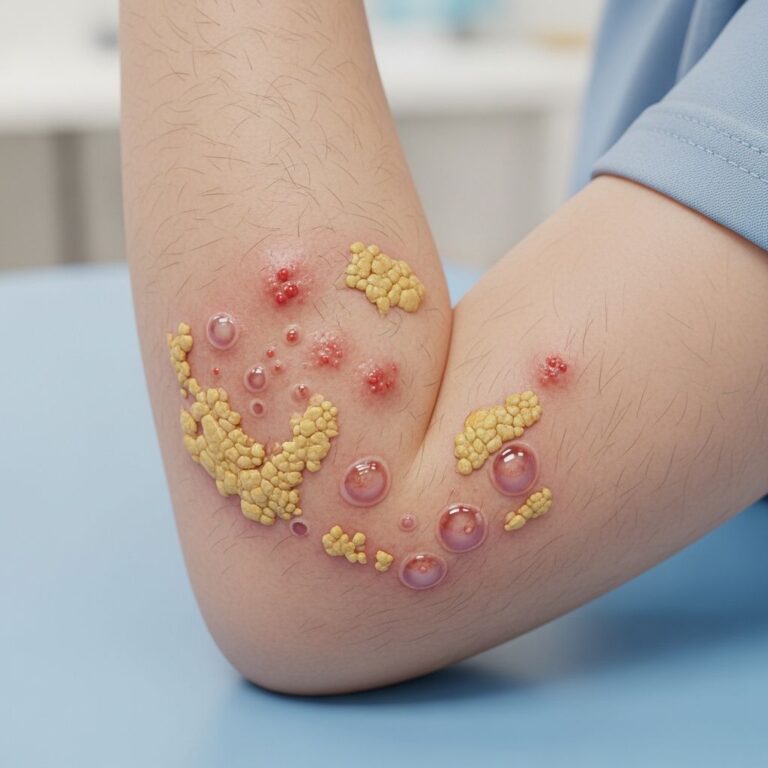
Lesions emerge hours to days post-exposure on infrequently sun-exposed sites: V-neck, upper chest, forearms, dorsal hands (sparing palms), lower legs. Facial involvement is rare due to chronic exposure-induced tolerance. Morphology is patient-specific but includes:
- Papules (most common: erythematous, 1-2mm, coalescing to plaques)
- Vesicles/bullae
- Nodules/prurigo-like
- Plaques (lichenoid or eczematous)
- Targetoid/erythema multiforme-like
Symptoms: Intense pruritus, burning; rarely fever, malaise, headache. Blotchy erythema, scaling in darker skin. Resolves 2-14 days; rechallenge worsens. ‘Hardening’ mitigates recurrences by mid-summer via stratum corneum hypertrophy and melanin upregulation.
| Skin Type | Typical Presentation |
|---|---|
| Fair (I-II) | Papules, plaques, vesicles |
| Medium (III-IV) | Grouped papules, eczematous |
| Dark (V-VI) | Pinhead papules, hyperpigmented macules |
Related Stories



Pathology of polymorphic light eruption
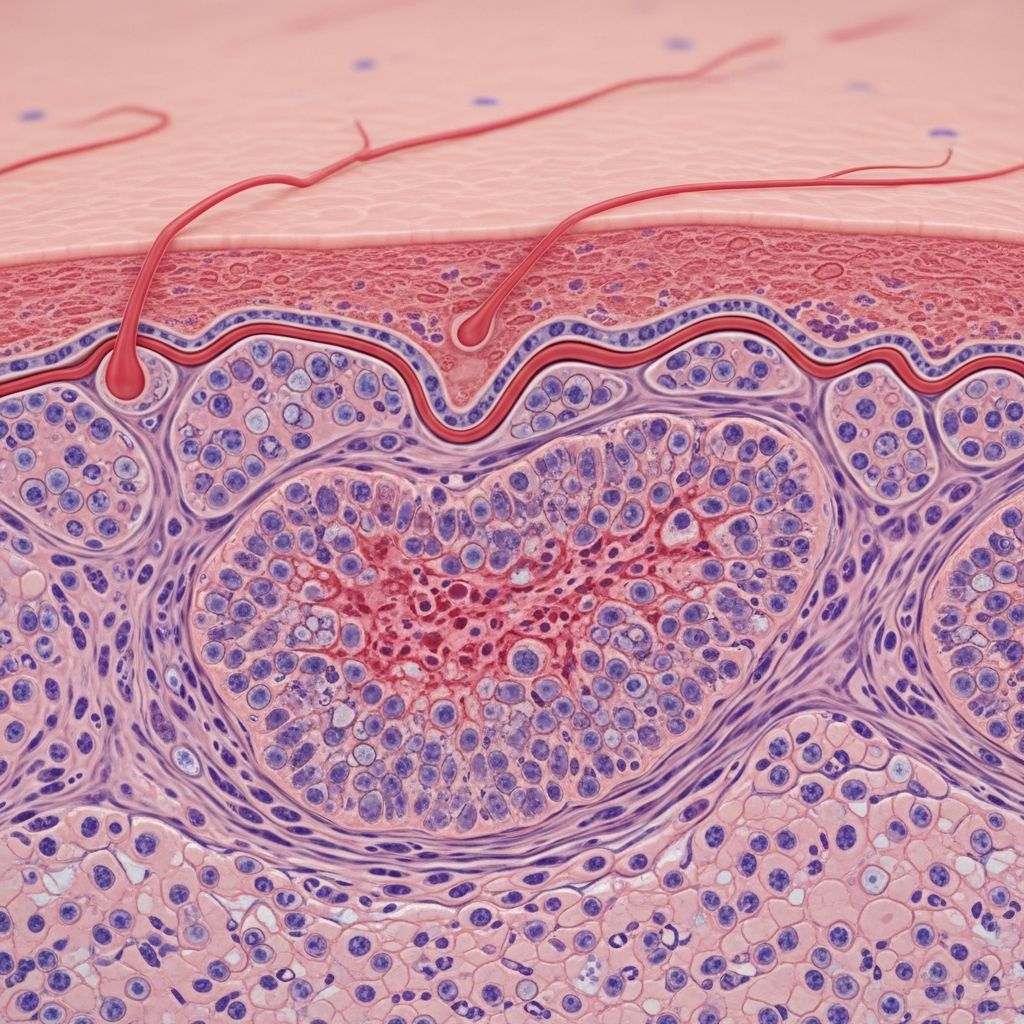
Histopathology reveals a superficial and deep perivascular lymphocytic infiltrate with papillary dermal oedema, mimicking early allergic contact dermatitis. Key features:
- Epidermis: Spongiosis, occasional necrotic keratinocytes, exocytosis of lymphocytes.
- Dermis: Oedematous papillae, dilated vessels, mixed infiltrate (CD4+ > CD8+ T-cells, few eosinophils).
- Advanced lesions: Vesicles (liquefaction degeneration), subepidermal bullae rare.
Immunohistochemistry shows increased ICAM-1/VCAM-1 expression, mast cell degranulation. No lupus band or porphyrins. Electron microscopy: Altered keratinocytes, Langerhans cell depletion. These findings confirm T-cell mediated photoallergy without vasculitis.
Diagnosis of polymorphic light eruption
Primarily clinical: Recurrent spring/summer pruritic eruption post-first intense UV exposure, sparing chronically exposed sites, resolving spontaneously. Supportive tests:
- Phototesting: Minimal erythema dose (MED) to UVA/UVB; reproduction of morphology diagnostic (positive in 90%).
- Photopatch testing: Rules out contact photoallergy.
- Biopsy: If atypical, excludes lupus/porphyria.
- Labs: ANA, porphyrins normal.
Action spectrum determination guides prevention.
Differential diagnosis of polymorphic light eruption
| Condition | Distinguishing Features |
|---|---|
| Actinic prurigo | Persistent, scarring, lips/eyes involved, Native American predominance |
| Chronic actinic dermatitis | Year-round, broad photosensitivity, elderly males |
| Lupus erythematosus (SCLE) | ANA+, malar rash, systemic symptoms |
| Solar urticaria | Immediate (<1hr) hives, positive light testing |
| Phytophotodermatosis | Linear streaks, history of plant contact |
| Porphyria cutanea tarda | Blisters, hypertrichosis, elevated porphyrins |
Treatment of polymorphic light eruption
Acute: Topical potent corticosteroids (clobetasol), cool compresses, oral antihistamines for pruritus. Severe: Short prednisone taper.
Prophylaxis (for ≥3 episodes/year):
- Photoprotection: Broad-spectrum SPF50+ (UVA/UVB), UPF clothing, seek shade 10am-4pm.
- Phototherapy: Narrowband UVB or UVA1 (hardening: 2-3x/week pre-spring, 95% efficacy).
- Systemic: Hydroxychloroquine 200-400mg/day (anti-inflammatory).
- Topical: 5-ALA-PDT emerging.
Avoid tanning beds.
Complications of polymorphic light eruption
Rare: Secondary infection, postinflammatory hyperpigmentation, anxiety from recurrence. No scarring or malignancy risk. Persistent cases may impact quality of life.
Outcome of polymorphic light eruption
Benign, self-limiting per episode; frequency diminishes with age or chronic exposure. Hardening resolves symptoms in 70% by summer’s end. Rarely persists lifelong.
Frequently asked questions about polymorphic light eruption
Is polymorphic light eruption dangerous?
No, PMLE is benign without scarring or systemic risks, though distressing.
Does PMLE go away?
Episodes resolve in days; tolerance develops seasonally. Frequency decreases over time.
Can PMLE affect the face?
Rarely, due to natural hardening from chronic exposure.
Is PMLE hereditary?
Genetic predisposition in 15-46%; family history common.
How to prevent PMLE?
UV protection, prophylactic phototherapy.
References
- Polymorphous light eruption — Healthfinder Florida Department of Health. 2023. https://quality.healthfinder.fl.gov/health-encyclopedia/HIE/1/001477
- Polymorphous Light Eruption — Yale Medicine. 2024-01-15. https://www.yalemedicine.org/clinical-keywords/polymorphous-light-eruption
- Polymorphous Light Eruption (PMLE) — Cleveland Clinic. 2025-06-12. https://my.clevelandclinic.org/health/diseases/17888-polymorphous-light-eruption-pmle
- Polymorphic light eruption — DermNet NZ (authoritative dermatology resource). 2024. https://dermnetnz.org/topics/polymorphic-light-eruption
- Polymorphic Light Eruption — StatPearls, NCBI Bookshelf, NIH. 2023-08-08. https://www.ncbi.nlm.nih.gov/books/NBK430886/
- Polymorphic light eruption — NHS UK. 2023. https://www.nhs.uk/conditions/polymorphic-light-eruption/
Similar Articles








Read full bio of medha deb