Managing Polypoidal Choroidal Vasculopathy: Current Treatment Approaches
Evidence-based strategies for treating PCV with photodynamic therapy and anti-VEGF agents
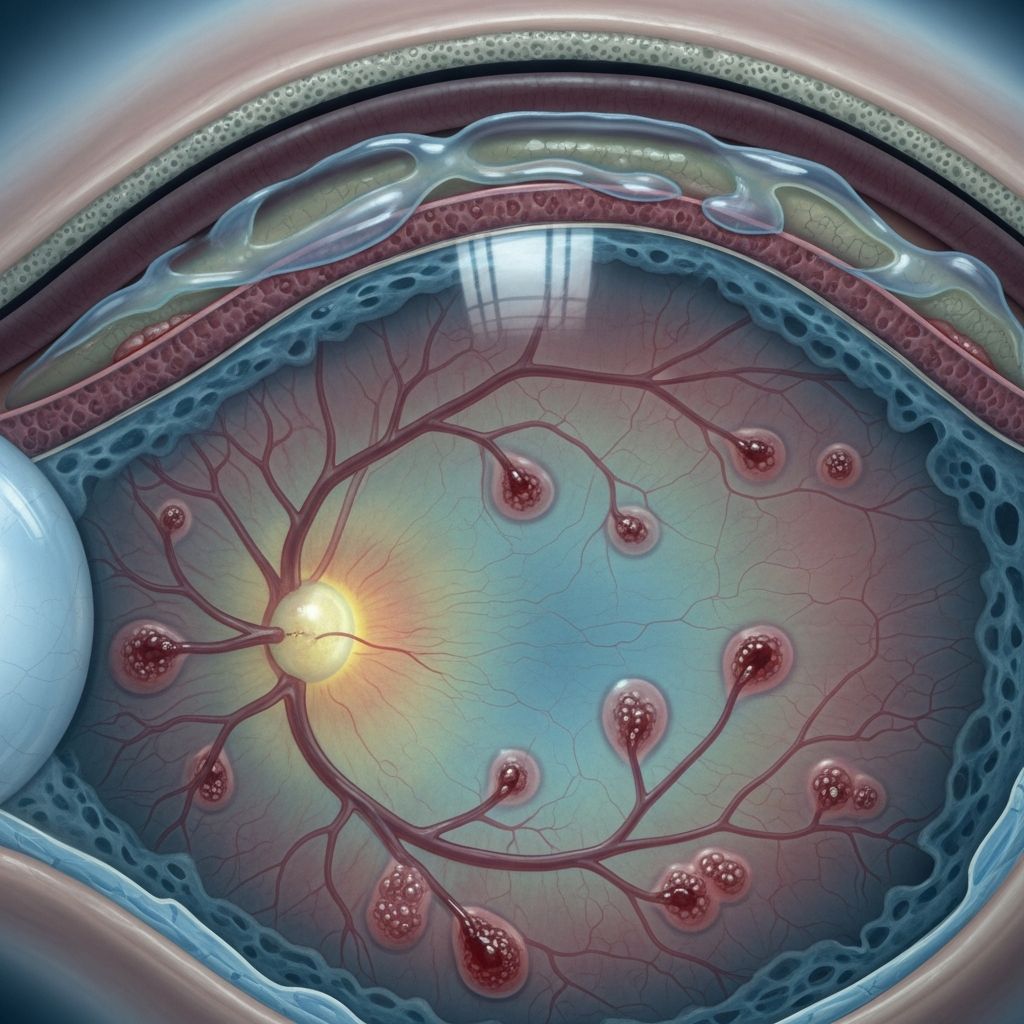
Polypoidal choroidal vasculopathy (PCV) represents a complex retinal condition affecting the choroidal vasculature, characterized by the presence of abnormal polypoidal lesions that can lead to visual deterioration if left untreated. The management of PCV has evolved significantly over the past two decades, with multiple therapeutic options now available to ophthalmologists and their patients. Understanding the strengths, limitations, and appropriate applications of each treatment modality is essential for optimizing clinical outcomes and minimizing the treatment burden on patients.
Understanding the Pathophysiology and Clinical Presentation
PCV involves abnormal choroidal vascular structures that leak fluid and blood, often causing exudative changes and sometimes serous or hemorrhagic retinal detachment. These polypoidal lesions can appear with varying degrees of clarity on imaging studies, which directly influences treatment planning decisions. The presence of a branching vascular network (BVN) alongside the polyps further complicates the clinical picture and necessitates comprehensive diagnostic evaluation before initiating therapy.
The variability in lesion presentation—from clearly defined polyps to ambiguous vascular changes—creates clinical scenarios where treatment selection must be individualized. Some patients present with well-circumscribed lesions amenable to specific interventions, while others have diffuse or poorly defined abnormalities requiring a more cautious or staged approach.
Photodynamic Therapy: Foundation and Evolution
Photodynamic therapy with verteporfin has established itself as a cornerstone treatment for PCV since early 2000s evidence demonstrated its efficacy in closing abnormal vascular structures. The mechanism involves infusion of a photosensitizing agent followed by targeted laser activation, which creates a vaso-occlusive effect that selectively damages the abnormal choroidal vasculature while preserving surrounding tissue.
Complete polyp regression represents a desirable therapeutic endpoint, as it reduces the risk of polyp rupture, chronic leakage, and the need for frequent retreatment. Research indicates that patients achieving favorable initial responses to PDT often require no additional treatment for extended periods, with approximately half of respondents remaining treatment-free for two years or longer.
However, PDT monotherapy has limitations. Despite its effectiveness in achieving polyp closure, long-term efficacy can be disappointing, with some lesions recurring or developing resistance after multiple treatment sessions. Additionally, PDT carries risks of potential complications including retinal hemorrhage and exudative retinal detachment, particularly in eyes with extensive disease.
Anti-VEGF Monotherapy: Evolution of Injectable Treatments
Intravitreal injections of anti-vascular endothelial growth factor (anti-VEGF) agents have transformed the treatment landscape for PCV, offering a less invasive alternative or complement to PDT. These medications suppress the angiogenic and permeability-enhancing signals that drive abnormal choroidal neovascularization, effectively stabilizing disease progression in many patients.
Anti-VEGF monotherapy proves particularly effective for lesions lacking definitive polypoidal components or for patients with questionable polyps on imaging studies. In these scenarios, anti-VEGF therapy may be employed as initial treatment with the expectation that spontaneous regression of ambiguous lesions and resolution of exudative changes will occur. This approach avoids exposing patients to the risks associated with PDT when the therapeutic target remains uncertain.
Related Stories



The convenience and favorable safety profile of anti-VEGF injections make them an attractive first-line option for patients with good baseline vision and mild to moderate leakage patterns. Medications in this class, when used as monotherapy, can stabilize visual acuity and reduce macular edema effectively in many patients.
Comparative Efficacy: Meta-Analytic Evidence
Comprehensive synthesis of clinical trial data reveals important insights regarding the relative effectiveness of different treatment approaches. A meta-analysis examining combination therapy versus monotherapy found that anti-VEGF agents produced significantly greater reductions in central retinal thickness at three-month follow-up compared to PDT alone. However, when evaluating visual acuity improvements over longer timeframes, combination therapy demonstrated superiority over both monotherapy approaches at multiple timepoints.
The EVEREST trial, a landmark multicenter study, directly compared three treatment arms in Asian patients with PCV. Results demonstrated that PDT combined with ranibizumab achieved complete polyp regression in 77.8% of patients, while PDT monotherapy achieved regression in 71.4%, compared to only 28.6% with ranibizumab alone. Visual acuity improvements were greatest with combination therapy (10.9 letters), followed by anti-VEGF monotherapy (9.2 letters) and PDT monotherapy (7.5 letters).
These findings establish that while anti-VEGF monotherapy effectively addresses fluid and exudative changes, combining it with PDT’s vaso-occlusive properties yields superior polyp closure rates and sustained visual benefits over extended follow-up periods.
Combination Therapy Strategy and Treatment Sequencing
The synergistic potential of combining PDT with anti-VEGF therapy derives from their complementary mechanisms: PDT provides direct angioocclusive effects on polypoidal structures, while anti-VEGF agents suppress the angiogenic and permeability-enhancing environment promoting continued vascular proliferation. This combination approach has demonstrated efficacy superior to either monotherapy in achieving both anatomical and functional outcomes.
Combination therapy proves particularly valuable in clinical scenarios where diagnostic uncertainty exists. In approximately 30% of PCV cases, imaging features remain ambiguous, making differentiation between PCV and choroidal neovascularization challenging. When polyps cannot be definitively characterized, combination therapy ensures that optimal treatment for both potential diagnoses is delivered, effectively serving as a safety-net approach.
Determining optimal treatment sequencing, injection intervals, and total injection numbers in combination therapy remains an area of ongoing clinical investigation. Individual factors—including lesion location, polyp clarity, baseline visual acuity, and prior treatment history—should guide these decisions.
Patient Selection and Treatment Individualization
Successful PCV management requires careful patient stratification and individualized treatment planning. Several key decision-making factors guide treatment selection:
- Lesion location relative to fovea: Subfoveal and juxtafoveal lesions often require combination therapy with PDT due to their anatomically critical location, whereas extrafoveal disease may respond to anti-VEGF alone or targeted thermal laser.
- Polyp definition on imaging: Definitive polyps on indocyanine green angiography typically warrant PDT-containing regimens, while questionable polyps may be initially managed with anti-VEGF monotherapy.
- Baseline visual function: Patients with preserved vision and relatively mild leakage patterns may benefit from anti-VEGF monotherapy initially, deferring PDT for non-responsive cases. Conversely, patients with significant vision loss may warrant more aggressive combination therapy from disease outset.
- Prior treatment history: Eyes with multiple prior PDT treatments or showing PDT-related RPE atrophy may be better managed with anti-VEGF monotherapy or alternative approaches to minimize additional photodynamic injury.
- Treatment burden considerations: Patients unable to tolerate frequent follow-up visits or multiple injections require treatment selection emphasizing longer intervals between interventions and sustained disease control.
Thermal Laser Photocoagulation: Targeted Ablation Strategy
Thermal laser photocoagulation represents an underutilized treatment option for appropriately selected PCV cases. This approach involves direct thermal ablation of polypoidal lesions and associated branching vascular networks when these structures are located sufficiently distant from the fovea and other critical retinal structures.
Peripapillary PCV lesions present ideal candidates for thermal laser treatment, as they can often be completely ablated without endangering foveal function. The theoretical advantage of complete lesion closure without recurrence makes thermal laser an attractive option when anatomically feasible. However, the limited applicability of this approach—only 20-30% of PCV lesions qualify based on anatomical criteria—restricts its role to a complementary modality rather than primary therapy for most patients.
Emerging Therapeutic Options and Future Directions
The PCV treatment landscape continues to evolve with development of longer-acting anti-VEGF molecules and novel delivery systems. Newer generation anti-VEGF agents such as brolucizumab have demonstrated non-inferiority in visual acuity outcomes compared to earlier agents while offering superior anatomical benefits and potentially extended intervals between injections.
Additional agents in development pipelines, including faricimab and port delivery system platforms, aim to reduce treatment burden by extending intervals between interventions while maintaining or improving anatomical and visual outcomes. These extended-interval therapies address a critical unmet need, as frequent office visits and injections lead to patient burden, increased costs, and treatment discontinuation in some populations.
Special Clinical Scenarios and Retreatment Considerations
PCV management extends beyond initial treatment to encompassing long-term follow-up and retreatment strategies. For persistent or recurrent lesions following initial therapy, treatment adjustments should be made according to individual angiographic and clinical findings, with the goal of reducing the frequency and extent of intervention while maintaining disease control.
Anti-VEGF monotherapy may represent the only useful current treatment option for lesions lacking definitive polypoidal components, as these likely represent secondary choroidal neovascularization rather than true PCV. In such cases, repeated PDT should be avoided given the lack of vaso-occlusive target and risk of cumulative photodynamic injury.
Low-fluence PDT represents a modified approach that selectively targets leaking polyps with reduced laser intensity, potentially reducing PDT-related complications while maintaining therapeutic efficacy in carefully selected cases. This technique may prove valuable in eyes with extensive disease or those with limited photodynamic reserve.
Role of Diagnostic Imaging in Treatment Planning
Indocyanine green angiography remains essential for both initial diagnostic confirmation and ongoing surveillance during treatment. ICGA should be incorporated into follow-up examinations, not solely as a diagnostic tool at presentation, to track polyp regression or recurrence and guide retreatment decisions. Optical coherence tomography provides complementary structural information regarding retinal thickness and fluid status, useful for assessing response to therapy between angiographic studies.
Practical Treatment Algorithm
| Clinical Scenario | Recommended Approach | Rationale |
|---|---|---|
| Definitive subfoveal polyps with branching vascular network | PDT combined with anti-VEGF | Combination therapy superior for polyp regression and visual outcomes in critical locations |
| Questionable polyps with extrafoveal disease | Anti-VEGF monotherapy initially | Avoids PDT risks when lesion definition uncertain; add PDT if non-responsive |
| Good baseline vision with mild leakage | Anti-VEGF monotherapy | Defers PDT risk; escalate only if inadequate response |
| Poor baseline vision or extensive disease | Combination therapy from outset | Aggressive approach justified by worse visual prognosis |
| Multiple prior PDTs with RPE atrophy | Anti-VEGF monotherapy or alternative | Minimizes photodynamic injury to already compromised tissue |
| Extrafoveal lesions without polyps | Thermal laser if feasible | Complete ablation possible; avoid injection burden if achievable |
Managing Treatment Burden and Patient Adherence
A critical challenge in PCV management involves balancing therapeutic efficacy against the cumulative burden of frequent clinical visits and injections. While combination therapy and PDT monotherapy demonstrate strong polyp regression rates, the requirement for regular injections, angiographic imaging, and office visits leads to treatment abandonment in some patient populations. Clinical decision-making should incorporate discussion of realistic treatment expectations, typical follow-up requirements, and potential long-term commitment to monitoring and retreatment.
Conclusion
PCV management has transitioned from a limited single-modality approach to a spectrum of evidence-based options tailored to individual patient characteristics. PDT provides potent polyp-closing capabilities but carries risks and may require repeated treatments. Anti-VEGF monotherapy offers convenient, effective disease stabilization for selected cases. Combination therapy optimizes outcomes when polyps are definitively identified, particularly in anatomically critical locations. Emerging longer-acting agents promise to reduce treatment burden while maintaining efficacy. Individualized treatment planning, informed by lesion characteristics, patient vision status, and treatment tolerance, remains essential for optimizing outcomes in this challenging retinal condition.
References
- Treatment of Polypoidal Choroidal Vasculopathy — Retina Today. 2012-03. https://retinatoday.com/articles/2012-mar/treatment-of-polypoidal-choroidal-vasculopathy
- Polypoidal Choroidal Vasculopathy Treatment Options: A Meta-Analysis — European Journal of Clinical Investigation, PubMed Central. 2018. https://pubmed.ncbi.nlm.nih.gov/28981139/
- Polypoidal Choroidal Vasculopathy: An Update on Diagnosis and Management — PMC, National Center for Biotechnology Information. 2023. https://pmc.ncbi.nlm.nih.gov/articles/PMC9831529/
- Polypoidal Choroidal Vasculopathy Treatment Hawaii — Hawaii Macula. https://hawaiimacula.com/research-stories/polypoidal-choroidal-vasculopathy-aiea-hawaii/
- Polypoidal Choroidal Vasculopathy — EyeWiki, American Academy of Ophthalmology. https://eyewiki.org/Polypoidal_Choroidal_Vasculopathy
Similar Articles








Read full bio of medha deb