Pomegranate Vs Cranberry Juice: What You Need To Know
Discover the nutritional differences, health benefits, and best uses for pomegranate and cranberry juice in your daily diet.
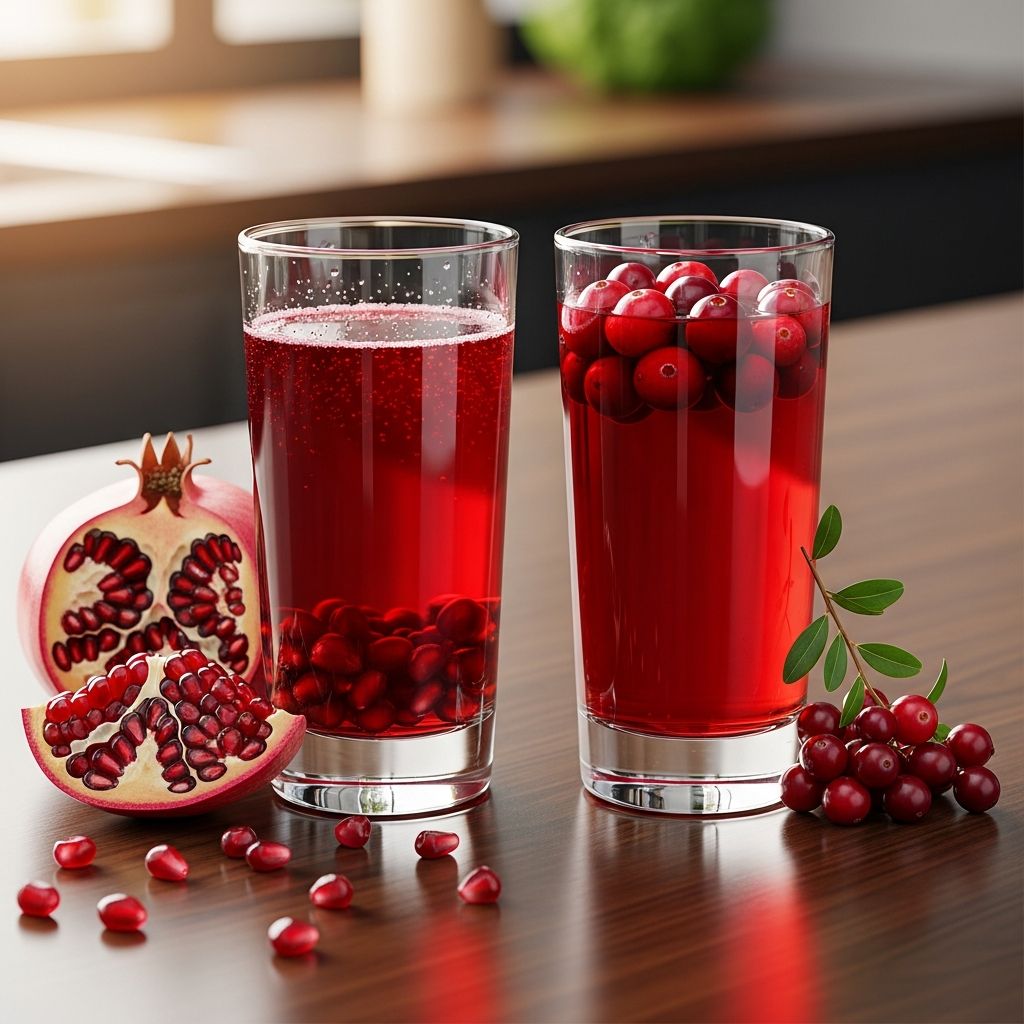
Both
pomegranate juice
andcranberry juice
are popular for their vibrant colors, tart flavors, and potential health perks, particularly their high antioxidant content. Pomegranate juice stands out for its rich polyphenol profile supporting heart and anti-inflammatory benefits, while cranberry juice is renowned for urinary tract infection (UTI) prevention. This comparison breaks down their nutrition, benefits, risks, and practical uses to help you decide which—or both—to incorporate into your routine.What Is Pomegranate Juice?
Pomegranate juice is extracted from the juicy arils (seeds) of the Punica granatum fruit, native to the Middle East but now grown worldwide. It’s deep red, slightly sweet-tart, and packed with
punicalagins
andanthocyanins
, potent antioxidants that give it superior free radical-fighting power compared to many juices. A typical 8-ounce (240 ml) serving delivers about 130-150 calories, mainly from natural sugars, with minimal fat and protein.Registered dietitians recommend 100% pure pomegranate juice without added sugars to maximize benefits. It’s often consumed straight, in smoothies, or as a mixer in cocktails. Studies highlight its role in improving blood flow and reducing oxidative stress, making it a favorite for cardiovascular wellness.
What Is Cranberry Juice?
Cranberry juice comes from small, tart berries (Vaccinium macrocarpon) primarily grown in North America. It’s bright red, intensely sour—often sweetened in commercial versions—and celebrated for
proanthocyanidins (PACs)
, compounds that prevent bacteria from adhering to urinary tract walls. An 8-ounce serving provides around 116 calories, 31 grams of carbs (mostly sugars), and key vitamins like C (26% DV), E (20% DV), and potassium.Opt for unsweetened or low-sugar varieties to avoid excess calories. Cranberry juice shines in preventing recurrent UTIs, especially in women, and supports immune function through its vitamin content.
Pomegranate Juice vs. Cranberry Juice: Nutrition Comparison
Here’s a side-by-side nutritional breakdown per 8-ounce (240 ml) serving of unsweetened juices, based on USDA data and analyses:
| Nutrient | Pomegranate Juice | Cranberry Juice |
|---|---|---|
| Calories | 133 | 116 |
| Carbohydrates (g) | 32 | 31 |
| Sugars (g) | 23 | 31 |
| Fiber (g) | 0.9 | 0.25 |
| Protein (g) | 1.7 | 1 |
| Vitamin C (% DV) | 27 (varies with fortification) | 26 |
| Vitamin K (% DV) | 22 | 11 |
| Potassium (% DV) | 10 | 4 |
| Antioxidants | High in punicalagins, anthocyanins | High in PACs, flavonols |
Cranberry juice edges out in lower calories and vitamin E, ideal for weight management. Pomegranate offers more folate, vitamin K for bone health, and denser antioxidants per volume. Both are low in fat but high in natural sugars—watch portions if monitoring blood sugar.
Health Benefits of Pomegranate Juice
- Heart Health: Polyphenols reduce blood pressure, improve arterial flexibility, and lower LDL cholesterol oxidation. A meta-analysis showed daily intake decreased systolic blood pressure by 5 mmHg.
- Anti-Inflammatory Effects: Punicalagins inhibit inflammatory markers like CRP, potentially easing arthritis symptoms.
- Anticancer Potential: Lab studies indicate ellagitannins slow prostate cancer cell growth; human trials are ongoing.
- Exercise Recovery: Antioxidants combat muscle soreness post-workout.
Pomegranate’s
ORAC score
(antioxidant capacity) rivals blueberries, supporting overall cellular protection.Health Benefits of Cranberry Juice
- UTI Prevention: PACs stop E. coli from sticking to bladder walls. A review of 28 trials found 32.5% reduced UTI risk with regular intake (at least 36 mg PACs daily).
- Immune Support: Vitamin C and E bolster white blood cell function against colds and infections.
- Oral Health: Inhibits plaque-forming bacteria, reducing gingivitis risk.
- Gut Health: Prebiotic-like effects promote beneficial bacteria.
Related Stories



Cranberry excels for urinary and digestive wellness but lacks pomegranate’s broad cardiovascular punch.
Which Juice Is Better for Specific Health Goals?
| Health Goal | Best Choice | Why? |
|---|---|---|
| UTI Prevention | Cranberry | PACs specifically target bacterial adhesion. |
| Heart Health | Pomegranate | Improves endothelial function and reduces plaque. |
| Antioxidant Boost | Pomegranate | Higher polyphenol diversity. |
| Weight Management | Cranberry | Fewer calories, less sugar. |
| Bone Health | Pomegranate | Vitamin K aids calcium absorption. |
For general wellness, alternate both. Athletes may prefer pomegranate’s carbs for energy, while diabetics lean toward diluted cranberry.
Risks and Downsides
Both juices are safe in moderation (8-16 oz daily), but caveats apply:
- High Sugar: Natural sugars spike blood glucose; dilute or choose low-sugar options.
- Drug Interactions: Pomegranate inhibits CYP3A4 enzymes, affecting statins and blood thinners. Cranberry may enhance warfarin effects.
- Acid Erosion: Tartness erodes tooth enamel—use a straw.
- Kidney Stones: High oxalate in pomegranate; limit if prone.
- Calories: Easy to overconsume, undermining weight goals.
Consult a doctor if pregnant, on meds, or with GI issues.
How to Choose and Use These Juices
- Labels: Seek “100% juice,” no added sugars or preservatives. Organic reduces pesticide exposure.
- DIY: Juice fresh fruits for max nutrients—pomegranates yield 1/2 cup arils per fruit.
- Recipes: Mix into smoothies, vinaigrettes, marinades, or mocktails.
- Storage: Refrigerate; freeze in ice cubes for longevity.
Pomegranate Juice vs. Cranberry Juice: The Bottom Line
Neither is universally “healthier”—**cranberry juice** wins for UTIs and low-cal snacking, while
pomegranate juice
excels in heart protection and antioxidants. Combine for synergistic benefits, prioritize whole fruits when possible, and view juices as treats, not staples. A balanced diet trumps any single superfood.Frequently Asked Questions (FAQs)
Is pomegranate juice or cranberry juice better for UTIs?
Cranberry juice is superior due to proanthocyanidins that prevent bacterial adhesion in the urinary tract.
Which has more antioxidants?
Pomegranate juice generally has higher antioxidant capacity from punicalagins and ellagic acid.
Can I drink these juices every day?
Yes, 8 oz daily is safe for most, but monitor sugar intake and consult a healthcare provider for interactions.
Are there sugars in unsweetened versions?
Yes, both contain natural fruit sugars (20-30g per serving)—dilute if needed.
Whole fruit vs. juice: Which is better?
Whole fruits provide fiber for better satiety and blood sugar control; juices offer concentrated nutrients but less fiber.
References
- Cranberries Vs Pomegranate: A Nutritional Showdown — Listonic. 2024-09-30. https://listonic.com/p/compare/cranberries-vs-pomegranate
- The 9 Healthiest Types of Juice — Healthline. 2023-10-15. https://www.healthline.com/nutrition/healthiest-juice
- Cranberry vs Pomegranate: What is the difference? — Versus.com. 2024-01-01. https://versus.com/en/cranberry-vs-pomegranate
- Cranberries vs. Pomegranate — In-Depth Nutrition Comparison — FoodStruct. 2024-05-20. https://foodstruct.com/nutrition-comparison/cranberry-vs-pomegranate
- National Nutrient Database for Standard Reference — USDA FoodData Central. 2023-12-01. https://fdc.nal.usda.gov/
- Cranberry Products for the Treatment of Urinary Tract Infections — PubMed (DOI: 10.1001/jamainternmed.2023.3286). 2023-06-12. https://pubmed.ncbi.nlm.nih.gov/37338891/
Similar Articles








Read full bio of medha deb