Porphyria Cutanea Tarda: Symptoms, Causes, And Treatment
Understanding the most common porphyria: causes, skin symptoms, diagnosis, and effective treatments for blistering photosensitivity.
What is porphyria cutanea tarda?
Porphyria cutanea tarda (PCT) represents the most common form of porphyria, classified as a hepatic porphyria primarily manifesting with cutaneous symptoms. It arises from partial deficiency of the enzyme uroporphyrinogen decarboxylase (UROD), leading to accumulation of porphyrins in the skin and liver. This condition predominantly affects adults over age 40, with symptoms triggered by environmental factors rather than acute attacks seen in other porphyrias.
PCT is characterized by increased photosensitivity, resulting in fragile skin that blisters, erodes, and scars upon minor trauma or sunlight exposure. Unlike variegate porphyria or hereditary coproporphyria, PCT lacks neurovisceral symptoms such as abdominal pain or neuropathy. The disorder divides into sporadic (type I), comprising 80% of cases with acquired hepatic UROD deficiency, and familial (type II), featuring germline UROD mutations plus a hepatic trigger. A rare homozygous familial form (type III) exists but is exceedingly uncommon.
Globally, PCT prevalence varies, with higher rates in regions like Slovakia and among Bantu populations due to iron overload. It accounts for over half of all porphyria diagnoses, emphasizing its relative commonality among these rare disorders.
Who gets porphyria cutanea tarda?
PCT typically manifests in mid-to-late adulthood, with mean onset around 45-50 years, though it can appear earlier in familial cases. Males are affected more frequently than females, particularly in sporadic forms linked to alcohol use. Individuals with predisposing factors face heightened risk.
Key demographic and risk associations include:
- Age: Predominantly >40 years; rare before age 30.
- Sex: Male predominance (2-3:1 ratio) in alcohol-related cases; equal in familial forms.
- Ethnicity: Elevated in Eastern European populations and those with African iron overload syndromes.
- Prevalence: 1 in 10,000-25,000 in general populations; up to 1 in 1,000 in endemic areas.
Familial PCT requires a single UROD mutation (heterozygous) plus an environmental trigger, while sporadic PCT involves no germline mutation but acquired liver UROD inhibition.
What causes porphyria cutanea tarda?
PCT stems from reduced hepatic UROD activity to below 20-30% of normal, causing buildup of carboxylated porphyrins like uroporphyrin and heptacarboxylporphyrin. This triggers oxidative stress and photosensitization in the skin.
Pathophysiology: Iron overload inhibits UROD directly and via uroporphomethene, an oxidative inhibitor. Heme synthesis pathway disruption occurs primarily in hepatocytes, with porphyrins excreted into plasma and deposited in sun-exposed skin. UV-A light activates these to produce reactive oxygen species, damaging dermal structures.
Major precipitating factors include:
- Hepatitis C virus (HCV): Present in 50-90% of cases; direct-acting antivirals often induce remission.
- Alcohol excess: Induces CYP enzymes and iron accumulation.
- Iron overload: Hepatic ferritin elevation; hereditary hemochromatosis (HFE mutations) in 20-30%.
- Estrogens: Oral contraceptives, HRT; prevalent in females.
- Smoking: Oxidative stress contributor.
- HIV: Immunosuppression unmasking PCT.
- Others: Toxins (e.g., hexachlorobenzene), dialysis.
In familial PCT, autosomal dominant UROD mutations (chromosome 1p34) reduce baseline activity, requiring a trigger for clinical expression.
Related Stories



What are the clinical features of porphyria cutanea tarda?
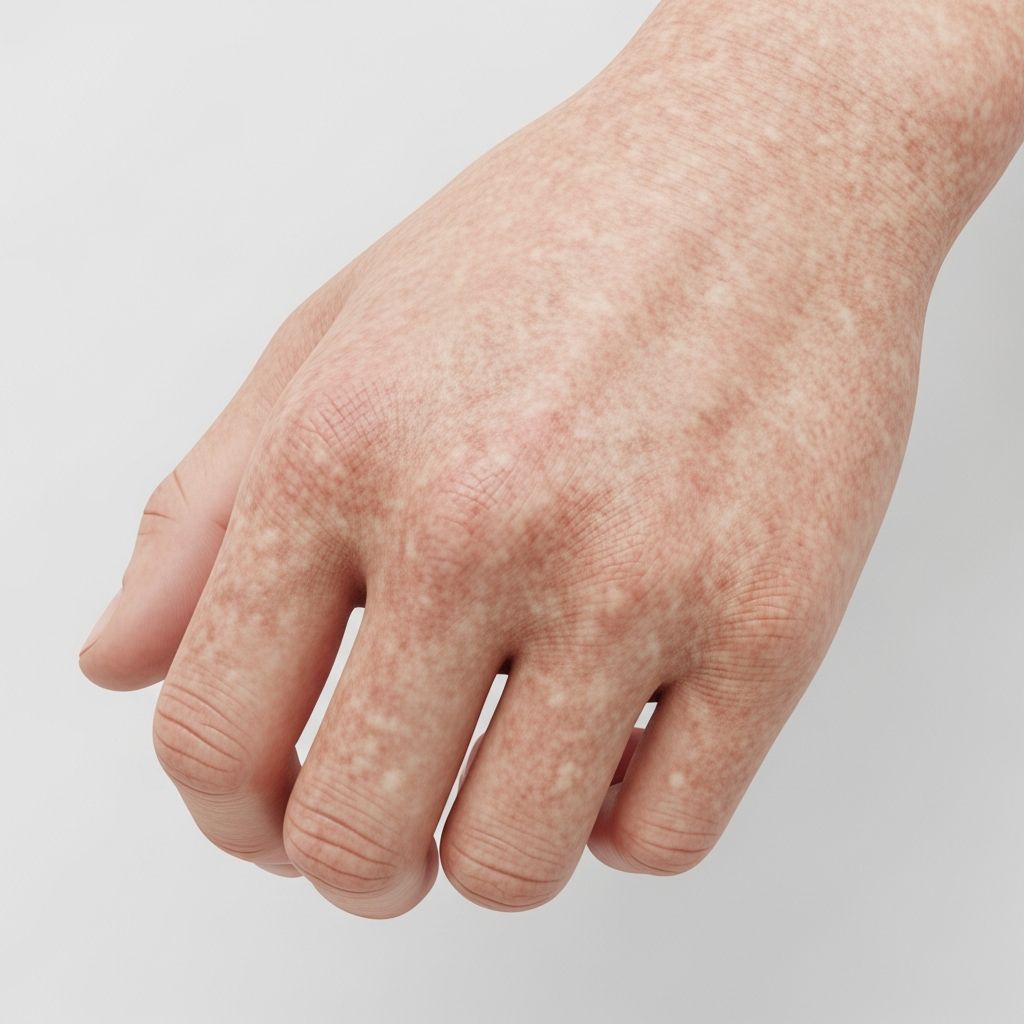
Skin lesions develop exclusively on sun-exposed areas: dorsal hands, forearms, face, V-neck, ears. Symptoms emerge gradually over months.
Primary features:
- Fragility: Skin tears with minor trauma, forming erosions.
- Blisters: Tense vesicles/bullae (0.5-2 cm) on acral sites; heal with milia, scars, crusts.
- Hyperpigmentation: Slate-gray or bronze on lesions.
- Hyperpigmentation: Increased vellus hair on face, temples, forearms.
- Sclerodermoid changes: Thickened, hardened skin on hands, forearms.
Less common: Nail dystrophy (dorsal longitudinal ridging), chemical leukoderma (white patches), prophyria cutis tarda-like lesions mimicking pseudoporphyria.
Systemic associations: Liver disease (fibrosis, HCC risk elevated 100-400 fold), diabetes, dyslipidemia. No abdominal pain or neuropathy distinguishes PCT.
How is porphyria cutanea tarda diagnosed?
Diagnosis combines clinical suspicion, biochemistry, and histopathology.
- Clinical: Photosensitive blisters, hypertrichosis, sclerodactyly.
- Biochemical:
- Plasma/ urine uroporphyrin >10x normal; urine isocoproporphyrin elevated.
- Fecal heptacarboxyporphyrin hallmark.
- Serum ferritin often >300 µg/L.
- Enzyme assay: Hepatic UROD <50% (gold standard, invasive).
- Molecular: UROD sequencing for familial PCT; HFE testing.
- Screen HCV, HIV, liver enzymes.
Biopsy shows subepidermal bullae with festooning; immunofluorescence reveals IgG/porphyrins at DEJ.
What is the treatment for porphyria cutanea tarda?
PCT responds excellently to therapy, with remission in 6-12 months. Address triggers first.
First-line: Phlebotomy (250-500mL every 2-4 weeks x 6-10 sessions) reduces iron/porphyrins; monitor ferritin to 20-50 µg/L.
Pharmacologic:
- Hydroxychloroquine 100-200mg 2-3x/week mobilizes hepatic porphyrins.
- Chloroquine low-dose alternative.
Specific therapies: DAAs for HCV (near-universal remission); treat HIV, stop estrogens/alcohol.
Symptomatic: Sunscreens (UVA blockers), analgesics, wound care, infection prophylaxis.
| Treatment | Dose/Frequency | Mechanism | Response Rate |
|---|---|---|---|
| Phlebotomy | 500mL q2-4w x6-10 | Iron reduction | 90-100% |
| Hydroxychloroquine | 100mg 2-3x/wk | Porphyrin excretion | 80-95% |
| HCV antivirals | Per guidelines | Eliminate trigger | Near 100% |
Relapse (20-50%) managed with repeat courses.
Frequently Asked Questions
Q: Is porphyria cutanea tarda hereditary?
A: About 20% of cases are familial (autosomal dominant UROD mutation); 80% sporadic. Genetic testing identifies at-risk relatives.
Q: Can PCT be cured?
A: Yes, most achieve complete remission with treatment; avoiding triggers prevents recurrence.
Q: Does PCT affect internal organs?
A: Primarily skin/liver; increased risk of cirrhosis, hepatocellular carcinoma requires surveillance.
Q: Is sun avoidance mandatory?
A: Essential during active disease; use UVA-protective clothing/sunscreen.
Q: How long until symptoms resolve?
A: 3-9 months with phlebotomy; new blisters cease early.
References
- Porphyria Cutanea Tarda: Pictures, Treatment, and More — Healthline. 2023-05-15. https://www.healthline.com/health/porphyria-cutanea-tarda
- Porphyria cutanea tarda: Video, Causes, & Meaning — Osmosis. 2024-02-10. https://www.osmosis.org/learn/Porphyria_cutanea_tarda
- Porphyria Cutanea Tarda — Merck Manual Professional Edition. 2025-08-01. https://www.merckmanuals.com/home/hormonal-and-metabolic-disorders/the-porphyrias/porphyria-cutanea-tarda
- Porphyria Cutanea Tarda – Symptoms, Causes, Treatment — NORD (National Organization for Rare Disorders). 2024-11-20. https://rarediseases.org/rare-diseases/porphyria-cutanea-tarda/
- Porphyria Cutanea Tarda — American Porphyria Foundation. 2023-07-12. https://www.porphyria.org/pct
- Porphyria Cutanea Tarda (PCT) — Canadian Porphyria Foundation. 2024-03-05. https://porphyriafoundation.org/for-patients/types-of-porphyria/pct/
Similar Articles








Read full bio of Sneha Tete