Portal Hypertension: Causes, Symptoms, and Treatment
Understanding portal hypertension: comprehensive guide to causes, symptoms, and treatment options.
Understanding Portal Hypertension
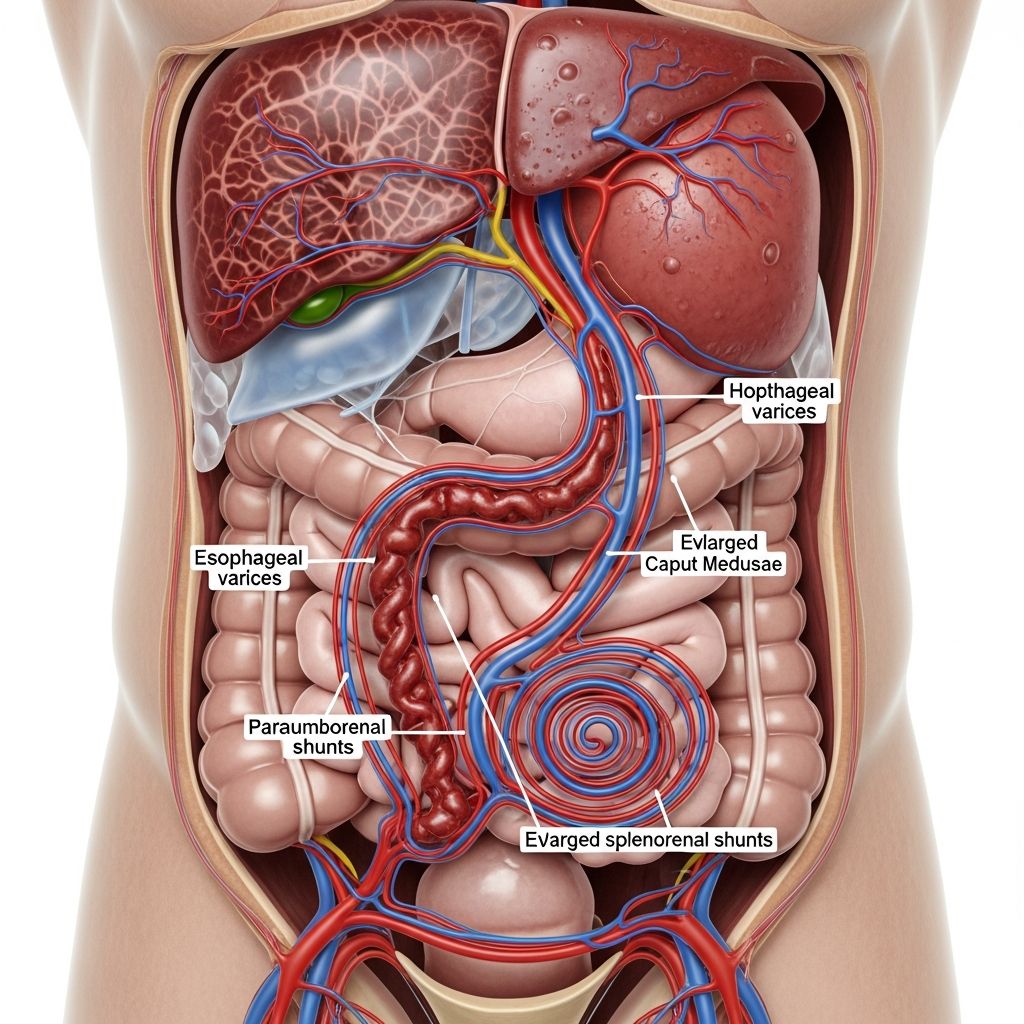
Portal hypertension is a serious medical condition characterized by elevated blood pressure in the portal vein, which carries nutrient-rich blood from the digestive tract to the liver. This condition develops when blood flow through the liver is impeded, causing pressure to build up in the portal venous system. Portal hypertension is most commonly associated with cirrhosis, a progressive liver disease involving extensive scarring that disrupts normal blood flow patterns. However, various other conditions can also lead to this serious complication, making early recognition and appropriate management essential for preventing life-threatening complications.
Causes of Portal Hypertension
Portal hypertension develops through multiple mechanisms, classified by anatomical location as prehepatic, intrahepatic, or posthepatic causes. Understanding these different etiologies is crucial for determining appropriate treatment strategies.
Cirrhosis and Liver Disease
The most common cause of portal hypertension in Western nations is cirrhosis, occurring when long-term liver damage results in extensive scarring of liver tissue. This scarring obstructs blood flow through the portal vein, causing pressure to accumulate. Cirrhosis most frequently develops from chronic alcohol abuse or hepatitis infections. The scar tissue in cirrhosis makes the smooth inner lining of the portal vein irregular, further slowing blood flow and increasing pressure within the vessel.
Prehepatic Causes
Prehepatic etiologies involve increased blood flow or obstruction in the portal or splenic veins. Conditions such as idiopathic tropical splenomegaly, arteriovenous malformations, or fistulas may elevate portal inflow. Obstruction can result from thrombosis (blood clots), tumor invasion, external compression, or portal vein stenosis. In other parts of the world, schistosomiasis, a parasitic infection affecting over 230 million people globally, represents a significant cause of portal hypertension.
Posthepatic Causes
Posthepatic causes involve the hepatic vein, heart, or inferior vena cava. Budd-Chiari syndrome, affecting the hepatic vein, represents a major posthepatic etiology. At the cardiac level, increased right atrial pressure from constrictive pericarditis, tricuspid insufficiency, or restrictive cardiomyopathy may contribute to portal hypertension. Lesions of the inferior vena cava, including stenosis, thrombosis, webs, or tumor invasion, also lead to posthepatic portal hypertension.
Noncirrhotic Portal Hypertension
Idiopathic noncirrhotic portal hypertension (INCPH) refers to portal hypertension developing in patients without cirrhosis. Contributing factors include blood clots in the portal vein, chronic bacterial or parasitic infections, underdeveloped bile ducts, weakened immune systems, Crohn’s disease, and inherited disorders such as Adams-Oliver syndrome and Turner syndrome.
Pathophysiology and Mechanism
Portal hypertension results from two primary mechanisms: increased resistance to portal venous flow and increased portal blood flow due to splanchnic vasodilation. Increased blood pressure in portal vessels develops through either increased volume of blood flowing through the vessels or increased resistance to blood flow through the liver. The increased blood flow is attributed to increased release of splanchnic vasodilators, notably nitric oxide, resulting from increased shear stress and reduced effective arterial volume. The splanchnic arterial dilation plays a significant role in worsening and progression of portal hypertension.
Symptoms and Complications
Portal hypertension produces multiple clinical manifestations as pressure builds within the portal system. Recognizing these symptoms is essential for prompt medical intervention.
Primary Symptoms
Patients with portal hypertension may experience blood in vomit or stools, indicating gastrointestinal bleeding. Confusion or forgetfulness can occur due to hepatic encephalopathy. Jaundice, characterized by yellowing of skin and eyes, develops as liver function deteriorates. Swelling in legs and feet reflects fluid accumulation from impaired liver function. Low white blood cell counts increase infection risk, while decreased platelet counts increase bleeding risk.
Esophageal Varices
The increased pressure causes large veins called varices to form in the esophagus and stomach. These fragile vessels can bleed easily, potentially causing life-threatening hemorrhage. Variceal bleeding represents one of the most serious complications of portal hypertension.
Related Stories



Ascites
Increased pressure in portal blood vessels causes protein-containing fluid to leak from the surface of the liver and intestine, accumulating within the abdomen in a condition called ascites. This produces abdominal swelling, discomfort, and rapid weight gain from fluid accumulation.
Splenomegaly
Portal hypertension often causes the spleen to enlarge because increased pressure interferes with blood flow from the spleen into the portal blood vessels. When the spleen enlarges, white blood cell counts decrease, increasing infection risk, while platelet counts decrease, increasing bleeding risk.
Diagnosis and Evaluation
Accurate diagnosis of portal hypertension involves integrating multiple diagnostic approaches. Healthcare providers base diagnosis on patient history, physical examination findings, laboratory evaluation, and imaging studies. Imaging modalities play a crucial role in identifying the underlying cause and assessing disease severity. Laboratory tests evaluate liver function and coagulation status. Noninvasive tools help assess portal pressure and predict bleeding risk.
Treatment and Management Strategies
Management of portal hypertension involves a comprehensive approach addressing both the underlying etiology and complications. Unfortunately, most causes of portal hypertension cannot be completely reversed, so treatment focuses on preventing or managing complications, especially bleeding from varices.
Treating Underlying Causes
The initial treatment step focuses on identifying the underlying etiology and addressing reversible causes whenever feasible. For instance, anticoagulation serves as the treatment of choice when thrombosis affects the portal vein or inferior vena cava in hypercoagulable states. In cases of hepatitis C infection, antiviral therapy can prevent disease progression, reduce hepatocellular carcinoma risk, and delay variceal bleeding onset. Abstinence from alcohol may reverse some complications in patients with alcohol-related liver disease.
Pharmacological Management
Patients can be treated medically with nonselective beta-blockers (NSBBs), which prevent variceal bleeding by reducing cardiac output, thereby decreasing splanchnic blood flow and increasing resistance in the splanchnic vascular system. This leads to reduced portal blood flow and decreased hepatic venous pressure gradient (HVPG). Carvedilol promotes nitrous oxide release, causing further portal pressure decrease and greater HVPG reduction compared to propranolol and nadolol.
Vasodilators such as isosorbide enlarge veins and reduce bleeding risk. Diuretic pills reduce fluid accumulation due to ascites. Lactulose, a synthetic sugar laxative, helps reduce confusion and mental changes caused by hepatic encephalopathy. Antibiotics may be prescribed to manage infections associated with portal hypertension.
Endoscopic Therapy
Endoscopic therapy includes banding, which blocks blood vessels from bleeding using rubber bands, or sclerotherapy, which injects blood-clotting solutions into varices to stop bleeding. These procedures represent first-line treatments for active gastrointestinal bleeding.
Shunting Procedures
Shunting uses tiny tubes placed around the liver to help provide sufficient blood flow, reduce portal hypertension, and prevent varices. Two different shunt procedures are sometimes performed to redirect blood flow through the portal venous system and relieve pressure. These interventions help when bleeding or other complications persist despite medical management.
Transjugular Intrahepatic Portosystemic Shunt (TIPS)
Persistent or severe disease may require TIPS placement, which creates a channel between the portal vein and hepatic vein, effectively lowering portal pressure. TIPS represents an important option for patients who fail medical management or endoscopic therapy.
Liver Transplantation
Liver transplantation remains the only definitive cure for cirrhosis-related portal hypertension. People with advanced liver disease or liver cancer may be candidates for liver transplant when other treatments fail or complications become unmanageable.
Importance of Early Management
Early identification and appropriate management, including nonselective beta-blockers, endoscopic interventions, and treatment of underlying causes, can significantly improve outcomes. Delayed diagnosis or inadequate management leads to increased hospitalization, higher mortality rates, and greater need for transplant evaluation. An interprofessional approach to managing portal hypertension enhances clinical decision-making and improves patient outcomes.
Lifestyle and Dietary Considerations
Diet plays an important role in managing portal hypertension. Patients should follow dietary recommendations from their healthcare providers, which may include sodium restriction to manage ascites and fluid accumulation. Alcohol should be completely avoided, as continued alcohol consumption accelerates liver disease progression. Regular medical follow-up helps monitor disease progression and adjust treatment as needed.
Frequently Asked Questions
Q: What is the most common cause of portal hypertension?
A: In Western nations, cirrhosis is the most common cause of portal hypertension. Cirrhosis develops from chronic liver damage, often from alcohol abuse or hepatitis infections. In other parts of the world, schistosomiasis, a parasitic infection, is more common.
Q: Can portal hypertension be cured?
A: Most causes of portal hypertension cannot be completely reversed. However, treatment focuses on preventing and managing complications. Liver transplantation remains the only definitive cure for cirrhosis-related portal hypertension. In some cases, treating underlying causes like hepatitis C or stopping alcohol consumption may help slow disease progression.
Q: What are the most dangerous complications of portal hypertension?
A: The most dangerous complication is variceal bleeding, where enlarged veins in the esophagus rupture and bleed. This can cause life-threatening hemorrhage. Other serious complications include ascites, hepatic encephalopathy, spontaneous bacterial peritonitis, and progressive liver failure.
Q: How is portal hypertension diagnosed?
A: Diagnosis involves patient history, physical examination, laboratory tests evaluating liver function, imaging studies such as ultrasound or CT scans, and noninvasive tools to assess portal pressure and bleeding risk. Healthcare providers integrate multiple diagnostic approaches for accurate assessment.
Q: What medications are used to treat portal hypertension?
A: Nonselective beta-blockers like propranolol are first-line medications that reduce portal pressure by decreasing blood flow. Vasodilators like isosorbide reduce bleeding risk. Diuretics manage ascites, while lactulose and antibiotics address hepatic encephalopathy and infections respectively.
Q: How can I prevent portal hypertension?
A: Prevention involves avoiding chronic liver disease risk factors: limit or eliminate alcohol consumption, get vaccinated against hepatitis A and B, maintain healthy weight, avoid hepatitis C exposure, and manage metabolic conditions. Early treatment of liver disease can prevent progression to portal hypertension.
References
- Portal Hypertension — National Center for Biotechnology Information (NCBI), U.S. National Library of Medicine. 2024. https://www.ncbi.nlm.nih.gov/books/NBK507718/
- Portal Hypertension: Causes, Symptoms, Treatments, Tests — WebMD. 2024. https://www.webmd.com/digestive-disorders/digestive-diseases-portal
- Portal Hypertension – Liver and Gallbladder Disorders — Merck Manuals. 2024. https://www.merckmanuals.com/home/liver-and-gallbladder-disorders/manifestations-of-liver-disease/portal-hypertension
- Portal Hypertension: Common Symptoms & Treatment — Cleveland Clinic. 2024. https://my.clevelandclinic.org/health/diseases/4912-portal-hypertension
- Portal Hypertension | Center for Advanced Digestive Care — NewYork-Presbyterian. 2024. https://www.nyp.org/cadc/liver-diseases-and-transplantation/portal-hypertension
- Portal Hypertension | Center for Liver Disease & Transplantation — Columbia Surgery. 2024. https://columbiasurgery.org/conditions-and-treatments/portal-hypertension
- Portal Hypertension: Symptoms, Causes, and Treatment — Medical News Today. 2024. https://www.medicalnewstoday.com/articles/portal-hypertension
Similar Articles








Read full bio of Sneha Tete