Portal Hypertension: Symptoms, Causes & Treatment
Understanding portal hypertension: causes, complications, diagnosis and evidence-based treatment options.
Understanding Portal Hypertension
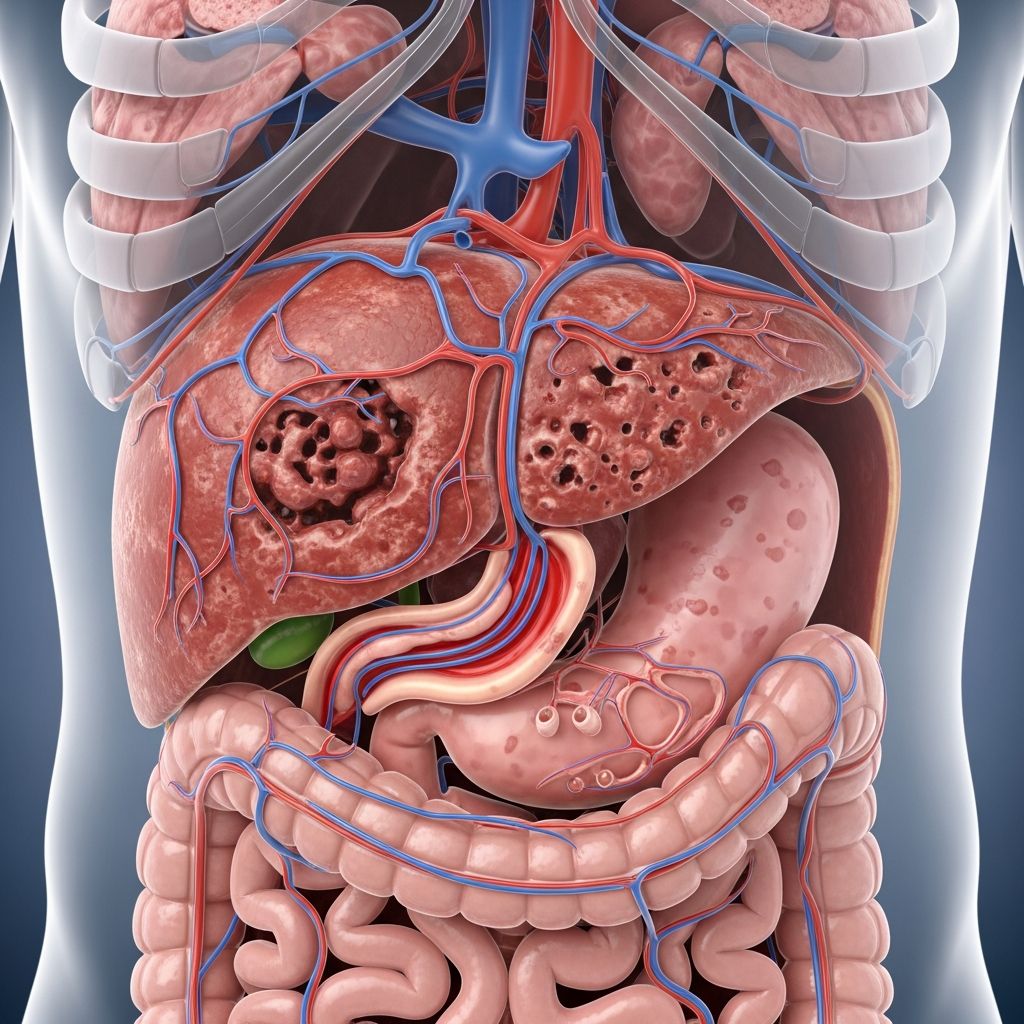
Portal hypertension represents one of the most serious complications of advanced liver disease, particularly cirrhosis. This condition occurs when high blood pressure develops in the portal vein, the major blood vessel that carries blood from your digestive organs to your liver. When scar tissue accumulates in the liver due to cirrhosis, it compresses the blood vessels running through the organ and significantly reduces their blood flow capacity.
The condition develops because of increased resistance to blood flow through the liver. When something blocks or slows the movement of blood through the portal vein, it causes elevated pressure throughout the entire portal venous system. Your body attempts to compensate for this increased pressure by diverting blood flow into other veins. However, this redirection causes these alternative veins to expand as they receive excessive blood volume, stretching their walls and weakening them in the process.
Portal hypertension is the most common cause of hospitalization and death in people with cirrhosis. The consequences can be severe and life-threatening, affecting multiple organs throughout your body. Understanding this condition, its complications, and available treatment options is essential for patients diagnosed with liver disease.
Causes of Portal Hypertension
Portal hypertension develops as a result of several underlying liver conditions, though cirrhosis is by far the most common culprit. The primary causes include:
- Cirrhosis – Permanent liver scarring that severely restricts blood flow through the organ
- Chronic alcohol use – Prolonged alcohol consumption damages liver tissue and leads to scarring
- Viral hepatitis – Both hepatitis B and C infections can cause chronic liver inflammation and eventual scarring
- Autoimmune liver disease – Conditions where the immune system attacks liver cells
- Fatty liver disease – Accumulation of fat in the liver can progress to cirrhosis
- Biliary disorders – Problems with bile ducts can impair liver function
- Blood clots – Thrombosis in the portal vein or hepatic vein can obstruct blood flow
- Infections – In some cases, infectious agents can cause portal hypertension
While cirrhosis accounts for the vast majority of portal hypertension cases, noncirrhotic causes such as congenital hepatic fibrosis, sarcoidosis, and schistosomiasis occasionally occur. The underlying mechanism in all cases involves increased resistance to blood flow through the liver, whether from structural damage, scarring, or vascular obstruction.
Recognizing the Symptoms and Complications
Portal hypertension itself may not always produce noticeable symptoms in its early stages. However, as the condition progresses and complications develop, several serious symptoms can emerge. Healthcare providers may suspect portal hypertension based on specific clinical indicators and risk factors such as chronic alcohol use, known cirrhosis, or a history of gastrointestinal bleeding.
Common Symptoms
Patients with portal hypertension may experience:
- Anorexia and loss of appetite
- Unexplained weight loss
- Early satiety (feeling full quickly when eating)
- Abdominal distension and swelling
- Vomiting, particularly vomiting blood
- Black or tarry stools indicating internal bleeding
- Fatigue and weakness
- Jaundice (yellowing of skin and eyes)
- Confusion or difficulty concentrating
Life-Threatening Complications
The complications of portal hypertension can be absolutely life-threatening, especially when internal bleeding occurs. The pressure within the portal venous system forces blood into alternative veins, causing them to enlarge and their walls to weaken. The greater the portal pressure becomes, the more enlarged these veins grow, and the more likely they are to rupture and bleed. Not everyone with portal hypertension will experience these complications, but the risk increases proportionally with increasing pressure levels.
Related Stories



The most serious complications include:
- Variceal bleeding – Rupture of enlarged veins in the esophagus or stomach causing severe internal hemorrhage. Acute variceal hemorrhage represents a medical emergency with a 6-week mortality rate ranging from 10% to 15% despite modern therapeutic advances.
- Ascites – Abnormal accumulation of fluid in the abdominal cavity, causing distension and discomfort
- Spontaneous bacterial peritonitis – Life-threatening infection of the fluid accumulated in the abdomen
- Hepatic encephalopathy – Brain dysfunction resulting from liver failure and toxin accumulation
- Hepatorenal syndrome – Rapid kidney failure associated with liver disease
- Hepatic hydrothorax – Fluid accumulation in the chest cavity
- Portal hypertensive intestinal vasculopathy – Abnormal blood vessel development in the intestines
Diagnostic Approaches
Accurate diagnosis of portal hypertension involves both clinical assessment and diagnostic testing. Healthcare providers can often recognize portal hypertension through its characteristic clinical signs and symptoms, but confirmation typically requires additional evaluation.
The Hepatic Venous Pressure Gradient
The most direct way to diagnose portal hypertension is to measure the pressure in your liver veins through a procedure that involves inserting a tiny catheter into a vein. This measurement is known as the hepatic venous pressure gradient (HVPG). An HVPG greater than 5 mmHg suggests portal hypertension, while values exceeding 10 mmHg are considered clinically significant and are often associated with complications such as varices and ascites.
However, direct HVPG measurement is an invasive procedure that carries risks including pain, arrhythmias, and vagal reactions. For this reason, alternative noninvasive methods of diagnosis are often preferred by healthcare providers.
Non-Invasive Diagnostic Methods
Rather than relying solely on invasive catheterization, healthcare providers typically employ several non-invasive approaches:
- Imaging tests – Ultrasound, CT scans, or MRI can visualize the liver, detect cirrhosis, identify ascites, and reveal enlarged blood vessels
- Blood tests – Laboratory studies assess liver function, measure bilirubin levels, and evaluate clotting factors
- Endoscopy – Direct visualization of the esophagus and stomach can identify varices before they rupture
- Doppler ultrasound – Specialized imaging assesses blood flow patterns through the portal vein
Treatment and Management Strategies
Portal hypertension itself may or may not be reversible, depending entirely on its underlying cause. If portal hypertension results from an infection or blood clot that healthcare providers can treat with medication, the condition can improve and sometimes resolve over time. However, when significant scar tissue is present, particularly in the case of cirrhosis, it usually does not reverse, leading to persistent portal hypertension.
Because cirrhosis is irreversible, most treatment is aimed at managing the complications of portal hypertension rather than curing the underlying disease. Healthcare providers address medical emergencies first, then move on to longer-term solutions designed to prevent future complications and improve quality of life.
Emergency Management
When acute variceal hemorrhage occurs, immediate intervention is critical. Emergency management includes:
- Rapid assessment and stabilization of the patient
- Blood transfusions to replace lost volume
- Endoscopic procedures to stop active bleeding
- Pharmacological interventions to reduce portal pressure
Long-Term Management Approaches
Long-term management focuses on preventing complications and maintaining quality of life through a comprehensive approach that addresses the underlying liver disease while managing portal hypertension and its sequelae. This typically involves:
- Regular monitoring with imaging and laboratory studies
- Medication therapy to reduce portal pressure and prevent variceal bleeding
- Dietary modifications and fluid restrictions when ascites is present
- Alcohol cessation programs for patients with alcohol-related liver disease
- Liver transplantation – The definitive treatment for end-stage liver disease, offering the best long-term outcomes when the patient is an appropriate candidate
The Role of Interdisciplinary Care
Managing portal hypertension effectively requires coordinated care from multiple healthcare specialists. Hepatologists, gastroenterologists, interventional radiologists, surgeons, and other specialists each contribute essential expertise. Pharmacists play a particularly important role in managing the complex medication regimens often required, navigating pharmacokinetic and pharmacodynamic changes in patients with liver disease, and ensuring evidence-based, patient-centered care that improves safety and outcomes.
Prevention and Lifestyle Considerations
While portal hypertension cannot always be prevented, certain lifestyle modifications can help prevent or slow progression of underlying liver disease:
- Eliminate alcohol consumption – Essential for patients with alcohol-related liver disease
- Maintain a healthy weight – Obesity increases risk of fatty liver disease
- Manage hepatitis risk – Get vaccinated against hepatitis A and B; practice safe behaviors to prevent hepatitis C transmission
- Follow medical recommendations – Adhere to treatment plans for autoimmune liver diseases
- Regular medical follow-up – Monitor liver function and screen for portal hypertension complications
Living with Portal Hypertension
A diagnosis of portal hypertension can be emotionally challenging, but modern medical management offers hope and improved outcomes. Regular communication with your healthcare team, adherence to prescribed treatments, and lifestyle modifications can help manage complications and maintain quality of life. Patients should report new symptoms immediately to their healthcare provider, as early recognition and intervention of complications can be life-saving.
Frequently Asked Questions
Q: Is portal hypertension always caused by cirrhosis?
A: While cirrhosis is the most common cause of portal hypertension, affecting approximately 2.6% of Americans, other causes include blood clots in the portal or hepatic veins, infections, autoimmune liver disease, and certain genetic conditions. However, cirrhosis accounts for the vast majority of cases.
Q: Can portal hypertension be cured?
A: Portal hypertension resulting from cirrhosis typically cannot be reversed because the liver scarring is permanent. However, if portal hypertension is caused by a treatable condition such as a blood clot or infection, it may improve with appropriate treatment. Liver transplantation represents the definitive treatment for end-stage liver disease.
Q: What is the difference between portal hypertension and portopulmonary hypertension?
A: Portal hypertension involves elevated pressure in the portal vein system within the liver. Portopulmonary hypertension is a rare complication where patients with portal hypertension also develop pulmonary arterial hypertension (high blood pressure in the lungs). This combination carries a poor prognosis and affects liver transplant eligibility.
Q: How often should I be screened for portal hypertension complications?
A: If you have known liver disease or cirrhosis, regular screening is essential. This typically includes routine imaging studies, blood tests, and endoscopic examination to detect varices. Your healthcare provider will recommend an appropriate screening schedule based on your individual risk factors and disease severity.
Q: What should I do if I vomit blood?
A: Vomiting blood is a medical emergency that requires immediate hospital evaluation. Call emergency services or go to the nearest emergency room immediately. This may indicate variceal bleeding, which requires urgent treatment to prevent life-threatening blood loss.
Q: Can I drink alcohol if I have portal hypertension?
A: No. Alcohol consumption should be completely eliminated, as it further damages the liver and worsens portal hypertension. Continued alcohol use significantly increases the risk of serious complications and reduces survival rates.
Q: What dietary modifications are recommended?
A: Dietary recommendations vary based on individual complications but typically include sodium restriction to manage ascites, protein adjustments, and adequate caloric intake. Your healthcare provider or a registered dietitian can provide personalized dietary guidance based on your specific condition.
References
- Managing Portal Hypertension and Associated Complications — US Pharmacist. 2025-11-01. https://www.uspharmacist.com/article/managing-portal-hypertension-and-associated-complications
- Portal Hypertension: Common Symptoms & Treatment — Cleveland Clinic. 2024-12-01. https://my.clevelandclinic.org/health/diseases/4912-portal-hypertension
- Portopulmonary Hypertension: A Focused Review for the Internist — Cleveland Clinic Journal of Medicine. 2023-10-01. https://consultqd.clevelandclinic.org/portopulmonary-hypertension-a-focused-review-for-the-internist
- Fifty Years of Surgery for Portal Hypertension at the Cleveland Clinic — PubMed Central, National Center for Biotechnology Information. 1995-01-01. https://pmc.ncbi.nlm.nih.gov/articles/PMC1234618/
- Expanding Treatment Landscape for Gastric Varices — Consult QD, Cleveland Clinic. 2024-12-01. https://consultqd.clevelandclinic.org/expanding-treatment-landscape-for-gastric-varices
Similar Articles








Read full bio of Sneha Tete