Portal Vein: Anatomy, Location & Function
Understand the portal vein's crucial role in liver function and blood circulation.
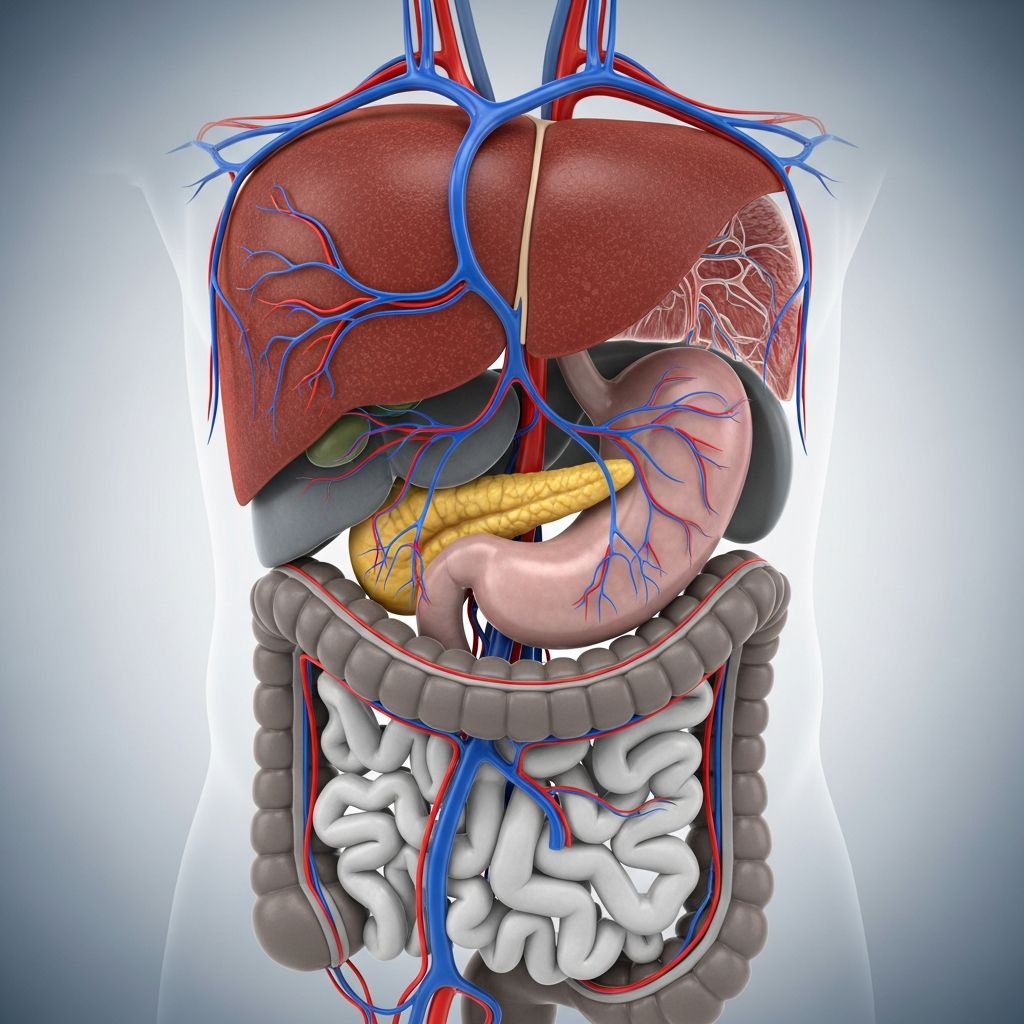
Your portal vein is a crucial blood vessel that plays a vital role in your circulatory system and liver function. It serves as the main blood supply to your liver, carrying nutrient-rich blood from your digestive organs for processing and filtration. Understanding the anatomy and function of your portal vein helps you appreciate how your body maintains optimal health and processes the nutrients you consume daily.
What Is Your Portal Vein?
Your portal vein, also known as your hepatic portal vein, is a large blood vessel that carries oxygen-depleted but nutrient-rich blood from your digestive organs to your liver. Unlike most veins that carry blood back to your heart, your portal vein has a unique function: it transports blood between two sets of organs—first from your digestive system to your liver, and then your liver processes this blood before it continues to your heart.
The portal vein is formed by the joining of two major veins: your superior mesenteric vein (SMV) and your splenic vein. These two vessels merge together to create the portal vein, which then enters your liver through an opening called the liver hilum. This arrangement allows your liver to receive and filter blood from multiple organs before that blood returns to general circulation throughout your body.
Anatomy and Structure of the Portal Vein
The portal vein is composed of three main layers, similar to other blood vessels in your body. These layers provide strength, elasticity, and functionality to the vessel, allowing it to withstand the pressure of blood flow while maintaining its structural integrity.
The structure of your portal vein begins at its formation point, where the superior mesenteric vein and splenic vein converge. From this junction point behind your pancreas, the portal vein extends forward and upward into your liver. The vessel typically measures approximately one centimeter in diameter, making it a substantial blood vessel in your abdominal cavity.
Once inside your liver, the portal vein divides into smaller branches that distribute blood throughout the organ’s different segments and sectors. This branching pattern ensures that every part of your liver receives adequate blood flow for processing and filtering.
Location of the Portal Vein
Your portal vein is located deep within your abdominal cavity, running through the upper right portion of your belly. The vessel begins behind your pancreas, at the point where the superior mesenteric vein and splenic vein join together. From this starting point, the portal vein travels upward and forward toward your liver.
The portal vein enters your liver through the liver hilum, which is a depression on the underside of your liver where major blood vessels and the bile duct pass through. This anatomical gateway is located just below your right rib cage, protected by your ribs and abdominal wall.
Related Stories



Inside your liver, the portal vein branches extensively throughout the organ’s eight segments. These branches ensure that blood is distributed evenly to all areas of your liver tissue, allowing for comprehensive filtration and processing of nutrients.
Tributaries of the Portal Vein
Your portal vein receives blood from several important tributaries—smaller veins that branch off from various organs in your abdominal cavity. These tributaries collect blood from specific organs and deliver it to the portal vein for transport to your liver.
The main tributaries include:
- Superior Mesenteric Vein (SMV): Collects blood from your small intestine and part of your large intestine
- Splenic Vein: Carries blood from your spleen, pancreas, and parts of your stomach
- Gastric Veins: Drain blood from your stomach, including the left and right gastric veins
- Cystic Vein: Carries blood from your gallbladder
- Superior Rectal Vein: Drains blood from the upper portion of your rectum
Function of the Portal Vein
The primary function of your portal vein is to transport nutrient-rich blood from your digestive organs to your liver for processing and filtration. After you eat a meal, your intestines absorb nutrients and begin the process of nutrient absorption. The blood vessels in your intestinal walls collect this nutrient-rich blood and carry it to your superior mesenteric vein, which then delivers it to your portal vein.
Your portal vein acts as a specialized delivery system, ensuring that your liver receives priority processing of blood from your digestive system. This arrangement allows your liver to perform several critical functions before the blood returns to general circulation:
- Filter out waste products and bacteria from blood
- Remove damaged or worn-out red blood cells
- Process and store nutrients for later use by your body
- Convert nutrients into forms your body can utilize
- Detoxify harmful substances
- Produce essential proteins and clotting factors
Blood Flow Through the Portal Vein
When blood enters your portal vein from its tributaries, it flows into your liver through the liver hilum. Inside your liver, the portal vein branches into progressively smaller vessels. These branches deliver blood into tiny capillaries called sinusoids, which are specialized blood vessels unique to your liver.
In these sinusoids, your blood comes into direct contact with liver cells (hepatocytes). This close contact allows your liver to perform its filtration and processing functions efficiently. The liver removes old red blood cells, bacteria, and other debris from your blood. Simultaneously, nutrients are either added to your blood or removed and stored for future use by your body.
After processing through your liver, the blood exits through your hepatic veins and flows into your inferior vena cava, a large vein that carries blood back to your heart. From there, the blood circulates through your heart and lungs to receive oxygen before being pumped out to supply the rest of your body.
Portal Venous System
Your portal vein is the central component of your hepatic portal system (also called your portal venous system), which is a specialized network of veins dedicated to filtering blood from your digestive organs. This system is unique because it represents a portal circulation—blood flows between two sets of capillary networks rather than returning directly to your heart.
The portal venous system drains blood from your stomach, intestines, pancreas, and spleen into your liver through the portal vein. Your liver then filters this blood and sends it back to your heart through your hepatic veins. This routing ensures that all nutrients and potentially harmful substances from your digestive tract are processed by your liver before entering your general circulation.
Relationship Between Portal Vein and Hepatic Veins
Your portal vein and hepatic veins serve opposite functions in your liver circulation. Your portal vein carries blood into your liver, delivering oxygen-poor but nutrient-rich blood from your digestive organs. Meanwhile, your hepatic veins carry blood out of your liver after it has been processed and filtered.
The three major hepatic veins—right, middle, and left—drain blood from your liver into your inferior vena cava. The right hepatic vein typically enters the IVC independently, while the middle and left hepatic veins often merge to form a common trunk before draining into the IVC. This arrangement ensures efficient drainage of processed blood from your liver back toward your heart.
Portal Vein and Hepatic Artery Supply
Your liver receives blood from two sources: your portal vein and your hepatic artery. While your hepatic artery delivers oxygen-rich blood to your liver for the organ’s own nutritional needs, your portal vein supplies approximately 75% of your liver’s blood volume and serves as the primary source for nutrient delivery and processing.
The hepatic artery develops with your biliary tract and continues to develop after birth, while the portal vein arises from embryonic vessels called the umbilical and vitelline veins, making it the central vessel around which liver development occurs. This embryological development explains why the portal vein is considered the primary blood supply for liver function.
Common Portal Vein Variations
While the standard anatomy of the portal vein follows the pattern described above, anatomical variations can occur in some individuals. These variations are typically harmless but may be significant during surgical procedures or medical imaging.
Some people may have variations in how their portal vein branches or combines with its tributaries. Additionally, certain conditions such as malrotation (an abnormal rotation of abdominal organs during fetal development) can result in different portal vein configurations. Tumors or other masses pressing on nearby structures can also cause temporary variations in portal vein positioning.
Health Conditions Affecting the Portal Vein
Several health conditions can affect your portal vein function. Portal hypertension occurs when blood pressure in your portal vein becomes elevated due to blockages or increased resistance to blood flow. This condition can result from liver cirrhosis, hepatitis, or blood clots in the portal vein.
When portal hypertension develops, your body attempts to compensate by diverting blood flow into alternative veins. This increased pressure can cause these veins to expand and weaken, potentially leading to internal bleeding or fluid accumulation in your abdomen. Understanding portal vein function helps healthcare providers diagnose and treat these serious conditions.
Importance of Portal Vein Health
Maintaining healthy portal vein function is essential for proper liver function and overall health. A properly functioning portal vein ensures that your liver receives an adequate blood supply to perform its numerous vital functions, including nutrient processing, detoxification, and immune function.
To keep your portal vein and liver healthy, maintain a balanced diet, limit alcohol consumption, exercise regularly, maintain a healthy weight, and seek medical attention if you experience symptoms of liver disease such as jaundice, abdominal swelling, or unexplained fatigue.
Frequently Asked Questions
Q: What is the difference between the portal vein and the hepatic vein?
A: The portal vein carries nutrient-rich blood into your liver from your digestive organs, while the hepatic veins carry processed blood out of your liver toward your heart. They have opposite functions in liver circulation.
Q: How much blood flows through the portal vein?
A: The portal vein carries approximately 75% of your liver’s blood volume, making it the primary blood supply to your liver for nutrient delivery and processing.
Q: What organs drain blood into the portal vein?
A: Your portal vein receives blood from your small intestine, large intestine, stomach, spleen, pancreas, and gallbladder through its various tributaries.
Q: Can the portal vein become blocked?
A: Yes, the portal vein can become blocked by blood clots or compressed by tumors, which can lead to portal hypertension and serious complications.
Q: Where does blood go after it leaves the liver?
A: After processing through your liver, blood exits via the hepatic veins, flows into your inferior vena cava, then travels to your heart before being pumped to your lungs and the rest of your body.
References
- Superior Mesenteric Vein: Anatomy, Location & Function — Cleveland Clinic. 2024. https://my.clevelandclinic.org/health/body/25169-superior-mesenteric-vein
- Hepatic Vein: Location, Anatomy & Function — Cleveland Clinic. 2024. https://my.clevelandclinic.org/health/body/hepatic-veins
- Physiology, Liver — StatPearls, National Center for Biotechnology Information. 2024. https://www.ncbi.nlm.nih.gov/books/NBK535438/
- Portal vein — Encyclopædia Britannica. 2024. https://www.britannica.com/science/portal-vein
- Splenic Vein: Anatomy and Function — Cleveland Clinic. 2024. https://my.clevelandclinic.org/health/body/splenic-vein
- Portal Hypertension: Common Symptoms & Treatment — Cleveland Clinic. 2024. https://my.clevelandclinic.org/health/diseases/4912-portal-hypertension
Similar Articles








Read full bio of medha deb