PCL Injuries A to Z: Causes, Symptoms & Treatment
Complete guide to PCL injuries: understand causes, symptoms, diagnosis, and treatment options.
Understanding Posterior Cruciate Ligament Injuries: A Complete Guide
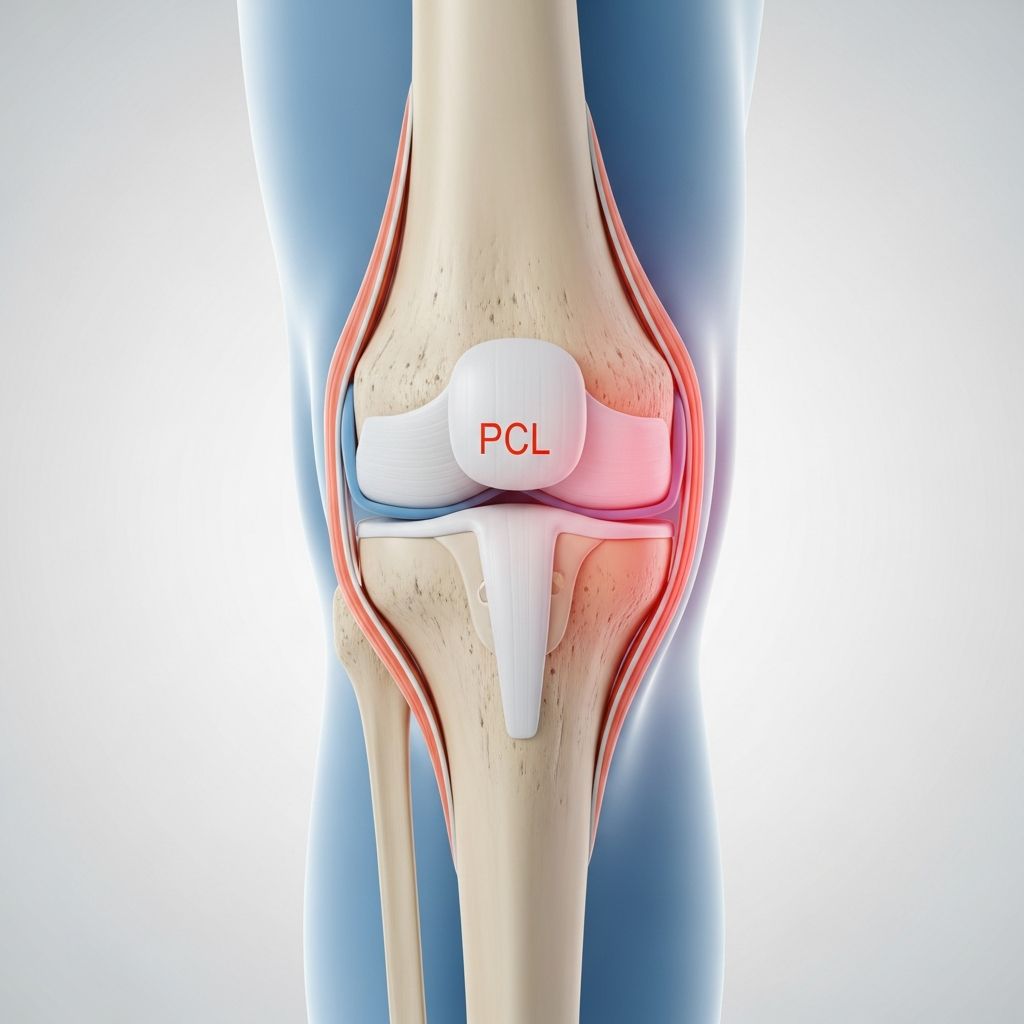
The posterior cruciate ligament (PCL) is one of the four major ligaments of the knee joint and plays a crucial role in maintaining knee stability. PCL injuries, while less common than anterior cruciate ligament (ACL) injuries, require prompt medical attention and appropriate management. This comprehensive guide explores everything you need to know about PCL injuries, from their causes and symptoms to diagnosis and treatment options.
What Is the Posterior Cruciate Ligament?
The posterior cruciate ligament is a strong band of tissue located at the back of the knee joint. It functions primarily to prevent the tibia (shinbone) from sliding backward relative to the femur (thighbone). The PCL is approximately 1.3 to 2 times thicker and about twice as strong as the anterior cruciate ligament, which explains why PCL injuries occur less frequently than ACL injuries. The ligament works in conjunction with other supporting structures, including the posterolateral joint capsule, popliteus muscle, medial collateral ligament, and posterior oblique ligament, to resist posterior tibial translation and maintain proper knee alignment during movement.
How Do PCL Injuries Occur?
Common Causes
PCL injuries typically result from direct trauma or high-impact incidents. Understanding the mechanisms of injury can help you recognize potential risk situations and take appropriate precautions.
- Motor vehicle accidents: One of the most common causes is a direct blow to the front of the knee when it is bent, such as when the knee strikes a vehicle dashboard during a collision.
- High-impact falls: Falling from significant heights or landing with force on a bent knee can cause PCL damage.
- Sports injuries: Direct contact during athletic activities, particularly in football, basketball, and soccer, can result in PCL tears.
- Motorcycle accidents: These high-velocity incidents frequently result in multiple ligament injuries including PCL damage.
- Direct knee trauma: Any forceful blow to the posterior aspect of the knee while in flexion can compromise ligament integrity.
Grades and Severity of PCL Injuries
PCL injuries are classified into three grades based on the extent of ligament damage and functional impairment. Understanding these classifications helps determine appropriate treatment strategies.
Grade I: Partial Tear
Grade I injuries involve minimal damage to the PCL with limited stretching or incomplete tearing of ligament fibers. In these cases, posterior tibial translation measures 1-5mm, and the tibia remains anterior to the femoral condyles. Patients typically experience minor pain and swelling but maintain functional knee stability. The ligament retains most of its ability to stabilize the knee, and symptoms are generally manageable with conservative treatment.
Grade II: Moderate Tear
Grade II injuries represent partial to moderate tears of the PCL ligament. Posterior tibial translation ranges from 6-10mm, with the tibia flush with the femoral condyles. Patients report moderate pain and swelling with some degree of instability in the knee joint. Activities requiring knee stability may become difficult, and functional limitations become more apparent. Some patients may experience a giving-way sensation during certain movements.
Grade III: Complete Tear
Grade III injuries involve complete rupture of the PCL, often in combination with damage to other ligamentous structures and capsular tissue. Posterior tibial translation exceeds 10mm, with the tibia positioned posterior to the femoral condyles, indicating potential concomitant capsuloligamentous injury. These severe injuries present with significant pain, swelling, stiffness, and marked instability. The knee may give way during weight-bearing activities, making walking and standing challenging.
Related Stories



Recognizing PCL Injury Symptoms
Acute Presentation
Symptoms of PCL injuries vary depending on severity but typically appear immediately after the incident or within hours. Key symptoms include:
- Pain and swelling: Immediate or delayed knee pain that ranges from mild to severe, accompanied by swelling in and around the knee joint.
- “Popping” sensation at the moment of injury, indicating potential ligament tearing
- Bruising: Discoloration around the knee resulting from bleeding within surrounding tissues
- Difficulty bearing weight: Challenges with standing, walking, or running on the affected leg
- Sensation of knee instability or “giving way”
- Reduced range of motion and stiffness
Chronic Symptoms
If untreated or inadequately managed, PCL injuries can lead to long-term complications. Chronic symptoms include recurrent pain and swelling, persistent instability, difficulty with specific activities, and increased risk of osteoarthritis development.
Diagnostic Methods for PCL Injuries
Medical History and Physical Examination
The diagnostic process begins with a detailed medical history. Your healthcare provider will ask about the injury mechanism, timing of symptom onset, previous knee injuries, and current functional limitations. Following the history, a comprehensive physical examination includes inspection for trauma signs such as swelling and bruising, palpation of the joint structures, assessment of range of motion, and neurovascular testing.
Special Physical Tests
Several clinical tests help evaluate PCL integrity and identify associated injuries:
- Posterior Sag Sign: With the patient lying on their back with hip flexion at 45 degrees and knee flexion at 90 degrees, sagging of the tibia posterior to the femur suggests PCL tears. This test has sensitivity ranging from 0.46-1.00 and specificity of 1.00.
- Quadriceps Active Test: This test is particularly helpful for diagnosing complete PCL tears.
- Posterior drawer test in neutral rotation and internal rotation positions
- Assessment of posterolateral corner integrity
Imaging Studies
MRI (Magnetic Resonance Imaging) serves as the gold standard for diagnosing PCL injuries and evaluating associated structural damage. On T1- and T2-weighted sagittal MRI images, increased signal within the PCL substance or disruption in ligament fiber continuity indicates acute injury. MRI effectively determines injury grade, evaluates associated injuries to other ligaments, meniscus, and cartilage structures, and assesses chronic changes including posterior tibial translation. Posterior translation less than 8mm may indicate potential for healing with restoration of ligament continuity.
Treatment Options for PCL Injuries
Conservative (Non-Surgical) Treatment
Many PCL injuries, particularly Grade I and isolated Grade II injuries, respond well to conservative management approaches. Treatment protocols typically include:
- Rest and activity modification: Avoiding activities that stress the knee and allowing time for initial healing
- Ice application: Regular icing to reduce swelling and manage pain during the acute phase
- Compression and elevation: Using supportive wrapping and elevating the leg to minimize swelling
- Physical therapy: Structured rehabilitation focusing on strengthening surrounding muscles, improving proprioception, and restoring functional stability
- Bracing: Wearing appropriate knee braces to provide external stability during recovery
- Pain management: Over-the-counter or prescribed medications as needed for symptom control
Surgical Treatment
Surgical reconstruction of the PCL is recommended in specific scenarios. Acute PCL injuries warrant surgical intervention when posterior tibia subluxation is severe, posterior translation exceeds 10mm, multiple ligamentous injuries are present, or the patient is a young athlete with high functional demands. Grade III injuries are frequently combined with other ligament injuries, necessitating surgical reconstruction within approximately two weeks of injury to optimize anatomical repair and minimize capsular scarring.
For chronic PCL injuries, surgical intervention is considered when patients experience recurrent pain and swelling, positive imaging findings combined with activity limitations, or combination injuries requiring surgical management. Common surgical techniques utilize grafts such as the quadriceps tendon, which offers adequate biomechanical properties and acceptable morbidity factors.
Long-Term Complications and Prognosis
Untreated or inadequately managed PCL injuries can lead to significant long-term consequences. The loss of stability provided by the deficient PCL leads to increased contact pressures in the patellofemoral and medial knee compartments, resulting in altered biomechanics and posterior tibial subluxation. Over time, these abnormal forces cause degeneration of articular cartilage, leading to substantially increased incidence of osteoarthritis and meniscal tears.
Research indicates that patients with a history of isolated PCL tears demonstrate a six-fold increase in the rate of knee osteoarthritis later in life compared to the general population. However, studies suggest that surgical PCL reconstruction may potentially reduce the rate of arthritis development, emphasizing the importance of appropriate treatment decisions. Additionally, structures in the posterolateral corner of the knee face increased risk of injury when the PCL is deficient.
Rehabilitation and Return to Activity
Successful rehabilitation requires a structured, progressive approach tailored to the individual’s functional goals and injury severity. Physical therapy emphasizes strengthening of the quadriceps, hamstrings, and surrounding musculature to compensate for ligament insufficiency. Proprioceptive training improves balance and stability, while sport-specific functional testing helps determine readiness for return to athletics. Gradual progression from passive range of motion exercises through active strengthening to dynamic functional activities promotes optimal outcomes and reduces reinjury risk.
Prevention Strategies
While not all PCL injuries can be prevented, certain measures may reduce injury risk:
- Maintaining proper knee position during athletic activities
- Strengthening leg and core muscles through regular exercise
- Wearing appropriate protective equipment during contact sports
- Improving flexibility and balance through targeted training
- Following proper vehicle safety practices to reduce motor vehicle accident injuries
Frequently Asked Questions About PCL Injuries
Q: How common are PCL injuries compared to ACL injuries?
A: PCL injuries are relatively uncommon compared to ACL injuries. The PCL is significantly thicker and stronger than the ACL, requiring more forceful trauma to cause injury. This structural advantage explains why isolated PCL injuries occur less frequently in the general population.
Q: Can a PCL injury heal without surgery?
A: Yes, many Grade I and some Grade II PCL injuries can heal successfully with conservative treatment including rest, physical therapy, and bracing. However, Grade III injuries and those involving multiple ligaments typically require surgical reconstruction for optimal outcomes and return to high-demand activities.
Q: How long does PCL injury recovery typically take?
A: Recovery time varies based on injury severity and treatment approach. Conservative treatment may require 3-6 months for complete recovery, while surgical reconstruction typically involves 6-12 months of rehabilitation before return to full activity.
Q: What is the posterior sag sign and why is it important?
A: The posterior sag sign is a clinical test where the tibia visibly sags backward relative to the femur when the knee is bent at 90 degrees while lying on the back. This sign is highly specific and sensitive for diagnosing PCL tears, making it a valuable component of physical examination.
Q: Are there long-term consequences of untreated PCL injuries?
A: Yes, untreated PCL injuries can lead to chronic instability, abnormal knee mechanics, and significantly increased risk of osteoarthritis development. Studies show patients with isolated PCL tears have a six-fold increase in osteoarthritis rates later in life compared to those without such injuries.
Q: What is the role of MRI in PCL injury diagnosis?
A: MRI is the gold standard diagnostic tool for PCL injuries. It accurately determines injury grade, identifies associated structural damage to ligaments and cartilage, measures posterior tibial translation, and helps guide treatment decisions between conservative and surgical approaches.
References
- Posterior Cruciate Ligament Injury — Physiopedia. 2024. https://www.physio-pedia.com/Posterior_Cruciate_Ligament_Injury
- Posterior Cruciate Ligament Knee Injuries — StatPearls, National Center for Biotechnology Information (NCBI), National Institutes of Health (NIH). 2024. https://www.ncbi.nlm.nih.gov/books/NBK430726/
- Posterior Cruciate Ligament (PCL) Injury: A Comprehensive Guide — Ortho Kau. 2024. https://orthokau.com/knee-specialist-singapore/posterior-cruciate-ligament-pcl-injury-a-comprehensive-guide/
- Posterior Cruciate Ligament (PCL) Injuries — PM&R KnowledgeNow, American Academy of Physical Medicine and Rehabilitation (AAPMR). 2024. https://now.aapmr.org/posterior-cruciate-ligament-pcl-injuries/
- Posterior Cruciate Ligament (PCL) Injuries — OrthoInfo, American Academy of Orthopaedic Surgeons (AAOS). 2024. https://orthoinfo.aaos.org/en/diseases–conditions/posterior-cruciate-ligament-injuries/
Similar Articles








Read full bio of Sneha Tete