Postural Instability In Parkinson’s: 3 Stages And Management
Explore the impact of balance loss in Parkinson's, from early signs to advanced management strategies for safer mobility.
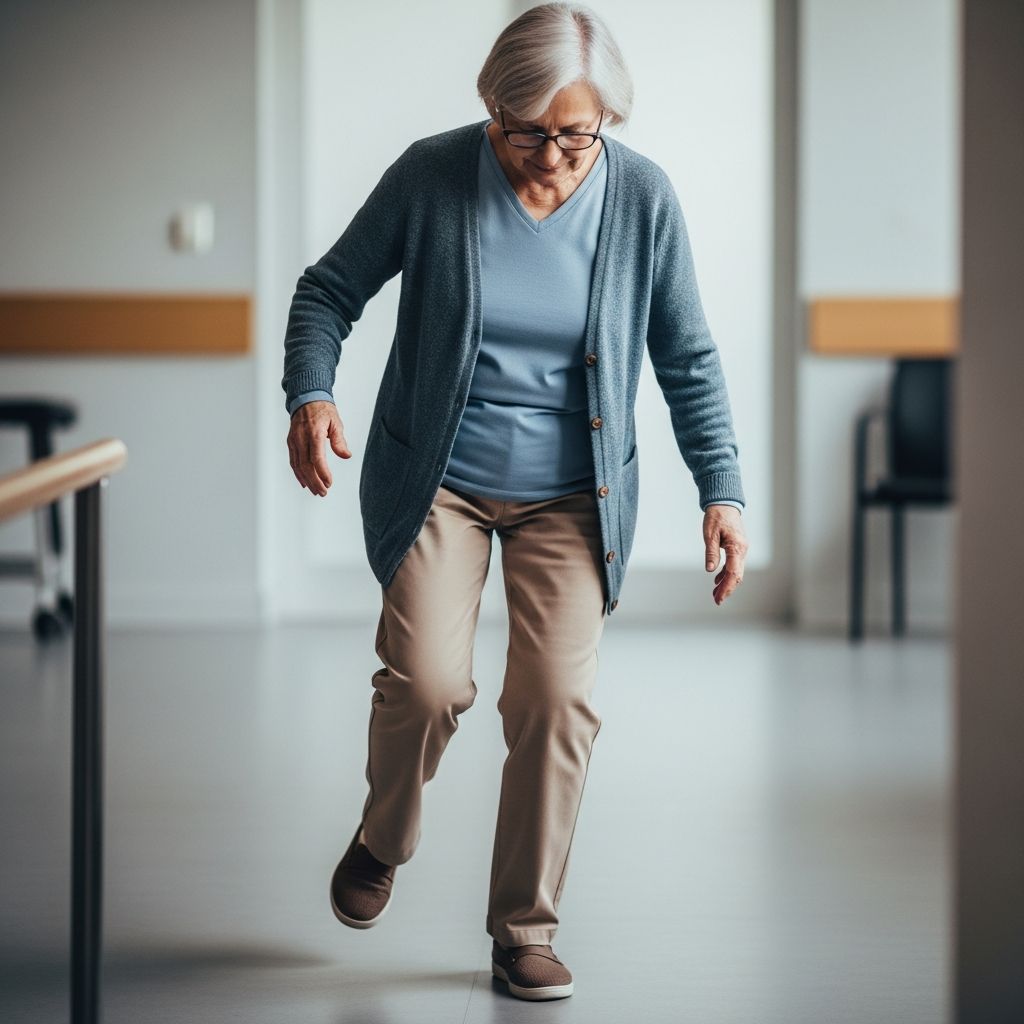
Postural instability represents a critical motor challenge in Parkinson’s disease, characterized by impaired balance that heightens fall risks and limits daily activities. This symptom arises from disruptions in the brain’s automatic control of posture, often emerging as the condition advances but detectable even early on.
The Role of Balance in Everyday Function
Maintaining an upright posture relies on seamless integration of sensory inputs from the eyes, inner ears, and body position sensors, coordinated by the brain’s basal ganglia. In Parkinson’s, dopamine shortages impair these reflexes, leading to unsteady standing and movement. People may sway excessively or struggle to recover from gentle pushes, a hallmark revealed in clinical tests like the pull test.
Early detection matters because subtle shifts, such as reduced arm swing during walking or hesitation in turns, signal emerging issues. These changes compound with other symptoms like slowed movements (bradykinesia) and muscle stiffness (rigidity), creating a cycle of declining mobility.
Progression Across Parkinson’s Stages
Traditionally viewed as a late-stage feature on scales like Hoehn and Yahr (stages 3-5), research now shows postural instability can appear soon after diagnosis. Within three years, over 85% of patients face gait disruptions, escalating disability and isolation.
- Early phase: Minor slowing of gait, shorter strides, and slight trunk rigidity during turns.
- Mid-stage: Shuffling steps, forward lean, and reduced toe clearance increase energy demands for walking.
- Advanced stage: Frequent freezing of gait (FOG), retropulsion (backward falls), and high fall frequency.
Gait alterations include flat-footed landings instead of heel strikes, limited knee extension, and absent arm swings, all draining metabolic reserves and nearing exhaustion limits during routine tasks.
Gait Patterns and Their Challenges
Parkinson’s gait evolves into a festinating pattern: small, accelerating shuffles with stooped posture and diminished arm movement. This inefficiency raises fall odds, especially on uneven terrain or during dual tasks like talking while walking.
| Gait Feature | Normal | Parkinson’s Affected |
|---|---|---|
| Heel Strike | Prominent | Absent or flat foot |
| Arm Swing | Symmetrical | Reduced/absent |
| Trunk Motion | Fluid | Rigid, forward lean |
| Step Length | Consistent | Shortened, variable |
| Speed | Moderate | Slowed, festinating |
These patterns link to postural instability/gait difficulty (PIGD) subtypes, which predict faster progression, cognitive decline, and falls compared to tremor-dominant forms.
Associated Risks and Complications
Beyond mobility loss, poor posture triggers pain from spinal misalignment, restricts lung expansion for speech, and hampers arm reach for self-care. Stooped shoulders and forward head tilt exacerbate communication barriers via softer voices and masked expressions.
Falls pose the gravest threat: patients often fail compensatory steps, showing tremor-like knee tremors instead during balance perturbations. Fear of falling fosters inactivity, depression, and social withdrawal.
Related Stories



Differentiating from Atypical Parkinsonism
Postural instability timing aids diagnosis. In idiopathic Parkinson’s, it develops later; in progressive supranuclear palsy (PSP), it’s inaugural, with early backward falls and gaze issues. Multiple system atrophy similarly presents early balance woes alongside autonomic failures.
- PSP: Vertical gaze palsy, dysphagia, early falls required for diagnosis.
- Corticobasal degeneration: Asymmetric rigidity with limb instability from onset.
- Parkinson’s: Gradual onset, responsive to levodopa initially.
Diagnostic Approaches
Clinicians use the pull test—observing recovery steps after a nudge—and Timed Up and Go (TUG) for functional assessment. Signs like retropulsion or multiple steps indicate impairment. Subtypes classify patients as PIGD if postural/gait scores exceed tremor metrics.
Strategies for Management and Improvement
Though not fully reversible, targeted therapies mitigate progression. Levodopa boosts dopamine for better reflex control, while physical therapy emphasizes cueing and strengthening.
- Exercise regimens: Tai Chi, boxing, or dance enhance proprioception and reaction times.
- Cueing techniques: Rhythmic beats or laser lines combat FOG.
- Posture training: Mirrors, walls, or verbal reminders counter stooping.
Assistive devices like canes or walkers provide stability, and home modifications (grab bars, clear paths) reduce hazards. Multidisciplinary care integrates occupational therapy for daily adaptations.
Emerging Research Insights
Studies highlight basal ganglia’s role in coupling balance and locomotion, with early vestibular integration deficits. Kinematic analyses quantify impairments, guiding personalized rehab. Recent evidence stresses early intervention to preserve function.
Frequently Asked Questions
What causes postural instability in Parkinson’s?
It stems from basal ganglia dysfunction impairing automatic postural reflexes, compounded by rigidity and bradykinesia.
Can postural instability appear early?
Yes, subtle changes occur early, worsening over time despite traditional late-stage views.
How do falls relate to this symptom?
Impaired stepping responses lead to retropulsion or FOG, multiplying fall risks.
Are there exercises to help?
Balance-focused activities like Tai Chi improve stability; consult professionals for tailored plans.
Does medication fix balance issues?
Dopamine therapies help but don’t fully resolve advanced instability; combine with therapy.
Building Resilience Through Awareness
Recognizing postural instability empowers proactive steps. Regular assessments track progression, while lifestyle adjustments sustain independence. Support networks and education bridge gaps, fostering optimism amid challenges.
References
- 5. Motor Symptoms, Postural Instability, and Gait — ATrain Education. 2023. https://www.atrainceu.com/content/5-motor-symptoms-postural-instability-and-gait
- Stooped Posture — Parkinson’s Foundation. 2024. https://www.parkinson.org/understanding-parkinsons/movement-symptoms/stooped-posture
- Understanding Postural Instability & Balance in Parkinson’s — YouTube/Parkinson’s NSW. 2023. https://www.youtube.com/watch?v=A-soIvlAnPI
- Postural Instability in PD for Physical Therapists — e3 Diagnostics. 2024. https://e3diagnostics.com/blog/postural-instability
- Postural Instability — Physiopedia. 2025. https://www.physio-pedia.com/Postural_Instability
- Symptoms of Parkinson’s — American Parkinson Disease Association. 2024. https://www.apdaparkinson.org/what-is-parkinsons/symptoms/
Similar Articles








Read full bio of Sneha Tete