Potassium Tablets: 2-4 Tablets Daily Guide For Sando-K
Comprehensive guide to Sando-K effervescent tablets for preventing and treating low potassium levels in the blood.
Sando-K
Peer reviewed by healthcare professionals. Last updated for accuracy based on official sources.
About potassium
Potassium is an essential electrolyte that plays a critical role in maintaining normal heart function, muscle contraction, and nerve signaling. The body tightly regulates potassium levels through diet, kidney function, and hormonal control. A normal healthy diet rich in fruits, vegetables, and fresh foods typically provides sufficient potassium for most people. However, certain conditions or medications can lead to hypokalaemia, or low blood potassium levels, which can cause symptoms like muscle weakness, cramps, fatigue, irregular heartbeat, and in severe cases, life-threatening arrhythmias.
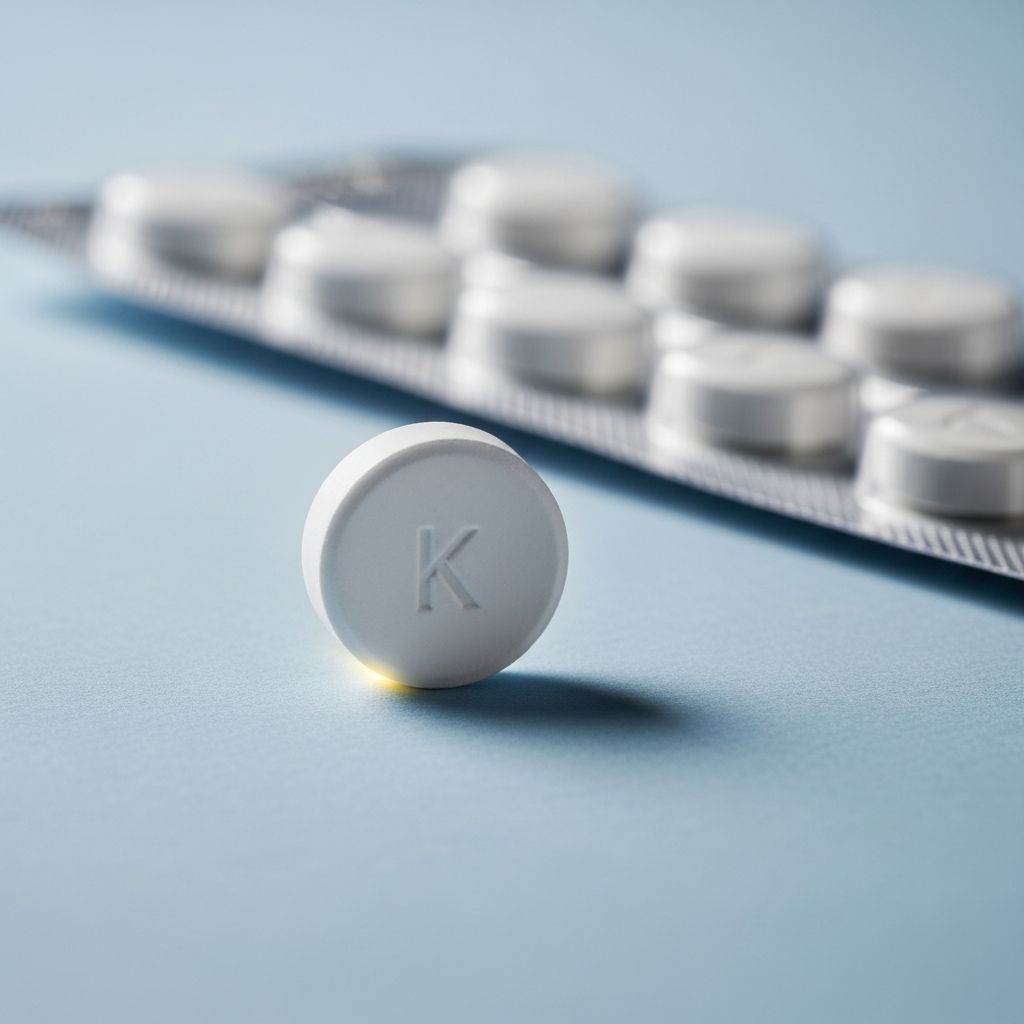
Sando-K effervescent tablets are a specific formulation designed to prevent and treat hypokalaemia. Each tablet contains potassium chloride (600 mg) and potassium bicarbonate (400 mg), delivering 470 mg of elemental potassium (12 mmol) per tablet. This dual-component approach not only replenishes potassium but also helps correct associated chloride depletion and metabolic alkalosis. Sando-K is particularly useful when oral potassium replacement is needed, such as in patients taking potassium-depleting diuretics or experiencing gastrointestinal losses.
| Type of medicine | A salt (an electrolyte) |
|---|---|
| Used for | To replace potassium when there are low levels of potassium in your blood |
| Also called | Sando-K®, other brands like Kay-Cee-L® syrup |
| Available as | Oral liquid medicine, modified-release tablets, and effervescent tablets |
Key facts about Sando-K
- Sando-K is used for the prevention and treatment of low potassium levels (hypokalaemia).
- Common causes include diuretics (e.g., furosemide, thiazides), corticosteroids, severe diarrhoea, vomiting, malnutrition, or conditions like renal tubular acidosis.
- Tablets must be dissolved in water before use; do not swallow whole.
- Monitoring with blood tests and ECG is essential, especially in kidney impairment.
- Not suitable for everyone—check contraindications carefully.
Before taking potassium tablets or liquid medicine
Before starting Sando-K, inform your doctor about your medical history to ensure it’s safe. Some individuals require extra monitoring or alternatives.
Do not take Sando-K if:
- You are allergic to potassium chloride, potassium bicarbonate, or any ingredients (allergic reactions may include rash, itching, swelling, or breathing difficulties).
- You have severe kidney disorder with little or no urine output.
- You suffer from uncontrolled Addison’s disease (adrenal insufficiency).
- You have high potassium levels (hyperkalaemia).
- You have crush injuries from major trauma.
- You are severely dehydrated.
Warnings and precautions—talk to your doctor if you:
- Have heart disease or are taking digitalis (digoxin) for heart failure, as potassium can interact.
- Have myotonia congenita (stiff muscles).
- Have severe haemolysis (red blood cell breakdown).
- Have acidosis (build-up of acid in blood)—requires monitoring.
- Have reduced kidney function—each tablet’s 12 mmol potassium load needs consideration.
Periodic blood tests for potassium levels and electrocardiograms (ECG) are recommended during treatment to monitor efficacy and safety. Avoid salt substitutes containing potassium while on this medicine.
Other medicines and Sando-K
Inform your doctor of all medications, as interactions can occur:
- Potassium-sparing diuretics (e.g., spironolactone) may increase hyperkalaemia risk.
- ACE inhibitors or ARBs can elevate potassium.
- Non-steroidal anti-inflammatory drugs (NSAIDs) may affect kidney function and potassium handling.
Always check with a pharmacist or doctor before combining treatments.
How to take potassium
Follow your doctor’s instructions precisely, as dosage depends on your blood potassium levels. The pack label will specify your dose.
Related Stories



Dosage for adults and children
Standard dose: 2-4 tablets per day, dissolved in 1/3 to 1/2 glass of water (50-70 ml). Take with or after meals to reduce stomach upset.
For very low potassium: Up to 8-16 tablets per day, under medical supervision. Severe cases may require IV replacement initially.
Sando-K tablets are effervescent: Drop into water, let fully dissolve, then drink. Taking with food minimises gastrointestinal irritation.
If you take more than you should
Overdose symptoms include pins and needles, confusion, weakness, paralysis, low blood pressure, or heart issues. Seek immediate medical help—go to A&E or call your doctor. Bring the tablet container.
If you forget a dose
Take it as soon as remembered. If near the next dose, skip the missed one. Never double up.
Duration
Continue until your doctor advises stopping, based on blood tests. Regular monitoring prevents complications.
Possible side effects
Like all medicines, Sando-K can cause side effects, though not everyone experiences them.
| Common side effects | What to do |
|---|---|
| Tummy discomfort, diarrhoea, nausea, vomiting | Take after meals; stick to simple foods, avoid spicy/rich meals |
| Mouth ulcers or soreness (less common) | Rinse mouth after; inform doctor if persistent |
Serious side effects (rare): Hyperkalaemia signs (muscle weakness, irregular pulse)—stop and seek urgent care. Allergic reactions require immediate attention.
Report other symptoms to your doctor or pharmacist.
How to store Sando-K
Store below 25°C in original packaging, away from moisture. Keep out of reach of children. Do not use after expiry date. Dispose of unused tablets via pharmacy take-back.
Contents of the pack and other information
Active ingredients: Potassium chloride 600 mg, potassium bicarbonate 400 mg per tablet (12 mmol K+).
Other ingredients: Citric acid, sodium bicarbonate, adipic acid, polyacrylate, saccharin sodium, macrogol 6000, lemon flavour.
Pack size: Typically 100 tablets (5 tubes of 20).
Frequently Asked Questions (FAQs)
Q: What is Sando-K used for?
A: Sando-K treats and prevents hypokalaemia (low blood potassium), often due to diuretics, vomiting, or diarrhoea.
Q: How do I take Sando-K tablets?
A: Dissolve 2-4 tablets daily in 50-70 ml water; take after meals. Follow doctor’s dose.
Q: Can I take Sando-K with food?
A: Yes, preferably with a snack or meal to avoid stomach upset.
Q: What if I have kidney problems?
A: Use cautiously; requires monitoring. Contraindicated in severe cases.
Q: Are there alternatives to Sando-K?
A: Yes, like Kay-Cee-L syrup or modified-release tablets, depending on needs.
Q: What causes low potassium?
A: Diuretics, GI losses, poor diet, or conditions like Cushing’s syndrome.
When to seek medical advice
Contact your doctor if symptoms persist, worsen, or new issues arise. Regular blood tests ensure safe use.
References
- Sando-K – Patient Information Leaflet (PIL) — Electronic Medicines Compendium (emc). 2023. https://www.medicines.org.uk/emc/product/959/pil
- Sando-K Effervescent Tablets PIL PDF — Electronic Medicines Compendium (emc). 2023. https://www.medicines.org.uk/emc/files/pil.959.pdf
- SANDO-K® Product Information — Alturix. 2024. https://alturix.com/alturix-products/sando-k/
- Potassium tablets – Patient.info — Patient.info. 2025-02-13. https://patient.info/medicine/potassium-tablets-sando-k
- Oral potassium – GGC Medicines — NHS Greater Glasgow and Clyde. 2024. https://ggcmedicines.org.uk/formulary/nutrition-and-blood-9/fluids-and-electrolytes/oral-preparations-for-fluid-and-electrolyte-imbalance/oral-potassium/
Similar Articles








Read full bio of Sneha Tete