POTS: Symptoms, Causes, Diagnosis, and Treatment
Understand postural orthostatic tachycardia syndrome (POTS): symptoms, causes, diagnosis, treatment, and management strategies for better living.
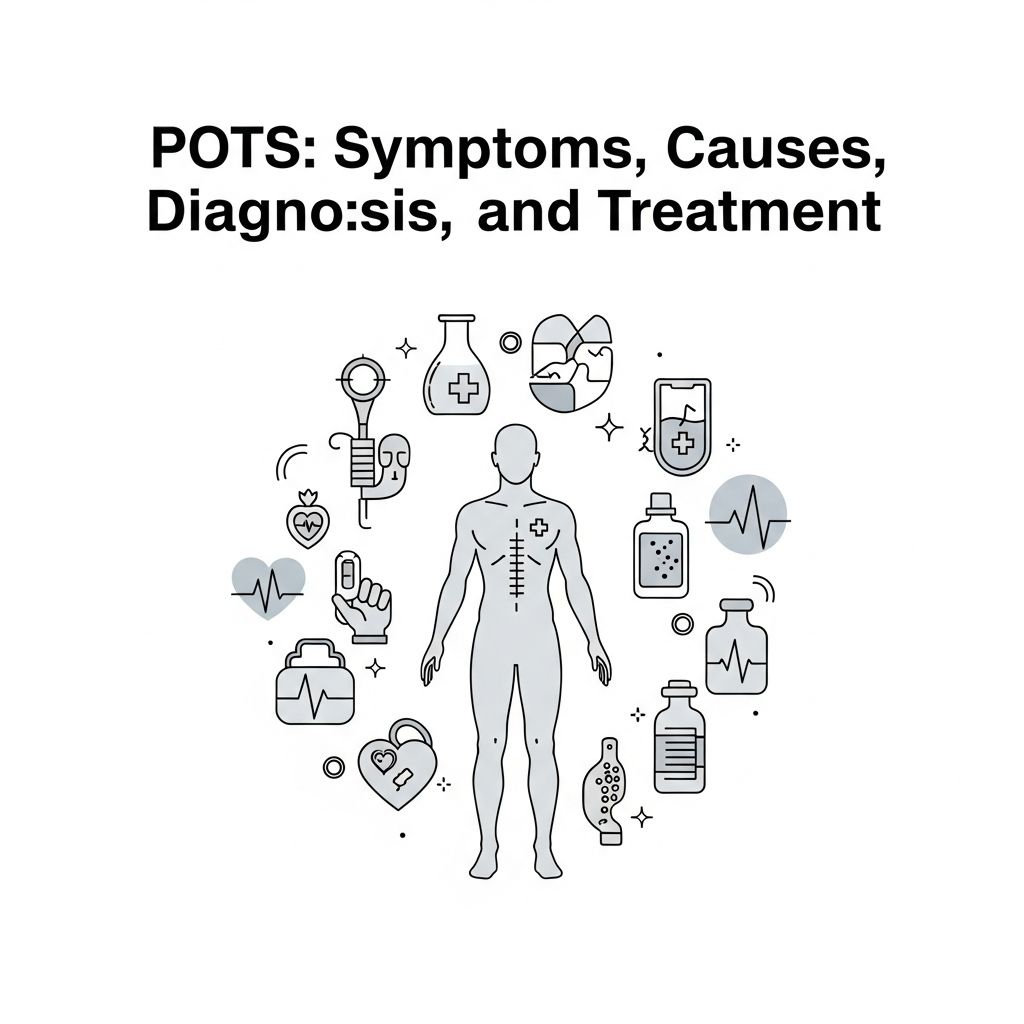
Postural orthostatic tachycardia syndrome (POTS) is a condition characterized by an excessive heart rate increase upon standing, leading to symptoms like dizziness, fatigue, and fainting. It affects 1 to 3 million people in the U.S., primarily women aged 15-50, and is a form of dysautonomia where the autonomic nervous system fails to properly regulate heart rate and blood pressure during positional changes.
What Is POTS?
**Postural orthostatic tachycardia syndrome (POTS)** is defined clinically as an increase in heart rate of at least 30 beats per minute (40 bpm in adolescents) within 10 minutes of standing, or exceeding 120 bpm, accompanied by orthostatic intolerance symptoms such as lightheadedness, palpitations, and weakness, without orthostatic hypotension (a drop of 20/10 mmHg in blood pressure).
In healthy individuals, standing triggers the autonomic nervous system to constrict blood vessels and slightly increase heart rate, maintaining blood flow to the brain. In POTS, excessive blood pools in the lower body, reducing venous return. This prompts release of norepinephrine and epinephrine, but blood vessels respond inadequately, causing compensatory tachycardia.
Symptoms vary but often improve when lying down. POTS is not life-threatening and does not reduce life expectancy, though it significantly impacts daily life. With tailored treatments, most patients see symptom improvement over time.
Symptoms of POTS
POTS symptoms occur or worsen upon standing and may include:
- Rapid heartbeat (tachycardia): Heart rate spikes dramatically.
- Dizziness or lightheadedness: Due to reduced brain blood flow.
- Fatigue and weakness: Persistent exhaustion, especially after activity.
- Fainting (syncope) or near-fainting: From transient hypotension.
- Brain fog: Difficulty concentrating, memory issues.
- Headaches, nausea, trembling: Common autonomic responses.
- Shortness of breath, chest pain: Mimicking cardiac issues.
- Gastrointestinal issues: Bloating, constipation in hyperadrenergic subtypes.
Symptoms intensify with heat, prolonged standing, dehydration, meals, or infections. They can fluctuate, sometimes lasting years before diagnosis.
Causes and Risk Factors of POTS
The exact cause of POTS remains unclear, but it’s multifactorial with subtypes including:
- Nephrupathic POTS: Small fiber neuropathy impairs nerve signaling to blood vessels.
- Hyperadrenergic POTS: Elevated norepinephrine (30-60% of cases), causing palpitations, tremors, GI symptoms due to norepinephrine transporter dysfunction.
- Hypovolemic POTS: Low blood volume from dehydration or deconditioning.
Risk factors include female sex (5:1 ratio), age 15-50, viral illnesses (e.g., mononucleosis), pregnancy, surgery, trauma, or autoimmune diseases like Sjogren’s, lupus, celiac. Post-COVID-19 and vaccination links show increased POTS diagnoses, possibly from immune responses to spike protein.
Cardiovascular deconditioning from bedrest leads to cardiac atrophy and hypovolemia, exacerbating tachycardia. Flow subtypes include low-flow (peripheral vasoconstriction deficit), normal-flow (splanchnic pooling), and high-flow (high cardiac output).
Who Gets POTS?
Related Stories



POTS predominantly affects women of childbearing age (15-50), with men also impacted. Higher risk follows physical stressors like illness, surgery, or trauma. Associated conditions increase susceptibility:
- Ehlers-Danlos Syndrome (hEDS/HSD): Connective tissue disorders; POTS prevalence up to 43% in HSD.
- Mast Cell Activation Syndrome (MCAS): Overlaps with allergy-like and GI symptoms; elevated histamine/prostaglandins in many POTS patients.
- Complex Regional Pain Syndrome (CRPS): Systemic autonomic dysfunction post-injury.
- Chronic Fatigue Syndrome (CFS): Up to 50% overlap; linked via small fiber neuropathy.
- Small Fiber Neuropathy (SFN): Detected in up to one-third of CFS/POTS cases; IVIG treatment improves symptoms.
Autoimmune mechanisms are suspected, with immune attacks on healthy tissue.
Diagnosis of Pots
Diagnosis is challenging due to nonspecific, fluctuating symptoms, often delaying identification for months to years. Providers review history, symptoms, and perform exams.
Tilt table test is gold standard: Patient strapped to table tilted to 60-80 degrees; monitors heart rate/blood pressure for 10-45 minutes to confirm tachycardia without hypotension.
Additional tests rule out mimics:
| Test | Purpose |
|---|---|
| Standing test | Active stand heart rate check (simpler alternative). |
| Blood tests | Check anemia, electrolytes, autoimmune markers, norepinephrine levels. |
| ECG/Echocardiogram | Rule out structural heart issues. |
| Autonomic function tests | Assess nerve responses (e.g., QSART for sweating). |
| 24-hour urine sodium | Evaluate blood volume. |
Skin biopsy confirms SFN in neuropathic cases.
Treatment and Management of POTS
No cure exists; management is individualized, focusing on symptoms via non-drug and pharmacological approaches. Most improve with combined strategies.
Lifestyle Modifications (First-Line)
- Increase fluid/salt intake: 2-3L water, 5-10g salt daily to expand blood volume.
- Compression garments: Thigh-high stockings (20-30 mmHg) prevent leg pooling.
- Exercise: Recumbent (rowing, swimming) progressing to upright; counteracts deconditioning.
- Posture training: Avoid triggers; elevate bed head, rise slowly.
- Diet: Small frequent meals; avoid carbs/alcohol that worsen pooling.
Medications
- Fludrocortisone: Retains sodium/volume.
- Midodrine: Vasoconstrictor for blood pressure.
- Beta-blockers (e.g., propranolol): Blunt tachycardia.
- Ivabradine: Heart rate specific.
- SSRIs/SNRIs: Aid autonomic function.
- For hyperadrenergic: Clonidine lowers norepinephrine.
IVIG benefits SFN-associated POTS. Avoid dehydration, heat; manage comorbidities.
Complications and Prognosis
Main risk: Injury from falls during syncope. Quality of life improves with treatment; symptoms often remit over years, especially in younger patients. Prevent flares by avoiding triggers.
Frequently Asked Questions (FAQs)
What is the main symptom of POTS?
A rapid increase in heart rate upon standing, plus dizziness, fatigue, and lightheadedness.
Is POTS life-threatening?
No, it does not reduce life expectancy, but fainting risks injury.
Can POTS be cured?
No cure, but symptoms manage well with lifestyle changes, exercise, and medications.
Who is most at risk for POTS?
Women aged 15-50, especially post-viral illness or with autoimmune/EDS conditions.
How is POTS diagnosed?
Primarily via tilt table test confirming orthostatic tachycardia without hypotension.
Does COVID cause POTS?
Increased post-COVID and post-vaccination, likely immune-mediated.
References
- Postural Orthostatic Tachycardia Syndrome (POTS) — Cleveland Clinic. 2023-10-12. https://my.clevelandclinic.org/health/diseases/16560-postural-orthostatic-tachycardia-syndrome-pots
- Narrative Review: Postural Orthostatic Tachycardia Syndrome-Associated Conditions and Management Strategies — US Cardiology Review (USC Journal). 2023. https://www.uscjournal.com/articles/narrative-review-postural-orthostatic-tachycardia-syndrome-associated-conditions-and
Similar Articles








Read full bio of medha deb