POTS Symptoms: 12 Signs To Recognize And Manage
Discover the 12 key symptoms of POTS, a condition causing rapid heart rate and dizziness upon standing, and learn how it impacts daily life.
Postural orthostatic tachycardia syndrome (POTS) is a condition affecting the autonomic nervous system, leading to an excessive heart rate increase upon standing from a sitting or lying position. Defined as a heart rate rise of at least 30 beats per minute (or 40 bpm in adolescents) within 10 minutes of standing, without a significant drop in blood pressure, POTS impacts millions, primarily women aged 15-50.
Symptoms arise because the body fails to properly constrict blood vessels when upright, causing blood to pool in the lower body. This reduces blood flow to the heart and brain, prompting compensatory tachycardia and norepinephrine release. While not life-threatening, POTS can severely disrupt daily activities.
What Is POTS?
POTS, or postural orthostatic tachycardia syndrome, is a form of dysautonomia where the autonomic nervous system mishandles posture changes. Normally, standing triggers blood vessel constriction and slight heart rate increases to maintain blood pressure and flow to the brain. In POTS, this fails, leading to blood pooling, reduced cerebral perfusion, and symptoms like lightheadedness.
Patients experience orthostatic intolerance—symptoms worsening within minutes of standing, relieved by lying down. POTS is chronic, lasting over six months, and affects an estimated 1-3 million Americans, though underdiagnosis is common due to overlapping symptoms with anxiety, dehydration, or other disorders.
POTS Symptoms
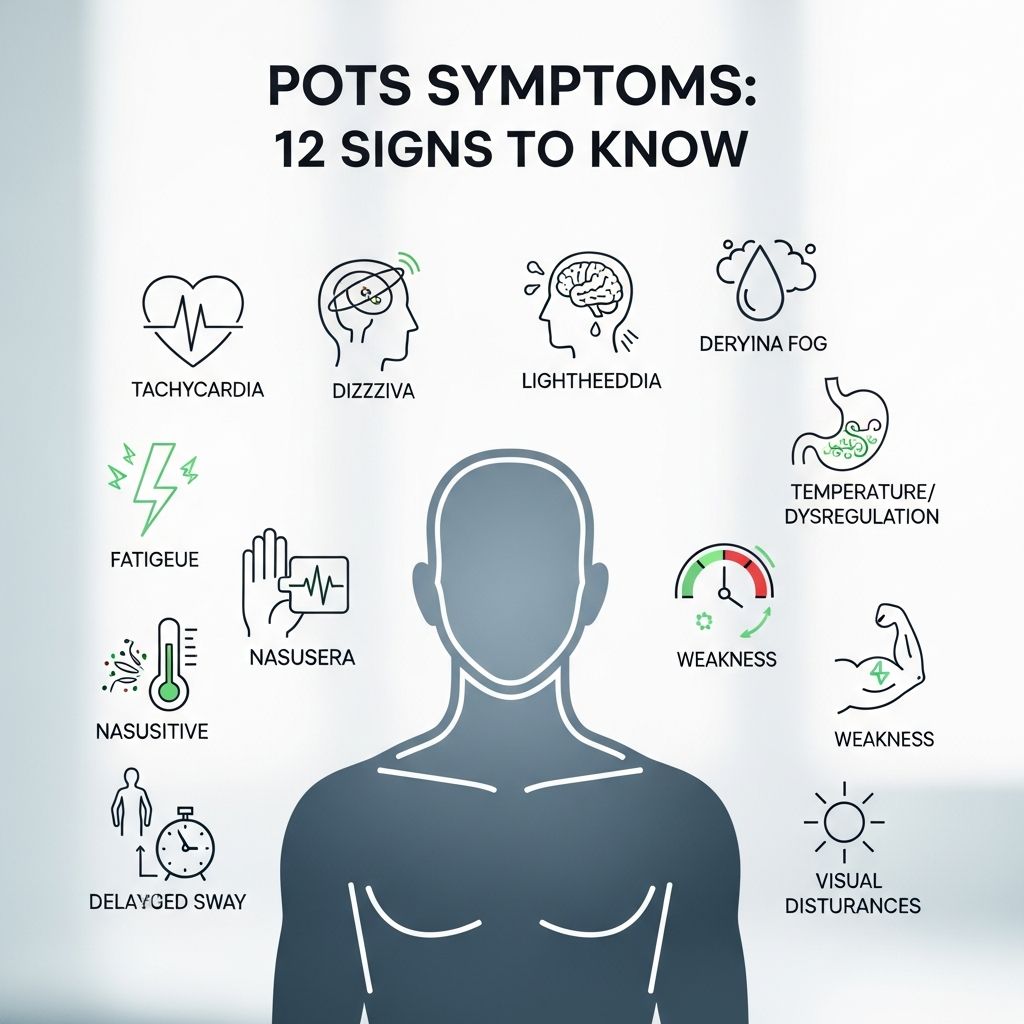
POTS manifests in diverse ways, often varying by severity. Core symptoms include:
- Dizziness or lightheadedness: The hallmark, occurring due to inadequate brain blood flow upon standing.
- Rapid heartbeat (tachycardia): Heart rate surges 30+ bpm upright, sometimes exceeding 120-140 bpm.
- Fatigue: Profound exhaustion, even after rest, linked to autonomic imbalance.
- Brain fog: Mental clouding, difficulty concentrating, or memory issues from poor cerebral perfusion.
- Heart palpitations: Fluttering or pounding sensations.
- Shortness of breath: Feeling winded without exertion.
- Chest pain: Non-cardiac discomfort, sometimes with ECG changes upright.
- Headaches: Often orthostatic, worsening with position changes.
- Tremors or shakiness: Due to sympathetic overdrive.
- Nausea: Gastrointestinal upset tied to autonomic dysfunction.
- Sleep disturbances: Trouble falling or staying asleep.
- Exercise intolerance: Rapid fatigue during activity.
Additional signs include dependant acrocyanosis (bluish leg discoloration), flushing, and excessive sweating. About 30% experience fainting (syncope), though pre-syncope is more common.
Symptoms of POTS by Severity
POTS severity ranges from mild to debilitating:
- Mild: Occasional lightheadedness, manageable with lifestyle tweaks.
- Moderate: Limits standing tasks, work, or exercise; requires daily management.
- Severe: Bedbound states, inability to work, profound fatigue impacting bathroom access.
Symptoms fluctuate daily or with triggers, profoundly affecting quality of life.
Who Gets POTS?
POTS predominantly affects females (80-85%), often post-puberty, with peak onset in teens to mid-40s. Risk factors include:
- Family history of autonomic disorders.
- Joint hypermobility (e.g., Ehlers-Danlos syndrome).
- Post-viral illness, pregnancy, surgery, or trauma.
- Autoimmune conditions.
It can emerge suddenly or gradually. Menstruation exacerbates symptoms via blood volume loss; pregnancy may improve or worsen it.
Causes of POTS
The exact cause is multifactorial, with subtypes:
- Hypovolemic POTS: Low blood volume leads to compensatory tachycardia.
- Neuropathic POTS: Small fiber neuropathy impairs vessel constriction.
- Hyperadrenergic POTS: Excess norepinephrine causes tachycardia and hypertension.
- Autoimmune: Immune attack on nerves or receptors.
Triggers include viruses, deconditioning, or genetics. Many report onset after illness or trauma.
How Is POTS Diagnosed?
Diagnosis involves:
- History and exam: Orthostatic symptoms without hypotension.
- Tilt table test: Gold standard; measures heart rate/blood pressure changes.
- Standing test: 10-minute stand with heart rate monitoring.
- Exclusion: Rule out anemia, thyroid issues, etc., via bloodwork.
Related Stories



Delays average months to years due to mimicry.
POTS Triggers
Symptoms worsen with:
- Prolonged standing.
- Heat, hot showers.
- Exercise, illness, dehydration.
- Menstruation, post-surgery.
| Trigger | Why It Worsens POTS |
|---|---|
| Standing | Blood pooling reduces brain flow. |
| Heat | Vasodilation exacerbates pooling. |
| Illness | Dehydration and inflammation. |
| Menstruation | Blood volume loss. |
POTS Treatment
No cure, but management includes:
- Lifestyle: Hydration (2-3L/day), salt (3-10g/day), compression garments, elevation.
- Exercise: Recumbent training (rowing, swimming) to rebuild tolerance.
- Medications: Beta-blockers, fludrocortisone, midodrine, ivabradine.
- Other: IV saline for flares.
Therapies target volume expansion and autonomic balance.
When to See a Doctor for POTS Symptoms
Seek care if dizziness, tachycardia, or fatigue persists with standing, especially post-illness or with fainting. Early intervention prevents deconditioning.
Frequently Asked Questions (FAQs)
Is POTS life-threatening?
No, POTS does not reduce life expectancy but requires management to maintain quality of life.
Can POTS be cured?
There is no cure, but symptoms improve with treatment and lifestyle changes.
Does POTS cause fainting?
Pre-syncope is common; full fainting occurs in about 30%.
Who is at risk for POTS?
Primarily young women, those with autoimmune issues, or post-viral triggers.
How is POTS different from low blood pressure?
POTS features tachycardia without hypotension drop.
References
- Living with POTS: Understanding the Condition That Affects Millions — University of Utah Health. 2024-10. https://healthcare.utah.edu/healthfeed/2024/10/living-pots-understanding-condition-affects-millions
- Postural Orthostatic Tachycardia Syndrome (POTS) — Cleveland Clinic. Accessed 2026. https://my.clevelandclinic.org/health/diseases/16560-postural-orthostatic-tachycardia-syndrome-pots
- The Postural Tachycardia Syndrome (POTS): Pathophysiology, Diagnosis and Management — PMC / NIH. 2005-08-22. https://pmc.ncbi.nlm.nih.gov/articles/PMC1501099/
Similar Articles








Read full bio of Sneha Tete