Pott’s Disease: Spinal Tuberculosis Explained
Understanding Pott's disease: causes, symptoms, diagnosis, and treatment of spinal tuberculosis.
What Is Pott’s Disease?
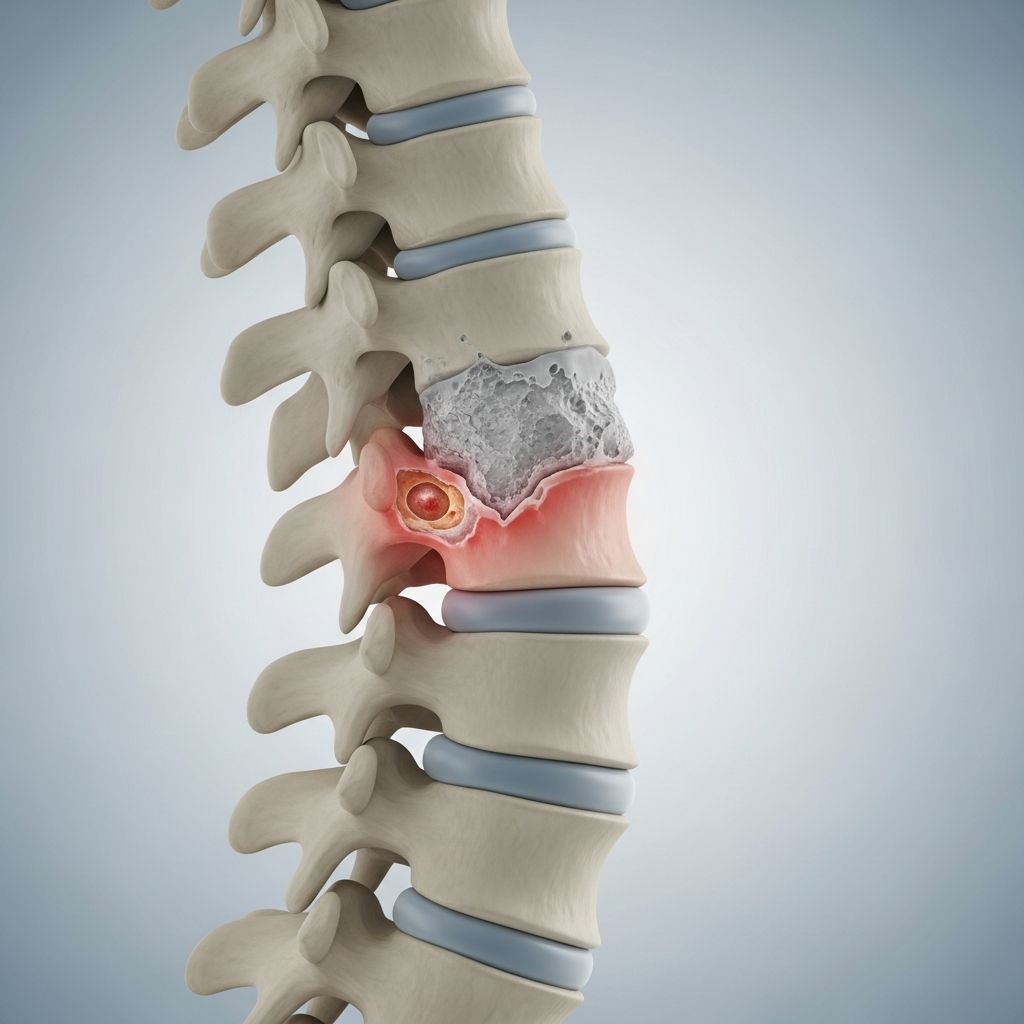
Pott’s disease, also known as spinal tuberculosis, is a form of tuberculosis (TB) that affects the spine. It is caused by the bacterium Mycobacterium tuberculosis, which spreads from the lungs to the spinal column through the bloodstream. This infection leads to destruction of the vertebrae, resulting in pain, deformity, and sometimes paralysis if left untreated. Pott’s disease is named after Sir Percival Pott, who first described the condition in the 18th century.
Causes of Pott’s Disease
Pott’s disease is caused by the spread of Mycobacterium tuberculosis from the lungs to the spine. The bacteria can enter the body through the respiratory tract and then travel via the bloodstream to the vertebrae. In some cases, the infection may originate from a silent focus elsewhere in the body, such as the gut, kidney, or tonsil. The infection typically begins in the cancellous bone of the vertebrae and gradually spreads to the adjacent vertebrae through the disc space.
Symptoms of Pott’s Disease
The symptoms of Pott’s disease can vary depending on the severity and location of the infection. Common symptoms include:
- Severe back pain, often localized to the affected vertebrae
- Low-grade fever
- Weight loss
- Fatigue
- Nonspecific constitutional symptoms
- Neurological deficits, such as weakness, numbness, or paralysis
- Kyphosis (abnormal curvature of the spine)
- Gibbus formation (sharp angulation of the spine)
In advanced stages, the disease can lead to progressive vertebral collapse, resulting in severe deformity and neurological complications.
Diagnosis of Pott’s Disease
Diagnosing Pott’s disease can be challenging due to its insidious onset and nonspecific symptoms. The following diagnostic methods are commonly used:
- Imaging studies: X-rays, CT scans, and MRI can reveal vertebral destruction, kyphosis, and other spinal abnormalities.
- Biopsy: A biopsy of the affected vertebrae can confirm the presence of Mycobacterium tuberculosis and rule out other causes of spinal infection.
- Culture and stain: Culturing and staining the biopsy specimen can identify the bacteria and guide treatment.
- PPD skin test: A positive PPD skin test indicates exposure to TB but does not confirm active disease.
- Chest radiograph: A chest X-ray can help identify pulmonary TB, which may be the source of the spinal infection.
Treatment of Pott’s Disease
The treatment of Pott’s disease involves a combination of medical and surgical interventions. The goals of treatment are to eradicate the infection, prevent or correct neurological deficits, and correct spinal deformities.
Medical Treatment
Medical treatment typically involves a regimen of anti-tuberculosis drugs, such as isoniazid (INH), rifampin, pyrazinamide, and ethambutol. The duration of treatment is usually 6 to 9 months, depending on the severity of the infection and the patient’s response to therapy. In some cases, additional drugs such as amikacin and quinolones may be used.
Surgical Treatment
Surgical intervention may be necessary in cases of severe spinal deformity, neurological deficits, or failure of medical treatment. Surgical procedures may include:
Related Stories



- Anterior decompression and reconstruction
- Posterior instrumentation and fusion
- Staged anterior and posterior procedures to restore neurological function and correct kyphosis
Prognosis of Pott’s Disease
The prognosis of Pott’s disease depends on the severity of the infection, the presence of neurological deficits, and the timeliness of treatment. With early diagnosis and appropriate treatment, most patients can achieve a full recovery. However, untreated or delayed treatment can lead to severe complications, including permanent neurological deficits and spinal deformities.
Prevention of Pott’s Disease
Preventing Pott’s disease involves controlling the spread of tuberculosis. This includes:
- Vaccination with the BCG vaccine
- Early detection and treatment of pulmonary TB
- Proper hygiene and infection control measures
- Regular screening for TB in high-risk populations
Frequently Asked Questions (FAQs)
Q: What is Pott’s disease?
A: Pott’s disease, also known as spinal tuberculosis, is a form of tuberculosis that affects the spine. It is caused by the bacterium Mycobacterium tuberculosis and can lead to severe spinal deformity and neurological complications if left untreated.
Q: What are the symptoms of Pott’s disease?
A: Common symptoms include severe back pain, low-grade fever, weight loss, fatigue, neurological deficits, kyphosis, and gibbus formation.
Q: How is Pott’s disease diagnosed?
A: Diagnosis involves imaging studies (X-rays, CT scans, MRI), biopsy, culture and stain of the biopsy specimen, PPD skin test, and chest radiograph.
Q: What is the treatment for Pott’s disease?
A: Treatment includes a regimen of anti-tuberculosis drugs (isoniazid, rifampin, pyrazinamide, ethambutol) for 6 to 9 months, and in some cases, surgical intervention may be necessary.
Q: What is the prognosis of Pott’s disease?
A: With early diagnosis and appropriate treatment, most patients can achieve a full recovery. Untreated or delayed treatment can lead to severe complications.
Q: How can Pott’s disease be prevented?
A: Prevention involves vaccination with the BCG vaccine, early detection and treatment of pulmonary TB, proper hygiene and infection control measures, and regular screening for TB in high-risk populations.
References
- Tuberculosis of the spine (Pott’s disease) presenting as … — Nature. 1985. https://www.nature.com/articles/3101365
- Spinal tuberculosis deserves a place on the radar screen — PubMed. 2004. https://pubmed.ncbi.nlm.nih.gov/15320363/
- Spinal tuberculosis deserves a place on the radar screen — CCJM. 2004. https://www.ccjm.org/content/ccjom/71/7/537.full.pdf
Similar Articles








Read full bio of Sneha Tete