Power Outage Survival for Medical Device Users
Essential strategies to keep life-sustaining home medical equipment running during prolonged blackouts and natural disasters.
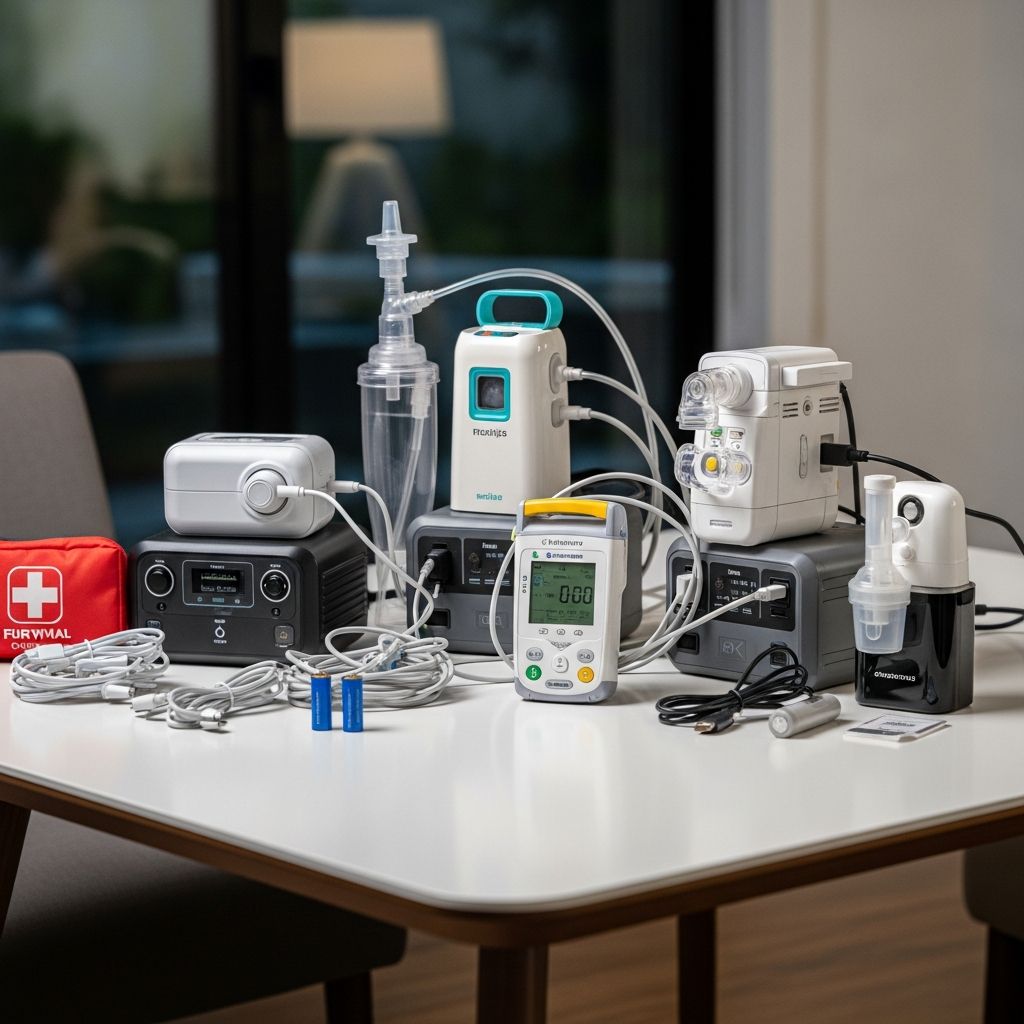
Prolonged power outages pose severe risks for individuals dependent on electrically powered home medical equipment. Devices such as continuous positive airway pressure (CPAP) machines, ventilators, oxygen concentrators, and powered mobility aids can fail without electricity, potentially leading to life-threatening situations. Proper preparation involves creating detailed contingency plans, securing alternative power options, and coordinating with healthcare providers and utilities to minimize disruptions.
Assessing Your Household’s Medical Power Dependencies
The first step in outage readiness is a thorough audit of all electricity-reliant medical needs within your home. Compile a comprehensive inventory that lists every person affected, the specific devices they use, and the operational durations required.
- Document devices like respirators, dialysis machines, suction units, and refrigerators for temperature-sensitive drugs such as insulin.
- Include model numbers, serial numbers, and battery life estimates for each item.
- Post this inventory visibly for all household members, caregivers, and visitors.
Consult device manuals or manufacturers to verify compatibility with batteries or generators. For instance, some oxygen concentrators offer portable tank alternatives, while others require specific power inverters.
Developing a Robust Backup Power Strategy
Backup power forms the cornerstone of any effective plan. Evaluate options based on device power demands and expected outage length.
| Device Type | Recommended Backup | Runtime Estimate | Safety Notes |
|---|---|---|---|
| CPAP/BiPAP | Battery pack or car adapter | 8-24 hours | Use distilled water for humidifiers |
| Ventilator | External battery + manual bag | 4-12 hours | Train on manual ventilation |
| Oxygen Concentrator | Stand-alone tanks + POC batteries | Variable | Reduce flow rate if approved |
| Powered Wheelchair | Spare deep-cycle batteries | 6-18 hours | Have manual chair ready |
| Refrigerated Meds | Cooler with ice packs | 24-48 hours | Minimize door openings |
Prioritize rechargeable batteries that match common retail availability. Maintain a charging schedule, as stored batteries self-discharge over time. Vehicle-based charging via inverters or cigarette lighter adapters provides extended support but requires caution to avoid draining the car battery completely.
Generator Selection and Safe Operation
Portable or standby generators offer substantial power for multiple devices during extended blackouts. Select units with sufficient wattage—typically 3,000-7,000 watts for medical setups—and fuel efficiency.
- Operate generators outdoors, at least 20 feet from windows, doors, and vents to prevent carbon monoxide buildup.
- Contact your utility provider for restrictions and grounding requirements before use.
- Test monthly and stock fuel stabilizers for long-term storage.
Pair generators with transfer switches to avoid back-feeding the grid, which endangers utility workers. For apartment dwellers, portable power stations serve as quieter, indoor-safe alternatives for smaller loads.
Manual and Non-Electric Alternatives
Invest in durable, portable manual backups to bridge gaps when power solutions falter. These reduce reliance on electricity entirely.
- Manual wheelchairs or walkers for powered mobility users.
- Handheld nebulizers or alternative inhalers for respiratory meds.
- Resuscitation bags for ventilator dependency.
- Non-electric oxygen tanks over concentrators.
Stock extra hearing aid batteries, suction bulbs, and cleaning supplies. Discuss reduced oxygen flow rates or treatment modifications with your physician to conserve resources.
Related Stories



Coordinating with Utilities and Healthcare Providers
Proactive outreach to service providers ensures prioritized response. Many utilities maintain lists for power-dependent customers, facilitating faster restoration.
- Register for priority reconnection with electric and water companies, specifying life-support devices like dialysis or ventilators.
- Inform your oxygen supplier, dialysis center, and primary care physician of your setup and backups.
- Identify nearby shelters or hospitals with backup power and transportation plans.
Label all equipment with your name, contacts, and operation instructions. Share this with neighbors or emergency contacts willing to assist.
Building a Comprehensive Emergency Kit
An all-in-one kit centralizes essentials, streamlining response during chaos.
- Fully charged power banks for phones and devices.
- Flashlights, lanterns, and extra batteries (non-gas for oxygen safety).
- Non-perishable food, water (1 gallon/person/day), and blankets.
- Manuals, prescriptions, and medical power of attorney documents.
- First-aid supplies, medications, and cash for supplies.
Customize for vulnerabilities like refrigerated drugs by including coolers and ice packs. Keep the kit in a waterproof, portable container near your exit.
Pre-Outage and During-Blackout Protocols
Anticipate outages from weather forecasts by pre-charging all batteries and filling fuel cans. During an outage:
- Minimize fridge openings to preserve cold chain.
- Monitor carbon monoxide detectors if using generators.
- Conserve battery life by powering down non-essentials.
- Communicate status to providers and contacts.
If batteries deplete, relocate promptly to equipped facilities. Post “Oxygen in Use” signs and avoid flames near combustibles.
Special Considerations for Vulnerable Groups
Caregivers for children or elderly users must train on equipment operation. For dialysis patients, secure clinic contingency plans. Hearing-impaired individuals need ample battery stocks and visual alerts.
Pet owners with medical needs for animals should extend plans accordingly. Community networks, like neighborhood check-ins, amplify safety.
Frequently Asked Questions (FAQs)
How long can insulin stay out of the fridge during an outage?
Unopened insulin vials remain potent at room temperature (59-86°F) for up to 28 days, per manufacturer guidelines. Use coolers for extended periods.
Can I use a car to power my medical devices?
Yes, with appropriate inverters or adapters, but run the engine periodically to recharge and avoid exhaust inhalation indoors.
What if I’m on a priority utility list?
It accelerates reconnection but doesn’t guarantee immediate power; always have independant backups ready.
Are portable power stations safe indoors?
Yes, fan-cooled models without exhaust are suitable, unlike fuel generators.
How often should I test my backups?
Monthly for generators and batteries; review plans annually or post-change in health status.
Long-Term Resilience Building
Beyond immediate survival, integrate smart home tech like solar chargers for sustainability. Participate in local emergency drills and advocate for community resilience programs. Regular physician check-ins refine plans as health evolves.
Empowerment through knowledge transforms potential crises into manageable events. By methodically addressing power dependencies, users reclaim control amid uncertainty.
References
- How to Survive an Extended Power Outage with Home Medical Equipment — American Academy of Family Physicians. 2023-10-12. https://familydoctor.org/how-to-survive-an-extended-power-outage-with-home-medical-equipment/
- Preparing for a Power Outage as a Medical Device User — American Lung Association. 2024-05-15. https://www.lung.org/blog/power-outage-preparation
- Emergency Planning Tips for People Who Rely on Electric or Battery-Dependent Medical Devices — PG&E Safety Action Center. 2023-11-01. https://www.safetyactioncenter.pge.com/articles/35-emergency-planning-tips-people-rely-electric-battery-dependent-medical-devices
- Home Use Devices: How to Prepare for and Handle Power Outages — U.S. Food and Drug Administration. 2013-07-01. https://www.fda.gov/downloads/MedicalDevices/ProductsandMedicalProcedures/HomeHealthandConsumer/UCM252812.pdf
- Emergency Power Planning for People Who Use Electricity and Battery-Dependent Assistive Technology and Medical Devices — ADA National Network. 2022-09-20. https://adata.org/factsheet/emergency-power
Similar Articles








Read full bio of Sneha Tete