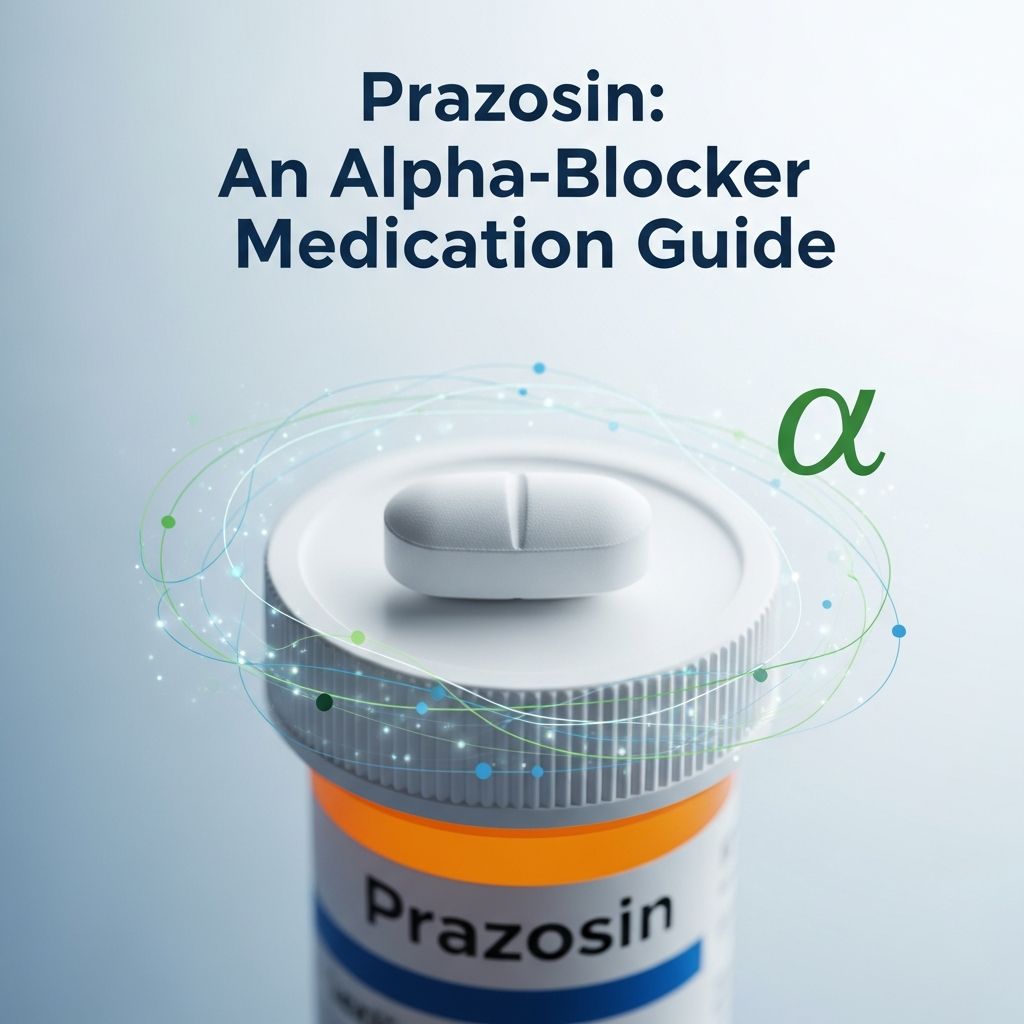
Prazosin: An Alpha-Blocker Medication Guide
Complete guide to prazosin: Uses, dosage, side effects, and important safety information.
What is Prazosin?
Prazosin is an alpha-blocker medication sold under the brand names Minipress and Hypovase, among others. It belongs to a class of medicines called antihypertensives and alpha-adrenergic receptor antagonists. This medication has been used clinically for several decades to manage various cardiovascular and urological conditions by working on specific receptors in the body’s nervous system.
How Does Prazosin Work?
Prazosin functions as a non-selective alpha-1 adrenergic receptor antagonist. Understanding its mechanism of action requires knowledge of how the body regulates blood pressure naturally. Alpha-1 receptors are located on the smooth muscle cells of blood vessels throughout the body. When these receptors are activated by natural chemicals called catecholamines (epinephrine and norepinephrine), they cause blood vessels to constrict or narrow, which increases blood pressure.
Prazosin works by blocking these alpha-1 receptors, which prevents the vasoconstricting effects of catecholamines. This blockade allows blood vessels to relax and dilate, making them wider and more open. As a result, blood can flow through the vessels more easily, leading to a decrease in total peripheral resistance and lower blood pressure. The medication can also cross the blood-brain barrier, which explains its effectiveness in treating conditions like post-traumatic stress disorder (PTSD)-associated nightmares.
Medical Uses of Prazosin
Prazosin has several approved and off-label uses for treating various medical conditions:
Primary Uses
- High Blood Pressure (Hypertension) — Prazosin is commonly used to treat elevated blood pressure, though it is considered a second-line choice for hypertension management. It is particularly useful for patients who have both high blood pressure and benign prostatic hyperplasia.
- Benign Prostatic Hyperplasia (BPH) — The medication helps treat urinary hesitancy and symptoms associated with an enlarged prostate by relaxing the smooth muscle in the prostate and urethra, improving urine flow.
- PTSD-Associated Nightmares — Prazosin is used off-label to reduce nightmares and improve sleep quality in patients with post-traumatic stress disorder.
Other Uses
- Raynaud Phenomenon — The medication can help manage symptoms of Raynaud syndrome by improving blood flow to affected areas.
- Insomnia — Prazosin is used off-label for its sedative properties to help patients with sleep disturbances.
- Scorpion Envenomation — The drug is recommended for severe stings from the Indian red scorpion.
Dosage and Administration
Prazosin is taken by mouth as oral capsules. The medication has an onset of action of 30 to 90 minutes, with a duration of action lasting 10 to 24 hours. However, the full antihypertensive effect becomes more apparent when prazosin is taken consistently over longer periods of time.
The medication is traditionally used multiple times per day. Dosage requirements vary depending on the condition being treated and individual patient factors. Your healthcare provider will determine the appropriate dose for your specific situation and may adjust it based on your response to the medication and any side effects experienced.
Related Stories



How the Body Processes Prazosin
Understanding how your body processes prazosin helps explain its dosing schedule and effects. Prazosin has a relatively short elimination half-life of 2 to 3 hours, which means the body clears half of the medication from the bloodstream during this timeframe. This pharmacokinetic property is why the medication requires multiple daily doses to maintain therapeutic effects. The blood gradually clears the drug, which is why consistent dosing as prescribed is important for maintaining stable blood pressure control.
Side Effects of Prazosin
Common Side Effects
Most patients tolerate prazosin well, but some experience mild side effects, particularly when starting the medication. Common side effects include:
- Dizziness or lightheadedness
- Sleepiness or drowsiness
- Nausea
- Heart palpitations or awareness of heartbeat
Serious Side Effects
Though less common, serious side effects require immediate medical attention. These include:
- Low blood pressure when standing (orthostatic hypotension)
- Depression or mood changes
- Severe dizziness or fainting
First-Dose Effect
A unique characteristic of prazosin is the “first-dose effect,” which is a significant drop in blood pressure and potential fainting that can occur after the first dose or when the dose is increased. This is why doctors typically start with a low dose, usually taken at bedtime, and gradually increase the dose over time. This approach helps your body adjust to the medication and minimizes the risk of severe dizziness or fainting.
Important Considerations with Prazosin
Heart Rate Response
Unlike some other alpha-blockers, prazosin typically does not cause reflex tachycardia (an increase in heart rate to compensate for lower blood pressure). However, when prazosin is first started, heart rate and contractility may temporarily increase as the body attempts to maintain its previously elevated blood pressure set point. Over time, as the body adjusts to lower blood pressure, heart rate returns to normal levels.
Tolerance Development
Unlike some other antihypertensive medications, tolerance (where the body becomes less responsive to prazosin over time) has not been observed with this medication. This means prazosin can maintain its effectiveness with long-term use when taken as prescribed.
Cardiac Function
Prazosin has minimal effect on cardiac function due to its selective action on alpha-1 adrenergic receptors. This selectivity makes it a relatively safe choice for patients with certain heart conditions, though individual assessment by a healthcare provider is essential.
Drug Interactions and Contraindications
Prazosin may interact with other medications and supplements. It is essential to inform your healthcare provider about all medications you are currently taking, including over-the-counter drugs and herbal supplements. Certain conditions may make prazosin unsuitable or require careful monitoring. Your doctor will evaluate whether prazosin is appropriate for you based on your medical history, current medications, and specific health conditions.
Who Should Not Take Prazosin?
While prazosin is generally well-tolerated, certain individuals should not use this medication or should use it only under close medical supervision. Contraindications and precautions should be discussed with your healthcare provider, as they can assess your individual risk factors and medical history to determine if prazosin is safe for you.
Prazosin as a Second-Line Treatment
While prazosin is effective at lowering blood pressure, it is classified as a second-line choice for hypertension treatment. This classification means other medications are typically tried first. However, prazosin becomes a first-line option for patients who have both hypertension and benign prostatic hyperplasia, as it effectively addresses both conditions simultaneously.
Storage and Precautions
Store prazosin at room temperature away from moisture and heat. Keep the medication in its original container with the label intact. Do not use prazosin after the expiration date printed on the bottle. Always keep prazosin out of reach of children and pets.
What to Avoid While Taking Prazosin
Certain activities and substances should be avoided or approached with caution while taking prazosin:
- Avoid suddenly stopping prazosin without consulting your doctor, as this can cause a sudden increase in blood pressure
- Limit alcohol consumption, as it may increase dizziness and increase the blood pressure-lowering effects
- Use caution with over-the-counter cold and allergy medications that contain decongestants, as these can interfere with blood pressure control
- Avoid driving or operating machinery if experiencing dizziness or drowsiness
Frequently Asked Questions
Q: How quickly does prazosin start working?
A: Prazosin begins working within 30 to 90 minutes of taking a dose. However, the full blood pressure-lowering effect becomes more noticeable after taking the medication consistently over days to weeks.
Q: Can prazosin be taken with food?
A: Prazosin can be taken with or without food. However, taking it with food may help reduce nausea if this is a bothersome side effect for you.
Q: What should I do if I miss a dose?
A: If you miss a dose, take it as soon as you remember, unless it is almost time for your next scheduled dose. Never double up on doses. Contact your pharmacist or doctor if you are unsure about missed doses.
Q: Is prazosin safe during pregnancy?
A: Discuss the safety of prazosin during pregnancy with your healthcare provider. Your doctor can weigh the benefits and risks based on your specific situation and recommend appropriate alternatives if necessary.
Q: Can prazosin be combined with other blood pressure medications?
A: Yes, prazosin can be used in combination with other medications to treat high blood pressure. Your doctor will determine the most appropriate combination based on your individual needs.
Q: How long will I need to take prazosin?
A: High blood pressure is typically a long-term condition requiring ongoing treatment. Your doctor will monitor your blood pressure and determine how long you need to continue prazosin therapy. Do not stop taking prazosin without consulting your healthcare provider.
Q: What makes prazosin different from other blood pressure medications?
A: Prazosin is unique among alpha-blockers because it typically does not cause reflex tachycardia. Additionally, it is the only alpha-blocker that is effective for treating PTSD-associated nightmares due to its ability to cross the blood-brain barrier.
References
- Prazosin (Minipress): Uses, Side Effects, Interactions — WebMD. Accessed 2026-01-13. https://www.webmd.com/drugs/2/drug-8695/prazosin-oral/details
- Prazosin – StatPearls — National Center for Biotechnology Information (NCBI), National Library of Medicine. https://www.ncbi.nlm.nih.gov/books/NBK555959/
- Prazosin: Uses, Interactions, Mechanism of Action — DrugBank. https://go.drugbank.com/drugs/DB00457
- Prazosin — Wikipedia. Accessed 2026-01-13. https://en.wikipedia.org/wiki/Prazosin
- Prazosin – Health Information Library — PeaceHealth. https://www.peacehealth.org/medical-topics/id/a682245
- Minipress capsules (prazosin hydrochloride) for oral use — U.S. Food and Drug Administration (FDA). 2013. https://www.accessdata.fda.gov/drugsatfda_docs/label/2013/017442s041lbl.pdf
- Prazosin (Minipress): Uses & Side Effects — Cleveland Clinic. https://my.clevelandclinic.org/health/drugs/18079-prazosin-capsules
- Prazosin (oral route) – Side effects & dosage — Mayo Clinic. https://www.mayoclinic.org/drugs-supplements/prazosin-oral-route/description/drg-20065617
Similar Articles








Read full bio of medha deb