Pregnancy Quad Marker Screen: What You Need to Know
Comprehensive guide to the quad marker screen test in pregnancy: benefits, timing, and what results mean.
Understanding the Pregnancy Quad Marker Screen
The quad marker screen, also known as the quadruple marker screen or maternal serum screen, is an optional prenatal screening test performed during the second trimester of pregnancy. This blood test analyzes four specific substances found in a pregnant woman’s blood to assess the risk of certain chromosomal abnormalities and neural tube defects in the developing baby. The test is one of the most commonly used screening methods in prenatal care and provides valuable information that can help expectant parents and their healthcare providers make informed decisions about pregnancy management and further testing if needed.
This screening test does not provide a definitive diagnosis but rather indicates the probability or likelihood that a pregnancy may be affected by certain conditions. Understanding what the quad marker screen measures, when it should be performed, its accuracy, and how to interpret results is essential for all pregnant women considering this test.
What Does the Quad Marker Screen Measure?
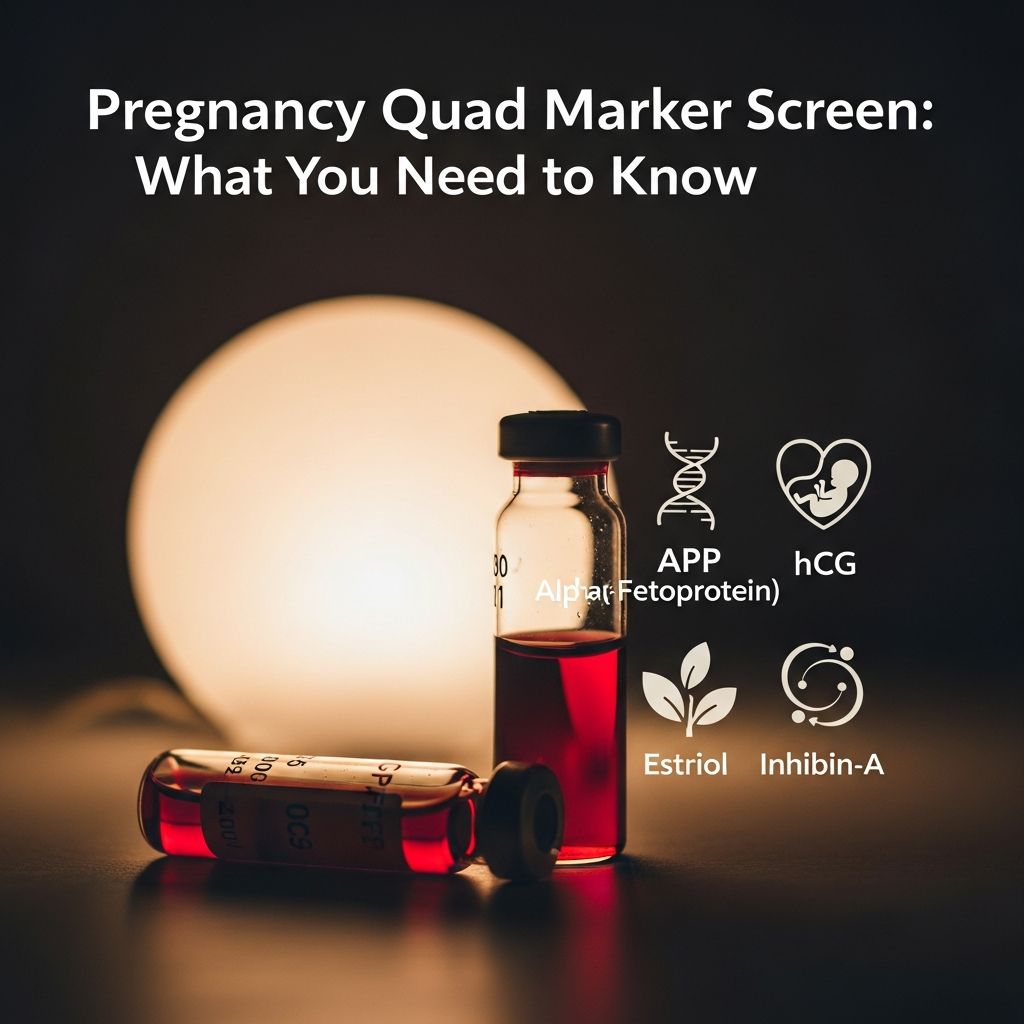
The quad marker screen measures the levels of four distinct substances present in a pregnant woman’s blood. Each of these markers provides important information about fetal development and potential risk factors. The four substances measured are:
- Alpha-fetoprotein (AFP): A protein produced by the developing baby’s liver. Abnormal AFP levels can indicate increased risk for neural tube defects or Down syndrome.
- Human chorionic gonadotropin (hCG): A hormone produced by the placenta. Elevated hCG levels may suggest an increased risk for chromosomal abnormalities such as Down syndrome.
- Estriol: A hormone produced by both the placenta and the baby’s liver. Lower than normal estriol levels can be associated with chromosomal abnormalities.
- Inhibin-A: A protein hormone produced by the placenta. Elevated inhibin-A levels are associated with increased risk for Down syndrome, particularly improving the detection rate compared to triple marker screening.
The inclusion of inhibin-A measurement distinguishes the quad marker screen from the earlier triple marker screen, which did not measure this substance. This additional marker significantly improves the test’s ability to identify pregnancies at risk for Down syndrome, making it a more reliable screening tool.
When Should the Quad Marker Screen Be Performed?
Timing is crucial for the accuracy and reliability of the quad marker screen. The test should be performed between 15 and 22 weeks of pregnancy, with the optimal timing typically between 15 and 20 weeks. The gestational age is calculated from the first day of the last menstrual period, which is why accurate dating of the pregnancy is important before performing this screening test.
The quad marker screen has traditionally been one of the most commonly used screenings in the second trimester. It was generally recommended when prenatal care began during the second trimester or when first trimester screening options, which involve both a blood test and an ultrasound examination, were not available. However, screening options and recommendations have evolved, with many providers now offering cell-free DNA screening as a preferred alternative or complement to traditional quad marker screening.
What Conditions Does the Quad Marker Screen Evaluate?
The quad marker screen evaluates the risk of several chromosomal and structural abnormalities in the developing fetus. The primary conditions assessed include:
Related Stories



- Down Syndrome (Trisomy 21): A chromosomal condition resulting from an extra copy of chromosome 21. Approximately 1 in 720 babies is born with Down syndrome. The quad marker screen can detect approximately 75 percent of Down syndrome cases in women under age 35 and 85 to 90 percent of Down syndrome cases in women age 35 years and older.
- Trisomy 18 (Edwards Syndrome): A chromosomal abnormality resulting from an extra copy of chromosome 18, which is associated with severe developmental and health complications.
- Open Neural Tube Defects: Birth defects of the brain, spine, or spinal cord, such as spina bifida and anencephaly. The test can detect approximately 75 percent of open neural tube defects.
- Abdominal Wall Defects: Structural abnormalities in the abdominal wall that may require surgical intervention after birth.
It is important to note that the quad marker screen only indicates the statistical risk or probability that a baby may have one of these conditions. A positive result does not guarantee that the baby will have the condition, and a negative result does not guarantee that the baby will not have it.
Who Should Consider the Quad Marker Screen?
While the quad marker screen is recommended for all pregnant women, it is ultimately an optional test, and the decision to undergo screening should be made after careful consideration and discussion with your healthcare provider. Certain situations may warrant particularly strong consideration of this screening test:
- Maternal age of 35 years or older at the time of delivery
- Family history of birth defects or chromosomal abnormalities
- Previous pregnancy or child with a chromosomal abnormality or birth defect
- History of insulin-dependent (type 1) diabetes prior to pregnancy
- Maternal diabetes or gestational diabetes
- Ethnic or racial background associated with higher risk for certain conditions
- Abnormal first trimester screening results
- Abnormal ultrasound findings
Before deciding whether to have the quad marker screen, it is valuable to think about what the results would mean to you personally. Consider whether the screening will provide reassurance or cause anxiety, and how you might handle your pregnancy differently depending on the results. These are important personal and family considerations to discuss with your healthcare provider.
How Is the Quad Marker Screen Performed?
The quad marker screen is a straightforward and simple blood test. A healthcare provider will insert a needle into a vein in your arm and collect a small sample of blood, similar to routine blood tests you may have had previously. The procedure takes only a few minutes and is generally quick and painless.
The blood sample is then sent to a laboratory where the four markers are measured and analyzed. Results are typically available within a few days. Because the test only requires a blood sample from the mother, there is no direct risk to the baby. The test poses no risk of miscarriage or other pregnancy complications.
How Accurate Is the Quad Marker Screen?
The accuracy and detection rate of the quad marker screen vary depending on the specific condition being screened and the maternal age:
| Condition | Detection Rate – Women Under 35 | Detection Rate – Women Age 35+ |
|---|---|---|
| Down Syndrome (Trisomy 21) | Approximately 75% | 85-90% |
| Open Neural Tube Defects | Approximately 75% | Approximately 75% |
Overall, the quad marker screen correctly identifies about 80 percent of women who are carrying a baby with Down syndrome. However, it is crucial to understand that these detection rates mean that some cases may not be identified by this screening test. Additionally, a significant proportion of women who receive an increased risk result do not actually carry a baby with the screened conditions.
Understanding Your Quad Marker Screen Results
Quad marker screen results are reported as either low risk (negative) or increased risk (positive). Results take into account both the measured marker levels and your age at the estimated time of delivery.
Low Risk (Negative) Results: A low risk result indicates that your statistical chance of carrying a baby with Down syndrome, trisomy 18, neural tube defects, or abdominal wall defects is decreased compared to average risk. However, it is important to understand that a negative screen result does not guarantee that your baby will not have one of these conditions. Some affected pregnancies will have normal screening results.
Increased Risk (Positive) Results: An increased risk result indicates that your statistical probability of carrying a baby with one of the screened conditions is higher than average for your age. This does not mean your baby definitely has the condition. An increased risk result does not provide a diagnosis; it simply indicates that further evaluation may be warranted.
What Should You Do If You Have an Increased Risk Result?
If your quad marker screen results indicate increased risk, your healthcare provider will recommend further evaluation to help clarify the findings. Additional testing options may include:
- Detailed Ultrasound Examination: A comprehensive ultrasound scan performed by a maternal-fetal medicine specialist to evaluate for structural abnormalities and other features consistent with chromosomal conditions.
- Cell-Free DNA Screening (NIPT): A blood test that examines fetal DNA circulating in the mother’s bloodstream, providing more precise risk assessment for chromosomal abnormalities.
- Chorionic Villus Sampling (CVS): An invasive diagnostic test performed between 10 and 13 weeks of pregnancy that involves removing a small sample of placental tissue for chromosomal analysis.
- Amniocentesis: An invasive diagnostic test typically performed after 15 to 16 weeks of pregnancy that involves sampling amniotic fluid to directly analyze fetal chromosomes.
These diagnostic tests can provide definitive answers regarding whether your baby has a chromosomal abnormality, unlike screening tests which only indicate probability and risk.
Comparison with Other Prenatal Screening Options
Prenatal screening has evolved significantly, and several testing options are now available to assess risk for chromosomal abnormalities:
| Screening Test | Timing | What It Measures | Detection Rate |
|---|---|---|---|
| Quad Marker Screen | 15-22 weeks | Four maternal serum markers | 75-90% for Down syndrome |
| Triple Screen | 15-22 weeks | Three maternal serum markers (without inhibin-A) | 60-70% for Down syndrome |
| Cell-Free DNA (NIPT) | 10 weeks onward | Fetal DNA in maternal blood | 99% for Down syndrome |
| First Trimester Screen | 11-14 weeks | Blood markers plus nuchal translucency ultrasound | 85-90% for Down syndrome |
Current recommendations increasingly favor cell-free DNA screening combined with first trimester ultrasound evaluation as the preferred initial screening approach, as these methods offer superior detection rates and more accurate risk assessment compared to traditional quad marker screening.
Risks and Safety Considerations
The quad marker screen is a routine prenatal screening test with an excellent safety profile. The test poses no risk of miscarriage or other pregnancy complications since it only involves a simple maternal blood draw. There is no risk to the baby, as the test does not involve any invasive procedures or direct contact with the pregnancy.
The only potential discomfort is the minor discomfort associated with the needle insertion for blood collection, which is minimal and temporary. Individuals with needle anxiety may experience some apprehension, but the procedure is quick and straightforward.
Important Considerations Before Testing
Before deciding to have the quad marker screen, it is important to consider several factors:
- Discuss the test with your healthcare provider and understand what results would mean for your pregnancy management
- Consider your personal and family values regarding prenatal screening
- Think about how you would feel receiving an increased risk result
- Understand that an increased risk result does not confirm a diagnosis
- Be prepared for potential follow-up testing if results are abnormal
- Consider genetic counseling if you have significant risk factors or concerns
Frequently Asked Questions About the Quad Marker Screen
Q: Is the quad marker screen the same as my usual prenatal test?
A: The quad marker screen is similar to other medical screening tests but is specifically designed to evaluate risk for chromosomal abnormalities and neural tube defects. The inclusion of inhibin-A measurement in the quad screen makes it more effective at detecting Down syndrome compared to older triple marker screening tests.
Q: Can the quad marker screen guarantee my baby does not have Down syndrome?
A: No. A negative quad marker screen result indicates a lower statistical risk, but it does not guarantee that your baby will not have Down syndrome or other conditions. Approximately 15-25% of Down syndrome cases may not be detected by this screening test.
Q: What does an increased risk result mean?
A: An increased risk result means the statistical probability of chromosomal abnormalities is higher than average for your age, but it does not confirm that your baby has the condition. Most women with increased risk results deliver healthy babies without the screened conditions.
Q: Is there a better screening test available?
A: Cell-free DNA screening (NIPT) offers significantly higher detection rates (up to 99% for Down syndrome) and is now often recommended as a preferred first-line screening test, particularly for those at increased risk.
Q: Can I decline the quad marker screen?
A: Yes. The quad marker screen is an optional test, and the decision to undergo screening is entirely your choice. Discuss your preferences and concerns with your healthcare provider.
Q: How much does the quad marker screen cost?
A: The cost of the quad marker screen varies depending on your insurance coverage and healthcare provider. It is often covered by insurance as a standard prenatal screening test, but you should verify coverage with your insurance company.
References
- Quad Screen Test — St. Nicholas Hospital. 2024. https://saintnicholashospital.com/quad-screen-test/
- Quad Screen: What It Is and What Results Mean — Healthline. 2024. https://www.healthline.com/health/pregnancy/quad-screen
- Pregnancy Genetic Testing: What It Is, Options, Benefits & Risks — Cleveland Clinic. 2024. https://my.clevelandclinic.org/health/diagnostics/24136-pregnancy-genetic-testing
- NIPT Test (Noninvasive Prenatal Testing): What To Expect — Cleveland Clinic. 2024. https://my.clevelandclinic.org/health/diagnostics/21050-nipt-test
- Screening for Chromosome Abnormalities — Cleveland Clinic. 2024. https://my.clevelandclinic.org/-/scassets/files/org/obgyn/screening-for-chromosome-abnormalities.pdf
- Anencephaly: What It Is, Causes, Signs & Prevention — Cleveland Clinic. 2024. https://my.clevelandclinic.org/health/diseases/15032-anencephaly
- Shifting decision making for aneuploidy screening to the first trimester — Nature Genetics in Medicine. 2020. https://www.nature.com/articles/gim9201173
Similar Articles








Read full bio of Sneha Tete