Pregnancy Tests: Types, Accuracy & When to Take
Complete guide to pregnancy tests: Learn about urine and blood tests, accuracy rates, timing, and how they work.
Understanding Pregnancy Tests
A pregnancy test is a straightforward way to determine whether you are pregnant. The result will either be positive, meaning you are pregnant, or negative, meaning you are not pregnant. These tests function by identifying a specific hormone called human chorionic gonadotropin (HCG), which your body produces exclusively during pregnancy. Understanding how these tests work, when to take them, and which type is best for your situation can help you get accurate results and make informed decisions about your reproductive health.
How Pregnancy Tests Work
Pregnancy tests function by detecting the presence and concentration of human chorionic gonadotropin (HCG) in your body. This hormone is produced by your placenta during pregnancy and begins to develop shortly after conception. The key to getting an accurate pregnancy test result is understanding that HCG needs time to build up in your system. Each day during early pregnancy, your body creates increasingly more HCG. As the weeks progress, you will have greater and greater amounts of HCG in your body, which makes it progressively more likely that a pregnancy test will show as positive.
This biological reality is crucial because it means that if you take a test too soon—before sufficient HCG has accumulated—it will come back negative even if you are actually pregnant. The timing of when you take your pregnancy test can significantly impact whether you receive an accurate result.
Types of Pregnancy Tests
There are two main categories of pregnancy tests: urine tests and blood tests. Each type has distinct advantages, accuracy levels, and uses.
Urine Pregnancy Tests
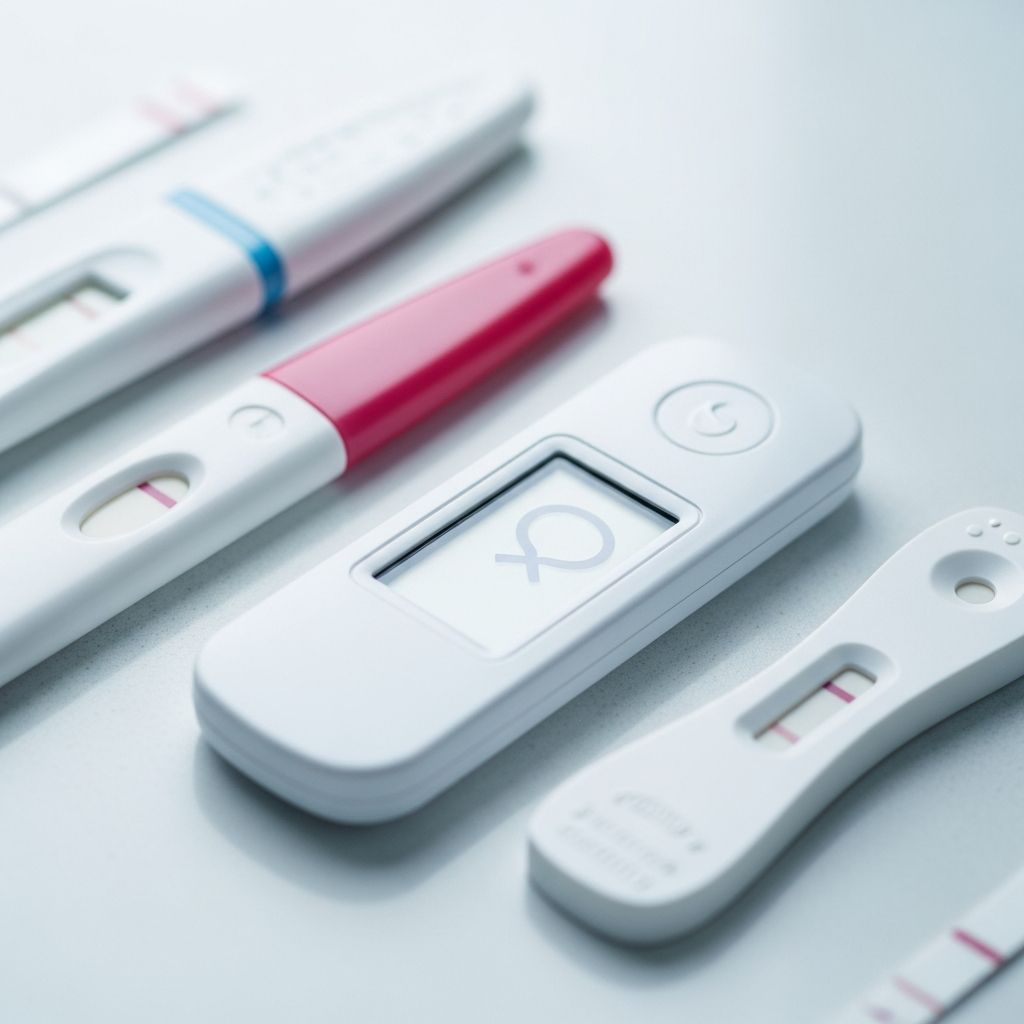
At-home pregnancy tests that use your urine are the most common type of pregnancy test available. These tests are readily available over the counter without requiring a prescription from your healthcare provider and come in a variety of price ranges to suit different budgets.
Accuracy and Timing: When used correctly, home pregnancy tests are 99% accurate. However, accuracy depends heavily on following instructions precisely and testing at the right time. Most urine tests are most accurate when you take them after you have missed your period. Results are typically available within three minutes, though if you wait too long to check the result, the reading may become inaccurate.
Convenience: The primary advantage of urine tests is convenience. You can take them in the privacy of your home at any time, without needing to schedule an appointment or wait for results from a laboratory.
Blood Pregnancy Tests
Blood tests to check for pregnancy are performed at your healthcare provider’s office and involve providing a sample of your blood. Blood pregnancy tests are typically reserved for special circumstances, such as when women are undergoing fertility treatments or when a healthcare provider suspects there might be a complication.
Sensitivity and Early Detection: Blood tests are slightly more sensitive than urine tests because they can detect very small levels of HCG. This heightened sensitivity means they can provide more accurate answers very early in pregnancy—within seven to ten days after conception. Blood pregnancy tests can detect even small amounts of HCG before you have missed your period.
Related Stories



Types of Blood Tests: There are two types of blood HCG tests. A qualitative HCG test simply checks if HCG is present and provides a yes or no answer similar to a urine test. A quantitative HCG test, also called a beta HCG test, measures the exact level of HCG in your blood and is useful for detecting very early pregnancies or monitoring pregnancy health over time.
Results Timeline: Your blood sample is taken at your provider’s office or hospital and then sent to a laboratory for analysis. Results might take anywhere from a few hours to two days, making blood tests slower than the immediate results you get from home urine tests.
Comparing Pregnancy Test Methods
| Feature | Urine Tests | Blood Tests |
|---|---|---|
| Location | At home or healthcare provider’s office | Healthcare provider’s office or hospital |
| Accuracy | 97-99% when used correctly | Slightly more sensitive than urine tests |
| Detection Timing | Most accurate after missed period | Within 7-10 days after conception |
| Results Timeline | 3 minutes | Hours to 2 days |
| Cost | Affordable, various price ranges | Typically more expensive |
| Convenience | Very convenient, no appointment needed | Requires appointment and visit |
When to Take a Pregnancy Test
Timing is everything when it comes to pregnancy testing. Taking a test too early can result in a false negative, even if you are pregnant. The optimal time to take a pregnancy test depends on the type of test you are using.
Urine Tests: For home urine pregnancy tests, the best time to test is after you have missed your period. At this point, HCG levels in your urine have typically reached high enough concentrations to be reliably detected. Some sensitive tests may work a few days before a missed period, but waiting until after your missed period increases the likelihood of an accurate result.
Blood Tests: Blood tests can detect pregnancy much earlier—within seven to ten days after conception. If you suspect you might be pregnant and cannot wait for a missed period, a blood test ordered by your healthcare provider is your best option for early and accurate confirmation.
Confirming Pregnancy Beyond Testing
While pregnancy tests are the primary method for confirming pregnancy, there is another way to verify that you are pregnant: ultrasound. Your healthcare provider performs an ultrasound in their office to visualize your pregnancy and confirm viability. An ultrasound can provide visual confirmation of your pregnancy and help establish how far along you are in your pregnancy.
Understanding HCG Levels
Human chorionic gonadotropin (HCG) is the hormone that pregnancy tests detect. This hormone is made by the placenta during pregnancy and can be measured using blood or urine tests. At-home pregnancy tests detect HCG in your urine, while blood tests measure HCG in your bloodstream.
HCG levels rise rapidly in early pregnancy. During the first few weeks after conception, HCG typically doubles every two to three days. This exponential increase is why blood tests can detect pregnancy so much earlier than urine tests—they can measure even tiny amounts of HCG before it accumulates in sufficient quantities in your urine.
Accuracy and Reliability
When used correctly, home pregnancy tests are remarkably accurate, with accuracy rates of 97-99%. However, this high accuracy depends on following the test instructions precisely. Factors that can affect accuracy include:
- Taking the test too early before sufficient HCG has accumulated
- Not following the manufacturer’s instructions correctly
- Using expired test kits
- Testing with diluted urine rather than first-morning urine
- Waiting too long to read the result, which can cause false readings
Blood tests are even more reliable than urine tests for early detection due to their sensitivity to lower HCG levels. However, regardless of which test type you use, the most important factor in obtaining accurate results is using the test at the appropriate time when HCG levels are sufficiently elevated.
What to Do After a Positive Result
If your pregnancy test is positive, the next step is to schedule an appointment with your healthcare provider. Your provider can confirm your pregnancy through blood tests or ultrasound and begin establishing your prenatal care plan. Early prenatal care is important for monitoring your health and the development of your fetus throughout your pregnancy.
During your first prenatal visit, your provider will likely order various tests and conduct a thorough evaluation to establish a baseline for your pregnancy care. This may include blood tests to check your overall health status, determine your blood type and Rh factor, and screen for certain infections.
What to Do After a Negative Result
If your pregnancy test is negative but you still suspect you might be pregnant, consider the timing of the test. If you tested too early, you might want to wait a few days and test again. Alternatively, you can contact your healthcare provider who may recommend a blood test for early and definitive confirmation.
If you took the test after a missed period and it came back negative, it is unlikely that you are pregnant. However, if your period does not arrive within a week or two, consider taking another test or consulting with your healthcare provider to determine why your period might be delayed.
Frequently Asked Questions
Q: How early can I take a pregnancy test?
A: Home urine tests are most reliable after you have missed your period. Blood tests can detect pregnancy as early as seven to ten days after conception, making them the best option for very early detection if you cannot wait for a missed period.
Q: Can I get a false positive on a pregnancy test?
A: False positives are extremely rare with modern pregnancy tests. However, certain medications, recent miscarriage, or recent abortion can result in lingering HCG that produces a positive result. If you receive a positive result, confirm it with your healthcare provider.
Q: Is first-morning urine better for pregnancy testing?
A: Yes, first-morning urine is ideal for home pregnancy tests because HCG concentrations are highest after your urine has accumulated overnight. This increases the likelihood of detecting HCG if it is present.
Q: How long does it take to get blood test results for pregnancy?
A: Blood pregnancy test results typically take anywhere from a few hours to two days, depending on your healthcare provider’s laboratory and how busy they are.
Q: Are there any risks associated with pregnancy tests?
A: At-home urine tests carry no risks. Blood tests involve a simple blood draw, which carries minimal risk—just the slight discomfort of the needle and a small possibility of bruising at the injection site.
Q: Can medications affect pregnancy test results?
A: Most medications do not affect pregnancy test results because they detect the HCG hormone, not medications. However, fertility medications containing HCG can produce false positives.
Q: Should I tell my healthcare provider about my home pregnancy test result?
A: Yes, you should inform your healthcare provider of your positive home pregnancy test result so they can confirm it and begin your prenatal care. Your provider may order additional tests to confirm the pregnancy and check your overall health.
References
- Pregnancy Test: When To Take, Types & Accuracy — Cleveland Clinic. 2022-11-28. https://my.clevelandclinic.org/health/diagnostics/9703-pregnancy-tests
- Human Chorionic Gonadotropin (hCG): Purpose & Levels — Cleveland Clinic. https://my.clevelandclinic.org/health/body/22489-human-chorionic-gonadotropin
- Get Prenatal Testing — Cleveland Clinic. https://my.clevelandclinic.org/services/schedule-prenatal-testing
- Urine vs. Blood Pregnancy Tests Explained — Ava Health. https://avahealthpdx.org/blood-vs-urine-pregnancy-tests/
- Blood vs. Urine Pregnancy Tests: What’s the Difference? — Richland Pregnancy Resource Center. https://richlandpregnancy.com/blood-vs-urine-pregnancy-tests-whats-the-difference/
Similar Articles








Read full bio of Sneha Tete