Presbyopia Solutions: From Glasses to Surgery
Discover evolving treatments for age-related near vision loss, from simple eyewear to cutting-edge drops and procedures.
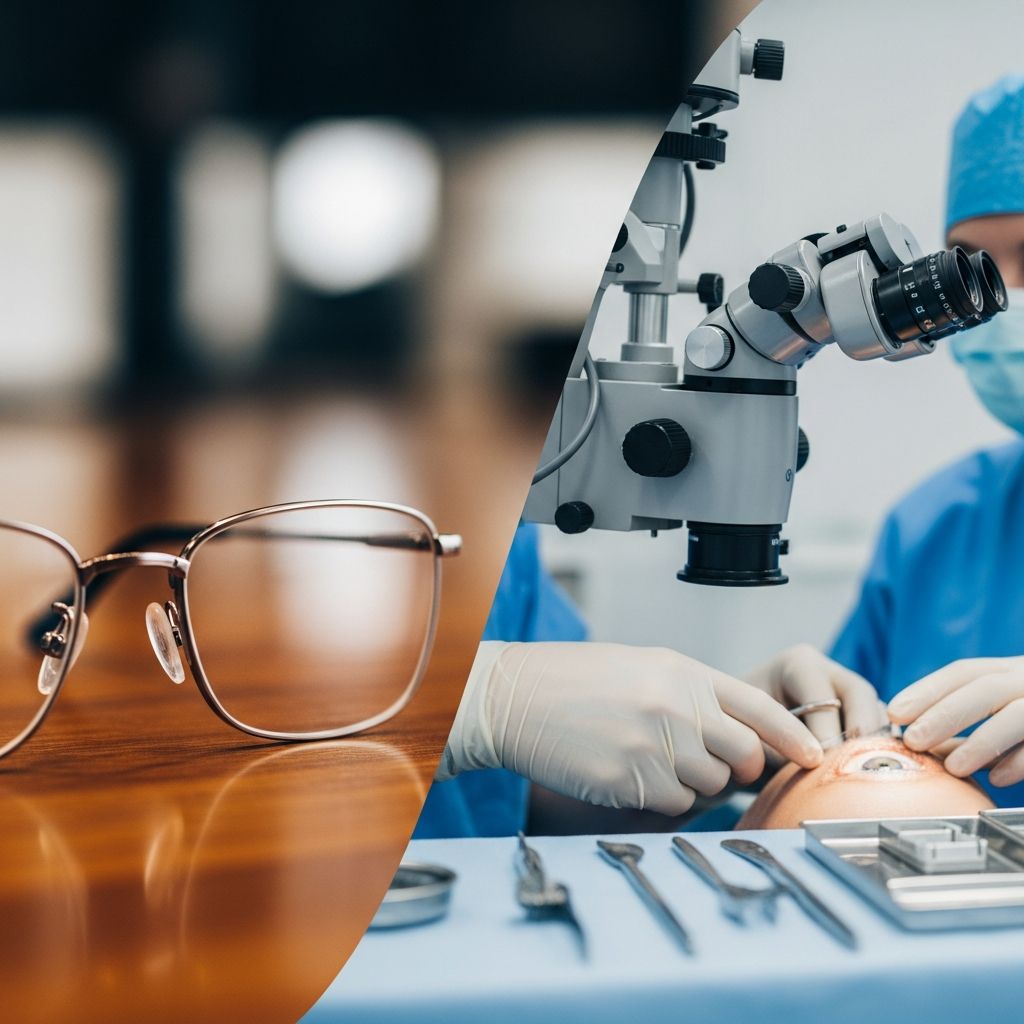
Presbyopia, the gradual decline in the eye’s ability to focus on close objects, typically begins around age 40 and affects nearly everyone by their mid-60s. This condition arises from the natural hardening of the eye’s lens, reducing its flexibility for near tasks like reading. Fortunately, a wide array of treatments exists, ranging from non-invasive aids to innovative pharmaceuticals and permanent surgical fixes, allowing individuals to maintain sharp vision without constant interruption.
Understanding the Shift in Near Vision
As people age, the crystalline lens inside the eye loses elasticity, impairing the eye’s accommodation—the process of adjusting focus from distant to nearby objects. Symptoms include holding reading material at arm’s length, eye strain, headaches, and difficulty with fine print in low light. Unlike myopia or hyperopia, presbyopia is inevitable and progressive, but modern interventions can restore functionality effectively.
Early detection through comprehensive eye exams is crucial, as presbyopia often coincides with other conditions like cataracts or dry eye. Regular check-ups help tailor solutions to individual lifestyles, whether for office work, driving, or hobbies requiring precise near vision.
Traditional Optical Corrections
The most accessible starting point for presbyopia management involves eyewear and contact lenses, offering immediate relief without medical intervention.
Reading Glasses and Progressive Lenses
Off-the-shelf reading glasses provide a quick fix for occasional near tasks, with magnification strengths from +1.00 to +3.50 diopters. For full-time wearers, prescription bifocals feature a distinct line separating distance and near zones, while progressive lenses offer seamless transitions across multiple focal points without visible lines.
- Pros: Affordable, no adaptation period for simple readers, customizable tints for glare reduction.
- Cons: Visible lines in bifocals can distort peripheral vision; progressives require 1-2 weeks to adjust.
Contact Lens Options
Contacts appeal to active individuals seeking freedom from frames. Monovision fits one eye for distance and the other for near, training the brain to blend inputs. Multifocal contacts use concentric rings or blended zones for all distances.
| Type | Description | Best For |
|---|---|---|
| Monovision | One distance, one near lens | Adaptable patients avoiding surgery |
| Multifocal | Multiple power zones | Full spectrum vision needs |
| Hybrid | GP center, soft skirt | High astigmatism with presbyopia |
Consultation with an optometrist ensures proper fit, as improper use can exacerbate dry eye symptoms common in presbyopes.
Pharmacological Advances: Eye Drops Revolutionizing Care
Recent years have ushered in eye drops that temporarily improve near vision by constricting the pupil (pinhole effect), enhancing depth of field without glasses. These miotics represent a noninvasive leap, ideal for occasional use.
FDA-Approved Drops Currently Available
Vuity (pilocarpine 1.25%), approved in 2021, constricts the pupil for up to 6 hours of relief when instilled once daily. Qlosi (pilocarpine 0.4%), launched in 2025, uses a lower dose in preservative-free vials, minimizing side effects like headache or dim vision.
- Vuity: Effective for 71% of users in trials, best in lighted conditions.
- Qlosi: Up to 10-hour duration, suitable for contact lens wearers.
Related Stories



Emerging Drops on the Horizon
The pipeline brims with promise. YUVEZZI (carbachol 2.75% + brimonidine 0.1%), FDA-approved and slated for US launch in Q2 2026, combines pupil constriction with rapid reversal, offering 8+ hours of efficacy and superior outcomes over monotherapies in Phase 3 trials. VIZZ (aceclidine 1.44%), approved July 2025, provides another aceclidine-based option with favorable tolerability.
LNZ100, expecting approval in August 2025, boasts a 71% efficacy rate with 10-hour effects from CLARITY trials involving over 30,000 doses. Nyxol (phentolamine) targets nighttime use for residual correction.
These drops shine for mild presbyopia but may cause temporary blur in low light or headaches; they’re not permanent fixes.
Surgical Interventions for Lasting Freedom
For those desiring spectacle independence, surgeries reshape the cornea or replace the lens, providing durable results.
Laser-Based Procedures
Monovision LASIK adjusts one eye for distance and the other for near, costing $1,900-$2,500 per eye with a 6-8 week adaptation. PresbyLASIK creates multifocal corneal profiles for blended vision. Laser scleral microporation (Ace Vision) rejuvenates scleral elasticity via uncrosslinking, preserving distance vision in trials.
Intraocular Solutions
Refractive Lens Exchange (RLE), akin to cataract surgery ($3,400-$11,730), swaps the natural lens for premium IOLs—multifocal, extended depth of focus (EDOF), or accommodating designs. This eliminates presbyopia permanently and prevents future cataracts.
| Procedure | Cost per Eye | Recovery Time | Glasses Independence |
|---|---|---|---|
| Monovision LASIK | $1,900-2,500 | Days | 80-90% |
| RLE with Multifocal IOL | $3,400-11,730 | Weeks | 95% |
| Corneal Inlays | Varies | Days | High for near |
Candidates should have stable prescriptions and no severe dry eye. Risks include halos or reduced contrast, mitigated by advanced tech.
Comparing Treatment Pathways
Choosing depends on age, lifestyle, and tolerance for maintenance.
- Low Commitment: Glasses or drops for intermittent needs.
- Moderate: Multifocal contacts for daily activity.
- High Commitment: Surgery for lifelong correction.
Eye drops bridge gaps, with YUVEZZI’s once-daily dosing enhancing convenience.
Future Horizons in Presbyopia Management
Ongoing trials promise laser enhancements and novel drops like Dioptin (Novartis) and MicroLine (Eyenovia). Gene therapies and customizable IOLs may further personalize care, emphasizing prevention via UV protection and healthy diets rich in lutein.
Frequently Asked Questions (FAQs)
What causes presbyopia?
The eye’s lens hardens with age, reducing focus flexibility for near objects.
Are presbyopia eye drops safe long-term?
Current approvals show good safety profiles in trials up to 30,000+ doses, but consult professionals for personal risks.
Can LASIK fully cure presbyopia?
It provides monovision correction with 80-90% glasses-free success, though adaptation is key.
Who qualifies for refractive lens exchange?
Adults over 50 with stable vision seeking permanent multifocal correction.
How do new drops like YUVEZZI work?
They combine miotics for constriction and alpha-agonists for reversal, enabling sustained near vision.
References
- Presbyopia: The Future Is Here — Modern Optometry. 2024. https://modernod.com/topics/myopia/presbyopia-the-future-is-here/39835/
- FDA approves carbachol–brimonidine eye drop for presbyopia — Ophthalmology Times. 2026-01-15. https://www.ophthalmologytimes.com/view/fda-approves-carbachol-brimonidine-eye-drop-for-presbyopia
- Vision Changes After 40: Complete Presbyopia Treatment Guide — West Broward Eye Care. 2025. https://www.westbrowardeyecare.com/vision-changes-after-40-complete-presbyopia-treatment-guide/
- Presbyopia: Treatment and Advanced Techniques in 2026 — Bata Eye Center. 2026. https://bataleyecenter.com/en/presbyopia-treatment-and-advanced-techniques-in-2026/
- Refractive Lens Exchange: A Presbyopia Treatment — Eduardo Besser MD. 2025. https://www.eduardobessermd.com/blog/presbyopia-treatment
- The emerging era of presbyopia-correcting eye drops — Optometry Times. 2025-08-01. https://www.optometrytimes.com/view/the-emerging-era-of-presbyopia-correcting-eye-drops-what-s-next-
Similar Articles








Read full bio of medha deb