Prevent Onion Tears: Science & Solutions
Discover why onions sting your eyes and master proven techniques to chop without crying every time.
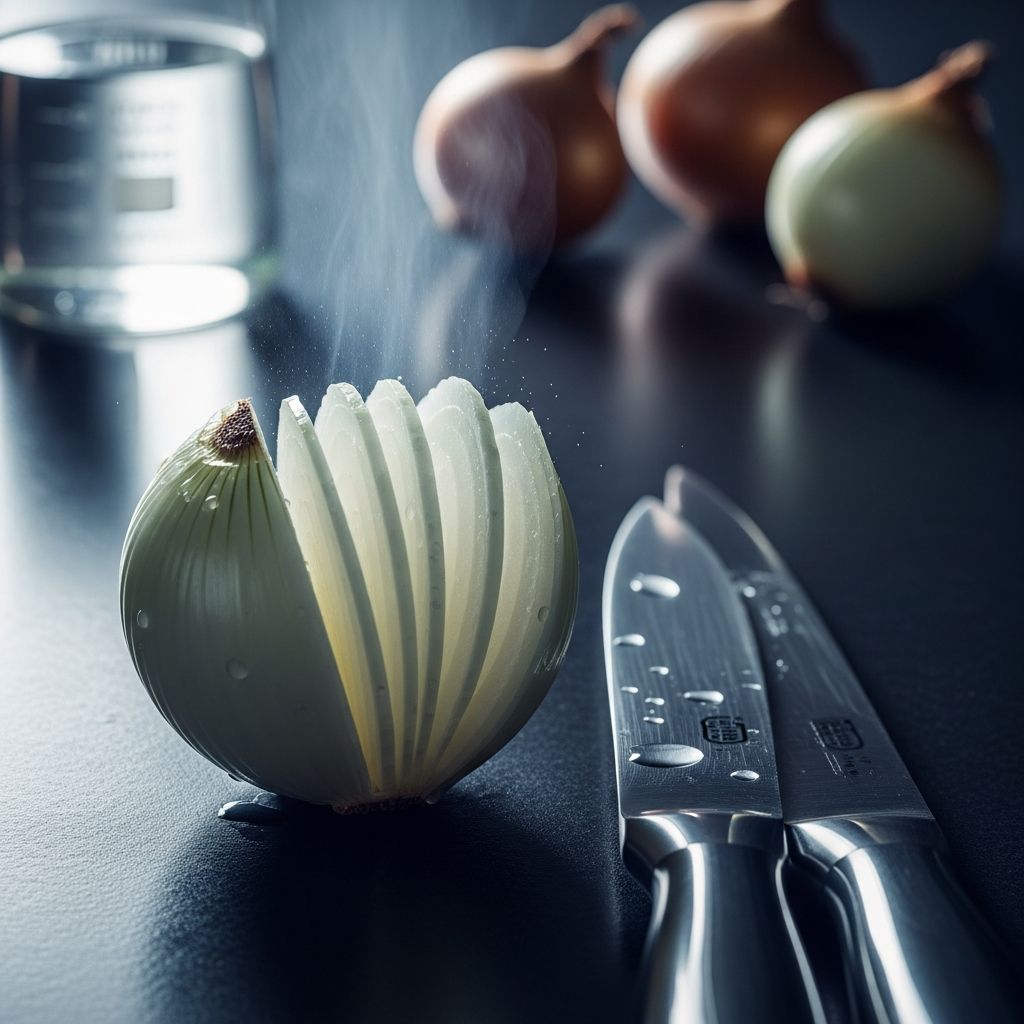
Chopping onions triggers an involuntary tear response due to a volatile sulfur gas released from damaged cells, which irritates the eyes and prompts protective tearing.This natural defense mechanism can be mitigated through simple preparation techniques and emerging innovations.
The Biochemical Chain Reaction Behind the Sting
Onions belong to the allium family, absorbing sulfur from soil to form amino acids essential for growth. When intact, these compounds remain compartmentalized within cells. Cutting disrupts this separation, unleashing enzymes like alliinase on sulfur-rich precursors such as S-1-propenyl-L-cysteine sulfoxide.
The initial reaction produces 1-propenyl sulfenic acid, an unstable intermediate. A second enzyme, lachrymatory factor synthase (LF synthase), transforms this into syn-propanethial-S-oxide, a gas akin to tear gas in its volatility. This compound drifts upward, contacting the eye’s moist surface where it hydrolyzes into sulfuric acid, stimulating pain receptors and triggering tears to flush the irritant.
Research spanning decades has refined this understanding. In the 1970s, chemist Eric Block identified the lachrymatory factor’s structure, confirming its post-cutting formation. Japanese scientists in 2002 pinpointed LF synthase, revealing a two-step enzymatic process published in Nature. Recent structural analysis via X-ray crystallography of LF synthase has further illuminated its role, aiding efforts to engineer tearless varieties.
Why Certain Onions Pack More Punch
Not all onions provoke equal tears. Red and white varieties contain higher enzyme levels and sulfoxides, intensifying gas production compared to milder spring onions. Onion maturity also factors in: older bulbs accumulate more precursors, amplifying irritation.
Sunions, a commercial tearless hybrid, result from selective breeding to lower pyruvate levels—a pungent byproduct of the same pathway. Genetically modified prototypes silencing LF synthase exist in labs but face market hurdles. These developments highlight selective breeding’s potential over genetic engineering for consumer acceptance.
Practical Strategies to Minimize Eye Irritation
While waiting for tearless onions, everyday methods disrupt the reaction chain effectively. Here’s a breakdown of proven approaches:
- Chill Before Chopping: Refrigerate onions for 30 minutes to slow enzyme activity and reduce gas volatility. Cold temperatures inhibit LF synthase without affecting flavor.
- Use a Sharp Knife: A precise blade causes cleaner cuts, minimizing cell damage and precursor release compared to dull edges that mash tissues.
- Improve Ventilation: Position a fan to blow gas away from your face or chop near an exhaust hood, dispersing the irritant before it reaches your eyes.
- Water Barriers: Cut under running water or soak onion slices briefly; water neutralizes the gas on contact.
- Protective Gear: Swim goggles create a seal, blocking vapors entirely for sensitive individuals.
| Method | Effectiveness | Pros | Cons |
|---|---|---|---|
| Chilling | High | Simple, no gear needed | Alters texture slightly |
| Fan/Ventilation | High | Quick setup | Requires equipment |
| Goggles | Very High | Foolproof | Less practical for precision |
| Under Water | Medium | Accessible | Messy, slows process |
Combine methods for optimal results, such as chilling plus ventilation, to achieve near tear-free chopping.
Advanced Kitchen Hacks for Frequent Cooks
Professional chefs employ nuanced tactics. Breathing through the mouth reduces nasal inhalation of gas, while positioning the cutting board farther from your face limits exposure. For batch prep, chop all onions at once in a well-ventilated area to front-load irritation.
Alternative tools like food processors pulverize onions rapidly, expelling gas before it concentrates. However, this risks over-processing flavors, so hand-chopping remains ideal for control.
Related Stories



The Evolutionary Purpose of Onion Tears
Onions evolved this defense to deter herbivores, insects, and microbes. The irritant likely causes similar distress in predators, rendering the bulb unpalatable. Sulfenic acids may also inhibit fungal growth, enhancing survival. Human tears serve a parallel protective role, diluting the acid and restoring ocular balance.
Health Implications and Eye Safety
Occasional onion tears pose no lasting harm, but frequent exposure can cause temporary redness or dryness. Those with dry eye syndrome or allergies may experience prolonged discomfort. Persistent irritation warrants an eye exam to rule out sensitivities.
Onions offer antioxidants like quercetin, supporting eye health long-term by combating oxidative stress. Balancing irritation risks with nutritional gains makes mitigation techniques essential.
Future Innovations in Tearless Technology
Ongoing research targets LF synthase inhibition. New Zealand trials have yielded GM onions lacking this enzyme, showing promise despite regulatory delays. Breeding programs prioritize low-pyruvate strains, with Sunions exemplifying commercial viability. Aerosol dynamics studies reveal cutting mechanics spur droplet outbursts, informing precise interventions.
FAQs
Why do onions make eyes water but not garlic?
Garlic produces a different sulfoxide (alliin), yielding less volatile irritants via alliinase alone, bypassing LF synthase.
Do sweeter onions cause fewer tears?
Yes, lower sulfur content in sweet varieties like Vidalias correlates with milder reactions.
Is it safe to chop onions with contacts in?
Contacts may trap irritants, worsening symptoms; remove them or use goggles.
How long does onion gas linger?
Volatiles dissipate in minutes with ventilation, but enclosed spaces prolong exposure.
Can cooking onions eliminate tears?
Sauteing post-chop releases gas during heating, but raw prep demands prevention.
Conclusion
Mastering onion prep transforms cooking from weepy ordeal to seamless task. By grasping the science—from enzymatic cascades to defensive evolution—and applying targeted strategies, anyone can chop confidently. Embrace these tips for drier eyes and flavorful meals ahead.
References
- How do tearless onions work? — BBC Science Focus. 2023. https://www.sciencefocus.com/science/how-do-tearless-onions-work
- Propanethial-S-oxide: how chopping onions makes you cry — Chemistry World. 2019-11-01. https://www.chemistryworld.com/podcasts/propanethial-s-oxide-how-chopping-onions-makes-you-cry/3009790.article
- Why onions make us cry — Science News Explores. 2015-09-28. https://www.snexplores.org/article/why-onions-make-us-cry
- Why Does Cutting Onions Make You Cry? — Houston Methodist. 2021-03-01. https://www.houstonmethodist.org/blog/articles/2021/mar/why-does-cutting-onions-make-you-cry/
- Droplet outbursts from onion cutting — PNAS. 2025. https://www.pnas.org/doi/10.1073/pnas.2512779122
Similar Articles








Read full bio of medha deb